Reporter’s Notebook 1999: “CO2 levels in decline last five years”

CO2 levels have been in decline the last five years said Tim Ball, a retired Professor of Geography, on Nov 24, 1999, at the Riverview Center, Guelph, Ontario, Canada.

That statement was completely false then and laughable now, but Ball continues to spew similar lies and misinformation to this day. Just last week Ball was a leading speaker in New York City at last week’s climate change denial festival.
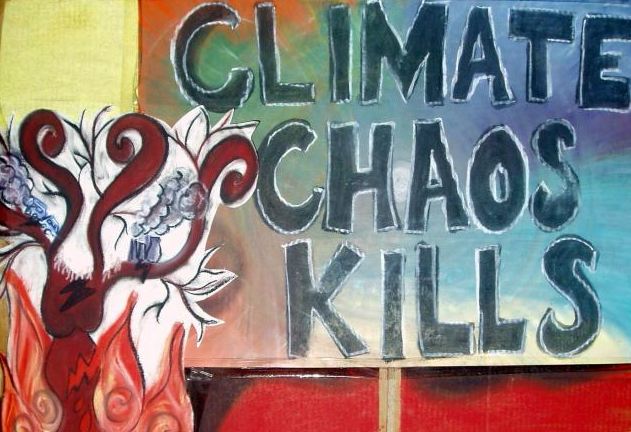
climate-chaos-kills-art-not-oil.jpg

I happened across my notes from the 1999 conference and was stunned at the outrageous comments Ball presented as “facts” to about 200 to 300 business types at a time when people knew little about carbon dioxide or global warming. No doubt many were convinced as Ball claimed (wrongly in every case) that: Continue reading

Last March of the Global Warming Denialists

Analysis by Stephen Leahy

Mar 4 (IPS) – Colder than usual January temperatures in the United States have brought the climate change deniers out of hibernation, flooding websites, and opinion and letters pages about the “great global warming hoax”. They even organised their own conference on denial in New York City this week.

king-penguins-on-beach-pnas-sml.jpg

“Global warming is not a global crisis” declared the Heartland Institute, organiser of the “International Conference on Climate Change”. Heartland is a well-known right-wing lobby group which accepted more than half a million dollars from oil giant ExxonMobil between 1999 and 2005, according to Exxon documents disclosed by Greenpeace, and thousands of dollars more from the tobacco industry.

Not surprisingly, in a statement issued Tuesday, they insisted that all efforts “intended to reduce emissions of CO2 be abandoned forthwith”.

“Manmade global warming is a total hoax. It has no basis in fact,” shouted Rush Limbaugh, a U.S. conservative radio host, on his Feb. 27 show, which draws as many as 13 million listeners. Continue reading

Business As Usual is Dead

dzerzhinsk-factories.jpg

Even if nations increased their energy and resource-use efficiency four-fold, there isn’t enough natural capital left intact to continue business as usual says says Eugene Rosa, a professor of natural resources and environmental policy at Washington State University.

(Natural capital are the resources — metals, oil — and services — air, water, etc — that nature provides.)

Improvements in technology and modernisation won’t rescue our planet from the depletion of the Earth’s natural capital, says Rosa.

For more on this topic please see this three-part series from 2007 on natural capital and how future global prosperity and equity CAN be achieved through the preservation of ecosystems:

See Part One: Like Enron, Earth Inc. Sliding Into Bankruptcy

Part Two: Global Warming is Real But I didn’t Do It

Part three: How to Kick-Start the 21st Century Eco-Economy

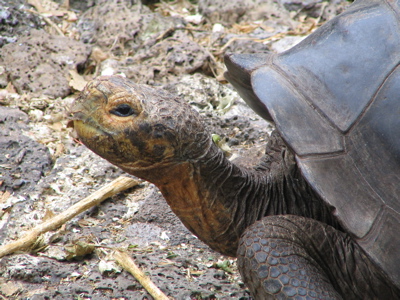
Ending The Oil Addiction: Galápagos Islands

img_0501.jpg

By Stephen Leahy*

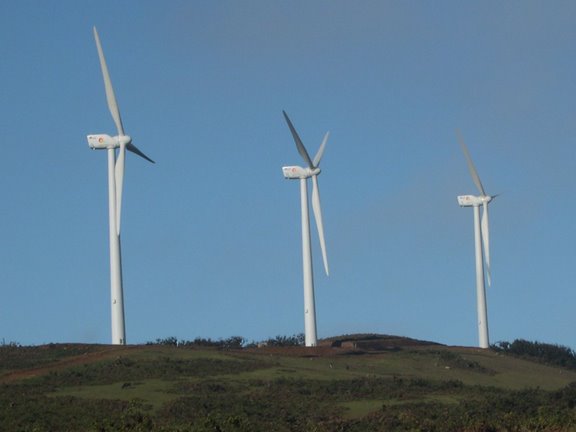
TORONTO, Feb 29 (Tierramérica) – Ecuador has taken the first step towards ending the oil dependence of its Galápagos Islands, in the eastern Pacific Ocean, with the official opening of a 10.8 million dollar wind energy facility on the island of San Cristóbal.

Ecuador’s President Rafael Correa toured the facility as part of a celebration of the 500th anniversary of the discovery of the Galápagos, and proposed to declare the islands fossil fuel free by 2015.

Located 1,000 kilometres off the coast of Ecuador, the archipelago comprises 17 small and 13 large islands that are home to 30,000 people and visited by more than 120,000 tourists each year.

Nearly everything is imported from the mainland, including vast quantities of diesel fuel for energy and transport. In 2001, a tanker ship struck a reef off the coast of San Cristóbal, one of the main islands, spilling 150,000 gallons of fuel into the ocean. Continue reading

Free, authoritative and online: 1.8 million species

carolina-anole-lizard-sml-john-sullivan-aol.jpgBy Stephen Leahy

Feb 27 (IPS) – Free, authoritative and online: 1.8 million species.

That is the ultimate goal of the Encyclopedia of Life project, which put its first 30,000 species on the Internet this week. This ambitious global project will provide the details of every known species — habitat, range, lifecycle, pictures and more — and archive everything online so anyone can access this important information about life on Earth.

From sharks to mushrooms to bacteria, the Encyclopedia of Life will provide scientifically verified information that will satisfy both a grade school child’s american-burying-beetle-doug-backlund-aol.jpegcuriosity or enable a university researcher — or amateur naturalist — to make a scientific breakthrough, says James Edward, new executive director of the Encyclopedia of Life (EOL) project headquartered in Washington at the Smithsonian Institution. Continue reading

Vitamin A and Zinc Supplements Cuts Malaria in Africa

Aedes aegypti copyright USDA

Feb 13 (IPS) – Malaria continues to cut a swathe through Africa, which accounts for most cases of the disease and the majority of malaria-related deaths. Globally, more than a million people die from malaria each year. In the case of children, this translates into a death every 30 seconds, according to the World Health Organisation.

A study by Burkina Faso’s Health Sciences Research Institute (Institut de recherche en sciences de la santé, IRSS) may point the way to reducing malaria’s toll on children, however.

IRSS research director Jean-Bosco Ouedraogo and his colleagues report in the current issue of ‘Nutrition Journal‘ that giving vitamin A and zinc supplements to children has been shown to reduce the incidence of malaria among them by a third. The journal is an online publication managed from London.

New ways of fighting malaria are critically needed. In recent years, the disease’s growing resistance to drugs and insecticides (malaria is transmitted by mosquitoes) has made malaria control much more challenging.

Ouedraogo spoke to IPS science correspondent Stephen Leahy.

Polar Bears’ Future Bleak in Melting Arctic

http://www.firstpeople.us

Lots of folks have been telling me that polar bears are doing ok and don’t need protection under the US Endangered Species Act. Some say polar bear populations are stable in Alaska and increasing in parts of Canada. And there might be 1500 more bears than previous estimates according to a three year study in Nunavut which makes $2 million a year from polar bear trophy hunters. But 1500 isn’t very many more bears and with the Arctic sea ice melting fast the future certainly doesn’t look bright.

As for Alaska consider this fact:

This week scientists announced new findings that the survival rate of polar bear cubs in Alaska’s Beaufort Sea has plummeted. In the late 1980s, 65 percent of polar bear cubs in the southern Beaufort Sea survived their first year. That has fallen to an average of 43 percent in the past five years. — Polar Bears Go Hungry as Icy Habitat Melts Away

“Without taking serious and urgent action to stabilize the climate, there is no future for polar bears” says Andrew Derocher, Chair of the World Conservation Union (IUCN), Polar Bear Specialist Group.

See also this controversy: Oil vs Polar Bears in Alaska

And these updates on the Arctic: Arctic Is the Canary in the Coalmine

Arctic Oil and Gas Rush Alarms Scientists

Arctic Meltdown Signals Long-Term Trend

Inuit Sue America over Climate Change

http://www.firstpeople.us

Oceans Hit Hard By Human Activity

copyright Ove Hoegh-Guldberg

By Stephen Leahy

Feb 15 (IPS) – Oceans span nearly three quarters of the Earth’s surface and despite this vast size hardly a square kilometre has been untouched by humans.

Researchers released the first-ever global map of human impacts on oceans Thursday in the journal Science. Impacts ranged from fishing to pollution to ship transportation.

“There really aren’t any areas without human impacts,” said Kimberly Selkoe, a principal investigator on the project and a post-doctoral researcher at the University of Hawaii.

“The most shocking message here is that we don’t actually have a lot of data on human impacts,” Selkoe told IPS. Continue reading

Galapagos Islands Spared Ocean Dumping Experiment

galap3.jpgLast summer while working in the Galapagos Islands I wrote about Planktos, a company that wanted to create plankton blooms near the islands by dumping tons of iron particles into the ocean: Carbon Project Endangers the Galápagos.

Planktos hoped these plankton blooms would ultimately become a lucrative way of removing carbon from the atmosphere. However in a January issue of the journal Science, a number of international scientists issued a warning that not enough was known to commercialize what is known as iron fertilization of the oceans.

Last summer’s dumping in the Galapagos never went forward, in part because of strong local objections, concern by marine scientists over unintended impacts and international environmental group protests. Feb 13 Planktos announced indefinite postponement of the experiment due to lack of investment funds because of “an effective disinformation campaign” by those opposing the effort.

Protecting Canada’s Water from the US

07102005-dry-mud-fish-manaquiri-amazonas-state-greenpeace.jpg

Under the North American Free Trade Agreement (NAFTA), Canada lost control over its energy resources. Now, with “NAFTA-plus”, Canada could also lose control over its freshwater resources, say experts in this Sept 2007 article CANADA: Losing Control of Water Through NAFTA and SPP

Now the Canadian Water Issues Council (CWIC) has written a model law to protect Canadian waters.

“There is a growing risk that North Americans may commit the ultimate ecological error by beginning to move large amounts of water over long distances, resulting in massive economic losses and ecosystem collapse in many donor regions,” says Ralph Pentland, CWIC’s Acting Chairman.

“The model legislation, drafted by the Council, addresses the need for a national approach to protecting this vital resource.”

See webcast of panel discussion on this and what it may take to turn this into real law.