Arctic Sea Ice Record – New Satellite Image

Temperatures of +21C above normal in Dec/Jan in the eastern Arctic. Parts of Hudson Bay remain unfrozen

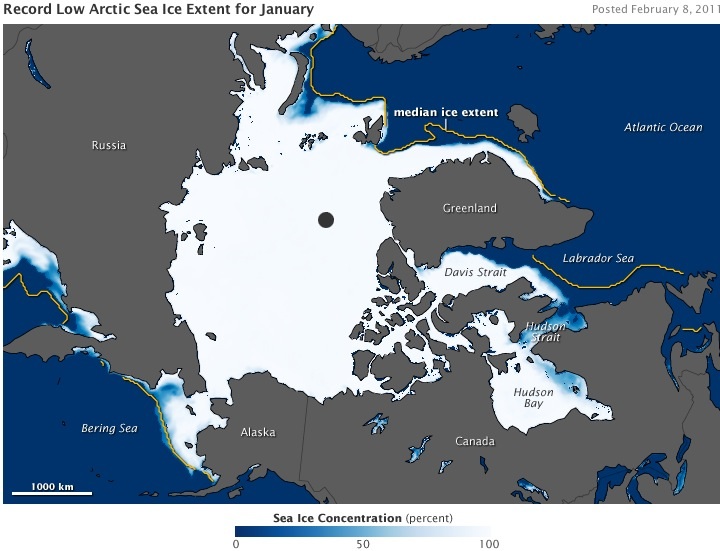
This NASA image shows average Arctic sea ice concentration for January 2011. Blue indicates open water; white indicates high sea ice concentrations; and turquoise indicates loosely packed sea ice. The yellow line shows the average sea ice extent for January from 1979 through 2000.

The U.S. National Snow and Ice Data Center (NSIDC) has reported that Arctic sea ice was at its lowest extent ever recorded for January (since satellite records began).

I’ve written about why this is happening and the consequences several times in recent weeks — Stephen

Arctic Defrost Dumping Snow on U.S. and Europe

Arctic Melt Down Is Bringing Harder Winters and Permanently Altering Weather Patterns

East Coast Blizzard and Europe’s Snowmaggddon Reveal Fingerprints of Climate Change

Will Super Cyclone Yasi be Australia’s Katrina? Landfall Wed as Cat 5 Storm

This is what climate change looks like

[Stunning satellite photo of Yasi on landfall here.]

[Update 24:00 EST Feb 2. Can it be true? No one has been killed or seriously injured? If that holds up over the next few days it will be absolutely stunning. Kudos to Australian govt and Australians.

[Update 17:30 EST Feb 2. Yasi has moved well inland leaving devastated coastal towns and landscape behind – houses flattened, 90% of trees broken, not a leaf left on bushes. Pix here

[Update 10:30 EST Feb 2 LANDFALL: South of Cairns at the beautiful town of Mission Beach as Cat 5. This is where Cyclone Larry came ashore in 2006, the worst cyclone in 100 yrs, and destroyed much of the area. The last 1500 endangered cassowaries — large flightless bird — live in the jungles there.

[Update: 18:00 EST Feb 1- Yasi landfall expected at high tide bringing storm surge of 3-4 9! metres propelled by 280-300 kph winds. City of Cairns in direct path. “Catastrophic” storm says Premier]

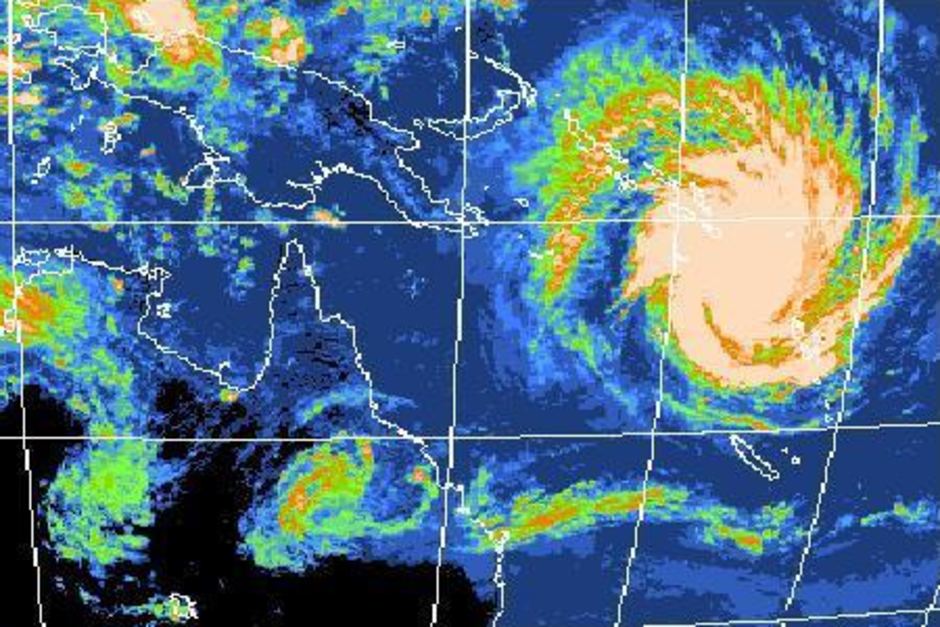
Following the recent record-breaking flooding, Queensland, Australia’s is facing yet another extreme weather event as super cyclone Yasi bears down on them. Yasi is expected to reach has reached dangerous Category 4 5 strength, generating winds of up to 280 300 kph when it hits the Queensland state coast early on Thursday (2pm Wednesday, GMT). Yasi is a huge storm as the satellite image above shows – it is about 600-700 km diameter making it an extremely large cyclone (cover half the USA). (Latest Met service satellite imagery)

For comparison Hurricane Katrina was also very large but only about a Cat 1 or 2 on landfall based on final data from NOAA that went largely unreported. Katrina’s storm surge caused most of the damage which could be the case with Yasi. One major difference is that Queensland does not have a major city on the coast (or even a small one protected by poorly designed levees). Shockingly even a year after Katrina more than 500,000 people remained displaced.

Large areas of Queensland are still underwater or mud-covered from flooding just 2 weeks ago that caused billions of dollars in damage. It was so bad that Australians now have to pay a temporary flood damage tax to help cover the costs… And now Yasi.

Australia may need a permanent climate change disaster tax.

This is what climate change looks like – record-breaking extreme weather events. The Queensland floods nor Yasi are the direct result of climate change. However because burning fossil fuels traps more of the sun’s heat in the atmosphere the odds and strength of extreme events increase as climate science has stated for two decades now. Here is my latest article on this The Yin and Yang of Climate Extremes We Will See More of.

Climate change loads the dice in favour of extreme events. Queensland has been very unlucky lately. Help them out if you can. — Stephen

This independent environmental journalism depends on public support. Click here learn more.

Related stories

First Ever: Two Hurricane Landfalls on Same Day – Pix

Flying Blind Into Future Hurricane Seasons

Philippines hit by 13 Major Storms 2007

Ice-cold Atlanta (and eastern US) Is Likely Connected to Arctic Hothouse

But first…

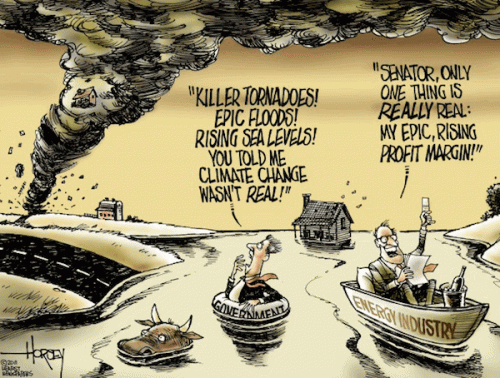
That’s a great cartoon.

Climate change seems to be behind the shockingly warm temps across much of the eastern Arctic all winter and is likely responsible for the snow has fallen across much of the southern US. Much of Arctic ice sea melted last summer, allowing the Arctic ocean to warm up which then took longer to freeze i.e. late Dec/ Jan. And that changed the wind circulation patterns bringing polar air far south. (See my previous post that explains what is happening East Coast Blizzard and Europe’s Snowmaggddon Reveal Fingerprints of Climate Change

And for a collection of global temp graphs see this post
Arctic Hothouse Turns Europe into an Icebox )

And finally here’s a short video by Peter Sinclair of Climate Denial Crock of the Week explaining this: Global Warming. Winter Weirding.

]

This is part of Community Supported Environmental Journalism, independent reporting supported by citizens in several countries thru one-time, weekly or monthly or in-kind donations.

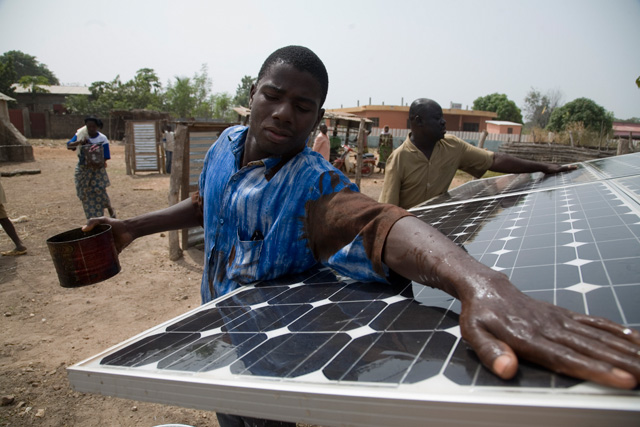
Africa’s Future Lies in a Green Energy Grid – Universal Access to Electricity Less Than Cost of Fossil Fuel Subsidies

Kenya switched to green energy and now more people than ever have electricity

Universal access to modern electricity would cost much less than current subsidies to fossil fuel industry

By Stephen Leahy*

UXBRIDGE, Canada, Dec 14, 2010 (IPS)

Development in Africa could falter as climate change grips the continent, increasing the length and severity of droughts and floods by altering precipitation patterns, among other impacts.

The region needs a major shift in its economic development policies and thinking towards decentralised, green economic development, experts now say.

“The world’s big economies are largely living off financial transactions which are unconnected to development,” warns Supachai Panitchpakdi, secretary-general of United Nations Conference on Trade and Development.

“Export growth does not automatically result in green economic growth, we must look at trade for development,” said Panitchpakdi.

In a rejection of failed neoliberal economic policies, Panitchpakdi said strong national policies on investments, taxation, protection of local industries, including subsidies, and changes to less restrictive intellectual property regimes are what is needed to green economies in Africa and elsewhere.

“Green economic development underpins environmental protection, economic growth and development,” he said.

This independent environmental journalism depends on public support. Click here learn more.

Continue reading

The Yin and Yang of Climate Extremes We Will See More of

Extreme weather accounted for 76 percent of all disasters over the past 20 years. Recovery is often impossible even in the US, i.e. New Orleans 5 years after Hurricane Katrina where poor neighborhoods remain devastated

By Stephen Leahy

UXBRIDGE, Canada, Oct 13, 2010 (Tierramérica) 

The floods that affected 20 million people in Pakistan and the devastating six-week heat wave in Russia in recent months are tragic climate events — and they’re closely linked.

“The Pakistan floods and Russia heat wave were directly connected, the atmospheric science makes that clear,” Kevin Trenberth, senior scientist at the U.S. National Centre for Atmospheric Research, told Tierramérica.

A long-lasting high pressure system called a “blocking high” essentially gave western Russia a dry Mediterranean summer, which in turn shifted more- than-normal moisture into the Indian monsoon, resulting in record-breaking rainfall in northern Pakistan and India, Trenberth explained.

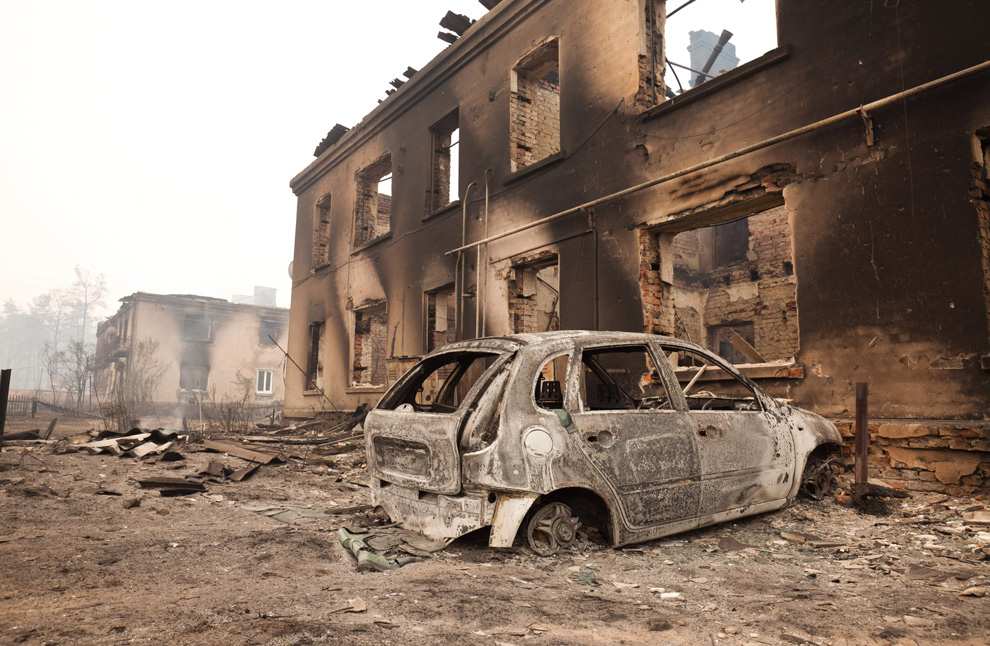
Wildfires burned many russian villages Aug 2010

It is difficult to determine whether climate change caused this extraordinary event, but it certainly made it much worse, according to Trenberth. “Without global warming these extremes are unlikely to have occurred,” he added.

The drought in Russian and the heavy rains in Pakistan are exactly what are expected to happen with climate change, said the expert.

“Changes in extreme weather events are the main way climate change is manifested,” he said, noting that the storms or floods that used to occur once every 200 years may now occur every 30 years.

This independent environmental journalism depends on public support. Click here learn more.

Continue reading

Media Fails on Climate Change in 2010 – How You Can Ensure 2011 Will Be Better

Few people understand the serious danger climate change poses all of us largely because media have done a poor job in covering it. In 2010, US TV media pretended it had all gone away – no more global warming…poof, bad dream, moving on.

From the must-bookmark The Daily Climate:

Drexel University professor Robert Brulle has analyzed nightly network news since the 1980s. Last year’s climate coverage was so miniscule, he said, that he’s doubting his data.

….

Coverage of December’s United Nations climate talks in Cancun is Exhibit A: Total meeting coverage by the networks consisted of one 10-second clip, Brulle said. By contrast, 2009’s Copenhagen talks generated 32 stories totaling 98 minutes of airtime. “I’m trying to check it again and again,” Brulle said of the 2010 data. “It’s so little, it’s stunning.”

Newspapers do little better with a huge decline in the US/Canada in 2010 which had some of the lowest level of coverage in the world, lower than Asia and the Pacific according to this graph. Continue reading

Be a Partner in Independent Enviro Journalism

More than 20,000 people from 190 nations attended the international climate meeting in Cancun, Mexico and it received one ten second clip on US network TV 

Coverage of environment and science has been gutted. If there is coverage it rarely digs below the surface. It’s not just TV, it’s all media. After 18 years of being published in major publications on two continents, I now count myself lucky to get $150 to $200 for an in-depth article. The few independent media outlets are either non-profits or struggling.

Urgent environmental issues didn’t go away just because most media stopped covering them.

Many, many people tell me:we need people like you to write about these issues”.

I’d like to do more but it is impossible to continue without your support for what I call Community Supported Journalism. People directly support independent journalists who craft honest and thoughtful articles about important subjects the mainstream media ignores or gloss over.

Community Supported Environmental Journalism Works

In 2010 dozens of people offered their help, donating $5,750 which helped ensure many breaking international stories were covered including the first media reports on the global die-off of corals and how climate change may be bringing colder winters to Europe and eastern North America. Those donors — who are really partners — enabled me to cover important international meetings like the UN Convention on Biodiversity, UN climate change conference, scientific meetings and much more.

Please join us. Consider a donation of just $10 a month to support enviro journalism that serves the public interest.

Contributions can be made safely and easily via PayPal* or Credit Card*. [You can cancel at any time, automatically. No need to contact me] 

Monthly support options starting @ $10 a month

One-time donations are most welcome. Click and enter the amount.

*More than 100,000 non-profits safely use PayPal Donate service

If you’d like a mailing address or contact me with story ideas, please complete this comment form.

Thanks for reading. — Stephen

Letters of Support:

We need people like you. In tough economic times, where information flow is increasingly channeled and controlled, you perform a simply critical role. Hang in there. You are an admirable role model for the future.”

– E. Ann Clark, Associate Professor, University of Guelph.

“Stephen Leahy has done a superb job exposing the enormous sums the US government is spending on corporate welfare for big oil.”

Ross Gelbspan, Pulitzer-prize winning editor and author of The Heat is On

My continued appreciation to those who have contributed in the past.

Arctic Hothouse Turns Europe into an Icebox

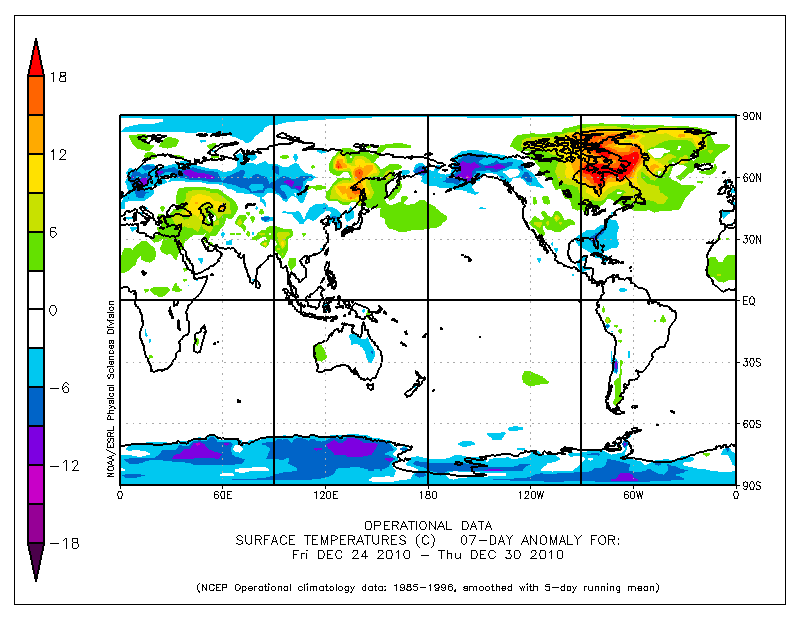
Here’s a temperature map from mid December illustrating the super warm Arctic region and the icy cold Europe in the mid-latitudes. [[ see also temp anomaly chart showing Hudson Bay to Greenland is 18C above normal this week]]

My previous post explains what is going on: East Coast Blizzard and Europe’s Snowmaggddon Reveal Fingerprints of Climate Change

— Stephen

And here is the Arctic sea ice extent – lowest ever for December.

As of Jan 2 Canada’s Hudson Bay is still not completely frozen over – likely the latest freeze up in a very long time. (10,000s of years?)


Final Update: COP 16 Cancun Climate Conference

19 Dec 2010

On reflection there was some progress at COP 16. Small island states, whose very existence is threatened, were satisfied the world is on its way to a significant climate treaty so that is something. Last year in Copenhagen, hardly anyone happy with the outcome. There is still a long and difficult road ahead. Not least because there remains a powerful and well-funded opposition to emission reductions in many countries.

In 2011 I hope to uncover more about that opposition while continuing to write about how the physical processes of climate change are not waiting for us to get our act together. Substantial changes are already underway. Changes to the global water cycle have been shown in the first global study of evapotranspiration rates as detailed in my article: “Climate Changes Herald a Future of Widespread Drought – Water Left High and Dry in Climate Talks”

The article also looks at some fairly dire drought projections for the coming decades.

For those experiencing a rough, early winter, I did the first article revealing how the melting Arctic may be bringing earlier and harsher winters to the UK, parts of Europe and North America. That story happened because of donations to help cover my costs of attending a polar science conference in Oslo were those new findings were presented. Science journalism isn’t easy or cheap to do. I was one of  few journalists in Oslo because hardly any media outlet covers travel costs any more – never mind paying a decent fee for a story. That’s why I am trying Community Supported Journalism where people support my efforts to inform people about the great issues of our time.

A warm thank you to those who sponsored some of the Cancun articles, contributing some much needed cash to help cover my costs.  Supporters names are prominently listed in the articles here. I can no longer continue to do environmental and science journalism without your help so thank you for helping out.

— Stephen

Just click the button to go to the PayPal Secure Donation* page & enter your sponsorship amount (fully secure, major Credit Cards accepted)

Your one-time or monthly contributions are vital for Community Supported Environmental Journalism (click for more info)

*More than 100,000 non-profits safely use PayPal Donate service

Climate Changes Herald a Future of Widespread Drought – Water Left High and Dry in Climate Talks

Serious droughts expected in large parts of the world in coming decades

By Stephen Leahy

CANCÚN, Dec 8, 2010 (IPS/TerraViva)

As the world heats up, continents are drying up, with severe droughts forecast in the future. But negotiators at the climate summit here seem to have forgotten about water in their endless discussions over forests, carbon trading and finances.

“The main impact of climate change is on the planet’s water cycle,” said Henk van Schaik of the Cooperative Programme on Water and Climate, a foundation based in the Netherlands.

“Climate-driven changes in the water cycle will affect large regions of the world,” van Schaik told TerraViva at a side event meeting here at COP 16 in Cancún .

The impact of climate on the world’s water resources is not addressed within the U.N. climate framework, said Anders Berntell of the Stockholm International Water Institute.

“Negotiators here see it as just another sector of the economy but it is a basic element for life. Water is the bloodstream of our planet,” Berntell said.

This article was made possible thanks to contributions from Hugh & Jo-Ann Roberston, Kevin Toner, Michael Sweatman, Ann Wakelin, Lynn Carey, Leif Knutsen, Nan Nolan, Chris Conrad, Godo Stoyke.

[Due to the high costs of covering such important events, support is needed from readers like you.Please consider making a small automatic monthly contribution as a fair exchange for these articles – for more information.] Continue reading