UN Climate Talks End In Dramatic Showdown But Little Progress

COP 19 Final Showdown between US and Fiji

By Stephen Leahy

WARSAW, Nov 24 2013 (IPS)

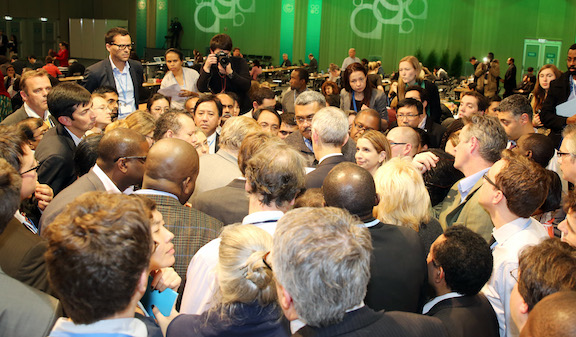
The U.N. climate talks in Warsaw ended in dramatic fashion Saturday evening in what looked like a schoolyard fight with a mob of dark-suited supporters packed around the weary combatants, Todd Stern of the United States and Sai Navoti of Fiji representing G77 nations.

It took two weeks and 36 straight hours of negotiations to get to this point.

At issue in this classic North versus South battle was the creation of a third pillar of a new climate treaty to be finalised in 2015. Countries of the South, with 80 percent of the world’s people, finally won, creating a loss and damage pillar to go with the mitigation (emissions reduction) and adaptation pillars.

Super-typhoon Haiyan’s impact on the Philippines just days before the 19th Conference of the Parties (COP19) amply illustrated the reality of loss and damages arising from climate change.  Philippines lead negotiator Yeb Saño made an emotional speech announcing “fast for the climate” at the COP19 opening that garnered worldwide attention, including nearly a million YouTube views

Click for complete story


Japan Bails Out on CO2 Emissions Target

cop presidentBy Stephen Leahy

WARSAW, Nov 15 2013 (IPS)   Japan announced Friday that it will renege on its carbon emissions pledge, likely ending any hope global warming can be kept to 2.0 degrees C.

The shocking announcement comes on the fifth day of the U.N. climate talks in Warsaw known as COP19, where more than 190 nations have agreed to a 2.0 C target and are trying to close the carbon emission gap to get there.

“It’s like a slap in the face of those suffering from the impacts of climate change such as the Philippines.” — Wael Hmaidan

Japan will increase that gap three to four percent with its new 2020 reduction target, according to the Climate Action Tracker (CAT). It amounts to a three-percent increase compared to a 1990 baseline. Japan’s 2009 Copenhagen Accord pledge was a 25 percent reduction by 2020.

“Japan is taking us in the opposite direction,” Marion Vieweg of Climate Analytics, a German climate research organisation, told IPS here in Warsaw.

“Their revision shows the bottom up approach is not working if countries can simply drop their pledges at any time,” Vieweg said.

Climate scientists have long maintained that the 2020 target for industrialised countries should be to reduce emissions 25-40 percent compared to a 1990 baseline. However, even if nations meet their current climate pledges under the Copenhagen Accord, CO2 emissions in 2020 are likely to be eight to 12 billion tonnes higher than what’s needed, according to the U.N. Environment Programme’sEmissions Gap Report 2013.

Japan, the fifth largest emitter of CO2, is just the latest to abandon its international commitments.

The Bigger Canada’s Energy Sector Gets the Poorer People Become

By Stephen Leahy

Thu, 2013-03-21 05:00 DeSmog Canada

Blame Canada is a four part series revealing how Canada has become a wealthy, fossil-fuelled energy superpower and an international climate pariah. For Part 1, click here. Part 2 here

Few are aware Canada’s GDP shot up from an average of $600 billion per year in the 1990s to more than $1.7 trillion in 2012. This near tripling of the GDP is largely due to fossil fuel investments and exports.

However not many Canadians are three times wealthier. For one thing GDP is only a measure economic activity. The other reason is that little of this new wealth stayed in Canada. And what did stay went to a small percentage of the population, worsening the gap between rich and poor.

One of the hallmarks of a “petro-state” is that while a country’s energy industry generates fantastic amounts of money, the bulk of its citizens remain poor. Nigeria is a good example. Canada’s poverty rates have skyrocketed in step with the growth of the energy sector. One Canadian child in seven now lives in poverty, according to the Conference Board of Canada, the country’s foremost independent research organization.

Income inequality increased faster than the US, with the rich getting richer and poor and middle class losing grounds over the past 15 to 20 years, the Conference Board also reported January 2013.

“Most of Canada’s increase in wealth went to the big shareholders in the resource industries,” says Daniel Drache, a political scientist at Toronto’s York University. “It mainly went to the elites.”

Full Story: http://desmog.ca/2013/03/20/blame-canada-part-3-bigger-canada-s-energy-sector-gets-poorer-people-become_

Unseen World of Water and the Water Crisis

world water supply

By Stephen Leahy

UXBRIDGE, Canada, Mar 22 2013 (IPS)

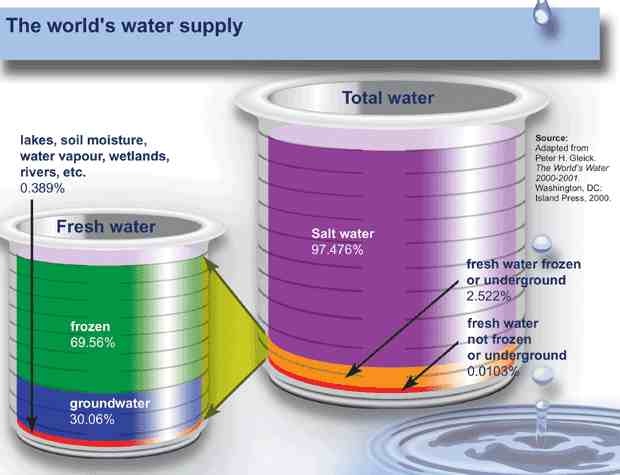
How much water does it take to turn on a light? It took 10,000 litres to make your jeans. Another three big bathtubs of water was needed for your two-eggs-toast-coffee breakfast this morning.

We are surrounded by an unseen world of water: furniture, houses, cars, roads, buildings – practically everything we use and make needs water.

“There is no way to generate energy without water,” said Zafar Adeel, co-chair of the UN-Water Task Force on Water Security and director of the Institute for Water, Environment and Health in Canada.

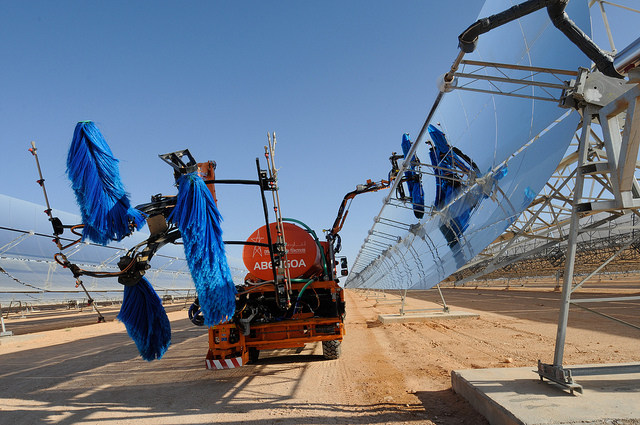
Even solar panels need regular washing to perform well. Wind energy might be an exception, Adeel told IPS from a water conference in Beijing being held during World Water Week.

There is growing recognition that peak oil is nowhere near as important as peak water because there is no substitute for water. The growing shortage of water — 1.2 to 1.7 billion people face scarcity — has alarmed many. Water has been identified as an “urgent security issue”, by a group that last year included both former U.S. Secretary of State Hillary Clinton and the InterAction Council, an association of 37 former heads of state and government.

It’s important that “water security” be recognised by the U.N. Security Council as either as a trigger, a potential target, or a contributing factor to insecurity and potential conflict in many parts of the world, said Adeel.

Canada Uses Foreign Aid to Promote Its Mining/Energy Sector

mining gaia

The absorption of Canada’s aid agency into the foreign affairs and international trade ministry has been widely condemned

By Stephen Leahy

Monday 25 March 2013 17.37 GMT theguardian.com

Following the unexpected announcement that the Canadian International Development Agency (Cida) will be folded into the ministry of foreign affairs and international trade, the Canadian government has made it clear there must be a direct return on its aid “investment”, primarily access to resources in other countries.

“It is a fundamental change. Canada is tying aid to its commercial interests. This is going to leave a bitter taste out there,” says Samantha Nutt, executive director of War Child Canada, which has received CIDA funding for more than a decade.

As Nutt acknowledges, all aid is politicised to some extent. But Canada has taken this to a new level. Civil society aid organisations working with CIDA are no longer aid delivery partners but sub-contractors, bidding on aid programmes and increasingly forced to work with the private sector, says Nutt.

“This puts Canadian aid organisations in ethical conflict. How can they criticise the actions of the mining companies they have to work with to get funding to help the poor?”

Cida’s fate has startled not only Canada’s foreign aid community but, by all accounts, Cida staff, who learned of the agency’s fate through the media.

The new department of foreign affairs, trade and development will continue to tackle poverty in developing countries with its $4.8 billion aid budget intact, the government said.

“This is Canadian money … Canadians are entitled to derive a benefit,” said international co-operation minister Julian Fantino last December, adding that Cida is working with the private sector to help Canada “maintain a global advantage”.

Full story

Canada’s Plan to Get Rich by Trashing the Climate

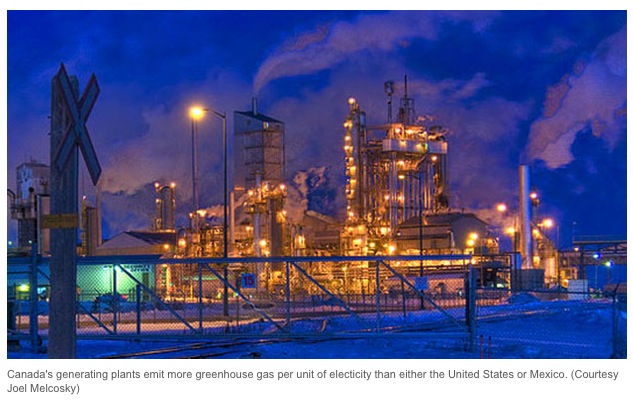
Canada's fossil fuel electricity has highest carbon emissions

By Stephen Leahy

Blame Canada is a four part series revealing how Canada has become a wealthy, fossil-fuelled energy superpower and an international climate pariah. For Part 1, click here.

Like every other country in the world, Canada has promised to help keep global warming to less than 2 degrees C. However Canada’s political and corporate leadership are committed to turning the country into a fossil-fuelled “energy superpower.”

With a drug lord’s just-providing-a-service hypocrisy Canada has openly declared it’s future is tied to the profits from dumping hundreds of millions of tonnes of climate-heating carbon into the atmosphere every year.

And the world’s new energy superpower plans to grow those annual emissions to 1.5 billion tonnes by 2020 giving one of the least populated countries a gigantic carbon bootprint.

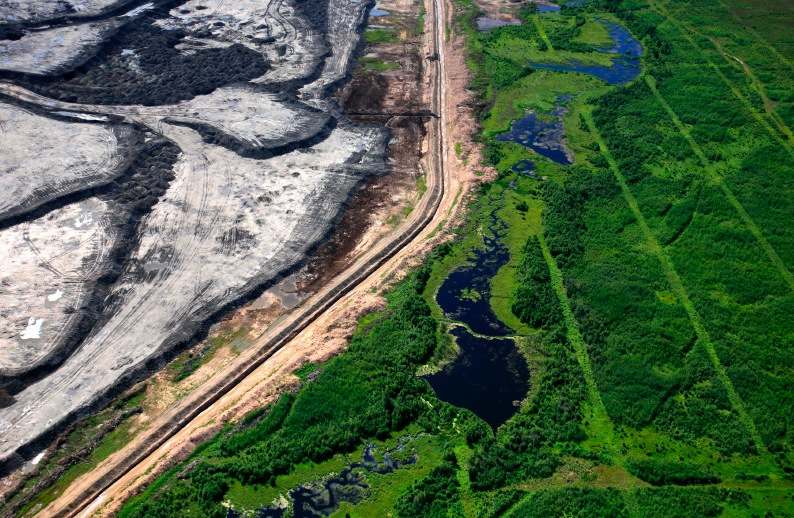
Most of this climate-wrecking carbon energy will come from Canada’s tar sands located just underneath the pristine boreal forest and wetlands of northern Alberta. The oil industry likes to call them “oil sands,” although there is no liquid oil only a tarry bitumen mixed deep in the sandy soil.

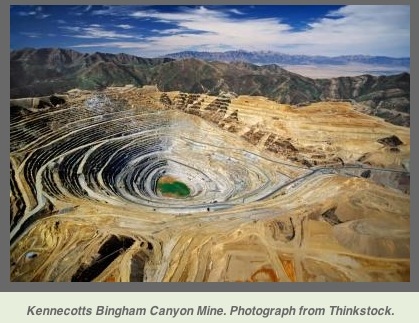
With an estimated 170 billion barrels, the tar sands are the third largest crude oil reserves. Extraordinary efforts involving colossal amounts of water, heat, chemicals and machinery are needed to get the bitumen out of the ground and into pipelines. This the world’s largest industrial project with more than $300 billion invested since 2001 by the oil industry.

Nowhere has fossil energy expansion or investment been faster or larger. Environmental activists call it “Canada’s Mordor.”

Canada Losing Its Seasons — Winter is in full retreat

arctic-sea-ice-min-volume-comparison-1979-2012-small

By Stephen Leahy

UXBRIDGE, Canada, Mar 11 2013 (IPS) 

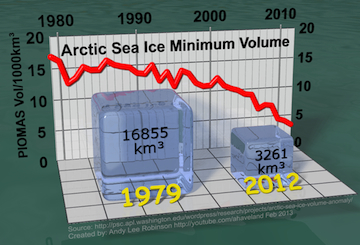
“Canada is not a country, it’s winter,” Canadians say with pride. But the nation’s long, fearsome winters will live only in memory and song for Canadian children born this decade.Winters are already significantly warmer and shorter than just 30 years ago. The temperature regimes and plant life of the south have marched more than 700 kilometres northward, new research shows.

The frozen north is leaving and won’t be back for millennia due to heat-trapping carbon emissions from burning fossil fuels, experts say.

By 2091, the north will have seasons, temperatures and possibly vegetation comparable to those found today 20 to 25 degrees of latitude further south, said Ranga Myneni of the Department of Earth and Environment, Boston University.

“If we don’t curb carbon emissions, Arctic Sweden might be more like the south of France by the end of the century,” Myneni, co-author of the Nature Climate Change study published Sunday, told IPS.

Full story here

Canada Has Become a Petro-State, Happily Drilling for Profits as the World Warms

tar sands - visible from space,tarnished earth

Thu, 2013-03-07 08:00 STEPHEN LEAHY

What’s happened to Canada? To the dismay of many a country with an international reputation for relatively progressive environmental policies (at least compared to the United States) is rushing headlong to dig up all the oil, gas, and coal it can. The country’s leaders can scarcely muster the effort to pretend to want to limit climate-heating carbon emissions.

And the Canadian business establishment and media have largely gone along with the program. Put it all together, and you have a country that has become a full-blown “petrostate.”

People are starting to notice. Last December at the UN climate talks in Doha, Qatar, Canada beat out tough contenders like Saudi Arabia to be elected “Colossal Fossil” by environmental organizations from around the planet. Canada had the dishonor of being the most uncooperative country out of 193 nations at the climate summit. It was the sixth year in a row that international environmental groups gave Canada their ‘highest’ award for its persistent efforts to block any agreement on reducing carbon emissions.

What’s happened to Canada is that it has experienced a steady takeover by the fossil fuel industry.

Canada’s is now the world’s fifth largest crude oil producer and the biggest supplier of oil to the US. Canada is also the third largest producer of natural gas and one of the top ten miners of coal. This enormous boom in fossil fuel production has been underway since the late 1990s. Like Saudi Arabia, fossil energy is by far Canada’s biggest export and has become the dominant economic and political focus.

Full story click below:

Blame Canada is a four part series revealing how Canada has become a fossil-fuelled energy superpower that’s going to wreck its future and the global climate.

Killer Heat Waves and Floods Linked to Climate Change

Projected drought and dry regions in 2060-2069

By Stephen Leahy

UXBRIDGE, Canada, Feb 27 2013 (IPS) 

Killer heat waves, floods and storms are increasingly caused by climate change, new research reveals.

Scientists in Germany say they have found how greenhouse gases from burning fossil fuels are helping to trap the jet stream, resulting in extraordinary weather such as the 2010 Pakistan flood and the 2011 heat wave in the United States.

Human-driven climate change repeatedly disturbs the flow of atmospheric waves around the globe’s Northern hemisphere, said lead author Vladimir Petoukhov of the Potsdam Institute for Climate Impact Research (PIK) in Germany.

Giant atmospheric waves called Rossby waves are meanders in the strong, high-altitude winds known as jet streams and have a major influence on weather. These wave movements are caused by the difference in temperatures between the cold air from the Arctic and hot air from the tropics. 

When the waves shift north, they suck warm air from the tropics to Europe, Russia, or the U.S., and when they swing down, they do the same thing with cold air from the Arctic, said Petoukhov.

“During several recent extreme weather events, these planetary waves almost freeze in their tracks for weeks,” he said. “So instead of bringing in cool air after having brought warm air in before, the heat just stays.”

Green Energy Solves Dual Crises of Poverty and Climate

Ain Beni Mathar Integrated Combined Cycle Thermo-Solar Power Plant

By Stephen Leahy

UXBRIDGE, Canada, Feb 25 2013 (IPS) 

Green energy is the only way to bring billions of people out of energy poverty and prevent a climate disaster, a new study reveals.

Conservative institutions like the World Bank, the International Energy Agency and accounting giant Price Waterhouse Coopers (PwC) all warn humanity is on a path to climate catastrophe unless fossil fuel energy is replaced by green energy.

The U.N.’s Sustainable Energy for All initiative intends to bring universal access to modern energy, doubling the share of renewable energy globally, and doubling the rate of improvement in energy efficiency by 2030.

Poverty eradication, sustainable development and the transition away from fossil fuel energy go hand in hand.

If those targets are met and similar efforts undertaken to reduce deforestation, then climate disaster can be avoided, said Joeri Rogelj of the Institute for Atmospheric and Climate Science in Zurich  who headed the analysis published Sunday in the journal Nature Climate Change.