GE Trees: Poor Countries Can’t Control

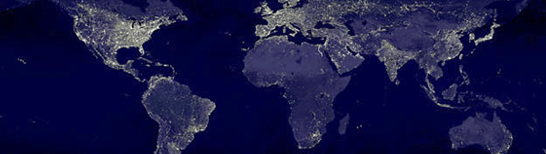
Courtsey of Museo d\'Arte Contemporanea, Turin, Italy

by Stephen Leahy

BONN, May 29 (IPS) – An intense North-South debate over genetically engineered trees has sidetracked delegates at a U.N. conference on biodiversity here: African nations want a global moratorium, while a few rich countries led by Canada say it should be up to individual countries to regulate.

While 168 nations that are part of the U.N. Convention on Biological Diversity (CBD) debate the issue, a new two-year U.N.-funded study warns that developing countries simply don’t have the capacity to manage or monitor biotechnology.

“Africa doesn’t have the technical and scientific capacity to fully debate let alone enforce rules around biosafety of biotechnology,” said the study’s co-author, Sam Johnston of the United Nations University Institute of Advanced Studies (UN-IAS) in Tokyo.

“Genetic contamination by GE plants is a huge issue and it’s increasing,” Johnston told IPS in Bonn.

Continue reading

Food Crisis is “Manufactured” – UK Expert

By Stephen Leahy

Rising fuel and transportation costs could force governments to return to local production of food, scientist Michel Pimbert says in a Tierramérica interview.

LONDON, May 19 (Tierramérica).- The current food crisis has revived the myth that the world doesn’t produce enough food for its six billion people, according to Michel Pimbert, author of a new study that highlights local production as a potential solution.

It is a “manufactured crisis” that is the outcome of a market-driven, global food system, says Pimbert, director of the agriculture and biodiversity program at the London-based International Institute for Environment and Development (IIED).

That system needs to evolve towards localized food production that allows people to improve nutrition, income and economies, starting at the household level and through the regional level, he says. Continue reading

Energy From Dirt Wins $200K Prize

“Literally, This Is Energy From Dirt”

ACCRA, Ghana May 10 (IPS) – You’ve heard of solar power, and also wind power. Now, you might start hearing about soil power as well.

Microbial fuel cells (MFCs) that make use of the energy given off by soil microbes are amongst the technologies that hold promise for bringing power to developing states, where electricity is often scarce.

The cells also form part of a project that has just won a grant of almost 200,000 dollars in the ‘Development Marketplace’ competition, for which results were announced at ‘Lighting Africa 2008‘; this May 5-8 conference took place in the Ghanaian capital of Accra. The project, developed by six students at Harvard University in the United States, was one of 16 winners selected from 52 finalists competing to bring innovative lighting products to the 74 percent of Africans without access to electricity.

The Development Marketplace competition was held under the ‘Lighting Africa’ campaign, launched towards the end of last year by the World Bank Group. Lighting Africa aims to provide 250 million people on the continent with safe, reliable and economical lighting products and energy services that do not make use of fossil fuels, by 2030. Continue reading

Keeping Darkness At Bay In Africa – Kerosene to the LED

By Stephen Leahy

ACCRA, May 8 (IPS) – In many of Africa’s towns and villages, only smoky kerosene lamps keep the darkness at bay after sunset. However, kerosene is a dangerous and increasingly expensive source of light for Africans who do not have access to electricity — about three-quarters of those living on the continent, according to the World Bank.

Lighting industry entrepreneurs are hoping alternative devices such as solar-powered LED lights will replace the kerosene lamps.

“Africans spend more than 18 billion dollars a year purchasing kerosene,” said Russell Sturm, who heads up the sustainable energy team at the International Finance Corporation (IFC), a member of the World Bank Group.

“And that estimate was done when oil was 35 dollars a barrel, so there is an enormous market for lighting,” he told IPS, adding that the prices of LED devices and solar panels had dropped dramatically over the past three years, and were now competitive with kerosene costs. The price of oil passed the 120 dollar per barrel mark for the first time earlier this week. Continue reading

Boost Food Production by Reducing Enviro Impacts


JOHANNESBURG, Apr 15 (IPS) – Over the past few years, Robert Watson has had what must qualify as one of the world’s tougher assignments: heading an initiative to help agriculture cope with the substantial challenges it faces presently, and the even bigger hurdles ahead.

The three-year International Assessment of Agricultural Science and Technology for Development (IAASTD) has sought to evaluate agricultural knowledge across the spectrum, with the help of governments, civil society, the private sector, and hundreds of experts.

Watson initiated the project while chief scientist at the World Bank; he currently serves as director of the IAASTD — also as chief scientist at the British environment and agriculture department.

The findings of the assessment are being formally presented Tuesday, this after they were reviewed at an intergovernmental plenary held in Johannesburg, South Africa, from Apr. 7-12. IPS environment correspondent Stephen Leahy chatted to Watson at this meeting about the landmark IAASTD. Continue reading

Food Crisis Needs this New Vision for Agriculture

By Stephen Leahy


JOHANNESBURG, Apr 15 (IPS) – The results of a painstaking examination of global agriculture are being formally presented Tuesday with the release of the final report for the International Assessment of Agricultural Science and Technology for Development (IAASTD).

The assessment has explored how agriculture can be reinvented to feed the world’s expanding population sustainably in an era of multiple challenges — not least those presented by climate change and a growing food crisis that has led to outbreaks of violence in a number of developing countries.

The expertise of some 400 scientists and other specialists was tapped for the IAASTD; governments of wealthy and developing nations also contributed to the assessment, along with civil society and the private sector. Continue reading

Towards a New and Improved Green Revolution

By Stephen Leahy

JOHANNESBURG, Apr 6 (IPS) – As food prices soar and hundreds of millions go hungry, experts from around the world will this week present a new approach for ensuring food security, at the intergovernmental plenary for the International Assessment of Agricultural Science and Technology for Development (IAASTD). The Apr. 7-12 conference is taking place in South Africa’s commercial hub, Johannesburg, and will be attended by representatives of an estimated 60 governments.

In the past year the price of corn has risen by 31 percent, soybeans by 87 percent and wheat by 130 percent. Global grain stores are currently at their lowest levels ever, with reserves of just 40 days left in the silos. Meanwhile, food production must double in the next 25 to 50 years to feed the additional three billion people expected on the planet by 2050.

“The question of how to feed the world could hardly be more urgent,” said Robert Watson, director of the IAASTD and chief scientist at the British environment and agriculture department. Continue reading

Vitamin A and Zinc Supplements Cuts Malaria in Africa

Aedes aegypti copyright USDA

Feb 13 (IPS) – Malaria continues to cut a swathe through Africa, which accounts for most cases of the disease and the majority of malaria-related deaths. Globally, more than a million people die from malaria each year. In the case of children, this translates into a death every 30 seconds, according to the World Health Organisation.

A study by Burkina Faso’s Health Sciences Research Institute (Institut de recherche en sciences de la santé, IRSS) may point the way to reducing malaria’s toll on children, however.

IRSS research director Jean-Bosco Ouedraogo and his colleagues report in the current issue of ‘Nutrition Journal‘ that giving vitamin A and zinc supplements to children has been shown to reduce the incidence of malaria among them by a third. The journal is an online publication managed from London.

New ways of fighting malaria are critically needed. In recent years, the disease’s growing resistance to drugs and insecticides (malaria is transmitted by mosquitoes) has made malaria control much more challenging.

Ouedraogo spoke to IPS science correspondent Stephen Leahy.

Africa, South Asia Face Mega-Famines

stanford-food-security-banner-sml.jpg

By Stephen Leahy

Feb 1 (IPS) – Climate change will cause major disruptions in the global food system, and adaptation to those changes needs to begin immediately, experts say.

Otherwise one-fifth of the world’s population could starve and millions of others become climate refugees, forced by heat and drought to abandon their lands and hunt for food elsewhere in the coming decades.

To prevent this nightmarish future, researcher David Lobell says the world community should focus its efforts where climate threats are likely to make the greatest impacts.

“We used historical data to determine what food-producing regions of the world were most sensitive to changes in temperature and rainfall,” said Lobell, author of the study published in the journal Science today.

“Impoverished regions of Southern Africa and South Asia will be hit first and hardest by climate change,” Lobell told IPS from his office at Stanford University’s Programme on Food Security and the Environment. Continue reading

Kenya’s Troubles thru a Photojourno’s Eyes [pix]

mike-berube-nairobi.png

mike-berube-nairobi-smoke.png

Kyle Douglas is a young professional bike racer in Europe while his friend Mike Berube, a photojournalist, is currently in Nairobi, Kenya documenting the unrest there.

Here’s Kyle’s take:

“Most nights I come home and I fix my bikes, work on writing up my race reports for the family and friends back home. Mike meanwhile has to go out in to a country that is polluted with violence and risk his life so that we can read about it as we drink our morning coffee!

Kyle, who is the son of two good friends of mine, asks Mike ten questions about his life. One of them:

What Kind of story will you tell your grand kids?

racer-kyle-in-europe.jpgI would tell them to be aware of the world and events and to show compassion and help those in need of a voice, shoulder, friend or someone to listen too… And to speak out against wrong in the world. Protest peacefully either by painting, writing, photography… whatever it takes… and in that protest… to help and show others [how] to protest so that people may live safe and happy like them.

Two amazing young men.