Geoengineering on a Desperate Planet — UN Declares Global Moratorium

By Stephen Leahy

NAGOYA, Japan, Oct 25, 2010 (Tierramérica)

[Update 30 October 2 am. Global moratorium passes.]

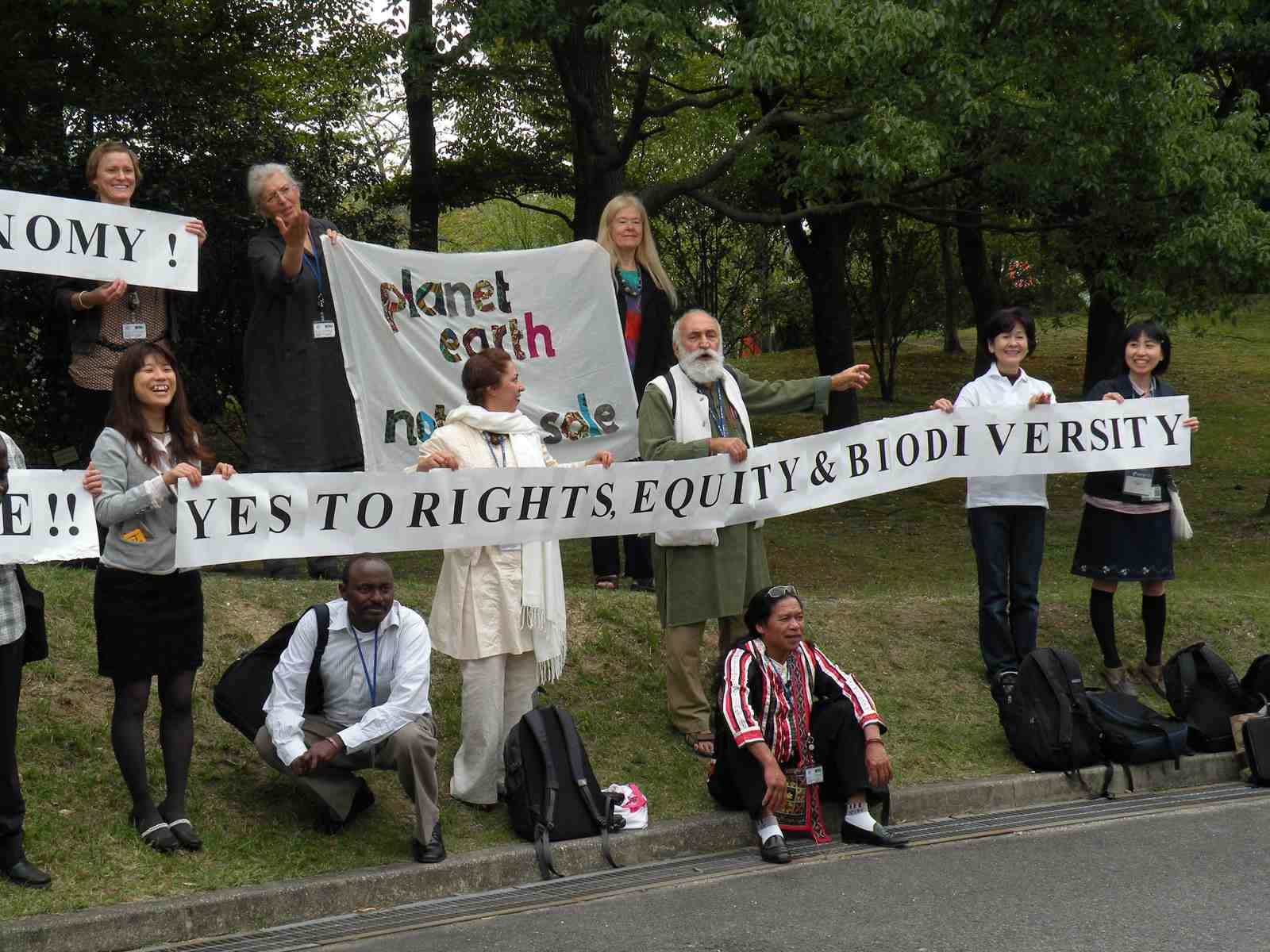
Delegates to the world summit on biodiversity here are calling for a moratorium on climate engineering research, like the idea of putting huge mirrors in outer space to reflect some of the sun’s heating rays away from the planet.

Climate engineering or geoengineering refers to any large-scale, human- made effort to manipulate the planet to adapt to climate change.

Representatives from Africa and Asia expressed concern about the negative impacts of geoengineering during the opening week of the 10th Conference of Parties (COP 10) to the United Nations Convention on Biological Diversity (CBD), Oct. 18-29. They were joined by civil society organisations in calling for a moratorium on geoengineering experiments.

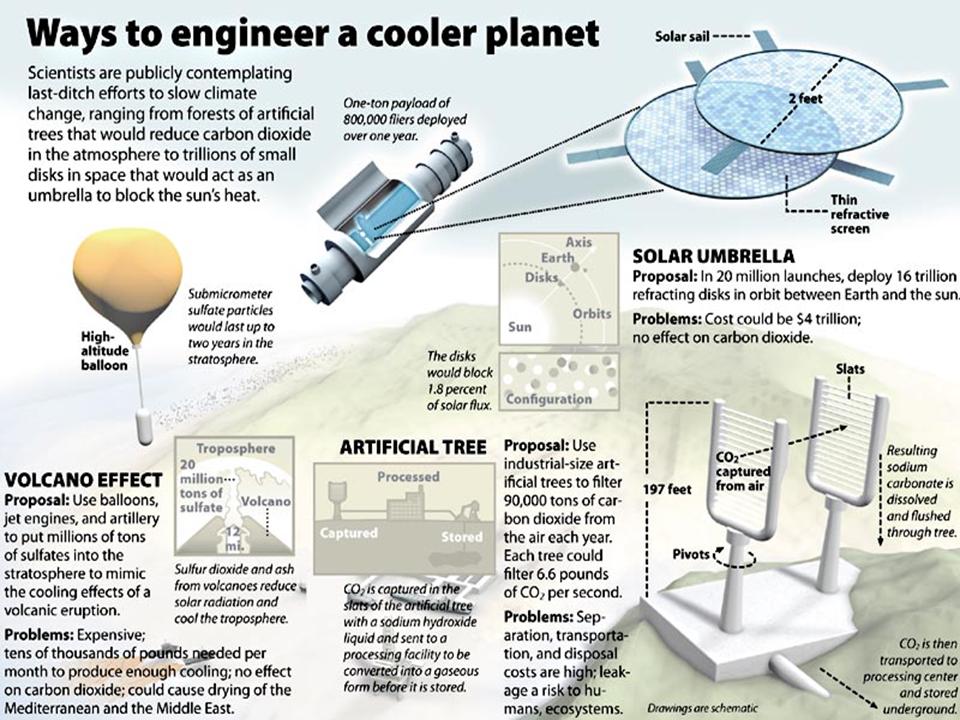
The geoengineering proposals include installing giant vertical pipes in the ocean to bring cold water to the surface, pumping vast amounts of sulphates into the stratosphere to block sunlight, or blowing ocean salt spray into clouds to increase their reflectivity.

The geoengineering proposals include installing giant vertical pipes in the ocean to bring cold water to the surface, pumping vast amounts of sulphates into the stratosphere to block sunlight, or blowing ocean salt spray into clouds to increase their reflectivity.

Broadly speaking, there are two main geoengineering approaches: solar radiation management and carbon sequestration, in other words, absorbing carbon dioxide from the atmosphere to reduce the concentration of this greenhouse-effect gas.

Is this article of interest? It exists thanks to contributions from readers. Please click here to learn more about Community Supported Journalism.

To manage the sun’s rays, there are ideas like releasing sulphates into the atmosphere or placing giant mirrors in outer space. For absorbing carbon, the possible approaches include ocean fertilisation, in which iron or nitrogen is added to seawater to stimulate the growth of phytoplankton to sequester the carbon deep in the ocean.

“Some of the proponents of these technologies think it’s easier to ‘manage the sun’ than get people to take a bus” to reduce carbon in the atmosphere, said Pat Mooney, executive director of the ETC Group, an international environmental organisation headquartered in Canada. [etc “Geopiracy” report]

“Politicians in rich countries see geoengineering as ‘Plan B’ so they don’t have to make the hard choices of reducing emissions causing climate change,” Mooney told Tierramérica.


Continue reading

Palau Announces Massive Marine Sanctuary to Protect Whales, Dolphins, Sharks

By Stephen Leahy

NAGOYA, Japan, Oct 25, 2010 (IPS)

One of Japan’s closest allies declared over the weekend that all of its oceans – more than 600,000 square kilometres – would be a sanctuary for whales, dolphins, dugongs, sharks and other species.

“There will be no hunting or harassment of marine mammals and other species in our waters,” said the Honourable Harry Fritz, minister of the environment, natural resources and tourism of the Republic of Palau.

“We urge other nations to join our efforts to protect whales, dolphins and other marine animals,” Fritz said at a press conference during Oceans Day at the meeting of the Conference of the Parties to the Convention on Biological Diversity in Nagoya, Japan.

Japan has long sought to overturn the global ban on commercial whaling and has actively solicited and received Palau’s support for many years. Japan is its second largest source of development aid after the United States. Japanese tourists frequent the islands since many people speak some Japanese.

“Palau now supports conserving marine mammals, along with sharks and other species,” said Susan Lieberman, director of international policy for the Pew Environment Group, a large U.S. NGO.

“This is a very significant announcement,” Lieberman told IPS.

Is this article of interest? It exists thanks to contributions from readers. Please click here to learn more about Community Supported Journalism. Continue reading

North-South Divide Again Clouds Biodiversity Talks


By Stephen Leahy

NAGOYA, Japan, Oct 19, 2010 (IPS)

The accelerating destruction of natural habitats will take millions of years to recover from, scientists have warned.

This may be the last chance to apply the brakes, Achim Steiner, executive director of the U.N. Environment Programme, reminded delegates representing the 193 member countries of the U.N. Convention on Biological Diversity (CBD).

“This meeting is being held to address a very simple fact: we are destroying life on this Earth,” Steiner said at the opening plenary meeting Monday. “It is absolutely essential that nations work together here.”

Ryu Matsumoto, Japan’s environment minister, warned that the world was about to reach a threshold where the loss of biodiversity would become irreversible.

“We’re now close to a tipping point on biodiversity,” he said. “We may cross that in the next 10 years.”

With 16,000 participants, the Oct. 18-29 gathering is by far the biggest international meeting on biodiversity. The term biodiversity refers to the variety of plants, animals and other species that provide a wide range of services to humanity.

Is this article of interest? It exists thanks to contributions from readers. Please click here to learn more about Community Supported Journalism. Continue reading

Rich Countries Trash Their River Systems and Make Things Worse With Expensive Engineering Fixes — Global Study in Nature

Jaw-dropping fact: Rivers in US and Europe in Worst Shape

By Stephen Leahy

UXBRIDGE Canada, Oct 5, 2010 (IPS)

Failure to protect and invest in nature has left the world’s rivers in crisis, threatening the water supply of more than five billion people according to a new study.

Pollution, dam building, agricultural runoff, conversion of wetlands, and water-works engineering have severely impacting global river systems, the first- ever health assessment of the planet’s riverine ecosystems reported in Nature last week (subscription req’d).

What made our jaws drop is that some of the highest threat levels in the world are in the United States and Europe,” says Peter McIntyre, a co-author of the report who is a zoologist at the University of Wisconsin-Madison in the U.S.

“Our study reveals, that on average, the richer the country the greater the threat to river systems,” McIntyre told IPS.

Is this article of interest? It exists thanks to contributions from readers. Please click here to learn more about Community Supported Journalism.

Expensive water-works engineering to control freshwater quality and quantity in rich countries decimate rivers’ natural abilities to control and clean water the Nature study found. River systems provide an estimated six to seven trillion dollars in services to humanity every year, but the hundreds of billions of dollars spent on engineering systems impairs those services for short-term gain, says co-author Charles Vörösmarty of the City University of New York, an expert on global water resources.

“We need to take another approach, to join hands with nature and work together,” Vörösmarty said in an interview. “If we do humanity will get a far better payback in the future.” Continue reading

Locally-Run Protected Areas Could Reverse Fisheries’ Death Spiral


Great Barracuda and Jacks, Diamond Rock, Saba,...
Image via Wikipedia


One third of all species of sharks, rays and reef-building corals are facing extinction while governments spend $27 billion subsidizing overfishing

By Stephen Leahy

UXBRIDGE, Canada, Sep 15, 2010 (IPS)

Local fishers objected to the creation of a new no-fishing marine protected area off the coast of Belize in 1996. Today they are benefiting from the bounty of fish spilling out of the Laughing Bird Caye National Park. Tourism has also boomed, illustrating the multiple benefits and value of marine protected areas, according to a new series of reports released Wednesday by Conservation International (CI).

“The ocean is in crisis but we can’t see it with our own eyes so we’re not aware of what is happening,” said Leah Bunce Karrer, co-author and director of the Marine Management Area Science Programme at CI.

“Marine managed areas offer a solution which could significantly reduce ocean degradation while benefiting local communities,” Karrer told IPS.

Is this article of interest? It exists thanks to contributions from readers. Please click here to learn more about Community Supported Journalism.

One third of all species of sharks, rays and reef-building corals are facing extinction. “Most people don’t realise that,” said Gregory Stone, chief ocean scientist at CI.

“As species disappear, entire ecosystems are altered in negative ways we don’t even want to imagine,” Stone said.

Only a fraction of one percent of the world’s oceans are effectively protected even though there is growing scientific consensus of the need to protect at least 20 percent of the seas. Continue reading

Record Heat Killing Caribbean and Indian Ocean Corals

By Stephen Leahy*

[There hasn’t been much news about the impacts of the record warming of parts of the world’s oceans but severe coral bleaching in the Indian ocean resulted in widespread coral death. Sadly the Caribbean also at high risk this month with record high water temps. My article connects that reality with how a new approach to protecting corals may give them the best chance to survive in hotter, more acidic oceans. — Stephen]

UXBRIDGE, Canada, Sep 13, 2010 (Tierramérica)

The waters of the Caribbean Sea are the warmest on record and the region’s imperilled corals are bleaching and beginning to die, experts warn.

This year many corals are already bleached and dying in the southern Caribbean Sea, especially in the Lesser Antilles, according to Mark Eakin coordinator of Coral Reef Watch at the U.S. National Oceanographic and Atmospheric Administration (NOAA).

Is this article of interest? It exists thanks to contributions from readers. Please click here to learn more about Community Supported Journalism.

The waters are even warmer than they were in 2005 when a severe bleaching occurred across much of the Caribbean. More than 60 percent of corals around the U.S. Virgin Islands died, Eakin told Tierramérica.

Water temperatures in this region reach their annual peak between September and October.

The area affected by bleaching and dying corals will likely extend to the region east of Nicaragua, past the island of Hispaniola (Haiti and Dominican Republic) to Puerto Rico and the Lesser Antilles, and south along the Caribbean coasts of Panama and South America, according to a warning issued by Coral Reef Watch last month.

“There is the potential that this will be worse than 2005, unless some tropical storms come through and mix the warm surface water with deeper, cooler water,” Eakin said.
Continue reading

Local Decisions To Protect Nature Boosts Economy, Quality of Life and Secure Jobs — Global Study

Multi-trillion-dollar ecosystem services can boost local economies and quality of life

By Stephen Leahy

UXBRIDGE, Canada, Sep 10, 2010 (IPS)

What do New York City, Vienna, Quito and Rio de Janeiro have in common? They all get their high quality drinking water through aqueducts connected to protected areas in nearby hills and mountains.

Twenty years ago, a rapidly expanding New York City determined it was far cheaper to protect and restore the source of its water supply, the Catskill/Delaware forests and wetlands, than spend six to eight billion dollars on a water treatment plant.

Cities are dependent on nature. There are many examples of how the ecosystem services provided by nature can provide cost-effective solutions for local municipal services, according to a new major study titled “TEEB report for Local and Regional Policy Makers” released Thursday in India, Brazil, Belgium, Japan and South Africa.

Is this article of interest? It exists thanks to contributions from readers. Please click here to learn more about Community Supported Journalism.

However, the study notes that few politicians and public officials realise that factoring in the planet’s multi-trillion-dollar ecosystem services into their policy-making can help save cities and regional authorities’ money while boosting the local economy, enhancing quality of life, securing livelihoods and generating employment.

All economic activity and most of human well-being whether in an urban or non-urban setting is based on a healthy, functioning environment,” said Pavan Sukhdev, study leader of The Economics of Ecosystems and Biodiversity (TEEB) initiative hosted by the United Nations Environment Programme. Continue reading

Organic farms have better fungi and that’s a very good thing

Organic cultivation of mixed vegetables in Cap...
Image via Wikipedia

New study from Britain’s Centre for Ecology & Hydrology concludes: Organic agriculture better for fungi that are a key to healthy ecosystems. [press release below]

This is just one of dozens of different studies that demonstrate the benefits of organic over conventional as I’ve previously posted. Despite the benefits to society organic farmers receive little government support or are marginalized in most countries. Wonder why? — Stephen

Organic farming more profitable and better than conventional systems – U of Wisconsin

Organic Agriculture Reduces Climate Change, Poverty and Hunger

Organic Provides 3X More Food Per Acre in Poor Countries – podcast

Overweight? Hungry? Blame “Hollow Food”


Centre for Ecology & Hydrology

Farming practices have a significant impact on the diversity of beneficial microbial fungi known to play important roles in crop productivity, soil recovery and maintenance of healthy ecosystems, according to new research published today (14 September 2010) in the journal Environmental Microbiology. The conclusions could have important implications for the way humans manage the agricultural landscape and tackle food security issues. Continue reading

Ice, Polar Bears & the Arctic Melt Down That’s Changing the World

polar-bear-snout-wwwfirstpeopleus-smlIce-free summer in the Arctic is just a matter of time – mostly likely within the next 5 years. Here’s a “six-pack” of my recent articles on how global warming is transforming the Arctic:

The Arctic — The Earth’s Freezer — Is Defrosting With Dire Results

The rapidly warming Arctic region is destabilising Earth’s climate in ways science is just beginning to comprehend.

Arctic Leaking Methane a Super-Potent Global Warming Gas — Reaching Feared Tipping Point?“The way we’re going right now, I’m not optimistic that we will avoid some kind of tipping point.ceberg-in-glacier-strait-nunavut-canada-image-credit-sandy-briggs

Arctic Ice Gone in 5 Years – First Time in One Million Years– “We’re going to see huge changes in the Arctic ecosystem”

Things Happen Much Faster in the Arctic — “Things are happening much faster in the Arctic. I think it will be summer ice-free by 2015,” said David Barber, an Arctic climatologist at the University of Manitoba.

Arctic Is the Canary in the Coalmine — The Arctic is “ground zero” for climate change, with temperatures rising far faster than anywhere else on the planet.

Arctic Oil and Gas Rush Alarms Scientists — As greenhouse gas pollution destroys Arctic ecosystems, countries like Canada are spending millions not to halt the destruction but to exploit it.

Oh yeah, and about those polar bears:

Polar Bear (Sow And Cub), Arctic National Wild...

Polar Bears Go Hungry as Icy Habitat Melts Away — The iconic animal of the frozen north, the polar bear, is starving to death because climate change is melting the Arctic Ocean sea ice.

Oil vs Polar Bears in Alaska — A coalition of environmental groups sued the George W. Bush administration Monday for delaying a decision to protect polar bears threatened with extinction

Polar Bears’ Future Bleak in Melting Arctic — “Without taking serious and urgent action to stabilize the climate, there is no future for polar bears” says Andrew Derocher, Chair of the World Conservation Union (IUCN), Polar Bear Specialist Group.

“Europe is going to cook the world’s tropical forests to fight climate change; it’s crazy” — Millions of Trees Burned for ‘Green Energy’

Burning trees for energy produces 1.5 times as much carbon as coal – study shows

By Stephen Leahy*

UXBRIDGE, Canada, Sep 24 ’09 (Tierramérica) (Revised Sept 1’10)

Millions of trees, especially from the developing countries of the South, are being shipped to Europe and burned in giant furnaces to meet “green energy” requirements that are supposed to combat climate change.

In the last two months alone, energy companies in Britain have announced the construction of at least six new biomass power generation plants to produce 1,200 megawatts of energy, primarily from burning woodchips.

At least another 1,200 megawatts of wood-fired energy plants, including the world’s largest, in Port Talbot, Wales, are already under construction.

Those energy plants will burn 20 to 30 million tonnes of wood annually, nearly all imported from other regions and equivalent to at least one million hectares of forest.

“Europe is going to cook the world’s tropical forests to fight climate change; it’s crazy,”Simone Lovera, of the non-governmental Global Forest Coalition, which has a southern officed in Asunción, Paraguay, told Tierramérica.

Do you find this article interesting? It exists thanks to contributions from readers. Please click here to learn more about Community Supported Journalism.

Europe has committed to reducing its carbon emissions 20 percent by 2020 in an effort to fight climate change. Biofuels and biomass energy will have key roles in achieving those goals, experts say.

[UPDATE: New story details regarding subsidies, increased air pollution from wood burning and the big lie that says ‘burning wood is carbon-neutral’: see Europe’s Green Energy Portfolio Up in Smoke?]

“Biomass is a very promising sector for energy companies,” says Jarret Adams, a spokesperson for Adage, a joint venture between French nuclear power giant Areva and the U.S.-based Duke Energy.

Adage is building a 50-megawatt, wood-burning power plant in the southeastern U.S. state of Florida, the first of 12 such “green energy” plants to be built over the next six years, Adams told Tierramérica.

“Burning wood for energy is considered carbon neutral by U.S. federal and state authorities,” he said. In other words, the process of generating electricity by burning wood emits an equal or lesser amount of carbon dioxide than the quantity absorbed by the trees through photosynthesis.

When Tierramérica questioned the assumption of carbon neutrality, Adams replied, “It is, but who knows for certain?”

See complete original story here.