Environmental Destruction Makes Money. Conservation Costs Money. This Global Dilemma Must Be Solved

Rich Countries Balk At Spending $ to Halt Biodiversity Crisis

By Stephen Leahy

NAIROBI, May 31, 2010 (IPS)

Developing countries rich in plants and animals but poor in financial and technical resources refused to make binding commitments to halt the unraveling of the planet’s biological infrastructure at the close of a major meeting Friday at the U.N.’s African headquarters in Nairobi.

For their part, rich countries balked at a 50-fold increase in funding to support efforts to slow and reverse the loss of species and ecosystems.

“Anything to do with finance has been a big problem here at this meeting,” said James Seyani, a delegate from Malawi and spokesperson for the African countries.

It takes money to protect, conserve and enhance biodiversity – the term for all living things that make up Earth’s ecosystems that are our life support system. Exploitation and destruction of vital ecosystems like forests and peatlands generates millions of dollars in revenue, but conserving or using these lands in ways that preserves biodiversity often costs governments money.

Do you find this article interesting? It is funded by contributions from readers. Please click here to learn more about Community Supported Journalism.

Reversing the declines in biodiversity is a matter of great urgency and countries with much of the world’s remaining species and intact ecosystems “are prepared to meet their commitments but we need the technical, human and financial resources to do this”, the delegate from Mexico said at the conclusion of the meeting that began May 10.

The absence of such resources is why biodiversity is in its current crisis, he said.

“The developing world needs to remember their previous commitments and provide new additional finances and resources. Those promises are not being adhered to,” Seyani told delegates late Friday afternoon at the end of the U.N. Convention on Biological Diversity’s (CBD) meeting to establish targets and an action plan to end the biodiversity crisis over the next decade. Continue reading

Oceans on the Brink: Dying Plankton, Dead Zones, Acidification

A number of marine diatom cells

By Stephen Leahy

VIENNA, Jul 31, 2010 IPS

The oceans are the lifeblood of our planet and plankton its red blood cells. Those vital “red blood cells” have declined more than 40 percent since 1950 and the rate of decline is increasing due to climate change, scientists reported this week.

Phytoplankton are a critical part of our planetary life support system. They produce half of the oxygen we breathe, draw down surface CO2, and ultimately support all of our fisheries,” said

Boris Worm of Canadas Dalhousie University and one of the worlds leading experts on the global oceans.

“An ocean with less phytoplankton will function differently,” said Worm, the co-author of a new study on plankton published this week in Nature. Plankton are the equivalent of grass, trees and other plants that make land green, says study co-author Marlon Lewis, an oceanographer at Dalhousie.

“It is frightening to realise we have lost nearly half of the oceans’ green plants,” Lewis told IPS.

“It looks like the rate of decline is increasing,” he said.

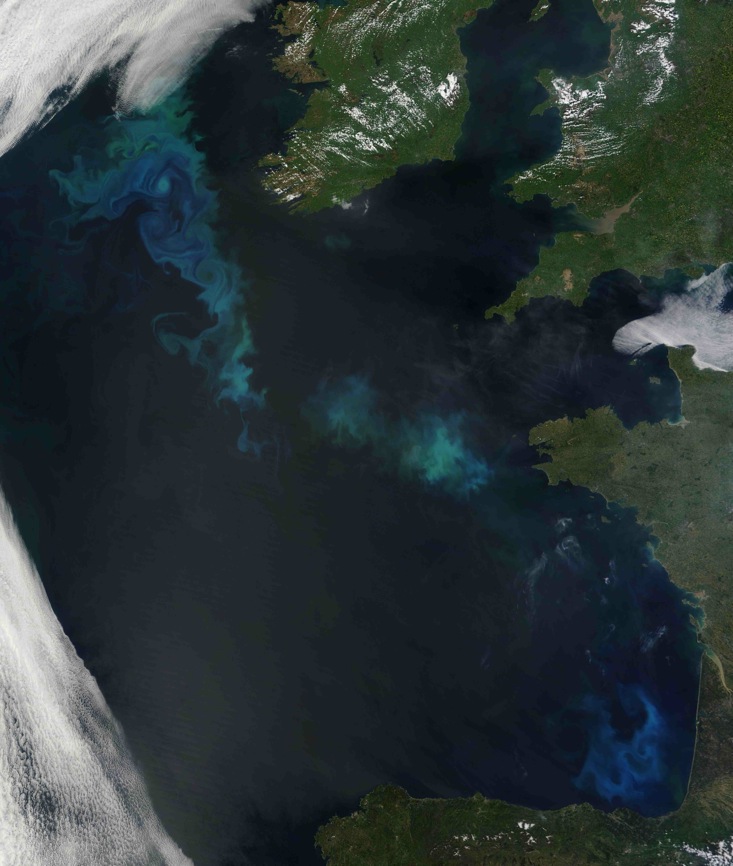
A large phytoplankton bloom in the Northeast Atlantic -NASA Earth Observatory Collection.

[See also my series of articles on ocean acidification]

Independent environmental journalism now depends on public support, learn more about how this works and how you can help, click here.

Climate change is warming the oceans about 0.2C per decade on average. This warmer water tends to stay on top because it is lighter and essentially sits on top of a layer of colder water. This layering, or stratification, is a problem for light-loving plankton because they can only live in the top 100 to 200 meters.

Eventually they run out of nutrients to feed on unless the cold, deeper waters mix with those near the surface. Ocean stratification has been widely observed in the past decade and is occurring in more and larger areas of the world’s oceans. Continue reading

Food Prices Soar (again) – Governments Starved Ag Research of Funding for Last 20 Years

By Stephen Leahy

[New Article]

MONTPELLIER, France, Apr 14, 2010 (IPS)

How’s this for short-sighted:

A billion people go hungry every day, food prices have climbed 30 to 40 percent, climate change is reducing agricultural production – and for the past two decades, the world has slashed investments in publicly-funded agriculture until it is a pittance in most countries.

“Moral outrage is needed. We must abolish this… It can be done. It must be done,”Ismail Serageldin Website, Egypt and a former World Bank economist, told nearly 700 World Food Prize laureates, ministers, scientists and a few representatives from development and farmer organisations at the first Global Conference on Agricultural Research for Development (GCARD) last month here in southern France.

“This is the launching pad to transform hunger in our time,” Serageldin concluded.

The “rocket” on the launching pad is a major transformation of the 500 million dollars of public funds for international agricultural research carried out by the Consultative Group on International Agricultural Research (CGIAR), an alliance comprising some 8,000 researchers in 100 countries.

For the past year, a global consultation process involving over 2,000 stakeholders from 200 countries has produced a draft plan for reform that promises to meet the needs of the world’s 500 million poor small farmers who feed the two billion poorest people.

Called ambitious and far-reaching by proponents, the “Montpellier Road Map” sets the priorities for “linking science and innovation to the needs of farmers and the rural poor”.

Critics say it resembles little more than a passionate shuffling of the status quo. As the French say like to say: “Plus ça change; plus c’est la même chose” (the more things change, the more they stay the same).
Continue reading

‘Tourists Please Don’t Go To Home of Canada’s Dirty Oil Sands’ Ad Campaign

Beautiful Alberta, Canada??

US enviro group is putting up billboards in four U.S. cities urging Americans to exclude Alberta from their travel plans, saying it is “one of the world’s dirtiest destinations”.

Let’s be clear here: I am not a supporter of this use of  a big “economic” club to hit govt over the head to get their attention. It will hurt many Albertans who are in the tourist biz where many likely support a moratorium on new tar sands development. Indeed most Albertans have said they want a “time out” in the tar sands. But big oil says no way and are pushing for faster approvals of new projects with “streamlined environmental reviews” of course.

In their  Re-Think Alberta Campaign enviro groups say they are trying to counter Alberta and Canadian government propaganda. Canada is lobbying the US  to prevent any cleaner-fuel regulations because the tar sands has the world’s highest CO2 levels and is the most destructive form of oil production. Yes worse, than off shore drilling – see here for more

And they are also down here lobbying for infrastructure, new pipelines, refineries, which would keep us addicted to high-carbon oil for another 50 years.” Corporate Ethics International Executive Director Michael Marx told Reuters.

1.3 million barrels of dirty oil is shipped  from tar sands region  to the US every day

Corporate Ethics also has a powerful video about the ongoing environmental mess that can easily be seen from space it is so big.

See also International Stop the Tar Sands Day commencing July 17 (more on this later).

You can learn more on enviro impacts of the tar sands in my short ebook:

Oil Stains in the Boreal Forest: The Environmental Cost of Canada’s Oil Sands

And from my recent articles:

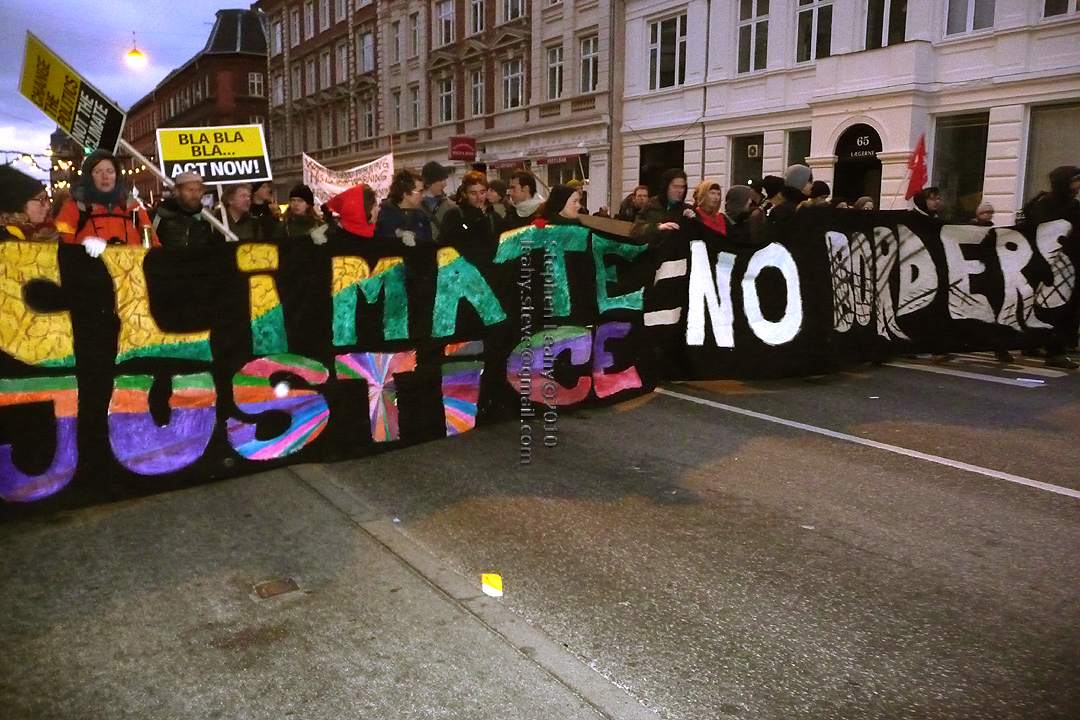
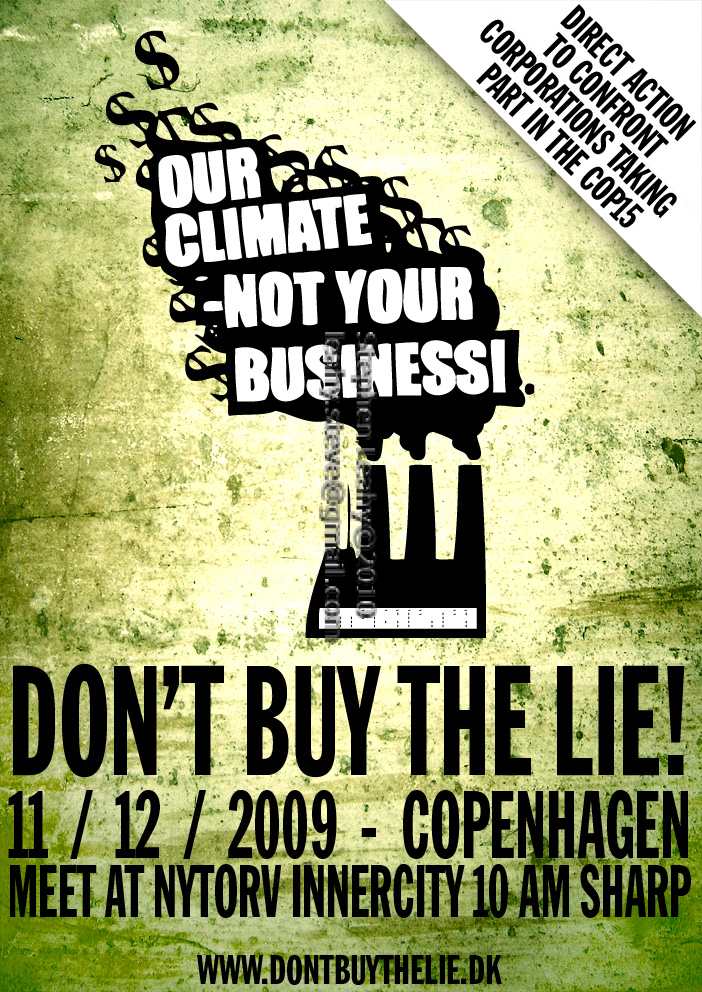
Canada’s “Mordor” Ensures Climate Treaty Failure in Copenhagen

Tar Sands, Riot Police & Hope in Copenhagen

— Green wishes, Steve

Free Markets Cause Chronic Hunger in Africa — There’s Plenty of Food but No Money

Written a few years ago but still relevant today. Ideology causes hunger not lack of food.

Free Markets Cause Chronic Hunger in Africa -- There's Plenty of Food but No Money By Stephen Leahy

BROOKLIN, Canada, Oct 20, 2006 (IPS)

[World Bank and International Monetary Fund free-market doctrines responsible for much of Africa’s hunger experts say]

It is a world of paradox and plenty: 852 million people are starving while one billion people are overweight, with 300 million of them considered medically obese. And the numbers of people whose health are at serious risk due to starvation or from obesity is rising rapidly. Wh … Read More

Biggest Conservation Agreement Ever — 2X the Size of Germany

By Stephen Leahy

UXBRIDGE, Canada, May 18, 2010 (IPS)

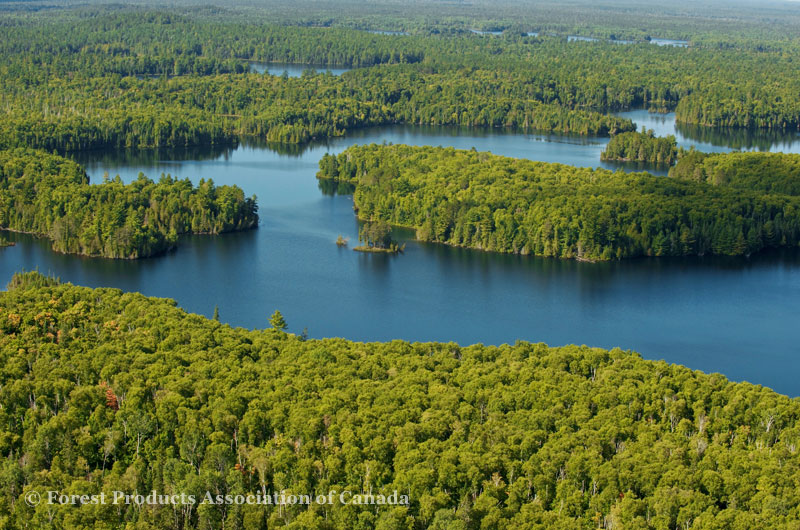
The decades-long war in Canada’s northwoods appears to be over. Environmental groups and Canadian logging companies linked arms Tuesday morning and agreed to work together to sustainably manage and protect 720,000 square kilometres of Canada’s boreal forest – an area twice the size of Germany.

“This is the biggest conservation agreement on the entire planet,” said Richard Brooks, spokesperson for participating environmental organisations and forest campaign coordinator of Greenpeace Canada.

The vast northern boreal forest is a broad band that circles the top of the world below the Arctic. It is the last great forest ecosystem – larger even than the Amazon – and the largest terrestrial storehouse of carbon. Made up primarily of pine and spruce trees, Canada’s boreal covers more than five million square kilometers, representing more than a quarter of the remaining intact forest on the planet. Just eight to 10 percent is currently protected.

“This is our best and last chance to save woodland caribou, permanently protect vast areas of the boreal forest and put in place sustainable forestry practices,” Brooks said in a press conference.

“We estimate there is roughly 20 billion tonnes of carbon in the trees and soils that are part of this agreement.”

That is equivalent to the annual emissions from 18 billion cars, he estimated. Continue reading

Why the BP Oil Spill Really Happened

We Can Live Without Oil

“It was a disaster that was going to happen, but business and government simply pretended it was not going to happen.”

[Update: Why the BP spill cannot be cleaned up]

By Stephen Leahy*

UXBRIDGE, Canada, May 10, 2010 (Tierramérica)

The policies and deals that contributed to the massive oil spill under way in the Gulf of Mexico are also jeopardising the Earth’s vital biological infrastructure, according to the Global Biodiversity Outlook 3, published Monday.

The British Petroleum oil spill of 5,000 barrels a day in the Gulf of Mexico, which began Apr. 20 when an explosion caused a rupture at the Deepwater Horizon oil rig, will have devastating consequences for marine life and coastal ecosystems for decades, experts say.

Similar business and policy decisions, multiplied thousands times over the last hundred years, have put the biological infrastructure that supports life in jeopardy, according to the Global Biodiversity Outlook 3 (GBO3) report, issued May 10 by the Convention on Biological Diversity.

The report is the most current assessment of the state of the planet’s biodiversity, the living organisms that provide us with health, wealth, food, fuel and other vital services.

In this study, “you can clearly see the outlines of what could be the sixth great extinction event of all life on Earth,” said Thomas Lovejoy, biodiversity chair at the Washington DC-based Heinz Centre for Science, Economics and the Environment, and chief biodiversity adviser to the president of the World Bank. Continue reading

Fish Companies Push Hard to Halt Tuna Collapse

By Stephen Leahy*

VICTORIA, Seychelles, Feb 8, 2010 (IPS)

In the Seychelles’ only cannery, the din of thousands of empty tuna cans rattling on narrow metal troughs is incredible as they bustle along, soon to be filled with Skipjack tuna that only days ago were swimming freely in the inky blue Indian Ocean.

At one end of the Indian Ocean Tuna Limited processing plant – the world’s second largest – cranes offload nets full of frozen tuna from huge international fishing boats called purse seiners while at the other end of the plant, 5,000 cans of tuna roll off the line every minute.

That’s a lot of tuna – roughly 400 metric tonnes a day. Can the Indian Ocean tuna bounty, which amounts to more than 20 percent of the world’s tuna, be sustained?

That was the key question at the first-ever Seychelles Tuna Conference that ended last weekend. It brought together nearly 200 scientists, fishers, environmentalists and policy makers here in Victoria, Africa’s smallest capital city, located 1,800 km east of Somalia and practically in the middle of the Indian Ocean.

“The boats are much more efficient today and the tuna stocks are declining and there is much less tuna than before, ” said Alain Fonteneau, a scientist with the L’Institut de recherche pour le développement, in Montpellier, France, who opened the conference. Continue reading

OUR Roof is on Fire: Dangerous Climate Change is Here

It will take lot of us – probably in the streets” to make politicians face the truth, says climate scientist James Hansen.

[Dangerous climate change is already upon us say some of the best scientists we have. But political leaders — and most of the public — don’t get it. This is an attempt to close the chasm between climate reality and climate denial fantasy. I wrote this at the end of the Copenhagen Climate meetings last December thanks in part to financial contributions from readers that allowed me to do the research and interviews. — Stephen]

Our leaders do not get the scale of the problem or the rapidity of the changes.”            — Andrew Weaver, climatologist at Canada’s University of British Columbia

Analysis by Stephen Leahy

COPENHAGEN Dec 22 ,2009 (IPS/TerraViva)

The roof of our house is on fire but our leaders, our economic system and we ourselves are ignoring the alarms and continuing to add more fuel. There are no exit doors in our house; there is nowhere else to go.

Dangerous climate change is already here.

The two-week climate summit in Copenhagen came to an end with disappointing results and details that are still vague.

A ”Copenhagen Accord” was agreed by the US, China, South Africa and India by Friday night. It was unclear which other countries were willing to support it.

But coral reefs are dying, the Arctic is melting and rising sea levels threaten the homes of millions. And we’re on our way to a planet-transforming four-degree C rise in global average temperatures in as soon as 50 years.

Future generations could face an utterly transformed planet, where large areas will be seven to 14 degrees C warmer, making them uninhabitable. In this world-on-fire, the one to two metre sea level rise by 2100 will leave hundreds of millions homeless, according to the latest science presented at the “4 Degrees and Beyond, International Climate Science Conference” at the University of Oxford in September.

That’s the science-based, slap-in-the-face reality as the Copenhagen climate talks fizzle out here with little progress Friday.

Our leaders do not get the scale of the problem or the rapidity of the changes. They don’t get that it must be dealt with now,” said Andrew Weaver, a climatologist at Canada’s University of British Columbia and lead author of the Intergovernmental Panel on Climate Change (IPCC) reports. Continue reading

A Tipping Point on Species Loss?

By Stephen Leahy

UXBRIDGE, Canada, Jan 13, 2010 (IPS)

Humanity is destroying the network of living things that comprise our life support system. While this sawing-through-the-branch-we’re-perched-on is largely unintentional, world leaders can’t say they didn’t know what’s going on: 123 countries promised to take urgent action in 2003 but have done little to stem the rising tide of extinctions in what’s known as the extinction or biodiversity crisis.

Species are going extinct at 1,000 times their natural pace due to human activity, recent science has documented, with 35 to 40 species vanishing each day, never to be seen again.

“The question of preserving biological diversity is on the same scale as climate protection,” German Chancellor Angela Merkel said in a speech in Berlin Monday at the official launch of the United Nations’ International Year of Biodiversity.

This week’s official launch will be followed by the first major event of the International Year, a high-profile meeting at the Paris headquarters of the U.N. Educational, Scientific and Cultural Organisation, Jan. 20-21.

“We need a sea change. Here, now, immediately – not some time in the future,” Merkel said.

While climate has been the focus in 2009, this year will be a global celebration of and action on biodiversity, Ahmed Djoghlaf, executive secretary of the Convention on Biological Diversity (CBD), told IPS from Berlin.

Continue reading