Say Goodbye to Coral Reefs

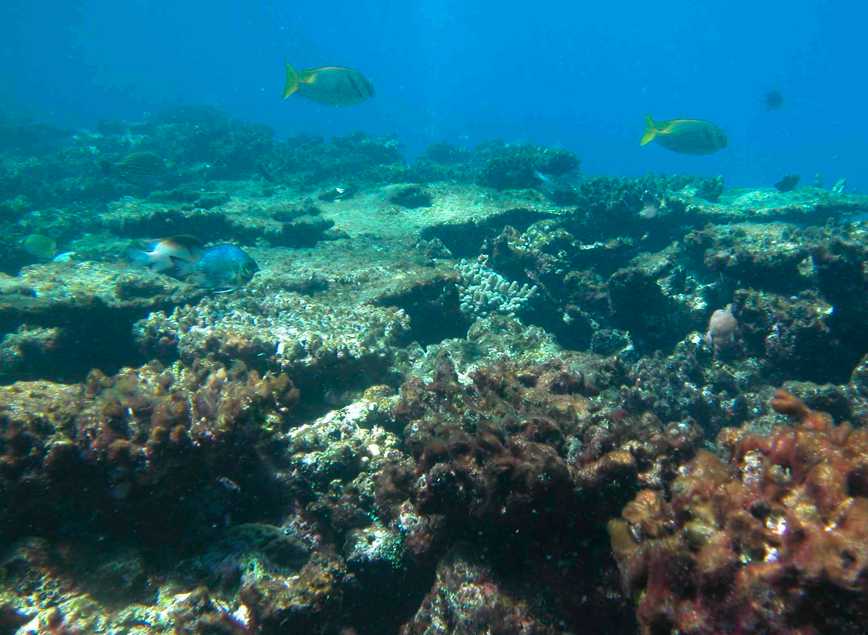
severely-degraded-reef-flat-at-kelso-reef-great-barrier-reef-australiaimage-c2a9-cathie-page-very-sml

Coral reefs will be the first global ecosystem to collapse in our lifetimes.

By Stephen Leahy

GIJON, Spain, May 22 (IPS) – The one-two punch of climate change that is warming ocean temperatures and increasing acidification is making the oceans uninhabitable for corals and other marine species, researchers said at a scientific symposium in Spain.

And now other regions are being affected. Acidic or corrosive waters have been detected for the first time on the continental shelf of the west coast of North America, posing a serious threat to fisheries, Richard Feely, an oceanographer with the U.S. National Oceanic and Atmospheric Administration (NOAA), told attendees in Gijon, Spain Wednesday.

More than 450 scientists from over 60 countries are participating in the “Effects of Climate Change on the World’s Oceans” symposium.

“Surface waters off the coast of San Francisco had concentrations of carbon dioxide that we didn’t expect to see for at least another 100 years,” Feely told IPS. Continue reading

Cell Phone Service, But No Toilets or Drinking Water for the Poor

By Stephen Leahy

[Why are there mobile phone networks and not sanitation networks?]

UXBRIDGE, Canada, Oct 20 (IPS) – It is a fact of the 21st century that some of the poorest regions of the world have good mobile phone coverage but no toilets or safe drinking water.

Simply installing toilets where needed and ensuring safe water supplies would do more to end crippling poverty and improve world health than any other possible measure, according to an analysis released Monday by the United Nations University (UNU).

“Water problems, caused largely by an appalling absence of adequate toilets in many places, contribute tremendously to some of the world’s most punishing problems, foremost among them the inter-related afflictions of poor health and chronic poverty,” said Zafar Adeel, director of the U.N. University’s Canadian-based International Network on Water, Environment and Health. Continue reading

A Green Lining in Market Meltdown?

By Stephen Leahy

UXBRIDGE, Canada, Oct 17 (IPS) – Clean and green technologies may end up a big winner in the current global financial crisis, say investment professionals.

Billions of dollars in new investments have been made in clean/green tech such as renewable energy and energy efficiency in recent years. And, despite fears of a major recession in the U.S., nearly all investment professionals and institutions reported plans to introduce new investment opportunities before the end of 2009, according a new survey of the 500-member Social Investment Forum (SIF), an association for socially and environmentally responsible investment firms.

“In the last two years the growth in the green economy has been tremendous,” said Jack Robinson, president of Winslow Management Company in Boston.

“But the huge win for the green economy is the U.S. bank bailout programme,” Robinson, a green investment expert, told IPS.

It turns out the near collapse of the U.S. financial system has a silver lining for the long-cash-starved alternative energy sector. Continue reading

Future Prosperity Linked to Green Technologies Bets Mexico…yes, Mexico

[Mexico exports$ billions in solar photovoltaic products and hopes to install 23 million square meters of solar panels by 2020]

By Stephen Leahy

TORONTO, Oct 3 (Tierramérica) – Achim Steiner, the eloquent executive director of the United Nations Environment Programme (UNEP), believes that Mexico could take a leadership role in the new “green” economy.

“UNEP wants to document new and creative efforts towards creating a prosperous, green economy,” said Steiner, referring to his recent meeting with Mexico’s President Felipe Calderón.

Stephen Leahy interviewed Steiner for TIERRAMÉRICA (TA)

TA: Mexico, like all Latin American countries, has traditionally looked to its natural resource base — oil, gas, minerals, agriculture — to drive economic growth. Do you see this changing?

ACHIM STEINER: I think Mexico is at the crossroads between the traditional resource-driven economy and the coming new green economy. Future prosperity, in my view, is in green technologies. Mexico is already moving in this direction. It exported solar photovoltaic products worth 2.3 billion dollars last year alone. Continue reading

‘Bailout’ for Oil Companies $20-40 Billion (and maybe more) every year


By Stephen Leahy

UXBRIDGE, Canada, Sep 30 ’08 (IPS)

Why do U.S. oil companies — some of the most profitable corporations on the planet — receive 20 to 40 billion dollars a year in subsidies from the U.S. government?

And, in a time of skyrocketing oil prices and profits, why did the George W. Bush administration in 2005 authorise an additional 32.9 billion dollars in new subsidies over a five-year period?

“Those are very good questions,” said Doug Koplow of Earth Track, Inc., an independent energy information research organisation in Boston, Massachusetts.

“I don’t have a good answer other than to say we’ve been subsidising American oil companies since 1918,” Koplow told IPS.

Koplow’s 2007 report to the Organisation for Economic Cooperation and Development puts the annual U.S. subsidy at an average of 39 billion dollars a year, when the costs of guarding oil lanes in the Persian/Arab Gulf, and the Alaska Pipeline are included. This does not include any costs from the Iraq war.

Official U.S. government statistics from the Energy Information Administration (EIA) offer a different picture, stating that the oil and gas industry only received 2.15 billion dollars in 2007.

“The EIA has a very narrow definition of what constitutes a subsidy,” said Koplow.econ-v-envir-franke1

Like many industrialised countries, the U.S. subsidises oil production, not oil consumption. Consumption subsidies reduce the cost of buying fuel to the public while production subsidies reduce the cost of finding and producing oil for oil companies.

Experts agree that both forms of subsidies encourage consumption and thus increase the price of oil.

Estimating U.S. oil and gas subsidies is very challenging. Subsidies rarely involve cash payments. Instead scores of U.S. government agencies and departments create hundreds of programmes to support the U.S. energy sector. And there is no requirement for the federal government to keep track of all this.

Among the most common subsidies are construction bonds and research-and-development programmes at low interest rates or tax-free, assuming the legal risks of exploration and development in a company’s stead and income tax breaks. Despite record high prices at the pump, the federal sales tax on petroleum products is lower than average sales tax rates for other goods. And on it goes.

Originally these production subsidies were intended to help the nascent industry meet a growing nation’s energy needs. Despite record-high prices, that rationale remains firmly in place. In 2007, U.S. oil giant Exxon corporation made history with 40.7 billion dollars in profits, the most any U.S. company has ever achieved in a single year.

And subsidy programmes from 1918 are still in place.

“I’m not aware of any oil and gas subsidy that has ever been phased out,” said Koplow, the leading expert on U.S. energy subsidies.

Energy subsidies are often simply hidden from public scrutiny. It’s only recently been revealed that 40 companies granted leases between 1996 and 2000 for drilling in the Gulf of Mexico do not have to pay royalties for the publicly-owned resource. This is worth nearly a billion dollars a year in lost revenue to the federal government, according to a 2008 study by Friends of the Earth (FOE), a U.S. environmental NGO, and may ultimately total 50 billion dollars.

That study also revealed that the Energy Policy Act of 2005 would generate an additional 32.9 billion dollars in new subsidies in the form of tax breaks, reduced royalty payments, and accounting gimmicks over a five-year period.

“The report only includes the explicit subsidies we could find,” said Erich Pica, an energy analyst at FOE.

For complete article see US: Great Place for the Oil Business

It gets better — June 09: New Story: New Way to Give Money to Oil Companies – Economic Stimulus Packages

Monster Ozone Hole (Again) – But your skin would fry in 3 mins without 20-yr old Ozone Treaty

By Stephen Leahy

UXBRIDGE, Canada , Sep 16 (IPS) – In hard economic times, protecting the environment is often seen as a luxury — or ignored completely. But had that attitude prevailed 20 years ago when it came to taking action to protect the ozone layer, skin cancer rates would have soared and climate change would be even more dramatic than it is today.

[Update April 09: NASA study now shows that without action UV radiation would have increased 650 per cent in mid-latitudes ie Washington DC. OUCH! fried skin in 5 mins or less. http://bit.ly/QJYN%5D

“We forget that things could have been far worse without international action in the form of the Montreal Protocol,” said U.N. Secretary-General Ban Ki-moon Tuesday as part of the annual World Ozone Day celebration.

And things are bad enough.

A massive ozone hole over Antarctica is making its annual appearance at a near record-sized 27 million square kilometres as measured by the U.S. National Aeronautics and Space Administration (NASA) on Sep. 13. This is the 25th “anniversary of the hole” and it likely has another 50 to 60 years of life left. Continue reading

Peak Soil: The Silent Global Crisis

30% of farmland can no longer grow food

By Stephen Leahy

(First published in the Earth Island Journal Spring 2008)

A harsh winter wind blew last night, and this morning the thin snow cover has turned into a rich chocolate brown. The dirt covering the snow comes from cornfields near my home that were ploughed following the harvest, a common practice in southern Ontario and in the corn-growing regions of the US Midwest.

A handful of this dirty snow melts quickly, leaving a thin, fine-grained wet mess. It doesn’t look like much, but the mucky sludge in my hand is the prerequisite for life on the planet.

“We are overlooking soil as the foundation of all life on Earth,” says Andres Arnalds, assistant director of the Icelandic Soil Conservation Service. Arnalds is an eloquent spokesperson for the unheralded emergency of soil erosion, a problem that is reducing global food production and water availability, and is responsible for an estimated 30 percent of the greenhouse gases emissions.

“Land degradation and desertification may be regarded as the silent crisis of the world, a genuine threat to the future of humankind.”

This article  depends on public support. Click here learn more.

Continue reading

‘Do What You Can’ Powers 1st Climate Change Village (Pub incl.)

By Stephen Leahy, Inter Press Service News Agency

The village of Ashton Hayes in Cheshire, England is aiming to be the first carbon-neutral community in the England (Golden Lion pub included).

In just two years, the 1,000 residents have saved 20 percent on their energy costs and transformed their community.

“It’s been great fun and an amazing boost in community spirit,” said Garry Charnock, who put the idea to some friends in the local pub. “I thought they’d think of me as a bit of a crank, but they were all for it.”

More than 75 percent of the village showed up for the first meetings, something that had never happened before. Charnock told IPS that people are worried about climate change and want to do something but are reluctant to do it on their own. Unwittingly, Charnock’s notion of a carbon-neutral village unleashed the power of community. Continue reading

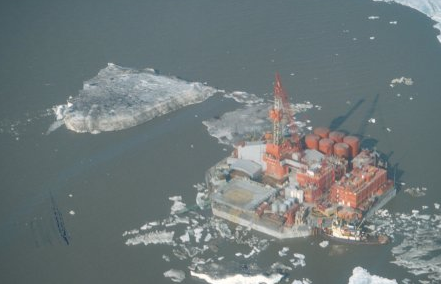
Arctic Oil and Gas Rush Alarms Scientists

By Stephen Leahy

[See also more recent story: Arctic Ice Gone in 5 Years – First Time in One Million Years; see also other Arctic and oil stories below. US and Canada to start offshore drilling in the Arctic summer 2010 – your support is needed to investigate and report on this. ]

UXBRIDGE, Canada, Sep 8 2008 (IPS)

As greenhouse gas pollution destroys Arctic ecosystems, countries like Canada are spending millions not to halt the destruction but to exploit it.

Late last August, Canada announced a 93.7-million-dollar prospecting programme to map the energy and mineral resources of the region. There are “countless other precious resources buried under the sea ice and tundra,” Prime Minister Stephen Harper said during the announcement. The government’s mapping effort is expected to trigger 469 million dollars in private sector resource exploration and development.

“It is estimated that a quarter of the world’s undiscovered oil and gas lies under the Arctic,” Harper said.

This scramble to exploit some of the most environmentally delicate regions of Earth has alarmed international experts who are meeting this week in Iceland to make recommendations to the United Nations and world governments on how to protect the polar regions.

“Many experts believe this new rush to the polar regions is not manageable within existing international law,” says A.H. Zakri, director of the United Nations University’s Yokohama-based Institute of Advanced Studies (UNU-IAS), co-organisers of the conference with Iceland’s University of Akureyri. Continue reading