Hurricane Felix Category Five — Pix

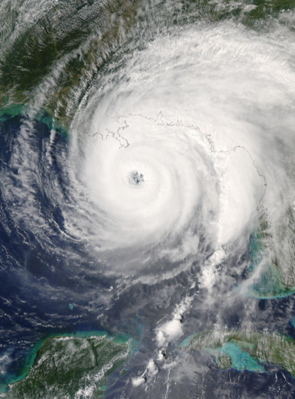
picture-4.pngHurricane Felix, the second Cat 5 storm in two weeks is set to hit Central America Monday. Here’s a satellite image from NOAA:

Tues AM Update: Felix hits Nicaragua as Cat 5 — first time two Cat 5 storms have made landfall in one season.

To learn more about modern hurricanes and the potential link to climate change check out

Steve’s Hurricane Handbook 2007

This is a short ebook  contains a collection of the most interesting quotes and facts about hurricanes from scientists and other experts.


Dirt: The Silent Global Crisis

Dirt Isn’t So Cheap After All


By Stephen Leahy

Aug 30 (IPS) – Soil erosion is the “silent global crisis” that is undermining food production and water availability, as well as being responsible for 30 percent of the greenhouse gases driving climate change.

“We are overlooking soil as the foundation of all life on Earth,” said Andres Arnalds, assistant director of the Icelandic Soil Conservation Service.

“Soil and vegetation is being lost at an alarming rate around the globe, which in turn has devastating effects on food production and accelerates climate change,” Arnalds told IPS from Selfoss, Iceland, host city of the International Forum on Soils, Society and Climate Change which starts Friday.

Along with many other international partner institutions, Iceland is marking the centenary of its Soil Conservation Service by convening this forum of experts.

Every year, some 100,000 square kilometres of land loses its vegetation and becomes degraded or turns into desert.

“Land degradation and desertification may be regarded as the silent crisis of the world, a genuine threat to the future of humankind,” Arnalds said.

Food production has kept pace with population growth by increasing 50 percent between 1980 and 2000. But it is an open question whether there will be enough food in 2050 with an estimated three billion more mouths to feed.

That means more food has to be produced within the next 50 years than during the last 10,000 years combined he noted.

“Global food production per hectare is already declining,” said Zafar Adeel, director of the United Nations University’s Canadian-based International Network on Water, Environment and Health.

There are a number of reasons for this decline, including the fact that soil degradation is producing growing shortages of water. Soil and vegetation act as a sponge that holds and gradually releases water, Adeel explained.

The newest challenge to food production and conserving land and water resources is the boom in vegetable-based biofuels, says Andrew Campbell, Australia’s first National Landcare Facilitator.

“Soils are under greater pressure than ever before,” Campbell said in an interview. “Governments around the world are subsidising crops to produce biofuels.”

For complete article see Dirt Isn’t So Cheap After All.

Steve’s Hurricane Handbook 2007

hurri-handbk.png One year before Katrina devastated New Orleans and the Gulf Coast, scientists feared global warming was going to make hurricanes more powerful.

Five Little-Known Facts:

  1. “These are not natural disasters, they are environmental disasters.”
  2. NOAA study found that Katrina was only a Category 1 or perhaps 2 on landfall
  3. Storms in the NorthWest Pacific Ocean are 75 percent more powerful than they were 30 years ago
  4. Climate change has the potential to raise oceans temperatures high enough create future hypercanes — 600 kilometre per hour superstorms
  5. “The U.S. has a very big societal problem when it comes to coping with hurricanes” (ok, maybe you knew that)

This is a sampling of the little known information about hurricanes from respected scientists collected in the modestly titled “Steve’s Hurricane Handbook 2007 – Lessons Learned 2004-2006? “ (1.2 mb pdf). It’s a compendium of the most interesting quotes and facts about hurricanes from hurricane experts since 2004. Continue reading

Flying Blind Into a Monster Hurricane Season

ivan.jpgFlying Blind Into Monster Storm Season

By Stephen Leahy

“…New Orleans is at the same risk as it was before Katrina.”
— Stephen Leatherman, director of the International Hurricane Research Center

Aug 24 (IPS) – Category Five Hurricane Dean is just the first of several monster storms coming this hurricane season, meteorologists predict.

The United States and other countries remain highly vulnerable, even as budget cuts to the National Aeronautics and Space Administration (NASA) imperil hurricane prediction and research.

“The U.S. will experience landfalls of between two and four major hurricanes this year,” said Gerry Bell, lead seasonal hurricane forecaster at the National Oceanic and Atmospheric Administration (NOAA) Climate Prediction Centre in Maryland.

“In addition to Dean, the Caribbean region can expect two or three more major storms,” Bell told IPS. Continue reading

Pollute for Free – America’s Economic Model

copyright Pembina Institute

If ever there was a project where sustainable accounting is needed, Alberta tar sands oil extraction is it.” — Mindy S. Lubber

Mindy Lubber, president of Ceres, a leading coalition of investors and environmental groups working on sustainability issues notes in this article today that the current “accounting system meant that companies were long able to “externalize” natural resource costs. In other words, they could pollute for free without paying for environmental damage and cleanups. Society and taxpayers shouldered these costs instead.”

Reform of this not-grounded-in-reality accounting and economic system is essential to move towards sustainable societies.

Canada’s oil or tar sands that supply the US with much of its oil is devastating huge swaths of pristine boreal forest, ruining wild rivers and polluting the air of the north Lubber says. For more on the environmental impacts of the biggest industrial project on the planet see Destroying Canada’s Boreal Forest for America’s Oil

Greenland on Verge of Meltdown

Copyright Alfred Wegener Institute for Polar and Marine Research Deniers Jump on NASA Gaff, While Greenland on Verge of Meltdown
By Stephen Leahy

Aug 16, 2007 (IPS) – Scientists warn that climate change tipping points are imminent, and will lead to potentially catastrophic events like a seven-metre sea level rise. Meanwhile, conservatives in the North American media are focusing on a NASA admission of a climate calculation error.

First the error.

Continue reading

Who Owns the Arctic?

arctic-oil-rig-on-ice.pngWith Russia planting its flag 14,000 feet under the North Pole yesterday, oil and gas exploration and conflict over territorial rights in the vast Arctic ocean basin is just beginning.

“The Arctic is one of the last frontiers, representing about 25 percent of the last unexplored potential oil and gas reserves in the world,” says Michael Byers, Canada research chair in Global Politics and International Law at the University of British Columbia

Sovereignty Claims Revived in the Arctic
By Stephen Leahy

(Originally published in 2006)

TORONTO, Apr 22 (Tierramérica) – An expedition is under way to help Canada and Denmark prove their sovereignty over certain areas of this frozen region, and its potential sources of petroleum and natural gas.

Canada and Denmark launched a joint expedition in early April to map the floor of the Arctic Ocean and help the two countries prove their claims of sovereignty over areas potentially rich in petroleum and natural gas.

Continue reading

Drowning Country: Tuvalu Symbol of Catastrophe and Hope

Tiny Tuvalu Fights for Its Literal Survival
By Stephen Leahy


Credit:NASA

Funafuti atoll seen from 125 miles above the Eart

VIENNA, Jul 27 (IPS/IFEJ) – The second smallest nation on Earth hopes to turn itself into an example of sustainable development that others can emulate.

But the South Pacific island nation of Tuvalu and its 10,500 people may only have 50 years or less to set that example before it is swept away by rising sea levels due to climate change.

“Construction of the first ever biogas digestor on a coral island is complete,” said Gilliane Le Gallic, president of Alofa Tuvalu, a Paris-based group that is working with the local Tuvaluan government.

Located on a small islet near Tuvalu’s capital of Funafuti, the biogas digester uses manure from about 60 pigs to produce gas for cooking stoves. More importantly, more than 40 Tuvaluans have been trained at the newly opened Tuvalu National Training Centre on renewable energy.

“We are trying to create simple, workable models of sustainable development that can be reproduced by others elsewhere,” Le Gallic, a documentary filmmaker, told IPS from Paris.

Continue reading

Carbon Project Endangers the Galápagos

img_0235.jpg


By Stephen Leahy

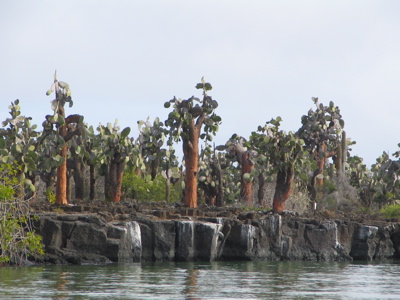
A company is preparing to enrich seawater with iron in order to promote phytoplankton growth and the absorption of carbon from the atmosphere near the environmentally-protected Galápagos Islands.

PUERTO AYORA, Galápagos, Ecuador, Jul 9 ’07 (Tierramérica).- Later this month a U.S. company, Planktos Inc., plans to dump 100 tons of iron dust into the ocean near Ecuador’s Galápagos Islands, despite opposition from environmental groups and marine scientists.This will be the first-ever commercial effort to reduce carbon dioxide in the atmosphere, one of the main gases blamed for climate change, by using iron particles to create a 10,000-square-kilometer “plankton bloom”.

Planktos says the extra volume of these small, floating organisms will absorb large amounts of CO2 from the atmosphere and take it deep into the sea. And this method may be the fastest and most powerful tool to battle climate change.

img_0508.jpg

“The currents will likely bring the bloom into the [Galápagos] Marine Reserve,” covering 133,000 sq. km, the world’s third largest marine reserve, says Washington Tapia, director of the Galápagos National Park, which includes the reserve. Continue reading

Greenest Ethanol Still Unproven

Sugarcane field Queensland Australia Copyright Renate Leahy 2004Cellulosic Ethanol – Clean but Worth Unproven
By Stephen Leahy

Jun 30 (IPS) – With biofuels being blamed for rising food prices and offering limited environmental benefits, diverse luminaries like former U.S. vice-president Al Gore and Microsoft’s Bill Gates are throwing their considerable support behind cellulosic ethanol, a second generation biofuel.

copyright Pembina InstituteThe big benefit cellulosic ethanol has is that virtually any plant material — left-over corn stalks, sawdust, wood chips, native perennials grown on marginal lands — could be turned into ‘green gold’, a low-emission fuel for the transportation sector.

“Cellulosic ethanol would reduce carbon emissions 88 percent over gasoline,” says Bruce Dale, a chemical engineer at the Biomass Conversion Research Laboratory at Michigan State University.
Continue reading