Too many of us, taking too much and having too big an impact. Will need 27 planet Earths by 2050

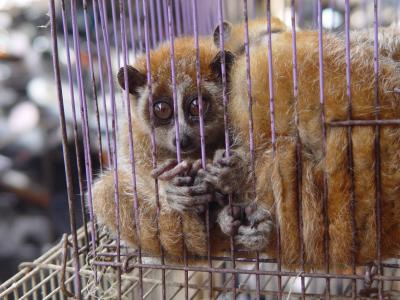
Slow loris from an illegal wildlife market in Southeast Asia

This story was featured on the IPS wire and on the Al Jazeera network . It’s about a study showing that national parks, conservation and protected areas have not and cannot halt the decline in biodiversity that is our life support system. It is hopeless without addressing the root cause of this and all other environmental problems: too many of us, taking too much and having too big of an impact. On our present course we’ll need 27 planet Earths by 2050 they conclude. — Stephen 

By Stephen Leahy

UXBRIDGE, Canada, Jul 29, 2011 (IPS)

Protecting bits of nature here and there will not prevent humanity from losing our life support system. Even if areas dedicated to conserving plants, animals, and other species that provide Earth’s life support system increased tenfold, it would not be enough without dealing with the big issues of the 21st century: population, overconsumption and inefficient resource use.

Without dealing with those big issues, humanity will need 27 planet Earths by 2050, a new study estimates.

The size and number of protected areas on land and sea has increased dramatically since the 1980s, now totaling over 100,000 in number and covering 17 million square kilometres of land and two million square kilometres of oceans, a new study reported Thursday.

This independent environmental journalism depends on public support. Click here learn more.

But impressive as those numbers look, all indicators reveal species going extinct faster than ever before, despite all the additions of new parks, reserves and other conservation measures, according to the study published in the journal Marine Ecology Progress Series.

“It is amazing to me that we haven’t dealt with this failure of protected areas to slow biodiversity losses,” said lead author Camilo Mora of University of Hawaii at Manoa.

“We were surprised the evidence from the past 30 years was so clear,” Mora told IPS.

The ability of protected areas to address the problem of biodiversity loss – the decline in diversity and numbers of all living species – has long been overestimated, the study reported. The reality is that most protected areas are not truly protected. Many are “paper parks”, protected in name only. Up to 70 percent of marine protected areas are paper parks, Mora said.

The study shows global expenditures on protected areas today are estimated at six billion dollars per year, and many areas are insufficiently funded for effective management. Effectively managing existing protected areas requires an estimated 24 billion dollars per year – four times the current expenditure.

“Ongoing biodiversity loss and its consequences for humanity’s welfare are of great concern and have prompted strong calls for expanding the use of protected areas as a remedy,” said co-author Peter Sale, a marine biologist and assistant director of the United Nations University’s Institute for Water, Environment and Health.

“Protected areas are a false hope in terms of preventing the loss of biodiversity,” Sale told IPS.  Continue reading

8.7 Million Species Run Spaceship Earth and Our Life Support System

Charonia tritonis Credit: David Burdick

We share the planet with 8.7 million species. We’re unconcerned about the ongoing loss of 200 species a day since we fail to realize they are our life support system. And we don’t know how many or which species are needed to keep things running. There is metaphor in the article to make that clearer I hope. We are not even close to coming to grips with this issue.  — Stephen

“If the decline in species around us is not significant then I ask what is?”

By Stephen Leahy

UXBRIDGE, Canada, Aug 23, 2011 (IPS)

 The life support system that generates the planet’s air, water, and food is powered by 8.7 million living species according to the newest and best estimate. We know next to nothing about 99 percent of those unique species – except that lots of them are going extinct.

“It is like a complicated engine where we only know about the major pieces. If we lose one or some of the small hidden pieces that play a critical role the engine might stop working,” said Camilo Mora of the University of Hawaii and Dalhousie University in Halifax, Canada.

Many species may vanish before we even know of their existence, of their unique niche and function in ecosystems,” Mora told IPS.

Until now there wasn’t even a decent guesstimate about how many species exist currently: three million? 100 million? Now a new validated analytical technique has pined down the big number to 8.7 million species (give or take 1.3 million).

The analysis published Tuesday in the journal ‘PLoS Biology’ estimated there are 6.5 million species found on land and 2.2 million – about 25 percent of the total – dwelling in the ocean depths.

This independent environmental journalism depends on public support. Click here learn more.

“Not knowing the answer to this fundamental question really highlights our ignorance about life on this planet,” said Boris Worm of Dalhousie University, co-author of the study along with Mora.

“We’re so fixated on the human enterprise we don’t recognise nature’s enterprise… the 8.7 million species that run the planet and provide the air we breathe, the water we drink and the soil we grow our crops in,” Worm told IPS. “If the decline in species around us is not significant then I ask what is? This is all we have on this planet, the only planet that holds life.” Continue reading

U.S. Awash in Oil and Lies, Report Charges | More Oil Development Risks Catastrophe

Canada’s Alberta Tar Sands Mining Pits

By Stephen Leahy

UXBRIDGE, Canada, Sep 2, 2011 (IPS)

With four times as many oil rigs pumping domestic oil today than eight years ago and declining domestic demand, the United States is awash in oil.

The country’s oil industry is primarily interested in who will pay the most on the global marketplace. They call that “energy security” when it suits, but in reality it is “oil company security” through maximising profits, say energy experts like Steve Kretzman of Oil Change International, an NGO that researches the links between oil, gas and coal companies and governments.

The only reason U.S. citizens may be forced to endure a risky, Canadian-owned oil pipeline called Keystone XL is so oil companies with billion-dollar profits can get the dirty oil from Canada’s tar sands down to the Gulf of Mexico to export to Europe, Latin America or Asia, according to a new report by Oil Change International released Wednesday.

“Keystone XL will not lessen U.S. dependence on foreign oil, but rather transport Canadian oil to American refineries for export to overseas markets,” concludes the report, titled “Exporting Energy Security“.

Little of the 700,000 to 800,000 barrels of tar sands oil pumped through the 2,400-kilometre, seven-billion-dollar Keystone XL will end up in U.S. gas tanks because the refineries on the Gulf Coast are all about expanding export markets. One huge refinery operator called Valero has been touting the potential export revenues of tar sands oil to investors, the report found.

Because Keystone XL crosses national borders, President Barack Obama has to issue a permit declaring the pipeline serves the “national interest” in order to be approved.

“The only way Keystone XL could be considered in the national interest is if you equate that with profits for the oil industry,” said Kretzman, who wrote the report. Continue reading

Is Rio Earth Summit 2.0 Doomed to Fail?

By Stephen Leahy

UXBRIDGE, Mar 7, 2011 (IPS)

Timed to coincide with the 20th anniversary of the 1992 Rio de Janeiro Earth Summit, the Rio 2012 Summit hopes to recapture the optimism of that earlier era.

At the June 2012 Rio Summit it is hoped countries will agree on policies to move toward a green economy from the present “brown” economic system driven by fossil fuel energy and the serial depletion and degradation of natural resources and ecosystems. A green economy promises to bring good jobs, clean energy and water while ensuring a more sustainable and fairer use of resources.

“If we continue on our current path, we will bequeath material and environmental poverty, not prosperity, to our children and grandchildren,” said Rio 2012 Secretary-General Sha Zukang.

“Rio 2012 will be one of the most important events in the coming decades,” Zukang said

Continue reading

10 Years in the Amazon: The Forest Vanishes Before Your Eyes

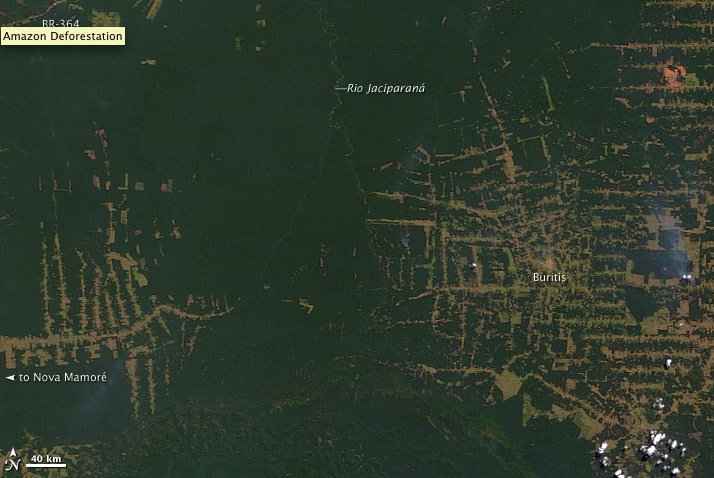
Amazon Forest 2000 - The state of Rondônia in western Brazil

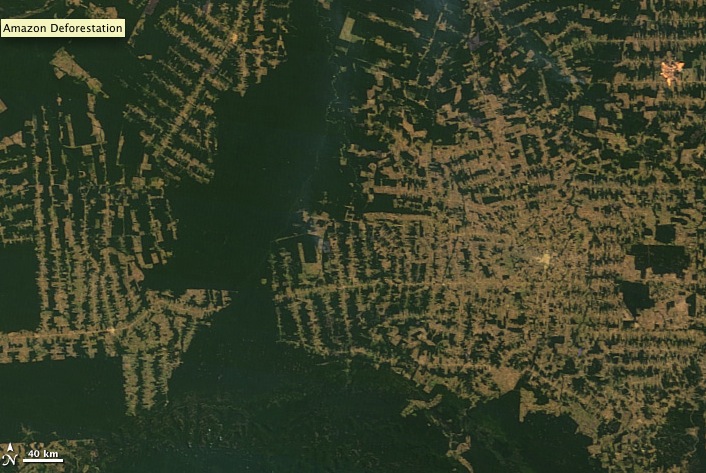
The state of Rondônia in western Brazil — once home to 208,000 square kilometers of forest (about 51.4 million acres), an area slightly smaller than the state of Kansas — has become one of the most deforested parts of the Amazon. In the past three decades, clearing and degradation of the state’s forests have been rapid: 4,200 square kilometers cleared by 1978; 30,000 by 1988; and 53,300 by 1998. By 2003, an estimated 67,764 square kilometers of rainforest—an area larger than the state of West Virginia—had been cleared. Source: Amazon Deforestation – NASA

See also: Amazon Drought Accelerating Climate Change   The REAL Amazon-gate: On the Brink of Collapse Reveals Million $ Study

Amazon Forest 2010 - The state of Rondônia in western Brazil

Super Cyclone Yasi leaves cassowary in greater peril

The 6ft bird was at risk before the storm hit Australia. Now its survival is even more doubtful

[As Yasi hit the Queensland coast Feb 2 I wondered about how it might affect the endangered cassowary having been confronted by one of these amazing and sometimes aggressive birds in the jungle near Mission Beach a few years ago. Sorry to say it doesn’t look good for a truly incredible species. — Stephen]

By Roger Maynard

Sunday, 27 February 2011

The cassowary, one of the world’s largest birds, beaten for size and weight only by the ostrich and emu, is in a fight for its life. The flightless bird has talons that can tear open a human with one swipe, but it is normally a placid and shy fruit-eater. Now it is in peril as food supplies run low in the wake of Cyclone Yasi, which flattened vast swathes of rainforest in northern Queensland earlier this month.

Emergency food drops have already been made in the Mission Beach area, south of Cairns. The Queensland government has set up more than 50 feeding stations to supplement the birds’ diet.

Graham Lauridon, a local vet, said the main threat is to younger cassowaries, unable to fend for themselves, who have to compete for food with adult birds. “There’s a strong likelihood we will lose quite a few in the next six months,” he said.

via Cyclone puts cassowary in greater peril – Nature, Environment – The Independent.

Permafrost Melt Soon Irreversible Without Major Fossil Fuel Cuts

Thawing Permafrost Will Accelerate Climate Disruption

By Stephen Leahy

UXBRIDGE, Canada, Feb 17, 2011 (IPS)

Thawing permafrost is threatening to overwhelm attempts to keep the planet from getting too hot for human survival.

Without major reductions in the use of fossil fuels, as much as two-thirds of the world’s gigantic storehouse of frozen carbon could be released, a new study reported. That would push global temperatures several degrees higher, making large parts of the planet uninhabitable.

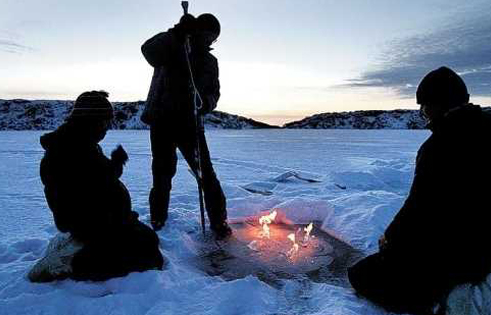
Once the Arctic gets warm enough, the carbon and methane emissions from thawing permafrost will kick-start a feedback that will amplify the current warming rate, says Kevin Schaefer, a scientist at the National Snow and Ice Data Center (NSIDC) in Boulder, Colorado. That will likely be irreversible.

This independent environmental journalism depends on public support. Click here learn more.

And we’re less than 20 years from this tipping point. Schaefer prefers to use the term “starting point” for when the 13 million square kilometres of permafrost in Alaska, Canada, Siberia and parts of Europe becomes a major new source of carbon emissions.

“Our model projects a starting point 15 to 20 years from now,” Schaefer told IPS. Continue reading
Amazon Drought Accelerating Climate Change

World’s Forests Losing Their Green. Billions of tonnes of CO2 Released

By Stephen Leahy

UXBRIDGE, Canada, Feb 3, 2011 (IPS)

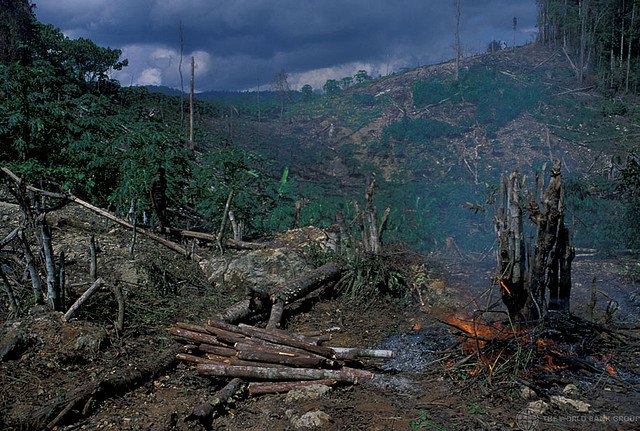
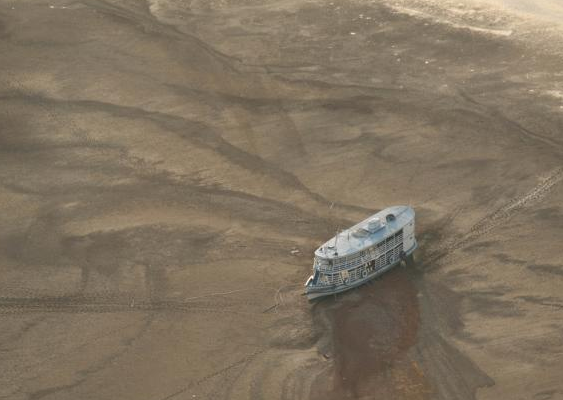
Last year’s severe drought in the Amazon will pump billions of tonnes of additional carbon dioxide (CO2) into the atmosphere, a new report has found.

Researchers calculate that millions of trees died in 2010, which means the Amazon is soaking up much less CO2 from the atmosphere, and those dead trees will now release all the carbon they’ve accumulated over 300 or more years.

The widespread 2010 drought follows a similar drought in 2005 which itself will put an additional five billion tonnes of CO2 into the atmosphere, Simon Lewis of University of Leeds in the UK and colleagues calculate in a study published Thursday in Science. The United States emitted 5.4 billion tonnes of CO2 from fossil fuel use in 2009.

The two droughts will end up adding an estimated 13 billion tonnes of additional CO2 – equivalent to combined emissions in 2009 from China and the U.S. – and likely accelerating global warming.

“New growth in the region will not offset those releases,” Lewis told IPS.

This independent environmental journalism depends on public support. Click here learn more.

After the 2005 drought, Lewis and Brazilian scientist Paulo Brando from the Amazon Environmental Research Institute (IPAM) led teams of researchers on the ground to assess the impacts. They determined that only a few trees died per hectare, and so while the forest canopy cover looked relatively unchanged, there had been a significant change in the forest’s carbon balance. Continue reading

Emission Reductions Punted to Durban, Breakthrough Seen on Forests

As carbon emissions bend upward Canada’s Harper government singled out as worst at climate talks. Again.

By Stephen Leahy*

CANCÚN, Mexico, Dec 11, 2010 (IPS/TerraViva)

If success is measured by delaying difficult decisions, then the Cancún climate meeting succeeded by deferring crucial issues over financing and new targets to reduce greenhouse gas emissions to the next Conference of the Parties meeting a year from now in Durban, South Africa.

International negotiations to address climate change proceeded at a glacial pace in the palatial, over-air-conditioned Moon Palace Resort in Cancún. After two long weeks, final talks dragged on into the early hours of Saturday morning, with Bolivia’s refusal to accept a weak agreement that puts the world on a path that “could allow global temperatures to increase by more than four degrees”, said Pablo Solón, Bolivia’s chief negotiator.

In the end, Bolivia’s continued objections were drowned out by applause and cheering by more than 190 national delegations as the chair of the meeting, Mexico’s foreign secretary Patricia Espinosa, gaveled the meeting to a close declaring “a consensus without Bolivia”.

“The Cancún text is a hollow and false victory that was imposed without consensus,” Bolivia said in a final statement.

Based on the science, Bolivia is not wrong.

The World Meteorological Organisation declared last week that the decade will close as the hottest 10- year period on record. The 100+ pages that form the “Cancún Agreements” will do nothing to curb greenhouse gas emissions warming the planet, but did revive the U.N. climate negotiation process after its near death in Copenhagen last year.

This article was made possible thanks to contributions from Janos Mate, James Creskey. Extra special thanks to monthly contributors Julie Davis, Aidan Constable, Patricia A Warwick, Judith A Leahy

[Due to the high costs of covering such important events, support is needed from readers like you. Please consider making a small automatic monthly contribution as a fair exchange for these articles – for more information.] Continue reading

As World Warms, Southern Africa Will Cook In Coming Decades

“A four-degree C world would be horrendous and must be avoided at all costs”

By Stephen Leahy*

MEXICO CITY, Dec 7, 2010 (IPS/TerraViva)

Africa will be amongst the hardest hit regions of the world as the climate heats up, threatening the continent’s food security, experts agree. If global temperatures rise 2.0 degrees C, southern Africa will warm an additional 1.5 degrees to a 3.5-degree increase on average.

Such temperatures could be reached as early as 2035. The Hadley Centre for Climate Prediction and Research in Britain recently advised that a 4.0-degree C rise in the global average temperature could be reached as soon as 2060 if the ever-increasing emissions of carbon dioxide and other greenhouse gases are not curbed.

The prognosis for agriculture and food security in SSA (Sub-Saharan Africa) in a 4°C+ world is bleak,” write the authors of a special issue of the Philosophical Transactions of the Royal Society to be published next month.

“A four-degree C world would be horrendous and must be avoided at all costs,” said Philip Thornton of the International Livestock Research Institute in Nairobi, Kenya and co-author of a paper in the Royal Society special issue “Four degrees and beyond”.

“This special issue is a call to action so we can avoid such a future,” Thornton told TerraViva.

Even if a new climate treaty came out of the final week of the 16th meeting of the Conference of Parties (COP) of the U.N. Framework Convention on Climate Change in Cancún, 2.0 degrees C looks inevitable, he said. No one is realistically expecting a comprehensive climate treaty for several years. This means southern Africa can expect to be 3.5 degrees C hotter and much drier in future, he said.

“It is going to get very difficult for rain-fed agriculture in this region,” Thornton warned.

This article was made possible by a contribution from Brewster Kneen of Canada

Due to the high costs of covering such important events, support is needed from readers like you. Please consider making a small automatic monthly contribution as a fair exchange for these articles – for more information.

Continue reading