Biodiversity at the Cliff’s Edge – Nature’s ‘Free Services’ In Sharp Decline

By Stephen Leahy*

NAGOYA, Japan, Oct 18, 2010 (Tierramérica)

What nature gives us is often taken for granted, but if its basic elements disappear, human life on Earth would not be possible. The mission of the biodiversity summit under way in Nagoya is to reverse the headlong rush towards the precipice.

The 10th Conference of Parties (COP 10) to the Convention on Biological Diversity (CBD), Oct. 18-29 in this southern Japanese city, seeks to create a new set of international agreements to halve the rate of loss of natural habitat, end overfishing, achieve zero net deforestation, eliminate harmful subsidies, and ensure that agriculture is sustainable by 2020, among other goals.

Without a successful meeting in Nagoya, achieving the United Nations Millennium Development Goals (MDGs) will be impossible, Janez Potočnik, of the European Union’s Commission for the Environment, told a high-level UN meeting last month in New York.

“Biodiversity” is term used to describe the wide variety of the living things that comprise the planet’s biological infrastructure and provide us with health, wealth, food, water, fuel and other vital services.

Many people fail to understand how dependent humanity is on the many natural services provided by nature, says Hal Mooney, an environmental biologist at Stanford University, in California.

“Those services are considered ‘free’ and not valued under the current economic structures,” Mooney told Tierramérica.

Is this article of interest? It exists thanks to contributions from readers. Please click here to learn more about Community Supported Journalism.

via Biodiversity at the Cliff’s Edge – IPS ipsnews.net.

“Do you want an economy, or a planet we can all live on? I don’t want my future compromised by inaction on climate” — 16 year old from India

Children begged world leaders to craft a new climate treaty and left Copenhagen empty-handed. Their story.

By Stephen Leahy

COPENHAGEN, Dec 5 2009 (IPS/TerraViva)

Young people from 44 countries are demanding that world leaders take decisive action on climate change. The time for talk is over, they declared at the end of a weeklong Children’s Climate Forum here.

“Our plates are empty due to drought. Our future is at risk, and we demand that something be done,” they wrote in a declaration titled “Our World, Our Future” signed by 164 participants aged 14 to 17 at the conclusion of the forum.

I don’t want my future compromised by inaction on climate,” said Bipra Biswambhara, 16, of India.

Biswambhara and many of her fellow delegates were “shocked to learn how many people and parts of the world are already affected by climate change”, she told TerraViva. “We youth are committed to taking action in our home communities,” she said.

“We must have pity for future generations to come,” said Mohamed Axam Maumoon, 15, of the Maldives, a low-lying chain of islands that will likely vanish under rising oceans if temperatures rise two degrees C.

Is this article of interest? It exists thanks to contributions from readers. Please click here to learn more about Community Supported Journalism.

“We are not alone, everyone is being affected,” Maumoon said. As a result there was a strong feeling of cooperation and common cause throughout the week, he said. “If we all work together we can have a bright future.” Continue reading

Local Decisions To Protect Nature Boosts Economy, Quality of Life and Secure Jobs — Global Study

Multi-trillion-dollar ecosystem services can boost local economies and quality of life

By Stephen Leahy

UXBRIDGE, Canada, Sep 10, 2010 (IPS)

What do New York City, Vienna, Quito and Rio de Janeiro have in common? They all get their high quality drinking water through aqueducts connected to protected areas in nearby hills and mountains.

Twenty years ago, a rapidly expanding New York City determined it was far cheaper to protect and restore the source of its water supply, the Catskill/Delaware forests and wetlands, than spend six to eight billion dollars on a water treatment plant.

Cities are dependent on nature. There are many examples of how the ecosystem services provided by nature can provide cost-effective solutions for local municipal services, according to a new major study titled “TEEB report for Local and Regional Policy Makers” released Thursday in India, Brazil, Belgium, Japan and South Africa.

Is this article of interest? It exists thanks to contributions from readers. Please click here to learn more about Community Supported Journalism.

However, the study notes that few politicians and public officials realise that factoring in the planet’s multi-trillion-dollar ecosystem services into their policy-making can help save cities and regional authorities’ money while boosting the local economy, enhancing quality of life, securing livelihoods and generating employment.

All economic activity and most of human well-being whether in an urban or non-urban setting is based on a healthy, functioning environment,” said Pavan Sukhdev, study leader of The Economics of Ecosystems and Biodiversity (TEEB) initiative hosted by the United Nations Environment Programme. Continue reading

“Europe is going to cook the world’s tropical forests to fight climate change; it’s crazy” — Millions of Trees Burned for ‘Green Energy’

Burning trees for energy produces 1.5 times as much carbon as coal – study shows

By Stephen Leahy*

UXBRIDGE, Canada, Sep 24 ’09 (Tierramérica) (Revised Sept 1’10)

Millions of trees, especially from the developing countries of the South, are being shipped to Europe and burned in giant furnaces to meet “green energy” requirements that are supposed to combat climate change.

In the last two months alone, energy companies in Britain have announced the construction of at least six new biomass power generation plants to produce 1,200 megawatts of energy, primarily from burning woodchips.

At least another 1,200 megawatts of wood-fired energy plants, including the world’s largest, in Port Talbot, Wales, are already under construction.

Those energy plants will burn 20 to 30 million tonnes of wood annually, nearly all imported from other regions and equivalent to at least one million hectares of forest.

“Europe is going to cook the world’s tropical forests to fight climate change; it’s crazy,”Simone Lovera, of the non-governmental Global Forest Coalition, which has a southern officed in Asunción, Paraguay, told Tierramérica.

Do you find this article interesting? It exists thanks to contributions from readers. Please click here to learn more about Community Supported Journalism.

Europe has committed to reducing its carbon emissions 20 percent by 2020 in an effort to fight climate change. Biofuels and biomass energy will have key roles in achieving those goals, experts say.

[UPDATE: New story details regarding subsidies, increased air pollution from wood burning and the big lie that says ‘burning wood is carbon-neutral’: see Europe’s Green Energy Portfolio Up in Smoke?]

“Biomass is a very promising sector for energy companies,” says Jarret Adams, a spokesperson for Adage, a joint venture between French nuclear power giant Areva and the U.S.-based Duke Energy.

Adage is building a 50-megawatt, wood-burning power plant in the southeastern U.S. state of Florida, the first of 12 such “green energy” plants to be built over the next six years, Adams told Tierramérica.

“Burning wood for energy is considered carbon neutral by U.S. federal and state authorities,” he said. In other words, the process of generating electricity by burning wood emits an equal or lesser amount of carbon dioxide than the quantity absorbed by the trees through photosynthesis.

When Tierramérica questioned the assumption of carbon neutrality, Adams replied, “It is, but who knows for certain?”

See complete original story here.


Environmental Destruction Makes Money. Conservation Costs Money. This Global Dilemma Must Be Solved

Rich Countries Balk At Spending $ to Halt Biodiversity Crisis

By Stephen Leahy

NAIROBI, May 31, 2010 (IPS)

Developing countries rich in plants and animals but poor in financial and technical resources refused to make binding commitments to halt the unraveling of the planet’s biological infrastructure at the close of a major meeting Friday at the U.N.’s African headquarters in Nairobi.

For their part, rich countries balked at a 50-fold increase in funding to support efforts to slow and reverse the loss of species and ecosystems.

“Anything to do with finance has been a big problem here at this meeting,” said James Seyani, a delegate from Malawi and spokesperson for the African countries.

It takes money to protect, conserve and enhance biodiversity – the term for all living things that make up Earth’s ecosystems that are our life support system. Exploitation and destruction of vital ecosystems like forests and peatlands generates millions of dollars in revenue, but conserving or using these lands in ways that preserves biodiversity often costs governments money.

Do you find this article interesting? It is funded by contributions from readers. Please click here to learn more about Community Supported Journalism.

Reversing the declines in biodiversity is a matter of great urgency and countries with much of the world’s remaining species and intact ecosystems “are prepared to meet their commitments but we need the technical, human and financial resources to do this”, the delegate from Mexico said at the conclusion of the meeting that began May 10.

The absence of such resources is why biodiversity is in its current crisis, he said.

“The developing world needs to remember their previous commitments and provide new additional finances and resources. Those promises are not being adhered to,” Seyani told delegates late Friday afternoon at the end of the U.N. Convention on Biological Diversity’s (CBD) meeting to establish targets and an action plan to end the biodiversity crisis over the next decade. Continue reading

Turning Forests Into Carbon Profits To Protect The Global Climate?

By Stephen Leahy*

MONTPELLIER, France, Apr 7, 2010 (Tierramérica)

Billions of dollars are being mobilised to protect and increase the world’s forests under a climate protection mechanism known as REDD (Reduced Emissions from Deforestation and Degradation). But many experts are unsure that it will work, and some fear it could end in disaster.

According to Anne Larson, who works in Nicaragua as an associate at the Indonesia-based Centre for International Forestry Research (CIFOR), “REDD presents lots of risks.”

“Most countries are simply not ready. They do not have policies to protect the rights of local and indigenous peoples, to determine land tenure or even work out who owns the ‘carbon rights’ to a forest,” Larson told participants at an international conference on smallholder and community forestry in Montpellier, France, in late March.

Under the REDD initiative, richer countries would pay to maintain forests in tropical regions to offset their own carbon emissions. Carbon dioxide from human activities is one of the main gases that produce the greenhouse effect.

The wealthy countries would be granted “carbon credits” towards achieving their carbon reduction commitments to combat climate change. Continue reading

Biggest Conservation Agreement Ever — 2X the Size of Germany

By Stephen Leahy

UXBRIDGE, Canada, May 18, 2010 (IPS)

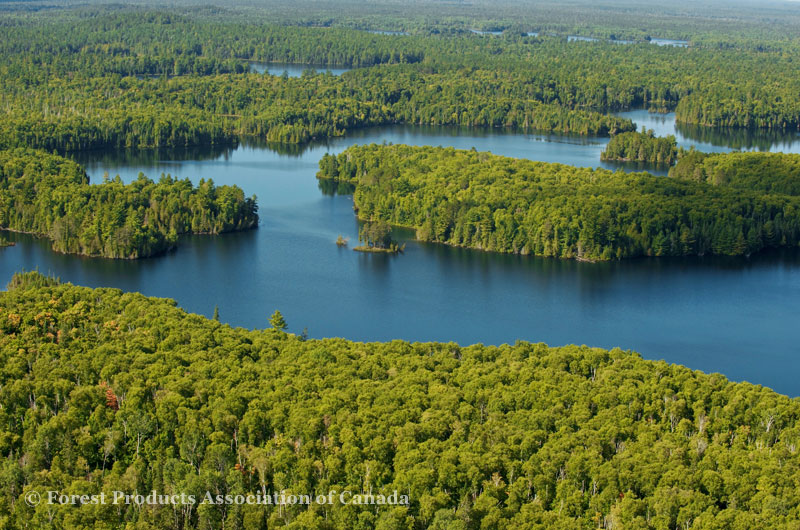
The decades-long war in Canada’s northwoods appears to be over. Environmental groups and Canadian logging companies linked arms Tuesday morning and agreed to work together to sustainably manage and protect 720,000 square kilometres of Canada’s boreal forest – an area twice the size of Germany.

“This is the biggest conservation agreement on the entire planet,” said Richard Brooks, spokesperson for participating environmental organisations and forest campaign coordinator of Greenpeace Canada.

The vast northern boreal forest is a broad band that circles the top of the world below the Arctic. It is the last great forest ecosystem – larger even than the Amazon – and the largest terrestrial storehouse of carbon. Made up primarily of pine and spruce trees, Canada’s boreal covers more than five million square kilometers, representing more than a quarter of the remaining intact forest on the planet. Just eight to 10 percent is currently protected.

“This is our best and last chance to save woodland caribou, permanently protect vast areas of the boreal forest and put in place sustainable forestry practices,” Brooks said in a press conference.

“We estimate there is roughly 20 billion tonnes of carbon in the trees and soils that are part of this agreement.”

That is equivalent to the annual emissions from 18 billion cars, he estimated. Continue reading

Traditional Indigenous Knowledge & Global Warming

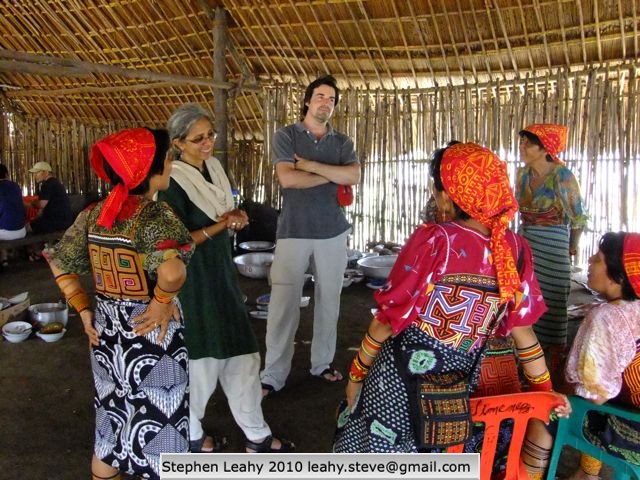
Returned from Panama a few days ago. I was offline for a week in a village in autonomus Kuna Yala territory on an island in the south Caribbean Ocean with no electricity, no roads, vehicles….just the sounds of the ocean and children playing. It was an amazing experience amongst unique group of Indigenous people still living by their traditional ways with a very strong emphasis on family, community and reciprocity.

Thanks to travel funding from an educational organization I was able to be at a unique workshop on the island where 18 indigenous people from around the world came to share their experiences in dealing with climate change. They are also documenting how their traditional knowledge is helping them adapt. What is often forgotten by those of us in the north is the lengthening of summer seasons, shortening winter, or changes in rainfall that are minor inconveniences for us often spell disaster for those who are subsistence farmers.

CONTRIBUTION UPDATE:

Special thanks to Ken of Ottawa, James from Toronto, Richard of Oshawa, Aidan who lives in Germany, Siri of London UK, Michael of Toronto, David of Salmon Arm and Catherine from Atikokan for your recent support. It is heartening to receive your encouragement and desire to help ensure I can continue to write and report on these important issues for everyone.

Thanks to these good folks the Community Supported Environmental Journalism Fund has now reached $1450.00, nearly 10 per cent of what’s needed for 2010.

There are some very important articles I’m hoping to write this year so help out if you can.

Contributions can be made via PayPal or Credit Card here:

(NOTE: For ocean lovers there is a major conference on Oceans this May –there are new prospects of international governance to hopefully end the ruthless rush to get the last fish. But will need $1000 to be able to get there)

— Greenest wishes, Steve

A Tipping Point on Species Loss?

By Stephen Leahy

UXBRIDGE, Canada, Jan 13, 2010 (IPS)

Humanity is destroying the network of living things that comprise our life support system. While this sawing-through-the-branch-we’re-perched-on is largely unintentional, world leaders can’t say they didn’t know what’s going on: 123 countries promised to take urgent action in 2003 but have done little to stem the rising tide of extinctions in what’s known as the extinction or biodiversity crisis.

Species are going extinct at 1,000 times their natural pace due to human activity, recent science has documented, with 35 to 40 species vanishing each day, never to be seen again.

“The question of preserving biological diversity is on the same scale as climate protection,” German Chancellor Angela Merkel said in a speech in Berlin Monday at the official launch of the United Nations’ International Year of Biodiversity.

This week’s official launch will be followed by the first major event of the International Year, a high-profile meeting at the Paris headquarters of the U.N. Educational, Scientific and Cultural Organisation, Jan. 20-21.

“We need a sea change. Here, now, immediately – not some time in the future,” Merkel said.

While climate has been the focus in 2009, this year will be a global celebration of and action on biodiversity, Ahmed Djoghlaf, executive secretary of the Convention on Biological Diversity (CBD), told IPS from Berlin.

Continue reading

The REAL Amazon-gate: On the Brink of Collapse Reveals Million $ Study


By Stephen Leahy

PARIS, Feb 2, 2010 (Tierramérica)

The Amazon jungle “is very close to a tipping point,” and if destruction continues, it could shrink to one third of its original size in just 65 years, warns Thomas Lovejoy, world-renowned tropical biologist.

[UPDATE Sept 6’10: The Amazon River is at its lowest level in 40 years — in 2005 devastating dry spell damaged vast swaths of South American rainforest Amazon May Be Headed For Another Bad Drought]]

Climate change, deforestation and fire are the drivers of this potential Amazonian apocalypse, according to Lovejoy, biodiversity chair at the Washington DC-based Heinz Centre for Science, Economics and the Environment, and chief biodiversity adviser to the president of the World Bank.

Amazonian rainforest, upper Amazon basin, Lore...
Image via Wikipedia

Lovejoy laid out the scenario for participants at the Biodiversity Science Policy Conference in Paris last week, sponsored by UNESCO (United Nations Educational, Scientific and Cultural Organisation), and marking the beginning of the U.N.’s International Year of Biodiversity.

“The World Bank released a study that finally put the impacts of climate change, deforestation and fires together. The tipping point for the Amazon is 20 percent deforestation,” and that is “a scary result,” Lovejoy told Tierramérica in an interview.

The study, “Assessment of the Risk of Amazon Dieback,” released Jan. 22, drew on the expertise of several international research institutions, including Japan’s Meteorological Research Institute, Britain’s Exeter University, Brazil’s Centre for Weather Forecasting and Climate Change (CPET/INPE), Germany’s Potsdam Institute and Earth3000.

Do you find this article interesting? It exists thanks to contributions from readers. Please click here to learn more about Community Supported Journalism.

The results and analysis were reviewed by an international blue-ribbon panel of scientists. Continue reading