Free Markets Cause Chronic Hunger in Africa — There’s Plenty of Food but No Money

By Stephen Leahy

BROOKLIN, Canada, Oct 20, 2006 (IPS)

[World Bank and International Monetary Fund free-market doctrines responsible for much of Africa’s hunger experts say]


It is a world of paradox and plenty:

852 million people are starving while one billion people are overweight, with 300 million of them considered medically obese.

And the numbers of people whose health are at serious risk due to starvation or from obesity is rising rapidly.

While what the World Health Organisation calls a global epidemic of obesity is a health issue of the modern world, hunger and malnutrition are old and bitterly intractable problems.

More than 50 million Africans currently need food assistance, according to the U.N. World Food Programme. More than 120 million Africans are living permanently on the edge of emergency food aid, says the British charity CARE International.

Why is hunger chronic in Africa?

“There is enough food, but people don’t have enough money to buy it,” says Anuradha Mittal, executive director of the Oakland Institute, a U.S.-based policy think tank on social, economic and environmental issues.

“Sixty-three percent of people in Niger live on less than a dollar a day,” Mittal told IPS.

Hunger is mainly the result of poverty.

Rome-based Food and Agriculture Organisation (FAO) reports that th

ere is enough food to give everyone in the world more than 2,700 calories a day, she says. Continue reading

Russia Leads the Most Poisonous Places on Earth

dzerzhinsk-factories[I have added more of the story in this post but the full article remains for subscribers only, sorry.]

By Stephen Leahy

Russia tops the list of the 10 most polluted places on the planet, while more investigation into Latin American and African pollution sites is needed, according to a U.S. environmental group.

Lead and other heavy metals, along with buried chemical weapons and radiation hazards from sites like Chernobyl in Ukraine, are the main sources of pollution affecting the health of 10 million people in different locations around the world.

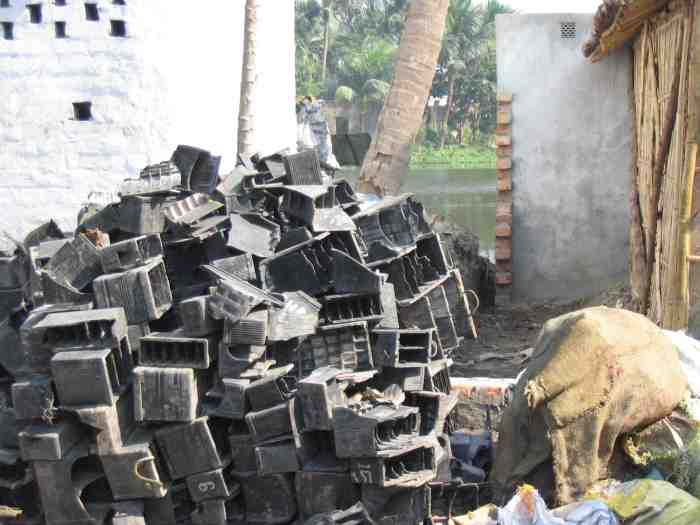
empty-car-battery-casings-india-photo-by-blacksmith-institute-sml

“These extremely toxic areas are mostly unknown even in their own countries,” said Richard Fuller, director of the New York-based Blacksmith Institute.

Continue reading

Canada Fights Ban on “Bulldozers of the Sea”

By Stephen Leahy

Oct 12 (IPS) – Canada is trying to scuttle a proposed United Nations moratorium on destructive bottom trawling of the open ocean that has received surprisingly strong support from the United States, as well as other countries.

“Canada’s attitude towards the oceans is embarrassing and archaic,” said Elliott Norse, president of the Marine Conservation Biology Institute, a scientific environmental group in Washington State.

“Canada treats the oceans as if nothing could harm them,” Norse told IPS.

The U.N. General Assembly started debate this week on an Australian-led plan for a temporary moratorium on deep-sea bottom trawling in unmanaged high seas and to impose tougher regulation of other destructive fishing practices.

Because of Canada’s good international reputation, other nations are listening and that greatly increases the risks the U.N. will not act on the proposed moratorium, Norse said.

Canada’s opposition, especially from a recently elected government, comes as a surprise.

“Canada doesn’t have any open ocean trawlers and has everything to gain from a ban,” Norse pointed out.

–FULL STORY

Related stories by Stephen Leahy

Trawling seamounts threatens ocean’s biodiversity
Hundreds of deep-sea species new to science are disappearing before they can be identified or studied, oceanographers are warning. The organisms are being pushed to extinction by trawlers targeting undersea volcanic mountains called seamounts. — New Scientist Magazine

A Plan to Torpedo the Trawlers
Environmentalist groups will soon be dragging deep-sea trawl nets the size of Boeing 747s across cities, rolling out ad campaigns featuring photos of unique creatures from the ocean’s depths, and sending out ships to dog the movements of ocean-going trawlers. — Wired News

New Data Erases Doubt on Storms and Warming

Stephen Leahy

BROOKLIN, Canada, Sep 11 (IPS) – There is little doubt now that climate change is making hurricanes and cyclones much more powerful and more frequent, top scientists announced Monday.

Sea surface temperatures are rising due to global warming and more than a dozen studies since Hurricane Katrina hit the United States last August show this has resulted in the dramatic increase in the strength of hurricanes in recent years.

“There is no doubt at all that hurricane intensity has increased,” said Kerry Emanuel, a climatologist at the Massachusetts Institute of Technology.

“I was startled to see the power of hurricanes and cyclones increase by 50 to 100 percent since the 1970s,” said Emanuel, one of 19 climate scientists who published a major study Monday in the Proceedings of the National Academy of Sciences (PNAS).

–full story

60 Years to Restore the Ozone Layer Over Antarctica

Stephen Leahy*

TORONTO, Sep 20 (Tierramérica) – Another giant ozone hole has opened up over the Antarctic, while evidence mounts that 20 years of international efforts have finally helped the atmosphere to start to heal itself.

The “hole” over the South Pole — actually an annual thinning of the ozone layer, which protects Earth from the sun’s ultraviolet radiation — measured about 24 million square kilometres, nearly the size of North America, according to the Sep. 8 estimate by the renowned British Antarctic Survey, a scientific organisation that has been studying the region for the past six decades.

The ozone hole will continue to grow and likely be one of the larger and “deeper” ones, perhaps 28 million square kilometres, predicts Andrew Klekociuk of the Australian government’s Antarctic Division. The largest ever recorded was 30.3 million sq km in 2000, according to NASA, the U.S. space agency.

— Tierramerica and Inter Press News Service

Forests Worth Far More Alive Than Dead

Stephen Leahy

BROOKLIN, Canada, Sep 27 (IPS) – Boreal forests provide 250 billion dollars a year in ecosystem services like reducing atmospheric carbon and water filtration, but which have gone unacknowledged by governments and industry, experts say.

Governments need to begin accounting for those services before allowing timber, oil and gas and mining to carve up the world’s remaining northern forests, argues the Edmonton, Canada-based ecological economist Mark Anielski.

The globe-spanning boreal forest is the last great forest ecosystem — larger even than the Amazon. The boreal is also the largest terrestrial storehouse of carbon, making it one of the world’s best defences against global climate change.

“The boreal is like a giant carbon bank account. The forests and peatlands store an estimated 67 billion tonnes of carbon in Canada alone — almost eight times the amount of carbon produced worldwide in the year 2000,” Anielski told IPS.

—Inter Press News Service