Turning Forests Into Carbon Profits To Protect The Global Climate?

By Stephen Leahy*

MONTPELLIER, France, Apr 7, 2010 (Tierramérica)

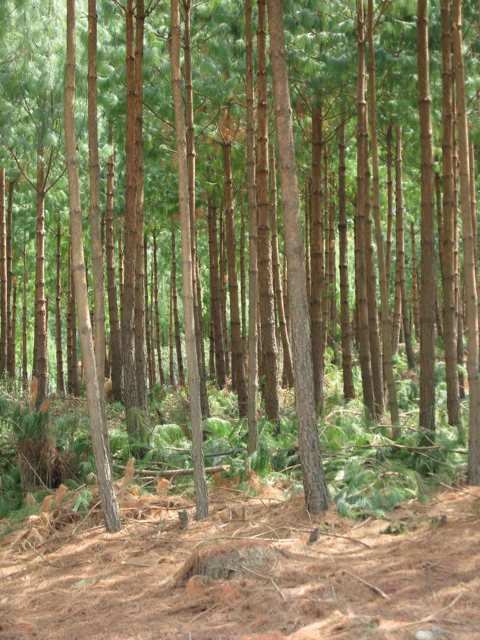
Billions of dollars are being mobilised to protect and increase the world’s forests under a climate protection mechanism known as REDD (Reduced Emissions from Deforestation and Degradation). But many experts are unsure that it will work, and some fear it could end in disaster.

According to Anne Larson, who works in Nicaragua as an associate at the Indonesia-based Centre for International Forestry Research (CIFOR), “REDD presents lots of risks.”

“Most countries are simply not ready. They do not have policies to protect the rights of local and indigenous peoples, to determine land tenure or even work out who owns the ‘carbon rights’ to a forest,” Larson told participants at an international conference on smallholder and community forestry in Montpellier, France, in late March.

Under the REDD initiative, richer countries would pay to maintain forests in tropical regions to offset their own carbon emissions. Carbon dioxide from human activities is one of the main gases that produce the greenhouse effect.

The wealthy countries would be granted “carbon credits” towards achieving their carbon reduction commitments to combat climate change. Continue reading
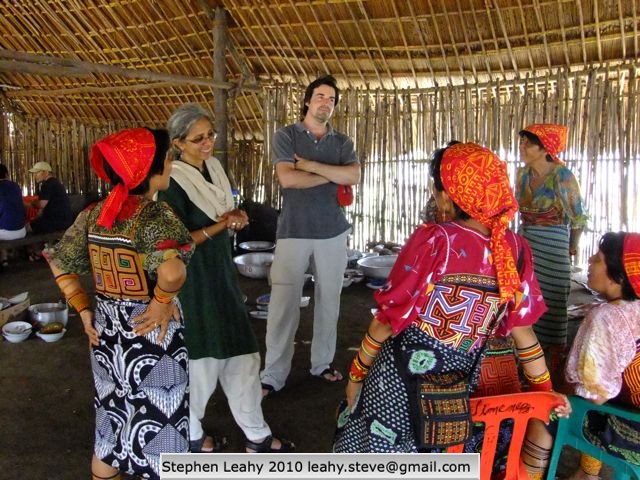
Traditional Indigenous Knowledge & Global Warming

Returned from Panama a few days ago. I was offline for a week in a village in autonomus Kuna Yala territory on an island in the south Caribbean Ocean with no electricity, no roads, vehicles….just the sounds of the ocean and children playing. It was an amazing experience amongst unique group of Indigenous people still living by their traditional ways with a very strong emphasis on family, community and reciprocity.

Thanks to travel funding from an educational organization I was able to be at a unique workshop on the island where 18 indigenous people from around the world came to share their experiences in dealing with climate change. They are also documenting how their traditional knowledge is helping them adapt. What is often forgotten by those of us in the north is the lengthening of summer seasons, shortening winter, or changes in rainfall that are minor inconveniences for us often spell disaster for those who are subsistence farmers.

CONTRIBUTION UPDATE:

Special thanks to Ken of Ottawa, James from Toronto, Richard of Oshawa, Aidan who lives in Germany, Siri of London UK, Michael of Toronto, David of Salmon Arm and Catherine from Atikokan for your recent support. It is heartening to receive your encouragement and desire to help ensure I can continue to write and report on these important issues for everyone.

Thanks to these good folks the Community Supported Environmental Journalism Fund has now reached $1450.00, nearly 10 per cent of what’s needed for 2010.

There are some very important articles I’m hoping to write this year so help out if you can.

Contributions can be made via PayPal or Credit Card here:

(NOTE: For ocean lovers there is a major conference on Oceans this May –there are new prospects of international governance to hopefully end the ruthless rush to get the last fish. But will need $1000 to be able to get there)

— Greenest wishes, Steve

“We Are a Harbinger of What Is to Come” – Global Warming is Already Affecting Millions – Video

[Those living closest to the land – small farmers, pastoralists, indigenous peoples — are already suffering from impacts of climate change. They have made a series of short videos to show people like you and me who are insulated from these impacts how our emissions of carbon are changing the world.

This is both a plea for help and a warning of what’s coming for all of us.

I found it remarkable those I spoke with are not angry. They simply want us to understand what is happening to them because if we understand, if we know what we are doing to them, then we will act. I hope they are right. — Steve]

By Stephen Leahy

COPENHAGEN, Dec 3 (IPS)

A small group of indigenous people have travelled here to the historic Copenhagen climate talks to show negotiators dramatic documentary videos they made about the immediate impacts of climate change on their homelands and way of life.

“We want to show policymakers what the three-year long drought in my country is doing to our communities,” said Stanley Selian Konini, a Maasai from Oltepesi in Kajiado district, Kenya.

“Our animals are all dead. The zebras and the monkeys are dying even in the forests,” Konini told IPS. “Leaders need to change policies to help us.”

The Kenyan video documents the impact of an intense drought hitting the Maasai community. During these extremely hard times, pastoralists have been losing their cattle – their main and sometimes only livelihood.

“It’s affecting our culture. There can be no dowry payments because we have no animals,” said Konini, one of the young Maasai who made the video.

“The elders say they have never seen anything like this drought. It is something beyond their understanding and experience of the Maasai people,” he said. Continue reading

Conserve Nature – Best Way We Have To Cope With Climate Change & Survive This Century

“….nature is sick, which threatens the survival of the human species”

“Conservation of nature is the first order strategy for climate change and carbon capture sequestration”

The only way forward is that “we must learn to live a simple life that is spiritually based”

By Stephen Leahy

MÉRIDA, Mexico, Nov 12 (IPS)

Lawrence Amos travelled from the Arctic at the top of the world to the tropical middle to recite in a soft voice the ongoing destruction of his home by climate change.

The ice is rougher and not as thick, and melts in May instead of June. There is less snow, more coastal erosion, and permafrost is melting, threatening to swallow homes, said Amos, an Inuit who lives in Sachs Harbour in Canada’s High Arctic, one of the remotest communities on the planet.

Amos was speaking here on Memorial Day at the 9th World Wilderness Congress from Nov. 6-13, where many other indigenous peoples, scientists and conservationists from more than 50 countries documented the escalating impacts of climate change on the land and in the oceans.

Like the roll call of the names of those fallen at Memorial or Remembrance Day ceremonies, Amos’ list of impacts experienced by the people of the western Arctic was tragically long.

Insects, birds and fish never seen before are now appearing in the region. “Grizzly bears are mating with polar bears… Our traditional knowledge about the land is becoming worthless,” he told IPS.

“Mother Nature does not use language. We must be aware of the signs, the changes in species, the melting of glaciers to inform us that nature is sick, which threatens the survival of the human species,” said Bittu Sahgal, founder of Sanctuary Asia, India’s leading environmental conservation magazine and book publisher.

“Nature will not talk to us, it will give us consequences,” he told more than 1,500 participants at the WILD9 congress, a partnership between the WILD Foundation, an international, non-governmental non-profit based in the United States, and Unidos para la Conservación, a conservation organisation in Mexico. Continue reading

Content Control: Patents Threaten Traditional Knowledge of Indigenous People

Quechua in Cusco region

“To have potatoes, there must be land, people to work it, a culture to support the people, Mother Earth and the mountain gods…”

By Stephen Leahy*

VIENNA, Jul 6 (Tierramérica)

Indigenous peoples risk losing control over their traditional knowledge if the World Intellectual Property Organisation (WIPO) insists on strict standards for managing access to information.

Patents and other forms of restricting access to knowledge are very worrisome in a time of climate change, says a new report by the London-based International Institute for Environment and Development (IIED).

The study was presented at meetings of the WIPO – a United Nations agency – held Jun. 23-Jul. 3 in Geneva.

Intellectual property standards restrict use of genetic resources when we need flexibility and adaptability to cope with climate change,” said Michel Pimbert, director of IIED’s Sustainable Agriculture, Biodiversity and Livelihoods Programme.

WIPO aims to develop rules for protecting rights over traditional knowledge, such as indigenous knowledge about medicinal plants, which conventional intellectual property laws do not cover.

However, according to IIED’s Krystyna Swiderska, who coordinated the research in Africa, Asia and Latin America, “WIPO’s call for consistency with existing intellectual property standards is a flawed approach as these have been created on Western commercial lines to limit access to inventions such as drugs developed by private companies.”

Intellectual property is about restricting access, creating monopolies and eliminating competition, and it is being pushed by transnational pharmaceutical and seed companies, said Pimbert. Continue reading

Heading for +2 degrees C (3.6 degrees F) Carbon Use Must Peak by 2015 Scientists Warn

Carbon overload - have to stop expanding
Carbon overload – have to stop expanding

By Stephen Leahy

“We shouldn’t forget that a 2-degree C global mean warming would take us far beyond the natural temperature variations that life on Earth has experienced since we humans have been around.”

ANCHORAGE, Alaska, Apr 30 (IPS)

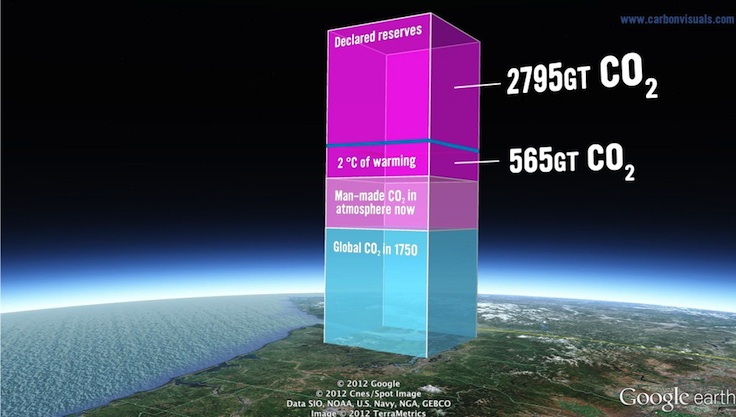
Climate scientists are calling for a phase-out of fossil fuels because humans are now pumping so much carbon dioxide (CO2) into the atmosphere that the ‘2-degree-C climate balloon’ will burst otherwise, new studies show.

That 2-degree C climate balloon has a maximum capacity of less than 1,400 gigatonnes of CO2 total emissions from the year 2000 to 2050, Malte Meinshausen and colleagues report in the current issue of Nature. The European Union and others consider a global temperature rise of more than 2 degrees C as dangerous and potentially catastrophic. Temperatures are already 0.8 C warmer than the pre-industrial period.

UPDATE Nov 2009 Prospect of a four-degree Celsius rise in global average temperatures in 50 years is alarming – but not alarmist, climate scientists now believe. Four Degrees of Devastation

The reality is that global emissions for the last seven years amounted to almost 250 gigatonnes of these long-lived greenhouse gases, meaning that the current and growing rates of fossil fuel emissions would burst the balloon in about 20 years – or less. Even if emissions are held to 1,400 gigatonnes maximum for the next 40 years, there is still a 50-percent probability of exceeding 2 degrees C, said Meinshausen, lead author of the study and climate researcher at the Potsdam Institute for Climate Impact Research.

Indigenous peoples from around the world also called for a phase-out of fossil fuels at the conclusion of the first Indigenous Peoples’ Global Summit on Climate Change in Anchorage, Alaska, that concluded last week.

“That call is well-supported by the evidence in this study,” Meinshausen told IPS.

Is this article of interest? It exists thanks to contributions from readers. Please click here to learn more about Community Supported Journalism.

Continue reading

China, Korea, Saudi Arabia Lead Global Land Rush To Buy Farmland In Other Countries

By Stephen Leahy*

conversion of US grasslandANCHORAGE, Alaska, USA, May 5 (Tierramérica)

More than 20 million hectares of farmland in Africa and Latin America are now in the hands of foreign governments and companies, a sign of a global “land grab” that got a boost from last year’s food crisis.

Rich countries that are short on land or water at home are looking to secure food-producing lands elsewhere as a way to ensure food security for their populations, said Joachim von Braun, director of the International Food Policy Research Institute (IFPRI).

“There is a major lack of transparency in these land deals,” von Braun said in a telephone press conference from Washington.

The IFPRI study, “‘Land Grabbing’ by Foreign Investors in Developing Countries,” by von Braun and Ruth Meinzen-Dick, which was presented last week, estimates that 15 to 20 million hectares have been acquired or are in the process of being sold.

Von Braun pointed out that this is equivalent to about 25 percent of all the farmland in Europe.

Because hard data is difficult to come by – the study was based primarily on information from press reports – IFPRI conservatively estimates that the deals represent 20 to 30 billion dollars being invested by China, South Korea, India and the Gulf States, mainly in Africa.

“About one-quarter of these investments are for biofuel plantations,” von Braun said. Continue reading

Indigenous Wisdom Against Climate Change

1993_-_carrie_dannBy Stephen Leahy*

ANCHORAGE, Alaska, Apr 28 (Tierramérica**)While industrialised countries like Canada continue to emit ever-higher levels of greenhouse-effect gases, indigenous peoples around the world are working to survive and adapt to an increasingly dangerous climate.

Over millennia, indigenous peoples have developed a large arsenal of practices that are of potential benefit today for coping with climate change, including some holistic and refreshingly practical ideas.

Why not give automobiles and planes a day of rest? And then later on, two days of rest. That would cut down on pollution,” suggested Carrie Dann, an elder from the Western Shoshone Nation, whose ancestral lands extend across the western United States.

Dann, winner of the 1993 Right Livelihood Award – known as the Alternative Nobel Prize – for her efforts to protect ancestral lands, made her proposal before the 400 delegates gathered in Anchorage, Alaska, Apr. 20-24 for the Indigenous Peoples’ Global Summit on Climate Change.

Dann warned that Mother Nature is getting warmer and the “fever” needed to be cured. “We see many range (grassland) fires in my territory, it is getting so hot,” she said. Continue reading

Native Peoples Sound Dire Warning On Climate

cracked-earthBy Stephen Leahy*

Drought and hotter weather are making it very difficult to grow the staple crop of maize in most regions of Mexico.

ANCHORAGE, Alaska, Apr 22 (IPS) – Humanity’s hot carbon breath is not just melting the planet’s polar regions, it is disrupting natural systems and livelihoods around the world, indigenous people reported this week at a global meeting on climate change in Anchorage, Alaska.

“We indigenous people are the prow of the ship of humanity in the oncoming waves of climate change,” said Vanessa Marsh of the small Pacific island of Niue.

Indigenous people are here to alert humanity and lead the way in healing Earth, Marsh, a youth delegate, told more than 400 representatives of world’s indigenous peoples here.

Coastal erosion, mud slides, longer droughts and more severe hurricanes are just some of the impacts of climate change affecting the Caribbean region, Chief Charles Williams of the Kalinago people on the island of Dominica told the U.N.-affiliated Indigenous Peoples’ Global Summit on Climate Change.

“Most indigenous people live on the margins…their ‘purses’ are not as strong as others when it comes to coping with climate change,” Williams said. Continue reading

Indigenous Peoples Demand Greater Role in Climate Debate

native-windmill-art

By Stephen Leahy*


ANCHORAGE, Alaska, Apr 20 (Tierramérica) – While indigenous peoples from around the world are meeting in this Alaskan city to seek a greater role in global climate negotiations, the rapidly warming Arctic is forcing some Inuit villages to be relocated.

“We have centuries of experience in adapting to the climate and our traditional lifestyles have very low carbon footprints,” Victoria Tauli-Corpuz, an indigenous leader from the Philippines and chair of the United Nations Permanent Forum on Indigenous Issues, told Tierramérica.

Carbon-based gases are the principal cause of the greenhouse effect, which leads to climate change. The excessive release of these gases, like carbon dioxide and methane, comes from human activities: the combustion of fossil fuels in industry and transportation, and emissions from livestock production and deforestation.

Some 400 indigenous people, including Bolivian President Evo Morales and observers from 80 nations, are gathered in Anchorage, Alaska for the Apr. 20-24 U.N.-affiliated Indigenous Peoples’ Global Summit on Climate Change.

They will discuss and synthesise ways that traditional knowledge can be used to both mitigate and adapt to climate change.

“Indigenous peoples have contributed the least to the global problem of climate change, but will almost certainly bear the greatest brunt of its impact,” said Patricia Cochran, chair of both the Inuit Circumpolar Council and the April Summit. Continue reading