UN Climate Talks End In Dramatic Showdown But Little Progress

COP 19 Final Showdown between US and Fiji

By Stephen Leahy

WARSAW, Nov 24 2013 (IPS)

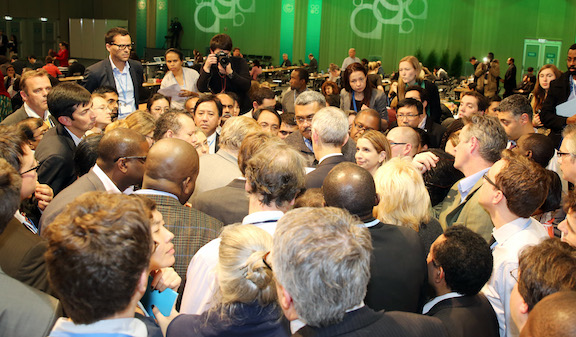
The U.N. climate talks in Warsaw ended in dramatic fashion Saturday evening in what looked like a schoolyard fight with a mob of dark-suited supporters packed around the weary combatants, Todd Stern of the United States and Sai Navoti of Fiji representing G77 nations.

It took two weeks and 36 straight hours of negotiations to get to this point.

At issue in this classic North versus South battle was the creation of a third pillar of a new climate treaty to be finalised in 2015. Countries of the South, with 80 percent of the world’s people, finally won, creating a loss and damage pillar to go with the mitigation (emissions reduction) and adaptation pillars.

Super-typhoon Haiyan’s impact on the Philippines just days before the 19th Conference of the Parties (COP19) amply illustrated the reality of loss and damages arising from climate change.  Philippines lead negotiator Yeb Saño made an emotional speech announcing “fast for the climate” at the COP19 opening that garnered worldwide attention, including nearly a million YouTube views

Click for complete story


The Bigger Canada’s Energy Sector Gets the Poorer People Become

By Stephen Leahy

Thu, 2013-03-21 05:00 DeSmog Canada

Blame Canada is a four part series revealing how Canada has become a wealthy, fossil-fuelled energy superpower and an international climate pariah. For Part 1, click here. Part 2 here

Few are aware Canada’s GDP shot up from an average of $600 billion per year in the 1990s to more than $1.7 trillion in 2012. This near tripling of the GDP is largely due to fossil fuel investments and exports.

However not many Canadians are three times wealthier. For one thing GDP is only a measure economic activity. The other reason is that little of this new wealth stayed in Canada. And what did stay went to a small percentage of the population, worsening the gap between rich and poor.

One of the hallmarks of a “petro-state” is that while a country’s energy industry generates fantastic amounts of money, the bulk of its citizens remain poor. Nigeria is a good example. Canada’s poverty rates have skyrocketed in step with the growth of the energy sector. One Canadian child in seven now lives in poverty, according to the Conference Board of Canada, the country’s foremost independent research organization.

Income inequality increased faster than the US, with the rich getting richer and poor and middle class losing grounds over the past 15 to 20 years, the Conference Board also reported January 2013.

“Most of Canada’s increase in wealth went to the big shareholders in the resource industries,” says Daniel Drache, a political scientist at Toronto’s York University. “It mainly went to the elites.”

Full Story: http://desmog.ca/2013/03/20/blame-canada-part-3-bigger-canada-s-energy-sector-gets-poorer-people-become_

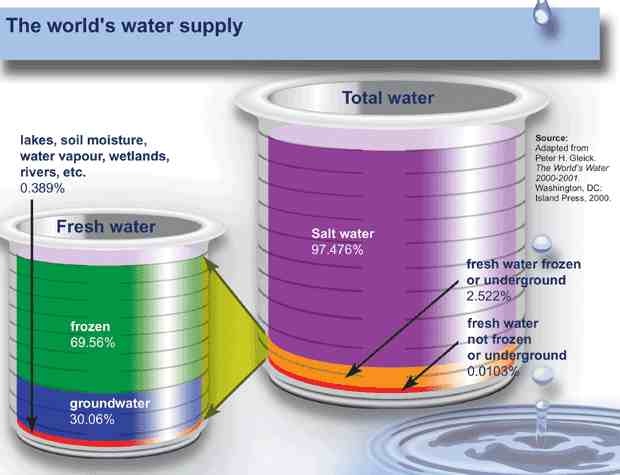
Unseen World of Water and the Water Crisis

world water supply

By Stephen Leahy

UXBRIDGE, Canada, Mar 22 2013 (IPS)

How much water does it take to turn on a light? It took 10,000 litres to make your jeans. Another three big bathtubs of water was needed for your two-eggs-toast-coffee breakfast this morning.

We are surrounded by an unseen world of water: furniture, houses, cars, roads, buildings – practically everything we use and make needs water.

“There is no way to generate energy without water,” said Zafar Adeel, co-chair of the UN-Water Task Force on Water Security and director of the Institute for Water, Environment and Health in Canada.

Even solar panels need regular washing to perform well. Wind energy might be an exception, Adeel told IPS from a water conference in Beijing being held during World Water Week.

There is growing recognition that peak oil is nowhere near as important as peak water because there is no substitute for water. The growing shortage of water — 1.2 to 1.7 billion people face scarcity — has alarmed many. Water has been identified as an “urgent security issue”, by a group that last year included both former U.S. Secretary of State Hillary Clinton and the InterAction Council, an association of 37 former heads of state and government.

It’s important that “water security” be recognised by the U.N. Security Council as either as a trigger, a potential target, or a contributing factor to insecurity and potential conflict in many parts of the world, said Adeel.

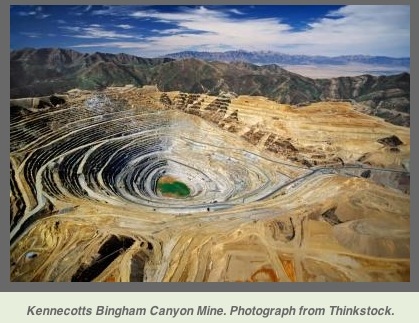
Canada Uses Foreign Aid to Promote Its Mining/Energy Sector

mining gaia

The absorption of Canada’s aid agency into the foreign affairs and international trade ministry has been widely condemned

By Stephen Leahy

Monday 25 March 2013 17.37 GMT theguardian.com

Following the unexpected announcement that the Canadian International Development Agency (Cida) will be folded into the ministry of foreign affairs and international trade, the Canadian government has made it clear there must be a direct return on its aid “investment”, primarily access to resources in other countries.

“It is a fundamental change. Canada is tying aid to its commercial interests. This is going to leave a bitter taste out there,” says Samantha Nutt, executive director of War Child Canada, which has received CIDA funding for more than a decade.

As Nutt acknowledges, all aid is politicised to some extent. But Canada has taken this to a new level. Civil society aid organisations working with CIDA are no longer aid delivery partners but sub-contractors, bidding on aid programmes and increasingly forced to work with the private sector, says Nutt.

“This puts Canadian aid organisations in ethical conflict. How can they criticise the actions of the mining companies they have to work with to get funding to help the poor?”

Cida’s fate has startled not only Canada’s foreign aid community but, by all accounts, Cida staff, who learned of the agency’s fate through the media.

The new department of foreign affairs, trade and development will continue to tackle poverty in developing countries with its $4.8 billion aid budget intact, the government said.

“This is Canadian money … Canadians are entitled to derive a benefit,” said international co-operation minister Julian Fantino last December, adding that Cida is working with the private sector to help Canada “maintain a global advantage”.

Full story

Canada’s Plan to Get Rich by Trashing the Climate

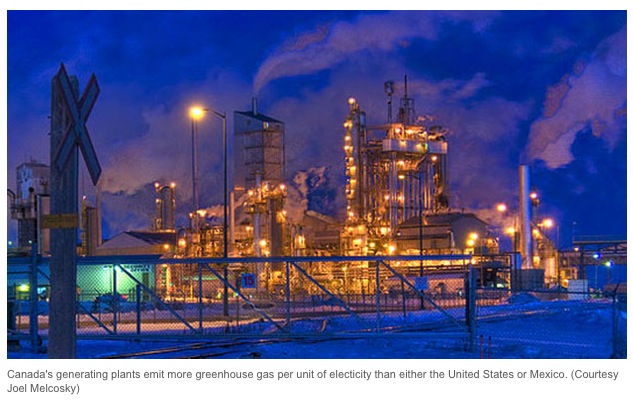
Canada's fossil fuel electricity has highest carbon emissions

By Stephen Leahy

Blame Canada is a four part series revealing how Canada has become a wealthy, fossil-fuelled energy superpower and an international climate pariah. For Part 1, click here.

Like every other country in the world, Canada has promised to help keep global warming to less than 2 degrees C. However Canada’s political and corporate leadership are committed to turning the country into a fossil-fuelled “energy superpower.”

With a drug lord’s just-providing-a-service hypocrisy Canada has openly declared it’s future is tied to the profits from dumping hundreds of millions of tonnes of climate-heating carbon into the atmosphere every year.

And the world’s new energy superpower plans to grow those annual emissions to 1.5 billion tonnes by 2020 giving one of the least populated countries a gigantic carbon bootprint.

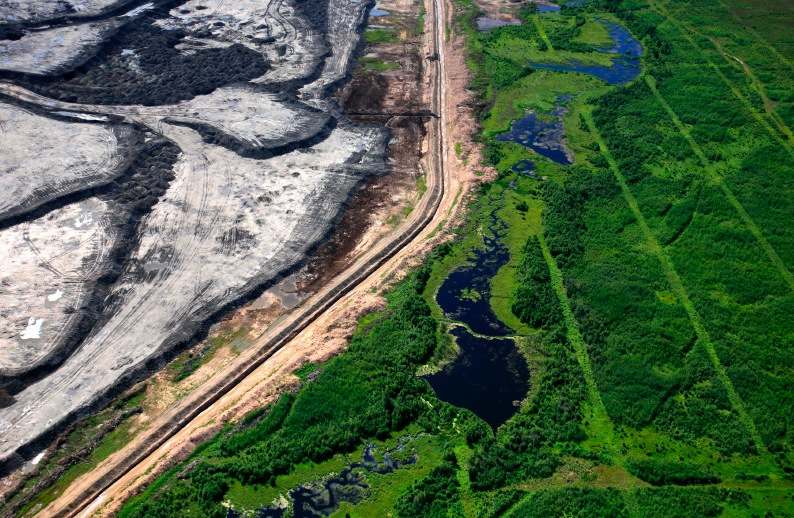
Most of this climate-wrecking carbon energy will come from Canada’s tar sands located just underneath the pristine boreal forest and wetlands of northern Alberta. The oil industry likes to call them “oil sands,” although there is no liquid oil only a tarry bitumen mixed deep in the sandy soil.

With an estimated 170 billion barrels, the tar sands are the third largest crude oil reserves. Extraordinary efforts involving colossal amounts of water, heat, chemicals and machinery are needed to get the bitumen out of the ground and into pipelines. This the world’s largest industrial project with more than $300 billion invested since 2001 by the oil industry.

Nowhere has fossil energy expansion or investment been faster or larger. Environmental activists call it “Canada’s Mordor.”

Who Wants a Sustainable, Pollution-Free New York by 2030?

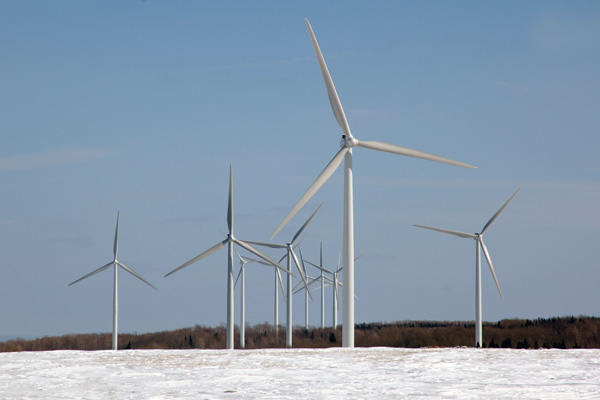
Wind turbines on the Tug Hill plateau in upstate New York

By Stephen Leahy

UXBRIDGE, Canada, Mar 19 2013 (IPS)

As usual, midtown Manhattan is packed with whisper-quiet cars and trams while thousands walk the streets listening to the birds of spring sing amongst the gleaming, grime-free skyscrapers in the crystal-clear morning air.

Welcome to New York City in April 2030.

I think the public will be 100 percent behind this, if they know about it.

This is not a fantasy. It is a perfectly doable goal, said Stanford University energy expert Mark Jacobson. In fact, the entire state of New York could be powered by wind, water and sunlight based on a detailed plan Jacobson co-authored.

It’s not only doable, powering New York on green energy is “sustainable and inexpensive” and would save lives and health costs, Jacobson told IPS.

Each year, air pollution kills 4,000 people in New York State and costs the public 33 billion dollars in health costs, according to the study Jacobson co-authored with experts from all over the U.S. It will be published in the journal Energy Policy.

Full Story

Canada Has Become a Petro-State, Happily Drilling for Profits as the World Warms

tar sands - visible from space,tarnished earth

Thu, 2013-03-07 08:00 STEPHEN LEAHY

What’s happened to Canada? To the dismay of many a country with an international reputation for relatively progressive environmental policies (at least compared to the United States) is rushing headlong to dig up all the oil, gas, and coal it can. The country’s leaders can scarcely muster the effort to pretend to want to limit climate-heating carbon emissions.

And the Canadian business establishment and media have largely gone along with the program. Put it all together, and you have a country that has become a full-blown “petrostate.”

People are starting to notice. Last December at the UN climate talks in Doha, Qatar, Canada beat out tough contenders like Saudi Arabia to be elected “Colossal Fossil” by environmental organizations from around the planet. Canada had the dishonor of being the most uncooperative country out of 193 nations at the climate summit. It was the sixth year in a row that international environmental groups gave Canada their ‘highest’ award for its persistent efforts to block any agreement on reducing carbon emissions.

What’s happened to Canada is that it has experienced a steady takeover by the fossil fuel industry.

Canada’s is now the world’s fifth largest crude oil producer and the biggest supplier of oil to the US. Canada is also the third largest producer of natural gas and one of the top ten miners of coal. This enormous boom in fossil fuel production has been underway since the late 1990s. Like Saudi Arabia, fossil energy is by far Canada’s biggest export and has become the dominant economic and political focus.

Full story click below:

Blame Canada is a four part series revealing how Canada has become a fossil-fuelled energy superpower that’s going to wreck its future and the global climate.

Canadian Police/Spy Service Considers Environmentalists Threats to National Security

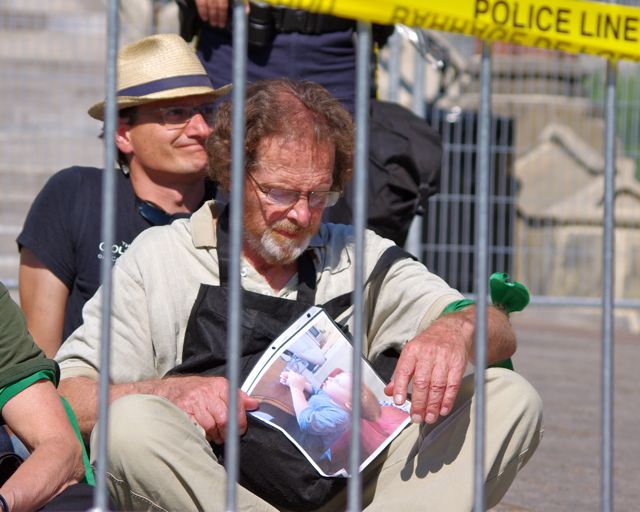
Man w picture of grandchild to be arrested for protesting against  tar sands expansion, Ottawa, Canadat to
Man w picture of grandchild to be arrested for protesting against tar sands expansion, Ottawa, Canada

By Stephen Leahy

UXBRIDGE, Canada, Feb 20 2013 (IPS) 

Canada’s police and security agencies think citizens concerned about the environment are threats to national security, and some are under surveillance, documents reveal.

The RCMP, the national police force, and Canada’s spy agency CSIS are increasingly conflating terrorism and extremism with peaceful citizens exercising their democratic rights to organise petitions, protest and question government policies, said Jeffrey Monaghan, a researcher with the Surveillance Studies Centre at Queen’s University in Kingston, Ontario.

Protests and opposition to Canada’s resource-based economy, especially oil and gas production, are now viewed as threats to national security, Monaghan said. This conclusion is based on official security documents obtained under freedom of information laws over the last five years.

Full Story here.

Thawing Permafrost May Be “Huge Factor” in Global Warming

Siberian permafrost -- Ted Schuur
Siberian permafrost — Ted Schuur

UXBRIDGE, Canada, Feb 14 2013 (IPS)

Thawing permafrost is emitting more climate-heating carbon faster than previously realised. Scientists have now learned that when the ancient carbon locked in the ice thaws and is exposed to sunlight, it turns into carbon dioxide 40 percent faster.

“This really changes the trajectory of the debate” over when and how much carbon will be released as permafrost thaws due to ever warmer temperatures in the Arctic, says researcher Rose Cory of the University of North Carolina.

There are 13 million square kilometres of permafrost in Alaska, Canada, Siberia and parts of Europe. As previously reported by IPS, a 2011 study estimated that global warming could release enough permafrost carbon to raise global temperatures three degrees C on top of what will result from human emissions from oil, gas and coal.

Human emissions are headed for four degrees C of global heating,warned the International Energy Agency (IEA) this week. A rapid “decarbonization of electricity supply” is needed to avoid that future, the IEA said as it released a new book titled “Electricity in a Climate-Constrained World”.

“The solutions are well-known: increased energy efficiency, greater research and development of low-carbon energy production, and putting a realistic price on carbon,” the book says

Full story here

Pollution as big a health problem as malaria or TB, finds report

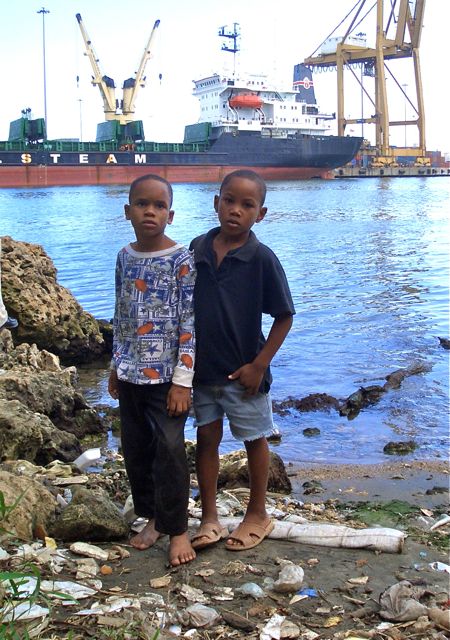
Haina, Dominican Republic - Children are developmentally impaired as a result of lead poisoning
Haina, Dominican Republic – Children are developmentally impaired as a result of lead poisoning

Industrial pollutants harm the health of 125 million people,

many of whom live in the developing world and work in mining

Stephen Leahy

guardian.co.uk, Wednesday 24 October 2012 12.30 BST

Waste from mining, lead smelters, industrial dumps and other toxic sites affects the health of an estimated 125 million people in 49 low- and middle-income countries. This unrecognised health burden is on the scale of malaria or tuberculosis (TB), a new report has found.

This year’s World’s worst pollution problems (pdf) report was published on Tuesday by the Blacksmith Institute in partnership with Green Cross Switzerland. It documents, for the first time, the public health impact of industrial pollutants – lead, mercury, chromium, radionuclides and pesticides – in the air, water and soil of developing countries.

“This is an extremely conservative estimate,” said Bret Ericson of the Blacksmith Institute, a small international NGO based in New York City. “We’ve investigated 2,600 toxic sites in the last four years, [but] we know there are far more.”

The US has an estimated 100,000-300,000 toxic sites, mainly factories or industrial areas, but toxic sites in the low- and middle-income countries assessed in the report are often in residential areas. “We see a lot of disease when we go into these communities,” said Ericson. “But we were surprised the health burden was so high – as much as malaria.”

Click to read full story:  Pollution as big a health problem as malaria or TB, finds report | Global development | guardian.co.uk.