
Written a few years ago but still relevant today. Ideology causes hunger not lack of food.
News

Biggest Conservation Agreement Ever — 2X the Size of Germany
By Stephen Leahy
UXBRIDGE, Canada, May 18, 2010 (IPS)
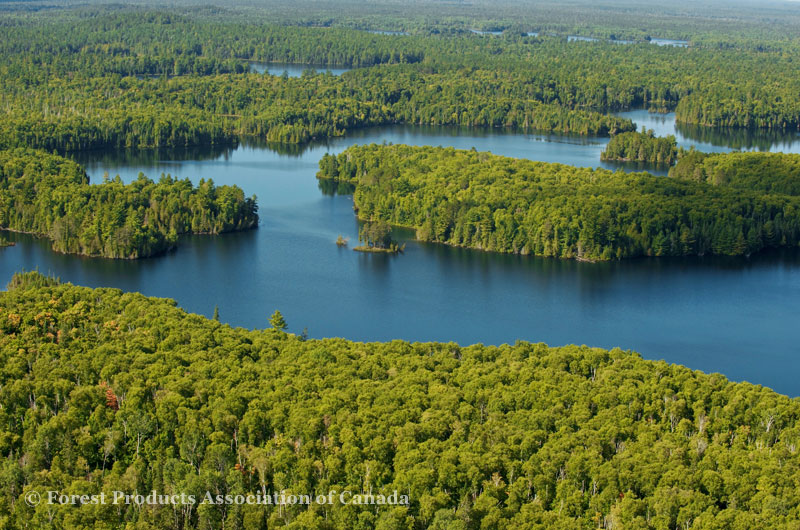
The decades-long war in Canada’s northwoods appears to be over. Environmental groups and Canadian logging companies linked arms Tuesday morning and agreed to work together to sustainably manage and protect 720,000 square kilometres of Canada’s boreal forest – an area twice the size of Germany.
“This is the biggest conservation agreement on the entire planet,” said Richard Brooks, spokesperson for participating environmental organisations and forest campaign coordinator of Greenpeace Canada.
The vast northern boreal forest is a broad band that circles the top of the world below the Arctic. It is the last great forest ecosystem – larger even than the Amazon – and the largest terrestrial storehouse of carbon. Made up primarily of pine and spruce trees, Canada’s boreal covers more than five million square kilometers, representing more than a quarter of the remaining intact forest on the planet. Just eight to 10 percent is currently protected.
“This is our best and last chance to save woodland caribou, permanently protect vast areas of the boreal forest and put in place sustainable forestry practices,” Brooks said in a press conference.
“We estimate there is roughly 20 billion tonnes of carbon in the trees and soils that are part of this agreement.”
That is equivalent to the annual emissions from 18 billion cars, he estimated. Continue reading
Burning Oil, Gasoline, Coal Causes Heart Attacks – American Heart Association

Researchers have long proven emissions from cars, trucks, coal plants reduce air quality and affect our health. Yet another study documents the serious health impacts on all of us, specifically our heart and arteries.
The evidence is stronger than ever that pollution from industry, traffic and power generation causes strokes and heart attacks, and people should avoid breathing in smog, the American Heart Association said on Monday. Continue reading
Why the BP Oil Spill Really Happened

We Can Live Without Oil
“It was a disaster that was going to happen, but business and government simply pretended it was not going to happen.”
[Update: Why the BP spill cannot be cleaned up]
By Stephen Leahy*
UXBRIDGE, Canada, May 10, 2010 (Tierramérica)
The policies and deals that contributed to the massive oil spill under way in the Gulf of Mexico are also jeopardising the Earth’s vital biological infrastructure, according to the Global Biodiversity Outlook 3, published Monday.
The British Petroleum oil spill of 5,000 barrels a day in the Gulf of Mexico, which began Apr. 20 when an explosion caused a rupture at the Deepwater Horizon oil rig, will have devastating consequences for marine life and coastal ecosystems for decades, experts say.
Similar business and policy decisions, multiplied thousands times over the last hundred years, have put the biological infrastructure that supports life in jeopardy, according to the Global Biodiversity Outlook 3 (GBO3) report, issued May 10 by the Convention on Biological Diversity.
The report is the most current assessment of the state of the planet’s biodiversity, the living organisms that provide us with health, wealth, food, fuel and other vital services.
In this study, “you can clearly see the outlines of what could be the sixth great extinction event of all life on Earth,” said Thomas Lovejoy, biodiversity chair at the Washington DC-based Heinz Centre for Science, Economics and the Environment, and chief biodiversity adviser to the president of the World Bank. Continue reading
Carbon Capture Fraud: The $1.6 billion (and counting) Taxpayer Gift to Coal and Oil Industry
 Could carbon capture and sequestration save the world?

Canadian taxpayers are putting $1.6 billion into the experiment
Desperate Times, Desperate Measures
by Stephen Leahy
Published in Nov/Dec’09 issue of Watershed Sentinel
Like a reckless gambler, the federal government’s plan to deal with our emissions of climate-altering carbon dioxide is to put most of our money on an unproven, risky and expensive long shot called “carbon capture and sequestration,” CCS for short. In a pair of October announcements, the Alberta and federal governments committed $1.6 billion to use this untested technology to reduce carbon emissions from an Alberta coal plant and a Shell Oil tar sands upgrader. Billions more are promised.
Canada puts 600 million tonnes of carbon dioxide into the atmosphere every year. That has to stop. This generation, you and me, must determine what methods and technologies offer permanent CO2 reduction at the scale we need, and do so quickly, safely and at the lowest cost. And we must act on that knowledge as if the future of children’s lives depend it because we are shaping the world they will inherit.
We cannot rely on political and business leaders to make these decisions on their own, as will become evident.
What other ways could we reduce our CO2 emissions with $1.6 billion of public money – $200 per Canadian family of four?
Replace 3.2 million older inefficient refrigerators with high-efficiency ones, thus reducing carbon emissions by 2-3 million tonnes annually. Continue reading
Arctic Leaking Methane a Super-Potent Global Warming Gas — Reaching Feared Tipping Point?
 By Stephen Leahy

“The way we’re going right now, I’m not optimistic that we will avoid some kind of tipping point.”
— Mark Serreze, senior research scientist at the National Snow and Ice Data Centre
UXBRIDGE, Canada, Mar 5, 2010 (IPS)
The frozen cap trapping billions of tonnes of methane under the cold waters of the Arctic Ocean is leaking and venting the powerful greenhouse gas into the atmosphere, new research shows.
It is not known if this may be one of the first indicators of a feedback loop accelerating global warming.
Researchers estimate that eight million tonnes in annual methane emissions are being released from the shallow East Siberian Arctic Shelf, which is equivalent to all the methane released from the world’s oceans, covering 71 percent of the planet.
On a global scale of methane emissions from the land-based sources – animals, rice paddies, rotting vegetation – the newly measured emissions from the Siberian seabed are less than two percent.
“That’s still very significant,” Natalia Shakhova, a researcher at the University of Alaska in Fairbanks, told IPS. “Before, it was assumed that this region had zero emissions.”
Methane concentrations measured over the oceans are currently about 0.6 to 0.7 parts per million (ppm), but they are now 1.85 in the Arctic Ocean generally, and between 2.6 and 8.2 ppm in the East Siberian Arctic Shelf, an area roughly two million square kilometres in size, said Shakhova.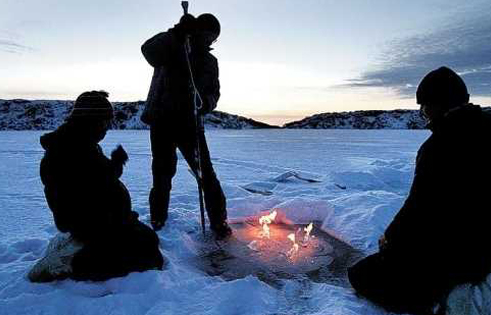
Shakhova, and her University of Alaska colleague Igor Semiletov, led eight international expeditions to one of the world’s most remote and desolate regions and published their results in the Mar. 5 edition of the journal Science. Continue reading
Traditional Indigenous Knowledge & Global Warming
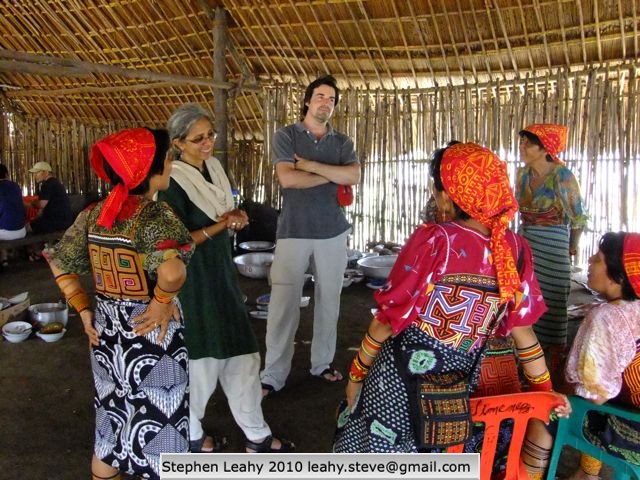
Returned from Panama a few days ago. I was offline for a week in a village in autonomus Kuna Yala territory on an island in the south Caribbean Ocean with no electricity, no roads, vehicles….just the sounds of the ocean and children playing. It was an amazing experience amongst unique group of Indigenous people still living by their traditional ways with a very strong emphasis on family, community and reciprocity.
Thanks to travel funding from an educational organization I was able to be at a unique workshop on the island where 18 indigenous people from around the world came to share their experiences in dealing with climate change. They are also documenting how their traditional knowledge is helping them adapt. What is often forgotten by those of us in the north is the lengthening of summer seasons, shortening winter, or changes in rainfall that are minor inconveniences for us often spell disaster for those who are subsistence farmers.
CONTRIBUTION UPDATE:
Special thanks to Ken of Ottawa, James from Toronto, Richard of Oshawa, Aidan who lives in Germany, Siri of London UK, Michael of Toronto, David of Salmon Arm and Catherine from Atikokan for your recent support. It is heartening to receive your encouragement and desire to help ensure I can continue to write and report on these important issues for everyone.
Thanks to these good folks the Community Supported Environmental Journalism Fund has now reached $1450.00, nearly 10 per cent of what’s needed for 2010.
There are some very important articles I’m hoping to write this year so help out if you can.
Contributions can be made via PayPal or Credit Card here: 
(NOTE: For ocean lovers there is a major conference on Oceans this May –there are new prospects of international governance to hopefully end the ruthless rush to get the last fish. But will need $1000 to be able to get there)
— Greenest wishes, Steve
One Meter Sea Level Rise on the Way New Studies Show

New research from several international research groups now reveals that at least one metre sea level rise is virtually certain. Confirms other recent studies that found that IPCC predictions of less than a half a meter rise in sea levels is around 3 times too low. See the Niels Bohr Institute at the University of Copenhagen and the scientific journal, Geophysical Research Letters.

Tsunami of E-Waste Could Swamp Developing Countries

By Stephen Leahy
UXBRIDGE, Canada, Feb 22, 2010
(IPS)
The mighty mountains of hazardous electronic waste are growing by about 40 million tonnes a year globally. In China, India and South Africa, those mountains are expected to grow 200 to 500 percent in the next decade, a new report warns.
And that’s just from domestic sales of TVs, computers and cell phones. The figure doesn’t include millions of tonnes of e-waste that is exported, mostly illegally, into these countries.
Sales of electronic consumer goods are skyrocketing in emerging economies, but that is not matched by capabilities to properly collect and recycle such products, which contain both toxic and valuable materials, says the United Nations report, “Recycling – from E-Waste to Resources“.
It was released in Bali, Indonesia Monday at a meeting of the Basel Convention on the Control of Transboundary Movements of Hazardous Wastes and Their Disposal.
E-waste from discarded mobile phones will be about seven times higher than 2007 levels in China by 2020. In India, the mobile phone e-waste mountain will be 18 times higher. At the same time, e-waste from televisions will be 1.5 to 2.0 times higher in China and India, while in India e-waste from discarded refrigerators will double or triple, the landmark report states. Continue reading
Fish Companies Push Hard to Halt Tuna Collapse
 By Stephen Leahy*
VICTORIA, Seychelles, Feb 8, 2010 (IPS)
In the Seychelles’ only cannery, the din of thousands of empty tuna cans rattling on narrow metal troughs is incredible as they bustle along, soon to be filled with Skipjack tuna that only days ago were swimming freely in the inky blue Indian Ocean.
At one end of the Indian Ocean Tuna Limited processing plant – the world’s second largest – cranes offload nets full of frozen tuna from huge international fishing boats called purse seiners while at the other end of the plant, 5,000 cans of tuna roll off the line every minute.
That’s a lot of tuna – roughly 400 metric tonnes a day. Can the Indian Ocean tuna bounty, which amounts to more than 20 percent of the world’s tuna, be sustained?
That was the key question at the first-ever Seychelles Tuna Conference that ended last weekend. It brought together nearly 200 scientists, fishers, environmentalists and policy makers here in Victoria, Africa’s smallest capital city, located 1,800 km east of Somalia and practically in the middle of the Indian Ocean.
“The boats are much more efficient today and the tuna stocks are declining and there is much less tuna than before, ” said Alain Fonteneau, a scientist with the L’Institut de recherche pour le développement, in Montpellier, France, who opened the conference. Continue reading
 Stephen Leahy, International Environmental Journalist
