Venezuelan Smuggling Opens Door to Blood Diamond Trade

blooddiamond-movie-poster-sml.jpg“Crooks are taking Venezuelan diamonds out of the country and selling them to other crooks.

In November, the Venezuelan government will report to an intergovernmental entity about the controls used to regulate diamond mining.

By Stephen Leahy

Oct 22 (Tierramérica).- Venezuela will have to explain its policies on mining and exporting diamonds at the next annual session of the Kimberley Process, an intergovernmental initiative to halt the use of the diamond industry to finance conflicts and civil wars.

The Venezuelan government has recognized that it is not easy to monitor its vast border, but assures that it intends to comply with the Kimberley Process, of which it is one of the three South American members, along with Brazil and Guyana.

Venezuela is not involved in the smuggling of the so-called conflict diamonds, or “blood diamonds”, uncut stones that in the past two decades were mined and trafficked to finance civil wars and illegal armed groups in countries like Angola, Cote d’Ivoire, Democratic Republic of Congo and Sierra Leone. Continue reading

Ethanol: The Great Big Green Fraud

gsi-biofuel.jpg

Subsidising biofuels is just about the dumbest way to go.” – Todd Litman, director of the Victoria Transport Policy Institute — Subsidies for 2007 est $13-$15 billion

…increasing biofuel production is a “total disaster” for starving people Jean Ziegler, the United Nations Special Rapporteur on the Right to Food

By Stephen Leahy

Oct 20 2007 (IPS)

A raft of new studies reveal European and American multibillion dollar support for biofuels is unsustainable, environmentally destructive and much more about subsidising agri-business corporations than combating global warming.

Not only do most forms of biofuel production do little to reduce greenhouse gas emissions, growing biofuel crops uses up precious water resources, increasing the size and extent of dead zones in the oceans, boosting use of toxic pesticides and deforestation in tropical countries, such studies say.

And biofuel, powered by billions of dollars in government subsidies, will drive food prices 20-40 percent higher between now and 2020, predicts the Washington-based International Food Policy Research Institute.

“Fuel made from food is a dumb idea to put it succinctly,” says Ronald Steenblik, research director at the International Institute for Sustainable Development’s Global Subsidies Initiative (GSI) in Geneva, Switzerland.

Biofuel production in the U.S. and Europe is just another way of subsidising big agri-business corporations, Steenblik told IPS.

“It’s (biofuel) also a distraction from dealing with the real problem of reducing greenhouse gas emissions,” he asserts. Continue reading

GW May Bankrupt US Without Urgent Action

“The true economic impact of climate change is fraught with ‘hidden’ costs.”

flood-rooftops-new-orleans.jpg

CLIMATE CHANGE-US: Delay Now, Pay Dearly Later
By Stephen Leahy

Oct 16 (IPS) – The United States is facing hundreds of billions of dollars in weather-related damages in coming years if it does not act urgently on climate change, the first-ever comprehensive economic assessment of the problem has found.

The costs of inaction on climate change on U.S. infrastructure, and its agricultural, manufacturing and public service sectors, will far outweigh the costs involved in making the needed reductions in greenhouse gas emissions, according to the report, “The U.S. Economic Impacts of Climate Change and the Costs of Inaction“, released Tuesday. Continue reading

Inuit Sue America over Climate Change

By Stephen Leahy

The Inuit people of the Arctic regions are preparing to charge the United States with human rights violations, saying that country is the leading culprit behind climate change, which threatens their way of life — and their very survival.

Originally published in Latin America Feb 15 2005 by Tierramérica

The sharp increase in temperatures in the Arctic has led to dramatic losses of sea ice and melting permafrost (the layer of ground that normally remains frozen year round), which have destroyed buildings and roads and forced relocations of entire native Inuit villages. Continue reading

GW Dramatically Rearranging Arctic Landscape

By Stephen Leahy


Credit:micropolisnews

A lone glacier drifts in the Canadian Arctic, Aug. 14, 2007.

Oct 4 (IPS) – The hot breath of global warming has now touched some of the coldest northern regions of world, turning the frozen landscape into mush as temperatures soar 15 degrees C. above normal.

Entire hillsides, sometimes more than a kilometre long, simply let go and slid like a vast green carpet into valleys and rivers on Melville Island in Canada’s northwest Arctic region of Nunavut this summer, says Scott Lamoureux of Queens University in Canada and leader of one the of International Polar Year projects.

“The entire landscape is on the move, it was very difficult to find any slopes that were unaltered,” said Lamoureux, who led a scientific expedition to the remote and uninhabited island. Continue reading

Pres. Bush: The Skunk at His Own Garden Party

By Stephen Leahy


Credit:White House Photo/Chris Greenberg

President George W. Bush addresses the Major Economies Meeting on Energy Security and Climate Change on Sep. 28, 2007.

Sep 29 (IPS) – After years of denial, the U.S. White House-sponsored summit on climate change ended Friday with President George W. Bush admitting that global warming was real and humans were responsible and asking for heads of state to join him at yet another summit next year (when his presidency ends).

It’s doubtful if anyone of consequence will attend that future gab-fest since President Bush continues to push voluntary cuts to greenhouse gas emissions when the rest of the world, including much of the business sector, has already said that approach simply doesn’t work.

“President Bush has so little credibility on climate change,” said Chris Flavin, president of the Worldwatch Institute, a U.S.-based environmental group. Continue reading

GW Desperation Drives Slightly Mad Ideas

coral-sea-oz.jpg

Climate Change: Time For Some Slightly Mad Ideas?
By Stephen Leahy

Sep 28 (IPS) – Lack of governmental action on climate change is forcing scientists to consider radical climate geo-engineering schemes such as giant vertical pipes in the ocean and growing vast blooms of plankton to try and prevent the worst from happening.

Companies backing some of these schemes hope to profit from the rising public clamour for action and politicians desperate to avoid serious reductions in greenhouse gas emissions.

“I wasn’t in favour of geo-engineering before, but we haven’t done well in reducing emissions,” said Chris Rapley, director of the Science Museum in London and former head of the British Antarctic Survey.

In fact, the global community continues on the “business as usual” path in terms of emissions of greenhouse gases (GHGs), thus increasing the chances of catastrophic climate change, Rapley, a climate change expert, told IPS.

“Just look at how incredibly quick the Arctic sea ice is melting,” he said. Continue reading

Organic Provides 3X More Food Per Acre in Poor Countries – podcast

Organic farming can yield up to three times as much food on individual farms in developing countries, as low-intensive methods on the same land—according to new findings by researchers from the University of Michigan.

This refutes the long-standing claim that organic farming methods cannot produce enough food to feed the global population.

Listen to U of Michigan Podcast and Podcast En Español

Related articles/posts:
Food Additives Make Kids Hyperactive – Organic Better?
Overweight? Hungry? Blame “Hollow Food”
Organic Agriculture Reduces Climate Change, Poverty and Hunger
The Real Cost of US Strawberries

“Climate change is like the Internet — it is never going away”

“Climate change is like the Internet — it is never going away.”
— Paul Dickinson, CEO of the Carbon Disclosure Project

Climate of Change Confronts Wall Street
By Stephen Leahy

Sep 24 (IPS) – Stockholders, investors and financial analysts are now demanding to know how climate change will affect companies’ bottom line, and a new report reveals large corporations’ risks and opportunities.

At the behest of institutional investors managing over 41 trillion dollars, several hundred large corporations voluntarily revealed how they are responding to this new reality in a report released Monday at a major event on New York’s Wall Street, where former U.S. President Bill Clinton will also speak.

“Climate change will change the way we do everything,” said Paul Dickinson, CEO of the Carbon Disclosure Project, an independent not-for-profit organisation.

“Nothing will go back to the way things were,” Dickinson told IPS.

Continue reading

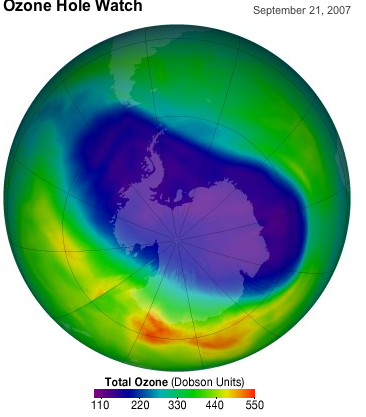
Skin Cancer Rising Despite New Ozone Deal to Cut CO2 Emissions

Ozone Deal to Cut Down CO2 Emissions

By Stephen Leahy


MONTREAL, Sep 23’07 (IPS) – More than 190 nations agreed this week to combat global warming and accelerate the healing of the ozone layer, although critics say more could have been accomplished.

The sun shone bright and warm here on Friday, the final day of the 19th Meeting of the Parties to the Montreal Protocol to protect the ozone layer. Outside, caravans of pre-school children in strollers or holding hands as they walked sported hats and long-sleeved shirts to protect their delicate skin.

It can be easy to forget that the sun was not always so dangerous, and that modern society is responsible for putting chemicals into the atmosphere that continue to destroy the ozone layer that protects all life from harmful levels of solar ultraviolet radiation.

[UPDATE: Sept 2009 — Ozone Treaty May Hold Key to Halting Climate Change;

— Ozone Hole 2009 – Bigger than North America – 24 million sq km]]

And we forget that things could have been far worse without international action in the form of the Montreal Protocol, which opened for signature 20 years ago this week.

Sadly, that action came late and was not vigorous enough for millions of people who have or will get skin cancer. Continue reading