My breakfast took 1100 litres (290 gal) of water to make – how much was yours?

meat sample

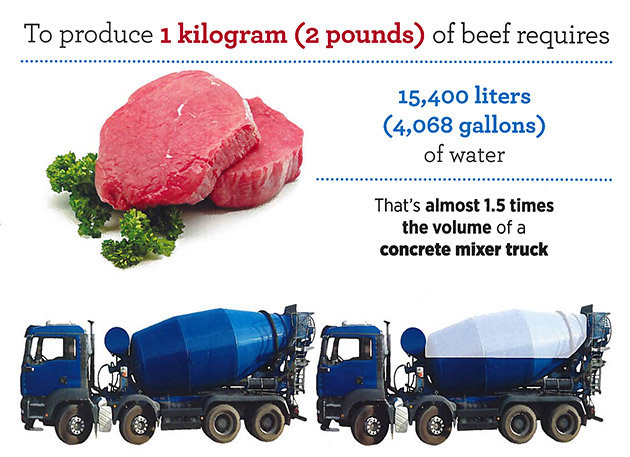
( Graphic from  ‘Your Water Footprint’) 

I have a confession: I used 1100 litres of water to make my breakfast today. It was nothing special, just a small glass of orange juice, a cup of coffee, two eggs, toast and two pieces of bacon. But it did take 1100 litres of water to grow and process the ingredients. Thats a whole lot of water considering the average bathtub only holds about 80 litres.

Even after 20 years of covering environmental issues in two dozen countries I had no idea of the incredible amounts of water needed to grow food or make things. Now, after two years working on my book Your Water Footprint Im still amazed the T-shirt Im wearing needed a whopping 2500 litres to grow and process the cotton. Or that 140 litres was needed to grow and process the coffee beans to make my morning coffee. Since a litre of water weighs a kilogram, thats 140 kilos of water, imagine having to haul that much in a bucket every morning!

Your Water Footprint wins Lane Anderson award as best Canadian Science book for general public

Water more valuable and useful than oil

Researching all of this I soon realized were literally surrounded by a hidden world of water. Although we cant see it, there is water in everything we eat, everything we use and buy. Almost anything you can think of – cars, furniture, books, dishes, TVs, highways, buildings, jewelry, toys and even electricity would not exist without water.

Its no exaggeration to say water is far more valuable and useful than oil.

Unfortunately, water is often taken for granted and undervalued, resulting widespread misuse and waste. The idea behind my book is to increase awareness of huge quantities of the hidden water our entire way of life depends on. Your Water Footprint uses colourful infographics to illustrate the size of the water footprints of a wide range things from shoes to whiskey. A water footprint is the amount of water consumed’ to make, grow or produce something. I use the word consumed to make it clear this is water that can no longer be used for anything else. Water can often be cleaned or reused, so those amounts of water are not included in the water footprints in the book.

For example, when you drink a half-litre of bottle water youre actually consuming 5.5. litres. Why so much? Making the plastic bottle consumed 5 litres of water.

After poring through many studies on water footprints, I was really surprised to see how tiny my direct use of water for drinking, cooking, showers and so on was by comparison. Each day the average North American uses 300 to 400 litres. (FYI: Flushing toilets is the biggest water daily use, not showers.) Now, 400 litres is not a trivial amount of water, and we can all get by using less by employing some water-savings tips.


How big is your water footprint? Take a quick test


However, compared to the hidden water, also known as virtual water, thats in the things we eat, wear and use for a day averages an incredible 7500 litres. That means our daily water footprint is almost 8,000 litres (direct + hidden freshwater use). Carrying all this water would be like trying to haul the weight of four mid-size cars every day.

Peak water is here

Water scarcity is a reality in much of the world. About 1.2 billion people live in areas with chronic scarcity, while two billion are affected by shortages every year. That’s two in seven people. And as the ongoing drought in California proves, water scarcity is increasing reality for many of us in the US and Canada. Water experts estimate that by 2025, three in five people may be living with water shortages.

While low-flow shower heads and toilets are great water savers, the water footprint concept can lead to even bigger reductions in water consumption. If a family of four replaced beef with chicken in all their meals, they would reduce their water use an astonishing 900,000 litres a year. That’s enough to fill an Olympic-sized pool to a depth of two feet. The reason is the water footprint of beef is four times larger than chicken.

Vegetables have an even smaller water footprint. If the average family liked the idea of “Meatless Mondays,” they’d save 400,000 litres of water a year.

My hope with Your Water Footprint is to give you enough information to make water-wise choices to reduce your water use which will help you save money, be prepared for shortages and ensure our children and grandchildren will have abundant fresh water. This is all about smart substitutions and changes, rather than sacrifice and self-denial.

To do this we need to know how much we are currently using. We can’t make the water-wise choices unless we begin to see and understand the invisible ways in which we rely on water.

Stephen Leahy is an award-winning environmental journalist based in Uxbridge, Ontario, Canada. He is the author ofYour Water Footprint: The Shocking Facts About How Much Water We Use to Make Everyday Products.

(First published Yahoo Canada News – Mon, 8 Sep, 2014)

Your Water Footprint: The Shocking Facts About How Much Water We Use to Make Everyday Products 

Only $19.95 paperback; 160 pages, 125 unique infographics,

also available as Kindle and in other ebook formats

In US:  AmazonPowell’s Books; Barnes&NobleIndiebound

Canada:  Chapters-Indigo Signed copies avail at Blue Heron Books – Stephen’s home town bookstore; In Ottawa visit the legendary Octopus Books

UK:  WH SmithAmazonWaterstones

Australia: Angus & RobertsonBooktopia

New Zealand: Mighty Ape

Poor Countries Need to Green, Low -Carbon Economies to End Poverty

Stephen's avatarStephen Leahy, International Environmental Journalist

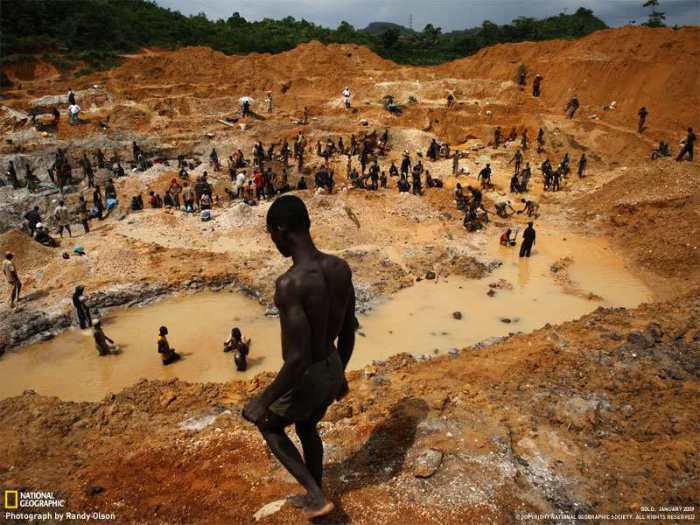
Small-scale gold mining in West Africa Small-scale gold mining in West Africa

“If we can’t get this right, we will be in big trouble

RIO DE JANEIRO, Jun 15 (TerraViva)

Poor countries that green their economies will lift millions of their citizens out of poverty and generate higher incomes while protecting invaluable natural ecosystems, says a report released here in Rio Thursday.

Some developing countries are actively pursuing a transition towards low-carbon, resource-efficient economies, it found.

“Our message is that economy and ecology can be brought together for the greater benefit of all people, but especially the poorest,” said Peter Hazlewood, director of Ecosystems and Development at the World Resources Institute (WRI), and co-author of the report “Building an Inclusive Green Economy for All”.Rio+20 logo

“This transition will not be easy. It will require new policies, targeted investments and reforms of government institutions,” Hazlewood said.

Governmental departments like agriculture, environment and economic development that…

View original post 366 more words

Rising Wealth Spells Disaster for the Planet, Study Finds

The last thing the planet needs – or the rest of us – is more millionaires

Stephen's avatarStephen Leahy, International Environmental Journalist

Wealthy Countries Export Environmental Impacts to Poor [New Article]

By Stephen Leahy

BERLIN, Jun 3, 2010 (IPS)

Rising global wealth spells disaster for the planet, with environmental impacts growing roughly 80 percent with a doubling of income, reports the first comprehensive study of consumption.

It adds to the mountain of evidence that the gospel of economic growth must be urgently transformed into the new gospel of resource-efficient green economies, a U.N. expert panel concluded Wednesday.

What are the biggest planetary criminals?

Fossil fuel use and agriculture, the study found. Ironically, these are also the two most heavily subsidised sectors, noted Ernst von Weizsaecker of Norwegian University of Science and Technology, and co-chair of the International Panel for Sustainable Resource Management.

Do you find this article interesting? It is funded by contributions from readers. Please click here to learn more about Community Supported Journalism.

“In the case of CO2, a

View original post 805 more words

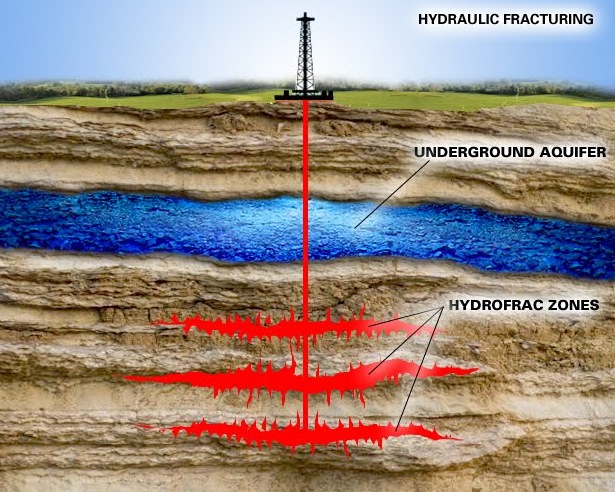
Fracking and Shale Gas Accelerating Global Warming

More evidence piling up that shale gas is little better than coal for the climate and slowing the shift to renewables and that’s a very bad thing.

Stephen's avatarStephen Leahy, International Environmental Journalist

UPDATE Jan 2013:

Yet another study reveals fracking has a huge problem of gas leaks. Up to  9% of the gas pumped out of the ground leaks into the atmosphere according to a study by National Oceanic and Atmospheric Administration (NOAA) published in Nature this week. Natural gas (methane) is a powerful greenhouse gas. If these leaks are widespread, fracking is worse than burning coal, accelerating global warming.

In Jan 2012 I detailed new research in the article below showing that replacing coal with natural gas from fracking does little to fight climate change (see below). Now two studies published that since then make an even stronger case that fracking for natural gas is a HUGE MISTAKE:

From Nature: Air sampling reveals high emissions from gas field. Methane leaks during production may offset climate benefits of natural gas.

From Environmental Research Letters: New study demonstrates switching to natural…

View original post 1,145 more words

Keystone XL Pipeline Carbon Emissions Top 100 Million Tons a Year

The Keystone XL oil pipeline could put up to 110 million tons of additional climate-heating CO2 into the atmosphere every year for 50 years, according a study publishedSunday in the journal Nature Climate Change.

If Keystone XL was a country, its 110 million tons of CO2 emissions would be comparable to those of the Czech Republic, Greece, and a number of other mid-sized European nations. And it could have a real shot at making the top 35 worst carbon polluting countries in the world.

The study notes that 110 million tons of CO2 is four times more emissions than the US State Department’s highest estimate for the controversial pipeline, which is currently undergoing an environmental review.

The State Department failed to account for the potential emissions from the increase in the global supply of oil, said study co-author Peter Erickson, a researcher with the US office of the Stockholm Environment Institute (SEI), an independent international research institute.

This new study is an update to an SEI working paper Motherboard reported on last December. At that time the estimated CO2 emissions from Keystone were 93 million tons, but that’s climbed higher with the benefit of updated information.

“This time it’s gone through the ringer of peer-review and is a far clearer and more direct version of the previous paper,” Erickson said in an interview. “It’s also generated a lot more media interest this time.”

The study shows how Keystone XL’s projected daily volume of 830,000 barrels of Canada’s bitumen oil could slightly lower oil prices on the global market and increase global consumption. More precisely, for every barrel of increased production, global oil consumption could increase by 0.6 barrels owing to the incremental decrease in global oil prices, Erickson said.

This finding is potentially crucial because of President Obama’s prior statement that he will only approve Keystone, “if this project does not significantly exacerbate the problem of carbon pollution.”

The decision remains largely in Obama’s hands because Keystone XL crosses national borders. The current plan is for a 1,200-mile, 36-inch diameter pipe to be built from Hardisty, Alberta to Steele City, Nebraska. The $7 billion pipeline will bring tar sands bitumen from under the frozen forests and lakes of northern Alberta to the world market, and will help the region’s booming oil operations expand even further. XL is part of a larger 2,500-mile Keystone pipeline system that terminates on the Texas Gulf Coast and is owned and operated by energy company TransCanada.

In 2012, Obama rejected TransCanada’s application because the pipeline route was through Nebraska’s environmentally sensitive Sandhills region. A few months later, TransCanada re-applied with a new pipeline route. The State Department is now doing an environmental review using energy consulting company Environmental Resources Management, which is expected to be completed next year.

Building more oil infrastructure is exactly the wrong thing to be doing when the world is struggling to reduce CO2 emissions. The SEI report pegs global investment in oil and gas infrastructure at $700 billion per year for the next 20 years, based on data from the International Energy Agency, along with considerable investment in coal.

That investment will only burn through our carbon budget faster than we are now. According to the IEA’s 2013 World Energy Outlook, which is one of the top energy reports annually, some two-thirds of our proven fossil fuel reserves must stay in the ground to avoid heating the planet by more than two degrees Celsius by 2050. That’s a threshold set by the US and other nations who have made climate change mitigation pledges.

However, SEI study co-author Michael Lazarus said last December that the CEOs, board members, bankers, and government officials who make the decisions to build new infrastructure won’t even talk about cutting back. “It seems to be off limits to talk about cutting back on fossil fuel extraction,” he said.

Presumably, these folks also aren’t talking about the disastrous environment all of us will be trapped in if we heat the planet by those two degrees and beyond. We can’t quit oil immediately because it will take time to build an alternative energy infrastructure. However, at this point it makes little environmental sense to build new pipelines like Keystone XL to increase access to tar sands bitumen, the world’s dirtiest form of oil.

You’d be shocked to see how your jewellery is made

The Sickest Places in the World

Parts of Indonesia, Argentina and Nigeria are among the top 10 most polluted places on the planet, according to a new report by U.S. and European environmental groups.


The Agbogbloshie e-Wasteland in Ghana. Fires are set to wires and other electronics to release valuable copper and other materials. The fires blacken the landscape, releasing toxic fumes. Credit: Blacksmith Institute

The Agbogbloshie e-Wasteland in Ghana. Fires are set to wires and other electronics to release valuable copper and other materials. The fires blacken the landscape, releasing toxic fumes. Credit: Blacksmith Institute

UXBRIDGE, Canada, Nov 5 2013 (IPS) Parts of Indonesia, Argentina and Nigeria are among the top 10 most polluted places on the planet, according to a new report by U.S. and European environmental groups.

They are extraordinarily toxic places where lifespans are short and disease runs rampant among millions of people who live and work at these sites, often to provide the products used in richer countries.

“People would be shocked to see the conditions under which their lovely jewelry is sometimes made,” said Jack Caravanos, director of research at the New York-based Blacksmith Institute, an independent environmental group that released the list Monday in partnership with Green Cross Switzerland.

Full story: The Sickest Places in the World

No Safe Havens in Increasingly Acid Oceans

churning-ocean-smlOil, gas and coal are contaminating the world’s oceans from top to bottom, threatening the lives of more than 800 million people

By Stephen Leahy

UXBRIDGE, Canada, Oct 15 2013 (IPS) 

Oil, gas and coal are contaminating the world’s oceans from top to bottom, threatening the lives of more than 800 million people, a new study warns Tuesday.

“It took a year to analyse and synthesise all of the studies on the impacts of climate change on ocean species,” Camilo Mora, an ecologist at University of Hawai‘i in Honolulu and lead author, told IPS.

“We are seeing greater changes, happening faster, and the effects are more imminent than previously anticipated.” — Alex Rogers of the University of Oxford

Mora is also lead author of ground-breaking climate study published in Nature last week.

“It was very sad to see all the responses were negative. We were hoping there might be some safe havens,” he said.

The study found that carbon emissions from burning fossil fuels are overheating the oceans, turning them acidic and reducing the amount of oxygen in seawater. This is happening too fast for most marine species to adapt and ocean ecosystems around the world will collapse.

By 2100, no corner of the oceans that cover 70 percent of the Earth’s surface will be untouched.

“The impacts of climate change will be felt from the ocean surface to the seafloor. It is truly scary to consider how vast these impacts will be,” said Andrew Sweetman of the International Research Institute of Stavanger, Norway, co-author of the PLOS Biology study published Oct. 15.

This ambitious study examined all the available research on how current and future carbon emissions are fundamentally altering the oceans. It then looked at how this will impact fish, corals, marine animals, plants and other organisms. Finally the 29 authors from 10 countries analysed how this will affect the 1.4 to 2.0 billion people who live near the oceans or depend on them for their food and income.

“We are making a big mess of the oceans. Climate change is having a major impact illustrating the need for urgent action to reduce emissions,” said Mora. Continue reading

Nano Worry: Big Concern for Very Small Things

Buckyball Molecule C320, Artwork Laguna Design

By Stephen Leahy

First published 04.07.04 at WIRED.COM

(I wrote this 10 years ago and was one of the first articles about environmental risks of nano techI have not been able to update it )

Nanoparticles called fullerenes — aka buckyballs — are extremely stable arrangements of carbon atoms that look like soccer balls. Eva Oberdörster, an aquatic scientist at Southern Methodist University, has conducted a study that looks at the potential risks of nanomaterials.

The nascent nanotechnology industry collectively cringed last week after a study showed that fish exposed to nanoparticles suffered brain damage. Critics say the much-hyped multibillion-dollar nano industry has a dark side few want to talk about.

“How many more studies showing toxicity are needed before regulators step in?” asks Kathy Jo Wetter of the Winnipeg-based ETC Group. ETC and other environmental groups are calling for a moratorium on the commercial production of nanoparticles.

Nano products are not subject to any special regulations, in part because little is known about the environmental and health implications of nanotechnology, says Kevin Ausman, executive director of the Center for Biological and Environmental Nanotechnology at Rice University in Houston.

Nanotechnology is a catchall term for an enormous range of research and technology measured at the scale of one-thousandth the width of a human hair. At this very small scale, ordinary materials have extraordinary properties promising the semi-fantastic — supercomputers that fit on the head of a pin and fleets of cancer-fighting nanobots — and the more mundane — better paint and eye shadow.

Stain-resistant nanopants and sunscreens and cosmetics using nanosized titanium dioxide particles are already on the market. And the Nanodesu bowling ball is one of the first consumer products that uses nanoparticles called fullerenes — aka buckyballs — which are extremely stable arrangements of carbon atoms that look like soccer balls.

To see what might happen if buckyballs got into the environment, Eva Oberdörster, an aquatic scientist at Southern Methodist University, put some into a fish tank at a concentration of 0.5 parts per million, along with nine largemouth bass. The buckyball-breathing fish experienced significant brain damage after 48 hours. Brain-cell membranes were disrupted, an affliction that has been linked to illnesses such as Alzheimer’s disease in humans.

Oberdörster’s unpublished study, which was released last week, is one of the few completed studies looking at the potential risks of nanomaterials. There is some cause for concern. Two recent studies documented lung damage in animals after they inhaled a type of buckyball called a carbon nanotube. Another showed that nanoparticles can get into the brain if inhaled.

They’re also small enough to cross cell walls and leak into the nucleus, the home of an organism’s DNA. And, in the case of titanium dioxide nanoparticles, they can kill bacteria. That’s good news in a hospital, but bad news in the environment, where bacteria are extremely important for maintaining soil fertility, among other things.

Understanding how nanomaterials and the environment interact is a complex, interdisciplinary problem, says Ausman.

“Some of the ways we normally measure environmental toxicity aren’t applicable to nanotechnology. And there aren’t many researchers who really understand these novel materials.”

One who does is John Bucher, director of federal toxicology research at the National Institute of Environmental Health Sciences. His group will soon begin a series of studies on the environmental health effects of three types of nanoparticles.

“There are so many different types of nanomaterials, some are likely toxic,” says Bucher.

Sorting out the impacts of nanotech won’t be easy, since the properties of nanomaterials are not well-defined yet. Something such as gold — which is normally biologically inert — is highly reactive and likely to disrupt biological processes when it’s nanosized.

And then there’s the problem of trying to detect particles of such a tiny size, says Bucher. Microscopes powerful enough to identify nanoparticles are just being developed.

It will be several years before the National Institute of Environmental Health Sciences toxicology studies are completed.

Ausman thinks regulations will be needed to guide future applications, but not enough is known to establish these yet. In the meantime, the nano industry and the benefits it can bring society shouldn’t be held back over toxicity fears, he says.

“I’m not concerned at this point.”

Global Land Grabbing by Speculators, Investment banks, Pension funds

Kenya green hills CIAT Neil Palmer sml

By Stephen Leahy

UXBRIDGE, Canada, May 10, 2012 (IPS)

Land is the missing element at next month’s big U.N. sustainable development summit known as Rio+20, where nations of the world will meet Jun. 20-22 with the goal of setting a new course to ensure the survival and flourishing of humanity.

However, governments are apparently unaware that a reversal of decades of land reform is underway with speculators, investment banks, pension funds and other powerful financial interests taking control of perhaps 200 million hectares of land from poor farmers in Africa, Latin America and Asia in recent years. Speculators and investors know land is the key to three necessities of life: food, water and energy. But neither land nor community land rights are on the summit agenda.

“Rural people are losing control over land and water because of this global land grab,” said Honduran farmer leader Rafael Alegria of the international farmers’ movement La Via Campesina.

Anywhere from 80 to 227 million hectares of rural, often agrarian land have been taken over by private and corporate interests in recent years, according to an April report released by Friends of the Earth International.

Many small land holders are being displaced in Central America and up to 40 percent of Honduran small farmers live in extreme poverty, according to the U.N. Food and Agriculture Organisation, Alegria told IPS through a translator.

Continue reading

2013 Carbon Emissions On Deadly Path to 5C

global-carbon-budget-2010-e1371236101998

By Stephen Leahy

WARSAW, Nov 19 2013 (IPS)

Burning of fossil fuels added a record 36 billion tonnes of CO2 to the atmosphere in 2013, locking in even more heating of the planet.

Global CO2 emissions are projected to rise 2.1 percent higher than 2012, the previous record high, according to a new report released Tuesday by the Global Carbon Project.

“Going beyond two degrees C is very risky, it’s completely unknown territory.” — Corinne Le Quéré

This increase is slightly less than the 2000-2013 average of 3.1 percent, said lead author Corinne Le Quéré of the Tyndall Centre for Climate Change Research in the UK.

“This is the second year in a row of below average emissions. Perhaps this represents cautious progress,” Le Quéré told IPS.

Still, these hard numbers demonstrate that the U.N. climate talks have failed to curb the growth in emissions. And there is little optimism that the latest talks known as COP19 here in Warsaw will change the situation even with the arrival of high-level ministers Wednesday.

Global emissions continue to be within the highest scenario of the Intergovernmental Panel on Climate Change (IPCC), she said.

“This is a five-degree C trajectory. It’s absolutely tragic for humanity to be on this pathway,” Le Quéré said.

For full story