Plants Finally Get DNA Barcodes — Genetic profiles to fight illegal logging

By Stephen Leahy*

MÉRIDA, Mexico, Nov 20 (Tierramérica)

Advances made in genetic profiling could be used to fight illegal timber trading, provide authentication of herbal medicines and map entire food chains, according to experts at a conference of the Mexican Academy of Sciences.

“It’s taken four years, but the new science of DNA (deoxyribonucleic acid) barcoding now has the crucial 'marker' for plants,” said David Schindel, executive secretary of the Consortium for the Barcode of Life (CBOL).

“Biodiversity scientists are using DNA technology to unravel mysteries, much like detectives use it to solve crimes,” Schindel told Tierramérica from Mexico City, where CBOL was co-host of the Nov. 10-12 conference of the Mexican Academy of Sciences with the Biology Institute of the Autonomous National University of Mexico (UNAM).

“This work in Mexico and elsewhere is enormously important,” says Patricia Escalante, chair of the Institute’s zoology department.

“Barcoding is a tool to identify species faster, more cheaply, and more precisely than traditional methods,” Escalante stated in a press release. Continue reading

Desperately Seeking Leadership on Climate

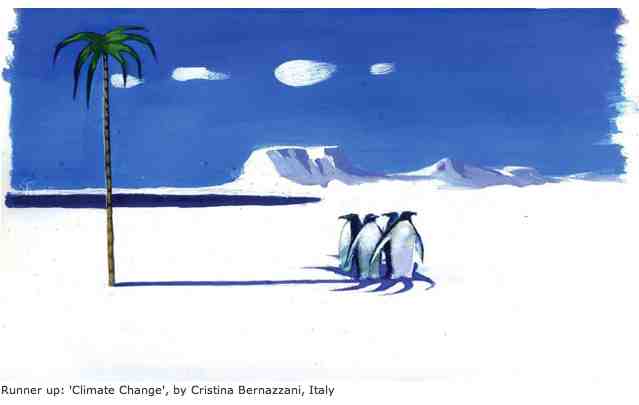
penguin palm tree

Civil society will have to provide unrelenting leadership if  global carbon emissions are to peak in less than 10 years and go ‘negative’, experts say.

By Stephen Leahy

UXBRIDGE, Canada, Jan 15 2009 (IPS)

Global emissions of carbon dioxide must reach a peak in less than 10 years and then begin a rapid decline to nearly zero by 2050 to avoid catastrophic disruption to the world’s climate, according to a new report.

Emissions of carbon dioxide will actually need to “go negative” – with more being absorbed than emitted – during the second half of this century, according to “State of the World 2009: Into a Warming World” released by the U.S.-based Worldwatch Institute this week.

“2009 is a pivotal year to deal with climate change,” said Christopher Flavin, president of well-respected Worldwatch Institute (WI), a U.S.-based environmental think tank.

“Humanity will face grave danger if we don’t move forward now,” Flavin told IPS.

Climate change is happening faster and with larger impacts than previously predicted, concludes the 26th annual “State of the World” report, devoted entirely to the challenges and opportunities of global climate change.

Even an additional warming of 2 degrees Celsius poses unacceptable risks to key natural and human systems, warned climate scientist W.L. Hare, one of the report’s 47 contributors.

SN852512 Continue reading

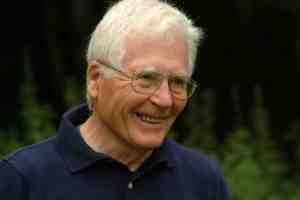
James Lovelock: “there will be a sudden shift to a new global climate … 5 or 6C warmer”

Lovelock_James credit Sandy Lovelock

Stephen Leahy interviews JAMES LOVELOCK the scientist who first proposed the Gaia Hypothesis

TORONTO, June 5 2009 (Tierramérica)

“When the first great climate disaster strikes, I hope we will all pull together just as if our nation were being invaded,” says British scientist James Lovelock in this exclusive Tierramérica interview.

Please throw something in the tip jar before reading on.
This is how I make my living.

As the world marksInternational Environment Day Friday, Lovelock argues that as the climate warms and the carbon content of the atmosphere soars, humanity is facing a far grimmer future that will be upon us sooner than any of the projections made by the Intergovernmental Panel Climate Change (IPCC).

A chemist, physician and biophysicist, Lovelock is one of the world’s foremost environmental scientists and founder of the Gaia Hypothesis, which describes the planet as a living organism, a complex system in which the components of the biosphere and atmosphere interact to regulate and sustain life.

Although his ideas often feed controversy, Lovelock has wide-ranging scientific credentials. As an inventor, he holds more than 50 patents, including the first devices for detecting the presence of ozone-depleting CFCs (chlorofluorocarbons) and pesticide residues in the environment.

He is also the author of many books. The most recent, “The Vanishing Face of Gaia: A Final Warning”, was published in April. Lovelock spoke with Tierramérica’s Stephen Leahy in Toronto.

TIERRAMÉRICA: Why are you critical of the IPCC? Continue reading

Scientists Build a Macroscope of Life on Earth

clown fish anomenes iucnBy Stephen Leahy

UXBRIDGE, Canada, Jun 2 (IPS) – Imagine looking at a Google Maps-like satellite image of the Amazon forest and with a mouse click find out what lives in that bit of forest – what tree and plant species are there, what animals, birds and insects.

You could even look at the DNA of the microbes that live on those insects in this amazing, futuristic online “macroscope of life” on planet Earth.

The information about these Amazonian species, their habitats and even their DNA already exists in most cases. But it is scattered like dry leaves all over the world in dusty museum basements, science labs, libraries and hundreds of electronic databases.

This week, scientists are launching a 10-year global effort to gather and compile the world’s vast storehouse of knowledge about biodiversity into a single online, interactive information system for life on Earth that will take its place alongside the world meteorology data network that pools information to predict the weather. Continue reading

Today’s Trophy Fish Are Tiddlers Compared to 50 Years Ago

trophy-fish-19501 Fresh evidence of fishing’s impact on marine ecosystems.

These are trophy fish caught on Key West charter boats in (a) 1957, (b) early 1980s and (c) 2007.

Scripps Oceanography graduate student researcher Loren McClenachan accessed archival photographs spanning more than five decades to analyze and calculate a drastic decline of so-called “trophy fish” caught around coral reefs surrounding Key West, Florida.

The study shows a stark 88 percent decline in the estimated weight of large predatory fish shown in black-and-white 1950s sport fishing photos compared to the relatively diminutive catches photographed in modern pictures.

“These results provide evidence of major changes over the last half century and a window into an earlier, less disturbed fish community…” writes McClenachan.

“The ongoing debate about the status of fisheries in the Florida Keys is a classic problem of the Shifting Baselines syndrome,” says Scripps Professor Jeremy Jackson. “Managers mistakenly assume that what they saw in the 1980s was pristine, but most prized fish species had been reduced to a small fraction of their pristine abundance long before. Historical ecology provides the critical missing data to evaluate what we lost before modern scientific surveys began.”

“I think the photos in this very original paper will make lots of people change their mind,” said Daniel Pauly, a professor at the University of British Columbia Fisheries Centre and Zoology Department.

Research paper published online in January and printed in an upcoming issue of the journal Conservation Biology,

[Source: Scripps news release Feb 18 2009]

Related articles: Coral Reefs and Acid Oceans Series

Get the latest Leahy articles once a week: Subscribe

UN CONVENTION ON BIOLOGICAL DIVERSITY – EXCLUSIVE COVERAGE OF COP 10 FROM NAGOYA, JAPAN


I was the only North American journalist to go and cover this important conference in Nagoya. People donated enough to help with travel costs so I could write about 10 articles that reached more than 200 million people. Scroll down and look for the COP 10 logo to find those articles.

I’m an independent journalist based in Canada who supports his family and the public interest writing articles about important social & environmental issues. This is now only possible with your support: see How Community Supported Journalism Works. Contributions can be made safely via PayPal or check/cheque. Thank you/Merci. — Stephen

Support Independent Environmental Journalism

Ten-Year Probe Reveals Oceans in Peril

sea-anemoneBy Stephen Leahy

UXBRIDGE, Canada, Nov 11 (IPS) – A thousand points of light are being shone into the dark ocean depths as scientists from 82 countries work to complete the decade-long global research effort called the Census of Marine Life.

“It’s been a remarkable time of exciting new discoveries and frightening revelations of how quickly the oceans are changing,” said Canadian deep-sea biologist Paul Snelgrove, a leader of a team integrating findings from all 17 census projects.

“We were startled to discover small crustaceans never seen by scientists before completely blanketing the seafloor at 500 metres in the Gulf of Mexico,” Snelgrove told IPS.

And during the eight years the census has run so far, scientists have documented that more than 90 percent of the oceans’ top predators — large sharks, tunas, swordfish, cod and others — are now gone and those remaining are in serious trouble. “We’re also seeing evidence of climate change with the shifting distribution of species,” he said. Continue reading

Top Ten Worst Pollution Problems That Kill Millions – Including Ones You’ve Never Heard Of

By Stephen Leahychromium-a-carcinogenic-commonly-used-in-the-tanning-industry-noraiakheda-kanpur-india-photo-by-blacksmith-institute-sml

UXBRIDGE, Canada, Oct 23 (IPS)

Gold mining and recycling car batteries are two of the world’s Top 10 most dangerous pollution problems, and the least known, according a new report.

The health of hundreds of millions of people is affected and millions die because of preventable pollution problems like toxic waste, air pollution, ground and surface water contamination, metal smelting and processing, used car battery recycling and artisanal gold mining, the “Top Ten” report found.

“The global health burden from pollution is astonishing, and mainly affects women and children,” said Richard Fuller, director of the New York- based Blacksmith Institute, a independent environmental group that released the list Tuesday in partnership with Green Cross Switzerland.

“The world community needs to wake up to this fact,” Fuller told IPS.

Continue reading

“We’re Running the Risk of Unstoppable Climate Change” — Oceanographer

Interview with leading marine scientist Chris Reid

“I’m afraid it is going to take a major catastrophe in the developed world…”

GIJON, Spain, Jun 4 (IPS) – Warming seawater, melting sea ice and glaciers, sea level rise, storm intensification, changes in ocean currents, growing “dead zones”, and ocean acidification are just some of the signs that the oceans that cover 71 percent of our watery planet are changing.

Changes in the oceans also means major impacts on the land and the atmosphere. “Policy makers and the public do not realize that the oceans are the drivers of the climate system,” says Chris Reid, recently retired professor of oceanography at the Sir Alister Hardy Foundation for Ocean Science in Plymouth, England.

Reid will be producing a report this summer on the impacts the altered oceans are having and will have on the global climate.

IPS environment correspondent Stephen Leahy spoke to Reid at an international scientific symposium held late last month in Gijon, Spain on the effects of climate change on the world’s oceans.

IPS: What is happening in the oceans that will affect the global climate?

CR: The oceans have absorbed 30 percent of all human emissions of carbon dioxide (CO2) since the start of the industrial age. There is now good evidence that the oceans are absorbing less carbon as a result of climate change. The warming of surface waters, glacial and sea ice meltwater, acidification and so on are inhibiting or slowing a number of the oceans’ mechanisms for absorbing carbon from the atmosphere and safely storing them in the deep ocean.

IPS: How will that affect us?

CR: It means the atmospheric concentrations of CO2 will rise much faster than has been previously projected by climate scientists. Human carbon emissions are already on pace for the worst case scenario as envisioned by the IPCC (Intergovernmental Panel on Climate Change). These changes in the oceans means the rate of warming will increase, bringing even more severe hurricanes and cyclones, flooding events and so on.

IPS: Cyclones like the one that recently devastated Burma?

CR: Yes. Research presented at this meeting shows that South Korea and Japan are experiencing more powerful cyclones. While a single event can’t be precisely connected to climate change, the Burma cyclone fits what is expected with climate change. Continue reading

Reporter’s Notebook 1999: “CO2 levels in decline last five years”

CO2 levels have been in decline the last five years said Tim Ball, a retired Professor of Geography, on Nov 24, 1999, at the Riverview Center, Guelph, Ontario, Canada.

That statement was completely false then and laughable now, but Ball continues to spew similar lies and misinformation to this day. Just last week Ball was a leading speaker in New York City at last week’s climate change denial festival.

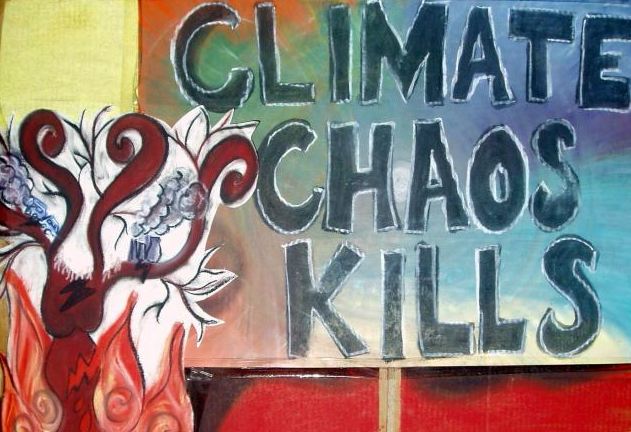
climate-chaos-kills-art-not-oil.jpg

I happened across my notes from the 1999 conference and was stunned at the outrageous comments Ball presented as “facts” to about 200 to 300 business types at a time when people knew little about carbon dioxide or global warming. No doubt many were convinced as Ball claimed (wrongly in every case) that: Continue reading