Energy Use On Suicidal Path

niger-delta-air-pollution-george-osodi.jpg

“If we get that kind of increase it will be societal suicide”

By Stephen Leahy

Nov 9 (IPS) – Today’s skyrocketing fossil fuel use will accelerate far faster in the coming decades, driving oil prices higher and virtually guaranteeing catastrophic climate change in the decades to come, energy experts say.

Emissions of greenhouse gases could increase a staggering 57 percent by 2030 if current trends continue, and with the strong growth of coal and oil energy use in India and China, the International Energy Agency (IEA) reported this week.

“If we get that kind of increase it will be societal suicide,” says Gavin Schmidt, a climate researcher at NASA Goddard Institute for Space Studies at Columbia University.

“It really is a huge increase,” Schmidt told IPS. Continue reading

The Coming Oxygen Crisis?

“I have no idea how this will affect oxygen levels but it is something we should be thinking about.”Bradley Cardinale, biologist, University of California,

By Stephen Leahy


Credit:NASA

The Amazon River and rainforest viewed from space.

Nov 6 (IPS) – Plants are the only source of oxygen on Earth — the only source. Studies around the world show that as plant species become extinct, natural habitats can lose up to half of their living plant biomass.

Half of the oxygen they produced is lost. Half of the water, food and other ecological services they provide are lost.

If a forest loses too many unique species, it can reduce the total number of plants in that forest by half, says Bradley Cardinale, lead author of the meta-analysis published this week in the Proceedings of the National Academy of Sciences (PNAS).

“Those unique species are not replaceable. Nothing takes their place. It was a really shocking finding for me,” Cardinale, a biologist at the University of California, Santa Barbara, told IPS. “That’s how much biodiversity matters.”

Continue reading

Climate Change Shifts Into Fast Forward

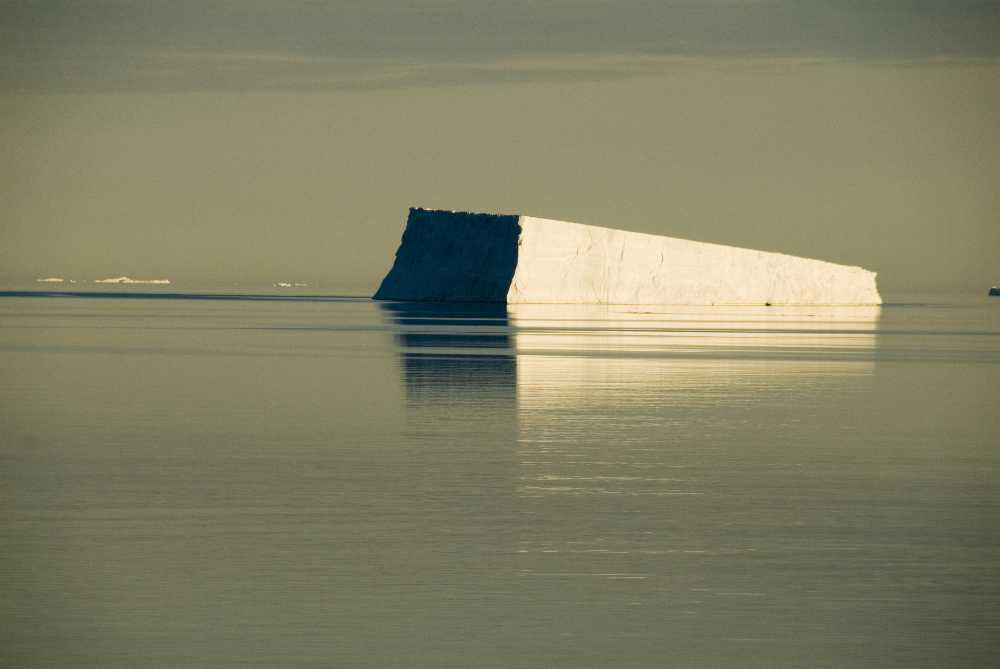
larsen-ice-shelf-remnant.jpg

By Stephen Leahy

Oct 26 (IPS) – Global warming has been compared to a slow-moving train wreck, in which the passengers are blissfully unaware of the coming catastrophe.

With the shocking loss of the Arctic sea ice this summer and several new reports this week that oceans and tropical forests are now absorbing less of the world’s steadily rising carbon emissions, our collective train wreck appears to have already tipped into fast forward.

“Global warming is a big feature of our lives now. It is no longer something that only future generations will have to cope with,” said Ted Scambos, senior research scientist at the National Snow and Ice Data Centre in the U.S. city of Boulder, Colorado.

The major ecosystems that absorb carbon emissions from the atmosphere are failing, and it is happening faster than anticipated, Scambos told IPS.

Continue reading

Ethanol: The Great Big Green Fraud

gsi-biofuel.jpg

Subsidising biofuels is just about the dumbest way to go.” – Todd Litman, director of the Victoria Transport Policy Institute — Subsidies for 2007 est $13-$15 billion

…increasing biofuel production is a “total disaster” for starving people Jean Ziegler, the United Nations Special Rapporteur on the Right to Food

By Stephen Leahy

Oct 20 2007 (IPS)

A raft of new studies reveal European and American multibillion dollar support for biofuels is unsustainable, environmentally destructive and much more about subsidising agri-business corporations than combating global warming.

Not only do most forms of biofuel production do little to reduce greenhouse gas emissions, growing biofuel crops uses up precious water resources, increasing the size and extent of dead zones in the oceans, boosting use of toxic pesticides and deforestation in tropical countries, such studies say.

And biofuel, powered by billions of dollars in government subsidies, will drive food prices 20-40 percent higher between now and 2020, predicts the Washington-based International Food Policy Research Institute.

“Fuel made from food is a dumb idea to put it succinctly,” says Ronald Steenblik, research director at the International Institute for Sustainable Development’s Global Subsidies Initiative (GSI) in Geneva, Switzerland.

Biofuel production in the U.S. and Europe is just another way of subsidising big agri-business corporations, Steenblik told IPS.

“It’s (biofuel) also a distraction from dealing with the real problem of reducing greenhouse gas emissions,” he asserts. Continue reading

GW Desperation Drives Slightly Mad Ideas

coral-sea-oz.jpg

Climate Change: Time For Some Slightly Mad Ideas?
By Stephen Leahy

Sep 28 (IPS) – Lack of governmental action on climate change is forcing scientists to consider radical climate geo-engineering schemes such as giant vertical pipes in the ocean and growing vast blooms of plankton to try and prevent the worst from happening.

Companies backing some of these schemes hope to profit from the rising public clamour for action and politicians desperate to avoid serious reductions in greenhouse gas emissions.

“I wasn’t in favour of geo-engineering before, but we haven’t done well in reducing emissions,” said Chris Rapley, director of the Science Museum in London and former head of the British Antarctic Survey.

In fact, the global community continues on the “business as usual” path in terms of emissions of greenhouse gases (GHGs), thus increasing the chances of catastrophic climate change, Rapley, a climate change expert, told IPS.

“Just look at how incredibly quick the Arctic sea ice is melting,” he said. Continue reading

Skin Cancer Rising Despite New Ozone Deal to Cut CO2 Emissions

Ozone Deal to Cut Down CO2 Emissions

By Stephen Leahy


MONTREAL, Sep 23’07 (IPS) – More than 190 nations agreed this week to combat global warming and accelerate the healing of the ozone layer, although critics say more could have been accomplished.

The sun shone bright and warm here on Friday, the final day of the 19th Meeting of the Parties to the Montreal Protocol to protect the ozone layer. Outside, caravans of pre-school children in strollers or holding hands as they walked sported hats and long-sleeved shirts to protect their delicate skin.

It can be easy to forget that the sun was not always so dangerous, and that modern society is responsible for putting chemicals into the atmosphere that continue to destroy the ozone layer that protects all life from harmful levels of solar ultraviolet radiation.

[UPDATE: Sept 2009 — Ozone Treaty May Hold Key to Halting Climate Change;

— Ozone Hole 2009 – Bigger than North America – 24 million sq km]]

And we forget that things could have been far worse without international action in the form of the Montreal Protocol, which opened for signature 20 years ago this week.

Sadly, that action came late and was not vigorous enough for millions of people who have or will get skin cancer. Continue reading

Ozone Hole is Back and Bigger Than Ever

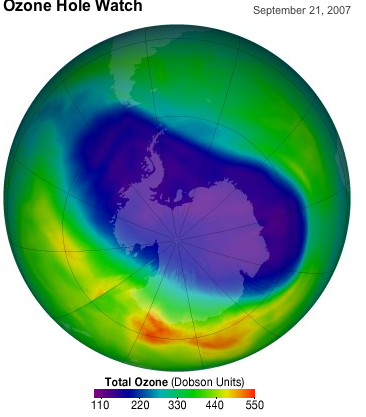
ozone-hole-sept-16-2007-sml.jpgThe World Meteorological Organization is reporting this week that the hole is back and bigger than ever. And it could grow larger in as spring returns to the region. In the past two years ozone holes larger than Europe have opened over the Antarctic and Southern Ocean.

The hole and the entire ozone layer and life on Earth would be in far worse shape if not for the The Montreal Protocol.

See also my stories on ozone and Montreal Protocol:

Ozone Treaty Best Bet to Slow Climate Change

From 2006:

Skin Cancer and the Record-breaking Antarctic Ozone Hole
60 Years to Restore the Ozone Layer Over Antarctica

Do you know what you’re eating? DNA barcoding IDs Fish Species

Geneticists Crack the Species Code
By Stephen Leahy


Credit:US CDC

Anopheles stephensi mosquito, a natural vector of malaria, which kills a million people per year.


Sep 14 (IPS) – Scientists are enthusiastic about a new DNA barcoding technology that will help keep illegal fish and timber out of global markets, slow the spread of invasive pests, and improve food safety and disease prevention and offer better environmental monitoring.

When a tree has been turned into a pile of lumber it’s very hard to know what species it was.” — David Schindel, executive secretary of the Consortium for the Barcode of Life

U.S. government regulatory agencies such as the Food and Drug Administration (FDA) and National Oceanic and Atmospheric Administration are beginning to utilise the three-year-old technology.

“It’s now a proven technology, everyone wants to use it,” said David Schindel, executive secretary of the Consortium for the Barcode of Life, comprised of 160 scientific and regulatory organisations from 50 countries and based at the Smithsonian Institution in Washington.

“It’s also an incredibly important technology for developing countries to research and protect their biodversity,” Schindel told IPS.

Continue reading

Facebook: Last Hope for Environment?

facebook-header.png

Global trends indicate a looming environmental catastrophe, and engaging high school students around the world may be the only hope.

By Stephen Leahyvital-signs.png

Sept 14’07 (IPS)
Governments, the corporate sector and media continue to champion industrial and economic growth at the cost of escalating impacts on the environment, concludes the latest report from the Washington-based Worldwatch Institute, “Vital Signs 2007-2008“.

For a number of years, the “Vital Signs” report has tracked 44 trends that are shaping the future, and they document a record level of industrial growth, says Erik Assadourian, Vital Signs project director.

“‘Vital Signs’ also documents the escalating impacts of such growth on the environment,” Assadourian told IPS in an interview from Barcelona.

The scale of the environmental crisis, in which catastrophic climate change is just one of many, is undermining the ecosystems that support life on Earth.

“Climate change and other environmental problems are symptoms of the root problem, which is the obsession with consumerism,” he said.

Vital Signs reports that in 2005, more wood was removed from forests than in any previous year. Fossil fuel usage dumped 7.6 billion tonnes of carbon emissions into the atmosphere. Meat production hit a record 276 million tonnes (43 kilogrammes per person) in 2006. Rising meat consumption is driving rising soybean demand to feed cattle, which in turn is a driver of deforestation as tropical forests are turned into soy fields.

And on it goes: global seafood consumption breaks records, steel and aluminium production too. None of this is sustainable — another three or four or five planets would be needed to maintain these levels of production and consumption. Continue reading

Greenland Ice Collapse Producing Earthquakes

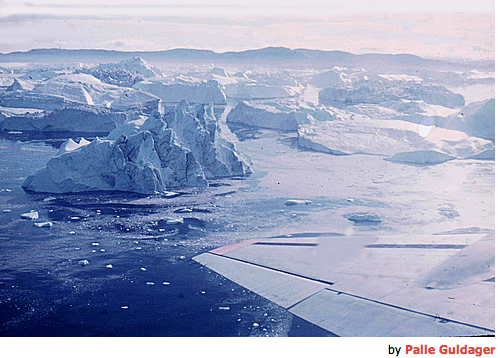
isfjorden-ved-jakobshavn-ilulissat.pngChilling from-the-scene update on my Greenland on Verge of Meltdown article in August: the Greenland ice cap is melting so quickly that it is triggering earthquakes as pieces of ice several cubic kilometres in size break off says Guardian reporter in Greenland.

UPDATE:
Here is a satellite view of Lulissat, Vestgronland Greenland just pan and zoom to the upper glacier to see the meltwater on the ice (not sure when this satellite pic was taken)
View Larger Map

Related stories:

The Earth is Going Dark Scientists Say
US Generals Say Warming Poses Major Security Threat

Climate Panel Report Called Too Conservative