Satélites revelan caída de tala amazónica en Perú

Para los lectores españoles:

Satélites revelan caída de tala amazónica en PerúRecently-contacted Murunahua man, River Yurua, Peru. He was shot in the eye by loggers during first contact. © David Hill / Survival
Por Stephen Leahy

La deforestación peruana, intensa en las áreas cercanas a carreteras y explotaciones minerales, ha tenido escaso impacto en las selvas protegidas, afirman investigadores.

TORONTO, 13 ago (Tierramérica).- Las políticas de conservación de selvas redujeron el ritmo de la deforestación en la Amazonia peruana, afirma un nuevo estudio basado en detección satelital de alta precisión.

Aunque los bosques amazónicos de Brasil son los que concitan la mayor parte de la atención internacional, los 661 mil kilómetros cuadrados de selvas peruanas son reconocidos como un ecosistema único.

Pero los impactos de la actividad humana en toda la región han sido mal comprendidos hasta un estudio publicado el viernes 10 en la revista científica Science.

“Las reservas forestales y las áreas de conservación de Perú parecen estar funcionando bien”, dijo Greg Asner, director del estadounidense Observatorio Aéreo de la Carnegie Institution of Washington, con sede en California.

Continue reading

Overweight? Hungry? Blame “Hollow Food”

New Studies Back Benefits of Organic Diet: Conventional agriculture produces “hollow food”, with low levels of nutrients and vitamins

wheat harvest sml

By Stephen Leahy

TORONTO, Canada, Mar 4, 2006 (Tierramérica)

(Originally published in 2006, two authoritative 2007 studies with similar findings are referenced at the end)

Organic foods protect children from the toxins in pesticides, while foods grown using modern, intensive agricultural techniques contain fewer nutrients and minerals than they did 60 years ago, according to two new scientific studies.

A U.S. research team from Emory University in Atlanta analysed urine samples from children ages three to 11 who ate only organic foods and found that they contained virtually no metabolites of two common pesticides, malathion and chlorpyrifos. However, once the children returned to eating conventionally grown foods, concentrations of these pesticide metabolites quickly climbed as high as 263 parts per billion, says the study published Feb. 21 (2006).

Organic crops are grown without the chemical pesticides and fertilisers that are common in intensive agriculture.There was a “dramatic and immediate protective effect” against the pesticides while consuming organically grown foods, said Chensheng Lu, an assistant professor at the Rollins School of Public Health at Emory University.

These findings, in addition to the results of another study published in Britain earlier this month, have fueled the debate about the benefits of organically grown food as compared to conventional, mass-produced foods, involving academics, food and agro-industry executives and activists in the global arena.

Continue reading

Carbon Project Endangers the Galápagos

img_0235.jpg


By Stephen Leahy

A company is preparing to enrich seawater with iron in order to promote phytoplankton growth and the absorption of carbon from the atmosphere near the environmentally-protected Galápagos Islands.

PUERTO AYORA, Galápagos, Ecuador, Jul 9 ’07 (Tierramérica).- Later this month a U.S. company, Planktos Inc., plans to dump 100 tons of iron dust into the ocean near Ecuador’s Galápagos Islands, despite opposition from environmental groups and marine scientists.This will be the first-ever commercial effort to reduce carbon dioxide in the atmosphere, one of the main gases blamed for climate change, by using iron particles to create a 10,000-square-kilometer “plankton bloom”.

Planktos says the extra volume of these small, floating organisms will absorb large amounts of CO2 from the atmosphere and take it deep into the sea. And this method may be the fastest and most powerful tool to battle climate change.

img_0508.jpg

“The currents will likely bring the bloom into the [Galápagos] Marine Reserve,” covering 133,000 sq. km, the world’s third largest marine reserve, says Washington Tapia, director of the Galápagos National Park, which includes the reserve. Continue reading

Aliens of the Deep Seas

350 Degrees Is Bathwater to These Animals
By Stephen Leahy


Credit:NASA

Hydrothermal vent


PUERTO AYORA, Galapagos Islands, Ecuador , Jul 5 (IPS) – Marine scientists returned to the Galapagos Islands this week to celebrate a discovery that Charles Darwin never dreamt of: bizarre animals that live in total darkness around active deep-sea volcanoes.

Thirty years ago, researchers found the first chimney spewing super-hot water — called a hydrothermal vent — 2,500 metres below the surface on the sea floor, with its own thriving  animal community. That life could prosper without sunlight or photosynthesis changed forever the very definition of what constitutes “life” on the Earth. And it opened a new window on the possibilities of life elsewhere in the universe.

After all, if a tiny shrimp can live in total darkness, under tonnes of pressure in a toxic chemical soup boiling away at 350 degrees C, why could not life take hold on some distant planetoid where conditions might not be so harsh?
Continue reading

Synthetic Lifeforms by Microbesoft

picture-6.pngGenome Guru Seeks Patent on Synthetic Life Form
 

By Stephen Leahy

Jun 11 (IPS) – Patent applications for the world’s first-ever human-made species have been made to patent offices around the world.

The Venter Institute, named for its founder and CEO, J. Craig Venter, has applied for a patent on a novel bacterium made entirely from synthetic DNA in the laboratory, according to a civil society organisation concerned that this new technology is outpacing ethics and safety protocols. Applications have reportedly been made to more than 100 patent offices over the past few months for the synthetic bacterium called “Mycoplasma laboratorium”. “In the tradition of ‘Dolly,’ (the first cloned animal) we have nicknamed this synthetic organism ‘Synthia'”, said Jim Thomas of ETC Group, a Canada-based organisation that recently won a 13-year legal battle against Monsanto’s species-wide soybean patent.

“These monopoly claims signal the start of a high-stakes commercial race to synthesise and privatise synthetic life forms,” Thomas told IPS. “Will Venter’s company become the ‘Microbesoft’ of synthetic biology?”

Continue reading

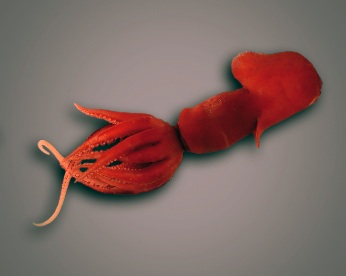
Free Access to Every Species on the Planet

new-species-of-squid-coml.jpg

A Web Page for Each of the World’s Creatures

By Stephen Leahy

May 10 (IPS) – Scientists launched a global initiative Thursday called the “Encyclopedia of Life” that will document the Earth’s 1.8 million known species and track the impacts of habitat loss and climate change.

The ambitious electronic encyclopedia will catalogue the details of every species thus far identified and put all this information on the Internet so anyone can access it.

“This will be a fantastic resource for the developing world,” said James Edwards, the new executive director of the Encyclopedia of Life project headquartered in Washington at the Smithsonian Institution.

Continue reading

Global Warming Connection to Outdated Technology

Paraphrase of the Day:


In era of rapid scientific development, cars and trucks still use an internal combustion engine developed 100 years ago and much of the world’s electricity comes from coal-fired power plants first developed in the 17th century.

— Andrew Weaver, a climatologist at the School of Earth and Ocean Sciences in University of Victoria, Canada.

Excerpt from article Massive Ecological Impacts Coming with New ‘Hothouse’ Climate

IMPORTANT NOTICE: Your Input Needed for Special Global Warming Project

Over the years people have asked for explanations about various aspects of global warming or climate change (ie what’s the difference?). I’ve probably written close to 100 stories on climate change but it may be time to put the whole subject together in a format that is concise, accurate and easy to understand. So I’m considering putting together a very brief eBook as an PDF electronic download and offering it on the highly-regarded self-publishing site lulu.com or from me directly.

Before investing the time and effort to put this together – please remember my livelihood is independent environmental journalism – I would like to have at least 25 people send me an email (writersteve AT gmail . com) or a comment to let me know they support this idea and would consider purchasing it. (only $5.00 — see ad notice below)

Please pass this link on to anyone who might be interested — or you think should be:].

Cheers and thanks for your support — Stephen


——–Draft eBook Notice——–


Really Brief BUT Authoritative Guide to Global Warming
Global warming, the latest climate science (including the Intergovernmental Panel on Climate Change Feb 2 report) and how it is changing our world explained in less than 20 factual and easily understood pages by experienced science writer Stephen Leahy.


Includes loads of links to high-quality, authoritative websites for more detailed information and further exploration of the most important issue of the 21st century.

$5.00 as high-quality eBook as PDF electronic download. (Note: To be published only if enough people say they want it.)

Synthetic Biology on Trial at World Social Forum 2007

etc-group-synbio-cover.png

Group Seeks Ban on “Living Machines”

By Stephen Leahy

Jan 20 (IPS) – Anyone with a laptop and a mailbox could create their own bacteria or virus, for good or ill, thanks to a rapidly evolving new technology called synthetic biology, activists warn.

Companies are jumping into synthetic biology and beginning to commercialise and patent bits of constructed DNA and other molecules that can be used to create living machines in the near future, the Canadian-based ETC Group warn in their report “Extreme Genetic Engineering: An Introduction to Synthetic Biology” which will be released at the World Social Forum (WSF) in Nairobi, Kenya Saturday.
Continue reading

Rapidly Warming Polar Regions Creates Urgency for 50,000 Scientists

“One day in the future there might be an oil rig sitting on top of the North Pole” said David Hik, chairman of International Polar Year Canada.

arctic-oil-rig-on-ice.png

The International Polar Year begins in March, and will involve 50,000 scientists studying the impact of climate change at the poles. Canada is the main contributor, donating 160 million dollars.

By Stephen Leahy

TORONTO, Canada, Jan 13 (Tierramérica) – The recent collapse of a Canadian Arctic ice shelf illustrates why Canada is the biggest contributor to the International Polar Year, the world’s largest scientific research program, focused on climate change. More than 60 nations,¬ from Chile to China, and 50,000 scientists and researchers will be involved in the International Polar Year (IPY) 2007-2008, actually a two-year period that will last from Mar. 1, 2007 to the same date in 2009.

Continue reading