Awarding Winner Poster - CBD COP 10 Nagoya - Copyright Stephen Leahy
By Stephen Leahy
NAGOYA, Japan, Oct 21, 2010 (IPS)
Blame Canada if countries fail to agree to a new binding treaty to curb the rapid loss of plant, animal and species that form the intricate web of life that sustains humanity.
That is the view of indigenous representatives from Canada in response to a late night move by the Canadian delegation to strike a reference to indigenous peoples’ rights at the U.N. Convention on Biological Diversity (CBD) members’ conference here.
“Canada is stalling progress here, weakening our rights and fighting against a legally-binding protocol on access and benefit sharing,” said Armand MacKenzie, executive director of the Innu Council of Nitassinan, the indigenous inhabitants in northeastern Canada.
“Their opposition threatens global biodiversity… people need to speak out,” MacKenzie told IPS.
A protocol on access and benefit sharing (ABS) without a guarantee of the rights of indigenous people and local communities “would be totally void”, said Paulino Franco de Carvalho, head of the Brazilian delegation.
“Brazil will not accept any agreement on biodiversity without a fair ABS protocol…. We are not bluffing on that, I must be very clear,” Franco de Carvalho said in a press conference.
Children begged world leaders to craft a new climate treaty and left Copenhagen empty-handed. Their story.
By Stephen Leahy
COPENHAGEN, Dec 5 2009 (IPS/TerraViva)
Young people from 44 countries are demanding that world leaders take decisive action on climate change. The time for talk is over, they declared at the end of a weeklong Children’s Climate Forum here.
“Our plates are empty due to drought. Our future is at risk, and we demand that something be done,” they wrote in a declaration titled“Our World, Our Future” signed by 164 participants aged 14 to 17 at the conclusion of the forum.
“I don’t want my future compromised by inaction on climate,” said Bipra Biswambhara, 16, of India.
Biswambhara and many of her fellow delegates were “shocked to learn how many people and parts of the world are already affected by climate change”, she told TerraViva. “We youth are committed to taking action in our home communities,” she said.
“We must have pity for future generations to come,” said Mohamed Axam Maumoon, 15, of the Maldives, a low-lying chain of islands that will likely vanish under rising oceans if temperatures rise two degrees C.
“We are not alone, everyone is being affected,” Maumoon said. As a result there was a strong feeling of cooperation and common cause throughout the week, he said. “If we all work together we can have a bright future.” Continue reading →
One third of all species of sharks, rays and reef-building corals are facing extinction while governments spend $27 billion subsidizing overfishing
By Stephen Leahy
UXBRIDGE, Canada, Sep 15, 2010 (IPS)
Local fishers objected to the creation of a new no-fishing marine protected area off the coast of Belize in 1996. Today they are benefiting from the bounty of fish spilling out of the Laughing Bird Caye National Park. Tourism has also boomed, illustrating the multiple benefits and value of marine protected areas, according to a new series of reports released Wednesday by Conservation International (CI).
“The ocean is in crisis but we can’t see it with our own eyes so we’re not aware of what is happening,” said Leah Bunce Karrer, co-author and director of the Marine Management Area Science Programme at CI.
“Marine managed areas offer a solution which could significantly reduce ocean degradation while benefiting local communities,” Karrer told IPS.
One third of all species of sharks, rays and reef-building corals are facing extinction. “Most people don’t realise that,” said Gregory Stone, chief ocean scientist at CI.
“As species disappear, entire ecosystems are altered in negative ways we don’t even want to imagine,” Stone said.
Only a fraction of one percent of the world’s oceans are effectively protected even though there is growing scientific consensus of the need to protect at least 20 percent of the seas. Continue reading →
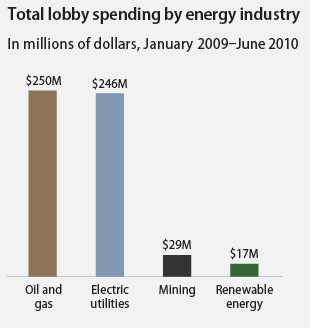
“Big oil companies and other special interests have spent millions of dollars in lobbying and campaign contributions to defeat clean energy and global warming legislation, according to a new analysis released today by the Center for American Progress Action Fund.
The study “Dirty Money” found that the top 35 spending companies and trade associations invested more than $500 million in lobbying and campaign contributions from January 2009 to June 2010 to defeat clean energy legislation. This political pressure spending convinced enough senators to oppose clean energy measures that would have created jobs, reduced oil use, and cut global warming pollution.”
“I meet international freelance journalists quite often. Most make it clear that budget cuts have made it increasingly difficult for just about anyone, especially freelancers, to get into print. It is usually the freelancers who are most willing to risk their lives to get the stories that need reporting the most. If the day arrives when they can no longer carry out their professions, we will all have a serious problem.
Muckraker: A reporter or writer who investigates and publishes reports involving a host of social issues, broadly including crime and corruption
Stephen Leahy, a Canadian, and one of the world’s best-known investigative reporters on environmental issues, has launched a challenge: if corporations won’t pay for the news, then it is up to communities and the public to fill the gap. A free society needs journalism, even if reporting the news is not commercially profitable.
Leahy’s model for supporting the news has the journalist make his pitch over the internet. The completed article can then be distributed by news agencies or magazines that are low on funds but high on public interest. That could be IPS, Reuters-Alertnet, Commondreams, InfoSud, The Essential Edge or any number of other publications and news outlets.
[edit: Wermus concludes]
Leahy observes that: “Many people tell me, we need individuals like you to get real information out.”
It may be too early to tell whether this really signals a new citizen’s approach to the need for hard information that may be crucial to society. In the best of all worlds it could bring together both consumers and media for promoting a better planet. The danger is that it could also produce yet another quagmire of holier-than-thou preaching.”
Update: Community Supported Journalism is working. However 50 people helping out has to become 500 so we all can get the crucial information we need. Please consider becoming one of the 500. Thank you. — Stephen
[Updated May 11 2012: At last a serious plan to phase out these subsidies will be on the table at the Rio+20 meet in June. I will be following this closely – with your help – Stephen ]
Experts say the subsidy madness must stop. With unemployment high can governments facing recession summon the will to end the fossil fuel industries’ FREE RIDE?
By Stephen Leahy
BERLIN, Jun 29, 2010 (IPS)
Every day, governments give away an estimated two billion dollars of taxpayer money to the fossil fuel industry. This unmatched largesse to a highly profitable sector by countries verging on bankruptcy or unable to feed large numbers of their own people is “complete madness”, according to many experts.
In Toronto Sunday, at the conclusion of G20 summit, countries agreed the madness must be constrained if not stopped.
“With countries committed to cutting their deficits, it is hard to ignore giving billions of real money away to the fossil fuel industry or to keep fuel prices low,” Halle said in an interview.
The two-billion-dollars-a-day public subsidy for carbon- based fuels is a very conservative estimate based on the extensive research conducted by the IISD’s Global Subsidies Initiative, said Halle. Not only do such huge subsidies undermine policies on energy efficiency, they make it impossible for alternative energy sources to compete, he said. [See also Fossil Fuel Subsidies Are 12X (more like 20X) Support for Renewables, Study Shows — Stephen]
“We can’t make the transition to low-carbon economies nor can the energy playing field be leveled without the elimination of fossil fuels. And time for that has finally come,” he said.
Others are less optimistic given the G8 and G20 track record for broken promises.
“It (the G20 commitment) fell short of vision and courage that is expected from global leaders in the light of the disastrous oil spill” in the Gulf of Mexico, said Darek Urbaniak of Friends of the Earth Europe. Urbaniak noted that BP, the company responsible for the spill, receives British and EU public subsidies.
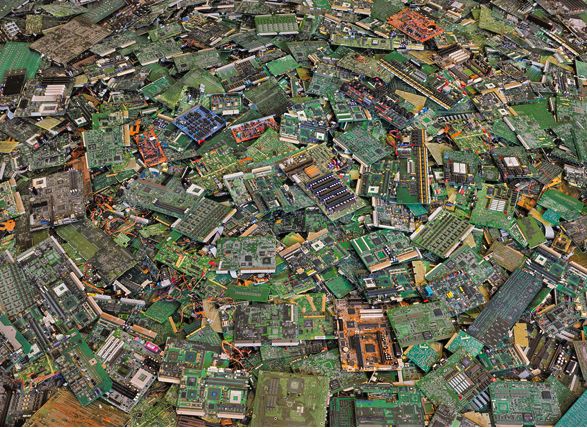
Circuit Boards – Chris Jordan “Intolerable Beauty: Portraits of American Mass Consumption http://www.chrisjordan.com
By Stephen Leahy
BERLIN, Jun 3, 2010 (IPS)
Rising global wealth spells disaster for the planet, with environmental impacts growing roughly 80 percent with a doubling of income, reports the first comprehensive study of consumption.
It adds to the mountain of evidence that the gospel of economic growth must be urgently transformed into the new gospel of resource-efficient green economies, a U.N. expert panel concluded Wednesday.
What are the biggest planetary criminals?
Fossil fuel use and agriculture, the study found. Ironically, these are also the two most heavily subsidised sectors, noted Ernst von Weizsaecker of Norwegian University of Science and Technology, and co-chair of the International Panel for Sustainable Resource Management.
“In the case of CO2, a doubling of wealth typically increases environmental pressure 60 to 80 percent, sometimes more in emerging economies,” von Weizsaecker said in an interview.
Rising affluence has also triggered a shift in diets towards meat and dairy products so that livestock now consumes much of the world’s crops and indirectly consumes 70 percent of the fresh water and produce much of the fertiliser pollution, von Weizsaecker said from Brussels.
“It is clear that a meat-based diet uses more land and fertiliser and emits far more CO2 than a vegetarian diet,” said von Weizsaecker.
The study also found that rich countries like Japan, the United States and many in the European Union are now “exporting” a large part or most of their true environmental impacts to developed countries by importing goods and food from those countries.
In a spiral of destructive co-dependency, China’s rising CO2 emissions and deforestation in Malaysia are in part a direct result of North American and European consumption of the goods made there.
“International trade clearly shows rich countries are outsourcing their impacts,” von Weizsaecker said.
“Given this fact, perhaps the current way of structuring agreements on emission reduction targets is becoming obsolete,” said Ashok Khosla, co-chair of the panel and president of the World Conservation Union (IUCN)
At the household level, it is the goods and services consumed, not the fossil fuel used for cars or homes, that accounts for most of the environmental impacts. This is despite energy and material efficiency gains over the past two decades. Efficiency has improved on a per dollar expenditure basis but people are consuming more, which drowns out any efficiency gains, said panel expert Sangwon Suh of the University of California, Santa Barbara.
“Policy makers cannot just look at direct emissions, they need to look at a full life cycle of their consumption and incorporate those impacts into their decision making,” Suh told IPS.
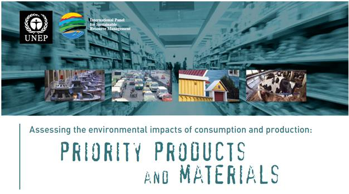
Representing the world’s foremost experts, the panel synthesised a comprehensive library of the most authoritative global studies to provide science-based assessments of products, materials and economic and lifestyle activities, producing the greatest harm to the planet.
“It is the first global assessment of what kind of consumption activities have the biggest impacts,” Suh said.
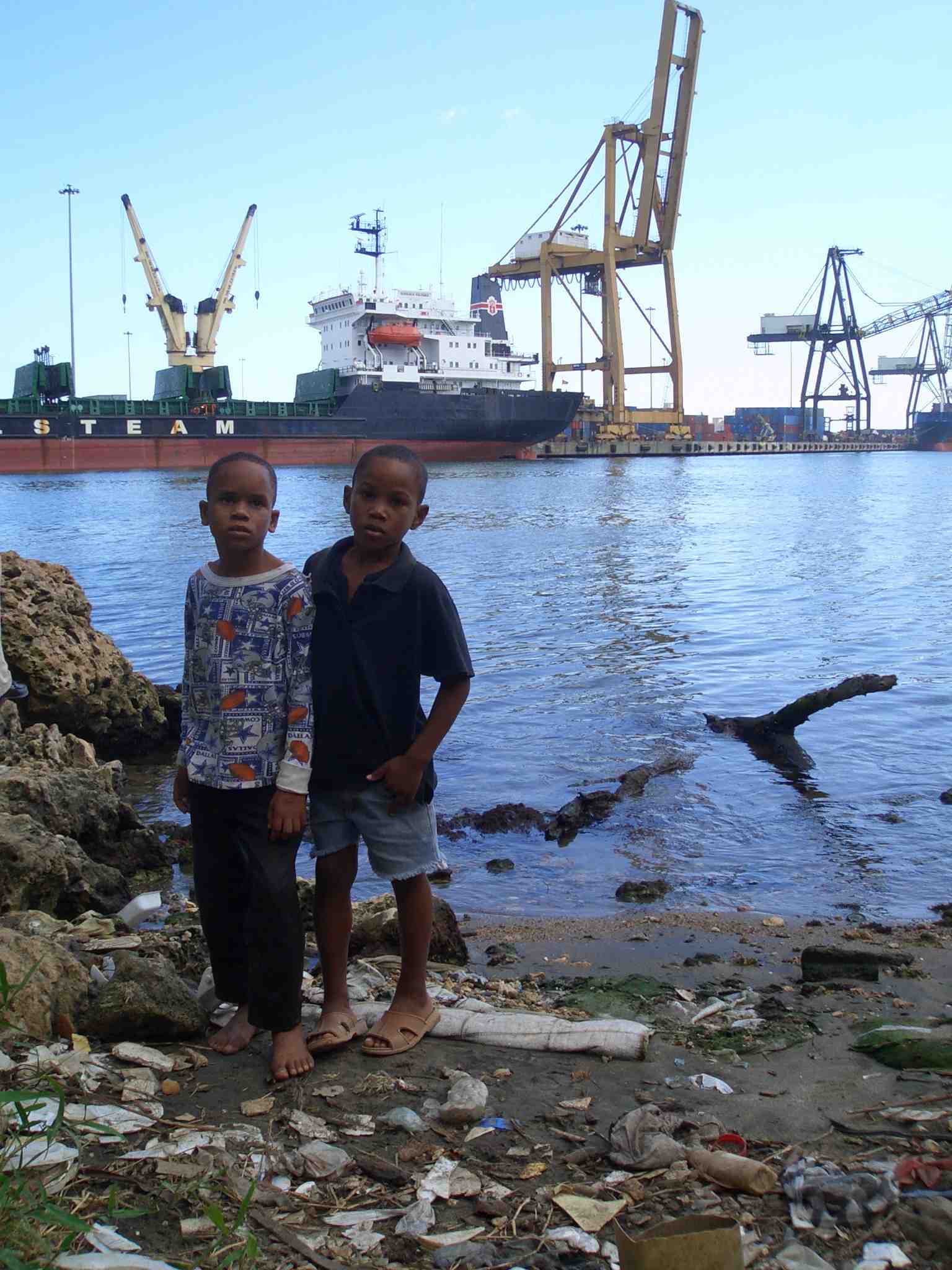
Children poisoned by lead from battery waste in Dominican Republic
Fossil fuel use and agriculture topped the list in the149-page report, followed by the heavily subsidised industrial fishing industry and the production and consumption of materials like metals and plastics. While the latter do cause severe damage locally all over the world, shockingly these are not that significant compared to global impacts of fossil fuel and agriculture, the report noted.
The purpose of this U.N. Environment Programme-sponsored study was to identify the “hot spots” in terms of environmental impacts so that policy makers can use this information to reform policies, said Suh.
“Setting priorities would seem prudent and sensible in order to fast track a low-carbon, resource-efficient green economy,” said Achim Steiner, UNEP’s executive director, which hosted the panel.
“Decoupling growth from environmental degradation is the number one challenge facing governments,” Steiner said in a statement.
However, this decoupling is not happening, the report shows. And it will not happen in the future without strong policy interventions, said von Weizsaecker.
Policy makers and economists will need to abandon their obsession with economic growth as the solution to all problems, writes Clive Hamilton in a new book “Requiem for a Species”. Growth has become a powerful symbol of success and modernity even though in reality it is neither, says Hamilton, a writer and academic at the Australian National University.
If someone is murdered, it adds about one million dollars to the GDP of rich countries when costs of police, courts, and prisons are factored in, according to his research.
“Murder is good for the economy. So is environmental destruction,” he writes.
It will take extraordinary leadership to reverse the consumption-driven society where children are bombarded with advertising – 17 billion dollars annually in the U.S. alone, Hamilton notes.
The same over-consumption brainwashing is well underway in the developing world. Shopping has become a form of recreation amongst China’s growing middle class and wealthy elite, who bought more than 12 percent of the world’s luxury goods in 2005, second only to the U.S., he says.
“Faced with the scale of the challenge, far more transformational measures need to be taken. Currently, we are fiddling – or fiddling around the edges – while Rome burns,” said Khosla.
Is this why there is no independent assessment of the BP oil well cap and surrounding sea floor?
Three of every four oil and gas lobbyists worked for federal government that’s probably why oil spill liability was capped at a ridiculous $50 million – an amount that wouldn’t cover the cost of a couple of oil spill skimmers.
Three out of every four lobbyists who represent oil and gas companies previously worked in the federal government, a proportion that far exceeds the usual revolving-door standards on Capitol Hill, a Washington Post analysis shows.
Key lobbying hires include 18 former members of Congress and dozens of former presidential appointees. For other senior management positions, the industry employs two former directors of the Minerals Management Service, the since-renamed agency that regulates the industry, and several top officials from the Bush White House. Federal inspectors once assigned to monitor oil drilling in the Gulf of Mexico have landed jobs with the companies they regulated.
Surprise, surprise BP threw even more money — +$1.7 million April to June –– at its lobbyists. And it works. Money unfortunately does buy influence in DC otherwise why aren’t US govt and/or independent science submersibles on the scene of the spill to verify BPs claims??
How could any level of government take the word a polluter that everything is cleaned up without bothering to CHECK to see if it is?
Even worse in my opinion: Why isn’t the media screaming for independent assessment of the leaking well head and surrounding area? (Twenty years ago they would have.)
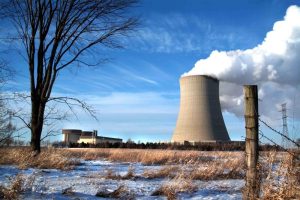
Costs of nuclear skyrocket while costs of renewables falling quickly say energy experts
BERLIN, Jul 31, 2009 (IPS)
Why is nuclear energy back on the table?
One reason is a powerful U.S. lobby where 14 energy companies spent 48 million dollars in 2007 alone to convince American politicians to give the industry huge loan guarantees because they cannot get financing anywhere else, says Ellen Vancko, a nuclear energy analyst at the Union of Concerned Scientists, a U.S.-based non governmental organisation (NGO).
This lavish lobbying effort by the energy and nuclear power sector has been ongoing since the mid-1990s, according to the Center for Responsive Politics, a U.S. NGO and now totals at least 953 million dollars.
Even more has been spent to convince the public that nuclear is one of the keys to energy security so that there is significant public support for new reactors, a Gallup Environment Poll reported this year.
“There are lots of senators and members of congress talking about nuclear as a clean, renewable energy resource,” Vancko says.
“The tar sands of Canada constitute one of our planet’s greatest threats” — James Hansen, Director of NASA’s Goddard Institute for Space Studies
“Extracting oil from Alberta’s tar sands jeopardizes the survival of our species” — Al Gore
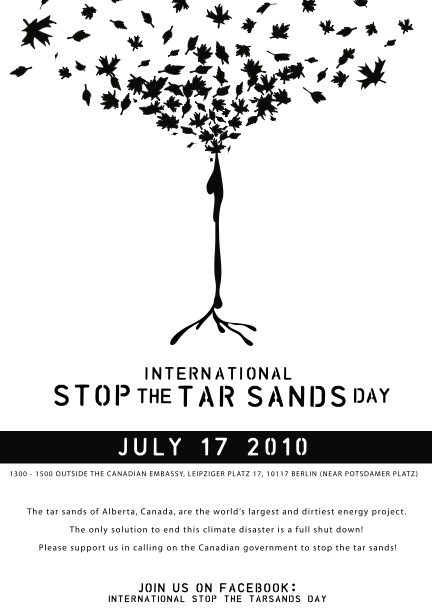
Warning of the global environmental disaster represented by Canada’s production of oil from its western tar sands, protesters will gather in front of the Canadian Embassies in Berlin, London and Copenhagen on Saturday, July 17 to mark International Stop the Tar Sands Day.
The goal of International Stop the Tar Sands Day is to raise awareness in Europe that oil made from Canada’s tar sands has “two-to-three times the global warming pollution of conventional oil,” according to eminent scientist James Hansen, Director of NASA’s Goddard Institute for Space Studies. “But the process also diminishes one of the best carbon-reduction tools on the planet: Canada’s Boreal Forest.”
Similar protests are planned at Canadian embassies in London, Paris and Vienna.
“Ultimately only Canadian people can stop the expansion of the tar sands. Through our demonstrations we want to show Canadians there is international support for a moratorium,” says first-time organizer Derek Leahy, a Canadian living in Berlin.
“We believe Canadians will make the right decision,” Leahy said
“Although European companies and banks are profiting from Canada’s tar sands few Europeans have heard about the tar sands. We intend to change that ,” he said
[Full disclosure: this is copied from a press release and Derek is my son — Steve]Continue reading →











 Stephen Leahy, International Environmental Journalist