Carbon Emissions Can Be Reduced 80% by 2020 – Lester Brown has a plan and he’s not crazy

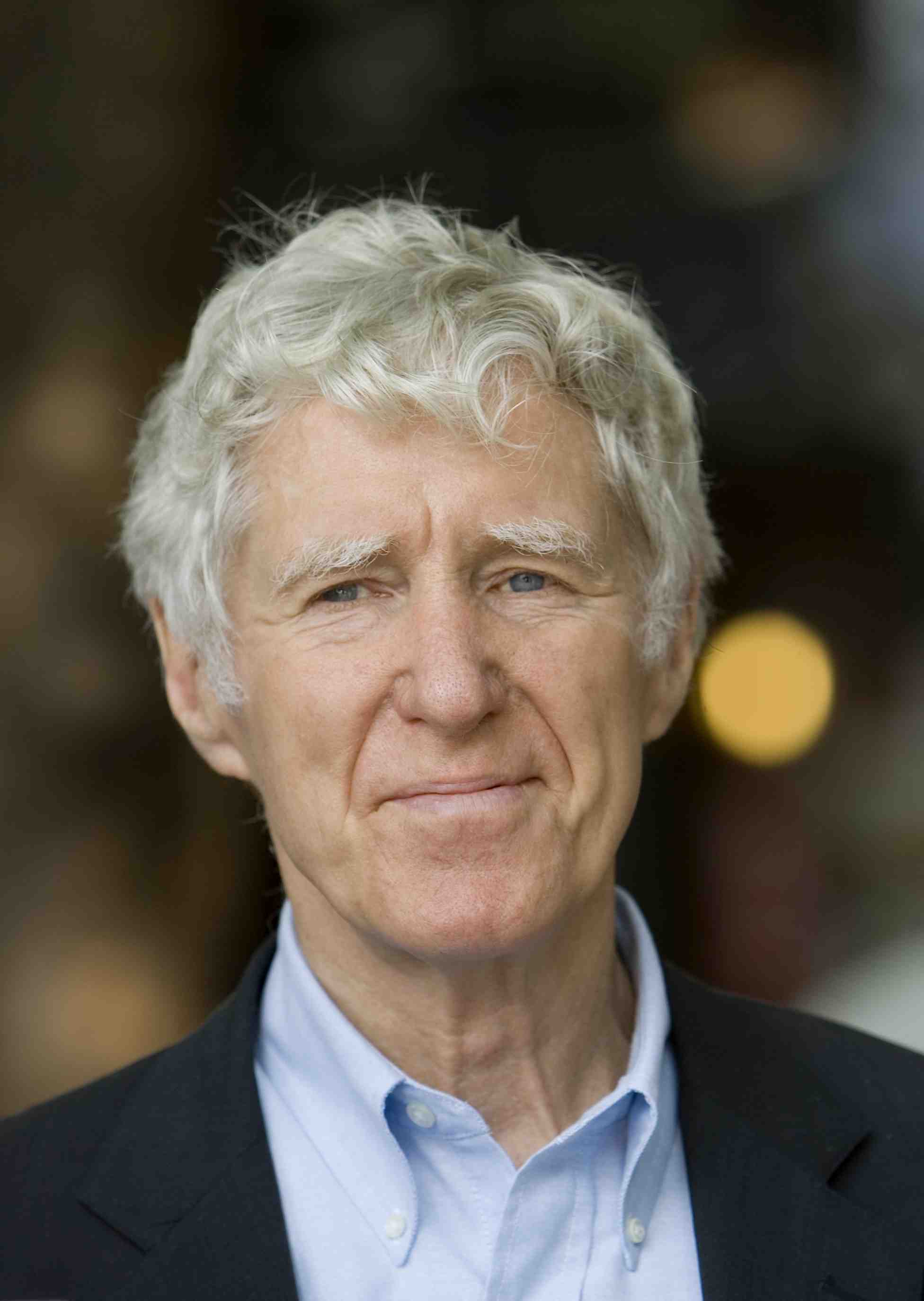
LesterBrown smlStephen Leahy interviews LESTER BROWN, founder of the Earth Policy Institute

UXBRIDGE, Canada, Oct 7 2009 (IPS)

Lester Brown says his views sometimes appear extreme – because the mainstream media largely doesn’t understand the urgency and challenges in avoiding catastrophic climate change.

The founder and president of the Washington-based Earth Policy Institute, he is also considered by many to be one of the world’s most influential thinkers.

“It looks like I’m a radical because the mainstream media aren’t reflecting the reality of our situation,” Brown says.

A farmer from the eastern U.S. state of New Jersey, Brown entered the U.S. Civil Service in the 1960s, becoming an expert on foreign agricultural policy before leaving to found the Worldwatch Institute in 1974.

The winner of many awards and honourary degrees, Brown is the author of 50 books. In 2001, he founded the Earth Policy Institute to provide a roadmap for achieving an environmentally sustainable economy.

His most recent book is “Plan B 4.0: Mobilizing to Save Civilization”, the fourth and perhaps most urgent version of the Plan B series, available for download at the institutes’s website. In Plan 4.0, Brown calls for carbon emissions cuts of 80 percent by 2020.

“We cannot afford to let the planet get much hotter,” he explains simply. Continue reading
G8 Failure to Launch on Potential Climate Catastrophe

SN851128.JPG

Analysis by Stephen Leahy

BERLIN, Jul 13 (IPS)

The G8’s failure to make meaningful commitments on climate last week pushes the world ever closer to global climate catastrophe, experts warn. Without commitments to take action, there is little comfort in G8 countries’ agreement to keep overall global warming below 2.0 degrees Celsius.

“If they took the 2.0-degree commitment seriously, it would imply a vigourous and immediate carbon emission reduction programme, said Michael Oppenheimer, a professor of Geosciences and International Affairs at Princeton University in the U.S.

“It would mean carbon emissions would have to peak by 2020 and decline. That’s a tall order but that’s what needs to happen to stabilise at around 2.0 degrees C,” Oppenheimer told IPS.

The Group of Eight of the world’s largest economies comprises Britain, France, Germany, Italy, Russia, Canada, Japan and the United States.

Climate experts stress that 2.0 degrees is not in any way a guarantee of safety. There are already significant impacts currently from climate change. However, from what scientists know today, risks increase markedly over 2.0 degrees of warming, Oppenheimer warned.

Global temperatures have already risen 0.8 C in the last hundred years and will reach 1.2 to 1.5 C based on emissions already in the atmosphere.

“The climate system is unpredictable. Two degrees is just a guideline,” Oppenheimer said. Continue reading

Global Day of Action Against Monsanto

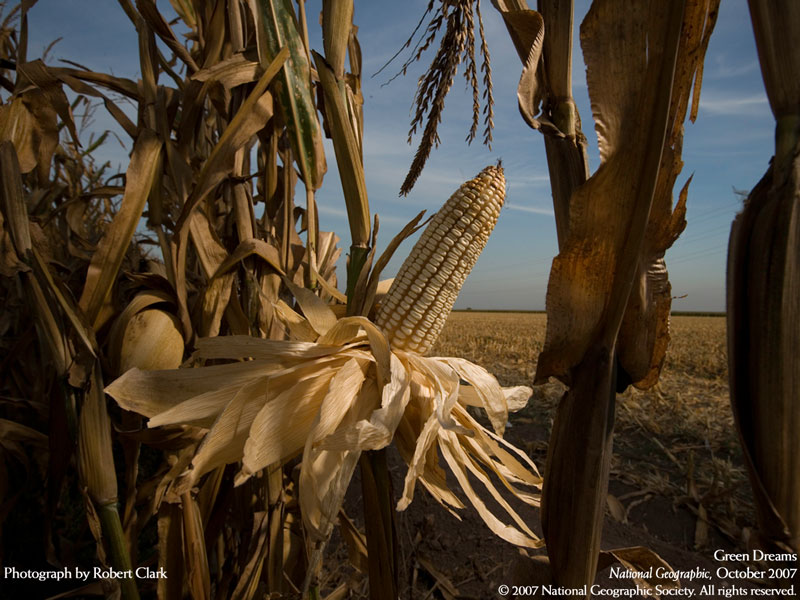
maize - mexicoCanadians are calling and writing the Minister of Health to ask that she immediately halt the introduction of Monsanto’s new eight-trait GM (genetically modified) corn called “SmartStax” because it was not assessed for safety by Health Canada.

“SmartStax” corn was authorized this summer by the Canadian Food Inspection Agency for planting next year but was not examined by Health Canada for human health safety.

This is part of a global action opposing Monsanto’s genetically modified (GM) crops under the first “International Day of Action Against Multinational Corporations” initiated by the global farmers’ movement called La Via Campesina.

“Its extremely significant that La Via Campesina is focusing their World Food Day action on Monsanto and GM crops. It shows us that farmers around the world see GM crops as a major threat to their survival,” said Devlin Kuyek, a Montreal-based researcher for the international group GRAIN.

[Here’s my full story on SmartStax corn variety that could be planted next spring in US/Canada]

Monsanto, Dow Stacking the Deck, Critics Say
By Stephen Leahy

BERLIN, Jul 29 (IPS) – The most complex genetically engineered corn (maize) yet has been approved for use next year in Canada and the United States without its potential health and environmental risks being investigated, anti-biotech activists charged Wednesday. Continue reading

Food Supply In Deep Trouble – Agriculture Most Vulnerable to Climate Change

veg food basketBy Stephen Leahy

UXBRIDGE, Canada, Oct 2 (IPS)

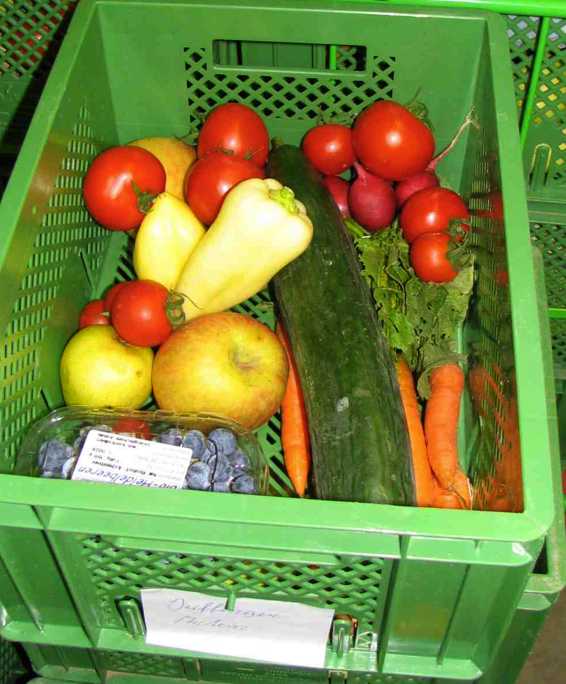
Rocketing food prices and hundreds of millions more starving people will be part of humanity’s grim future without concerted action on climate change and new investments in agriculture, experts reported this week.

The current devastating drought in East Africa, where millions of people are on the brink of starvation, is a window on our future, suggests a new study looking at the impacts of climate change.

“Twenty-five million more children will be malnourished in 2050 due to effects of climate change,” such as decreased crop yields, crop failures and higher food prices, concluded the International Food Policy Research Institute (IFPRI) study.

“Of all human economic activities, agriculture is by far the most vulnerable to climate change,” warned the report’s author, Gerald Nelson, an agricultural economist with IFPRI, a Washington-based group focused on global hunger and poverty issues.

The report, “Quantifying the Costs of Agricultural Adaptation to Climate Change“, may be the “most comprehensive assessment of the impact of climate change on agriculture to date”, as IFPRI claims, but researchers concede that there is no current way to quantify all of the future repercussions of changing weather patterns on the food supply.

A critical component of agriculture is knowing the best time to plant seeds, for example. Farmers rely on their past experience and weather records. But one of the most robust science findings is that climate change has and will produce significant increases in weather variability.

This means extremes like droughts or floods will happen more often or last longer, and extreme temperature shifts are more likely. The past is no longer a reliable guide for farmers because the fundamental conditions in the atmosphere have been altered – far more heat is being trapped in the atmosphere today because of carbon dioxide and other greenhouse gases than at any time since the dawn of agriculture.

Nelson told IPS that the IFPRI report is a “conservative estimate” of the potential impacts and does not include impacts of pests and disease, loss of farmland due to rising sea levels or loss of water from melting glaciers. Continue reading

Ozone Hole 2009 – Bigger than North America – 24 million sq km

Picture 7

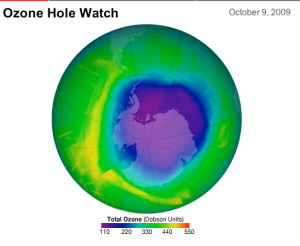
I’m not doing a full article on this year’s Antarctic ozone hole but you should know that the maximum size appears to have peaked at 24 million sq km, less than the 2006 record year 27 million sq km. Although some media reported this as a downward trend, it is too soon to say because ozone depletion is a complicated process and affected by local weather conditions.

Chilean Children Warned to Stay Indoors

The hole moves and shifts overhead like a unseen gigantic amoeba and on Oct 9 officials in southern Chile warned residents that the hole had extended itself over Punta Arenas and warned children to stay indoors and avoid exposure to the very hi-level UV rays.

Children hiding indoors during the day at the southern tip of Chile could have been the fate for much of the planet without the Montreal Protocol treaty 21 years ago to eliminate some of the ozone destroying chemicals used in deodorants and refrigerants.

This ought to be crucial cautionary tale for climate change.

Some of my previous articles on ozone:

Skin Would Fry in 5 Mins Without Ozone Treaty says NASA – Precautionary Lesson for Climate

Monster Ozone Hole (Again) – But your skin would fry in 3 mins without 20-yr old Ozone Treaty

*Skin Cancer Rising Despite New Ozone Deal to Cut CO2 Emissions

*Ozone Hole is Back and Bigger Than Ever

Time Running Out on Vows to Act on Climate Scientists Warn

Alleyway, RLeahy 2007

By Stephen Leahy

COLUMBUS, Ohio, Sep 24 (IPS)

Promises are easy to make.

But promises by world leaders will not halt the heat-trapping carbon emissions that are dialing-up global temperatures and altering the climate, say critics and climate researchers meeting in this U.S. Midwestern city.

As evidenced at the U.N. leader’s summit on climate change in New York Tuesday, the world’s big economies are refusing to commit to actions that will prevent this and future generations from inheriting a hostile climate no other humans have ever faced.

Do we have the social and political will to deal with a problem that we will only see partially in our lifetimes?” wonders Don McConnell, president of Battelle Energy Technology, the world’s largest non-profit research centre.

“What most don’t realise is that the biggest impact from climate change will be shifts in precipitation, not temperature increase,” McConnell told IPS at the McCormick Energy Solutions Conference at Ohio State University this week.

Continue reading

Facebookers Last Hope for Environment?

facebook header

‘The only real hope is for a global citizens’ movement unlike anything ever seen on the face of the Earth’ — Erik Assadourian, Vital Signs

By Stephen Leahy

BROOKLIN, Canada, Sep 14 2007 (IPS)

Global trends indicate a looming environmental catastrophe, and engaging high school students around the world may be the only hope say experts.

Governments, the corporate sector and media continue to champion industrial and economic growth at the cost of escalating impacts on the environment, concludes the latest report from the Washington-based Worldwatch Institute, “Vital Signs 2007-2008″.

For a number of years, the “Vital Signs” report has tracked 44 trends that are shaping the future, and they document a record level of industrial growth, says Erik Assadourian, Vital Signs project director.

“‘Vital Signs’ also documents the escalating impacts of such growth on the environment,” Assadourian told IPS in an interview from Barcelona.

The scale of the environmental crisis, in which catastrophic climate change is just one of many, is undermining the ecosystems that support life on Earth.

“Climate change and other environmental problems are symptoms of the root problem, which is the obsession with consumerism,” he said.

Vital Signs reports that in 2005, more wood was removed from forests than in any previous year. Fossil fuel usage dumped 7.6 billion tonnes of carbon emissions into the atmosphere. Meat production hit a record 276 million tonnes (43 kilogrammes per person) in 2006. Rising meat consumption is driving rising soybean demand to feed cattle, which in turn is a driver of deforestation as tropical forests are turned into soy fields.

And on it goes: global seafood consumption breaks records, steel and aluminium production too. None of this is sustainable – another three or four or five planets would be needed to maintain these levels of production and consumption. Continue reading

Solar Dreams – To Fly Around the World – Without Fuel By 2012

solar impulse3

By Stephen Leahy*

DÜBENDORF, Switzerland, Sep 16 (Tierramérica)

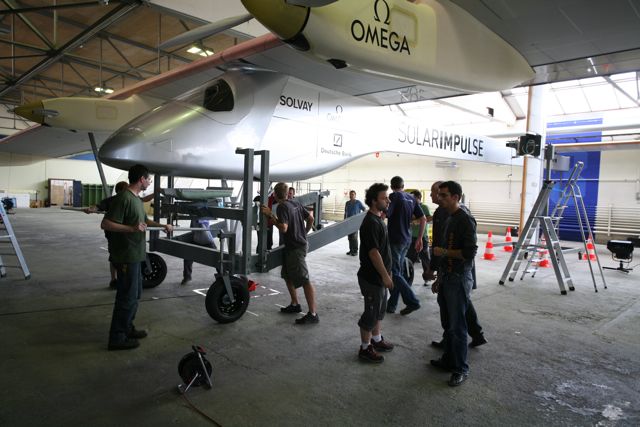
A solar-powered aircraft will take flight next month from Switzerland with hopes ultimately to circle the Earth in 2012, without fuel, and stopping every five days only to change pilots.

“I’m intrigued by the vision of perpetual flight,” mechanical engineer Andre Borschberg, chief executive of the 100-million-dollar Solar Impulse project, told Tierramérica.

Designed to use only energy from the sun during the day and run on sun-charged batteries at night, it could stay aloft perpetually, like a giant version of the thin-winged Arctic tern that migrates annually from the Antarctic to the Arctic, non-stop.

“The big lesson of the Wright brothers is that if you don’t try you never succeed,” Borschberg told Tierramérica in the Dübendorf Airfield hanger outside of Zurich, where the first prototype was being assembled for a test flight in October or November.

solar impulse2The U.S. inventors Orville and Wilber Wright are credited with the first airplane flight in 1903. “They never dreamed that a plane could cross the Atlantic Ocean, and yet less than 25 years later (in 1927) Charles Lindbergh flew from New York to Paris,” Borschberg said.

“It is our hope that the Solar Impulse will be a symbol to the world and create awareness about our own energy use,” he added.

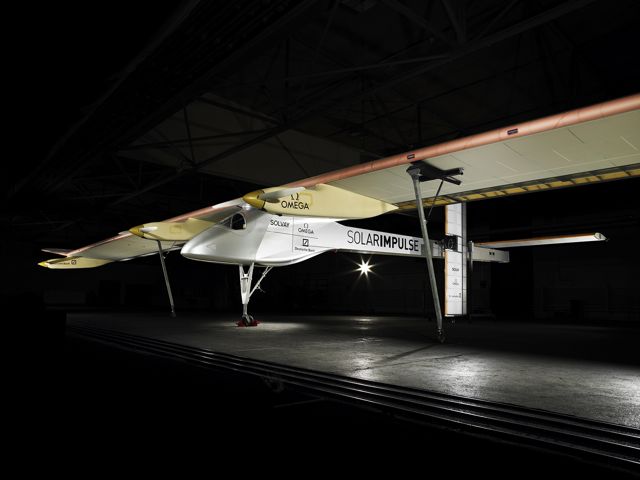
The Solar Impulse HB-SIA prototype plane is essentially a 64-metre long thin wing with four small propellers and narrow pilot pod and tail attached underneath.

Sitting in the airport hangar, even with its inner workings exposed, it doesn’t look like much more than a big paper glider – not much for 100 million dollars. Continue reading

Climate Survival Means Anticipating and Adapting

Alberto Cesar AraujoBy Stephen Leahy

GENEVA, Sep 8 (IPS)

Imagine being able to know months in advance when and where floods or droughts may occur.

That is what over 150 countries participating in the third World Climate Conference, which concluded last Friday in Geneva, pledged to achieve through the creation of a Global Framework for Climate Services.

Today is a landmark day for making climate services available to all people,” said Michel Jarraud, secretary-general of the World Meteorological Organisation (WMO), convener of the conference, told over 2,000 climate scientists, sectoral experts and decision-makers.

“Climate services” is the long-distance cousin to weather services or weather forecasting. New technology and better climate science has opened the window to very long range forecasting of climate events like droughts weeks and months in advance.

This year, scientists were able to anticipate unprecedented flooding of the Red River Valley in the United States Midwest months in advance, enabling local communities to prepare and avoid the worst consequences, said Jane Lubchenko, a noted ecologist, administrator of the National Oceanographic and Atmospheric Administration (NOAA) and head of the U.S. delegation.

“Imagine farmers able to determine what to plant and where, based on drought forecasts three to five years in the future, or coastal communities able to plan for sea level rise and storm intensity,” Lubchenco told IPS.

The proposed Global Framework for Climate Services will “strengthen production, availability, delivery and application of science-based climate prediction and services”.

Continue reading

The Arctic — The Earth’s Freezer — Is Defrosting With Dire Results

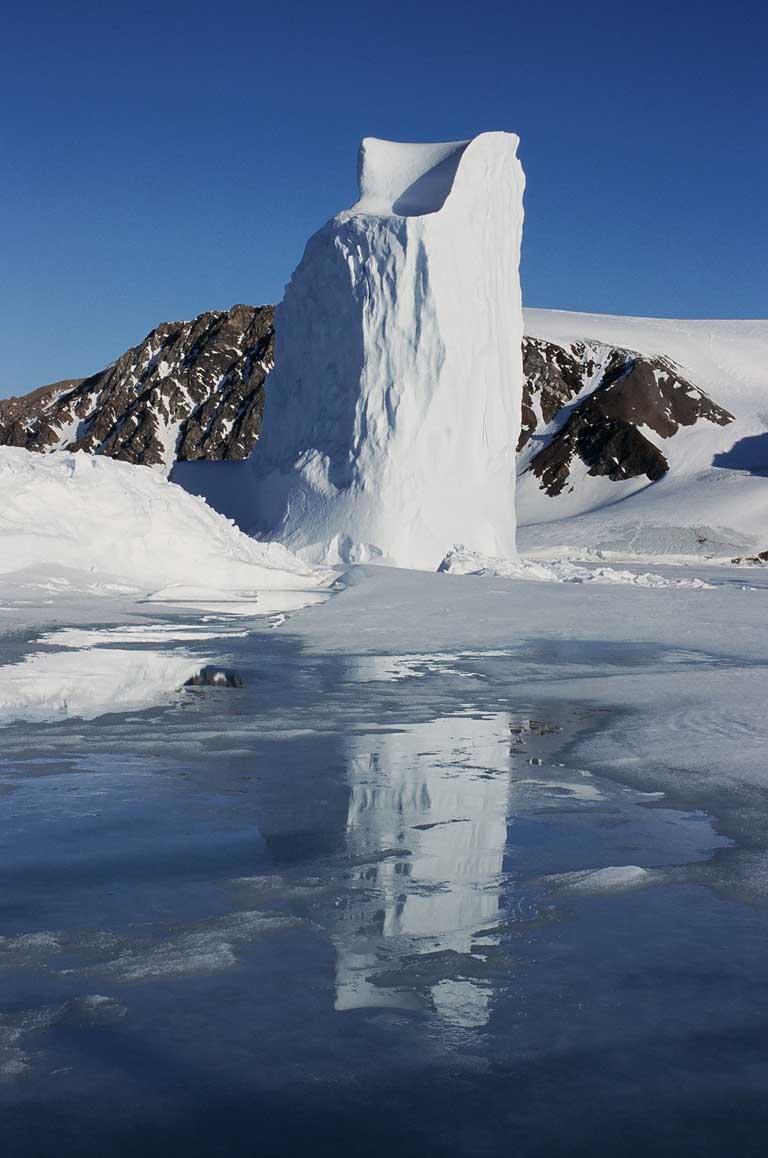
Iceberg in Glacier Strait, Nunavut, Canada, Image credit- Sandy Briggs.By Stephen Leahy

GENEVA, Sep 2 (IPS)

The rapidly warming Arctic region is destabilising Earth’s climate in ways science is just beginning to comprehend.

The entire world is being affected, and without urgent action to cut emissions, a too-warm Arctic could trigger catastrophic, irreversible climate change, top scientists say in a report released Wednesday in Geneva.

“It is crucial to know the full consequences of the Arctic warming, and this is an unprecedented review of the latest science,” said Martin Sommerkorn, an Arctic researcher and senior climate change advisor to World Wildlife Fund International.

“Simply put, if we do not keep the Arctic cold enough, people across the world will suffer the effects,” Sommerkorn told IPS.

Sea level rise of more than one metre, flooding affecting one quarter of the world’s population, and extreme global weather changes are on the way at the current pace of unchecked carbon emissions, the “Arctic Climate Feedbacks: Global Implications” report warns.

A warming Arctic has far wider and more serious consequences than previously believed based on the latest science of the past three years, including the very recent research from International Polar Year 2008-2009.

“There is a large potential that a warming Arctic will make climate change far worse,” said Sommerkorn, who acted as editor of the report written by 10 of the world’s leading climate scientists. Continue reading