CARBON FORESTS: Can the Free Market Slow Deforestation?

Sumatra burning forest courtesy of Kim Worm Sorensen sml

By Stephen Leahy

IPS 28/10/2006

Tropical forests’ ability to store carbon dioxide and mitigate climate change makes them more valuable than alternative uses like pasture or lumber, and rich countries ought to pay tropical countries to preserve their forests, the World Bank says.

However, some environmentalists caution that while reducing deforestation is vital, a so-called carbon trading system is the wrong approach and too complicated to implement.

The world’s tropical forests have been shrinking at a rate of five percent per decade since the 1950s. In the past five years, more than 50 million hectares of tropical forest have been lost — an area nearly the size of France. Aside from the loss of biodiversity, destruction of ecosystems and other negative impacts, deforestation is a major source of human-made emissions of climate-altering greenhouse gases (GHGs).

In fact, deforestation contributes almost twice as much GHGs as does all road transport around the world.

“The trees are worth more alive, storing carbon, than they would be worth if burned and transformed to unproductive fields,” said Kenneth Chomitz, lead author of the World Bank report released Monday. Continue reading


Free Markets Cause Chronic Hunger in Africa — There’s Plenty of Food but No Money

By Stephen Leahy

BROOKLIN, Canada, Oct 20, 2006 (IPS)

[World Bank and International Monetary Fund free-market doctrines responsible for much of Africa’s hunger experts say]


It is a world of paradox and plenty:

852 million people are starving while one billion people are overweight, with 300 million of them considered medically obese.

And the numbers of people whose health are at serious risk due to starvation or from obesity is rising rapidly.

While what the World Health Organisation calls a global epidemic of obesity is a health issue of the modern world, hunger and malnutrition are old and bitterly intractable problems.

More than 50 million Africans currently need food assistance, according to the U.N. World Food Programme. More than 120 million Africans are living permanently on the edge of emergency food aid, says the British charity CARE International.

Why is hunger chronic in Africa?

“There is enough food, but people don’t have enough money to buy it,” says Anuradha Mittal, executive director of the Oakland Institute, a U.S.-based policy think tank on social, economic and environmental issues.

“Sixty-three percent of people in Niger live on less than a dollar a day,” Mittal told IPS.

Hunger is mainly the result of poverty.

Rome-based Food and Agriculture Organisation (FAO) reports that th

ere is enough food to give everyone in the world more than 2,700 calories a day, she says. Continue reading

CANADA BAD: New Environment Policy Ignores Science

Critics Say New Environment Policy Ignores Science

By Stephen Leahy

Canada has officially turned its back on the Kyoto Protocol and climate change in its new “green plan” introduced Thursday, environmentalists say.

The new Conservative government’s environmental legislation called the Clean Air Act does not offer specific reduction targets other than a goal of cutting emissions of greenhouse gases 45-65 percent below 2003 levels by 2050.

“It’s a green scam, a delaying tactic that involves three more years of consultations,” said Claire Stockwell of the Canadian Youth Climate Coalition.

“We have already had six years of consultations and under existing legislation we could regulate emissions of greenhouse gases tomorrow,” Stockwell told IPS.

About 40 youth groups formed the non-partisan coalition this past September because of the realisation that the Conservative government will not comply with Canada’s commitments under the Kyoto Protocol, she said.

The coalition organised mock “funerals for the future” in 14 Canadian cities last week to protest the lack of urgent action on “the most pressing issue of our time”.

IPS News – published October 20 2006

Russia Leads the Most Poisonous Places on Earth

dzerzhinsk-factories[I have added more of the story in this post but the full article remains for subscribers only, sorry.]

By Stephen Leahy

Russia tops the list of the 10 most polluted places on the planet, while more investigation into Latin American and African pollution sites is needed, according to a U.S. environmental group.

Lead and other heavy metals, along with buried chemical weapons and radiation hazards from sites like Chernobyl in Ukraine, are the main sources of pollution affecting the health of 10 million people in different locations around the world.

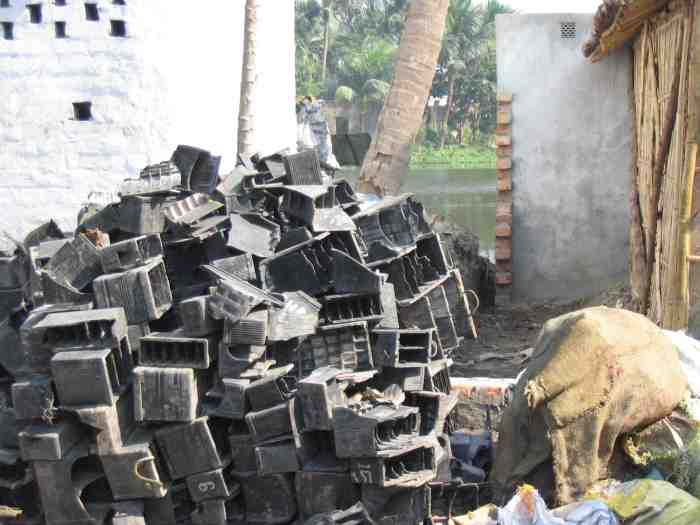
empty-car-battery-casings-india-photo-by-blacksmith-institute-sml

“These extremely toxic areas are mostly unknown even in their own countries,” said Richard Fuller, director of the New York-based Blacksmith Institute.

Continue reading

Canada Fights Ban on “Bulldozers of the Sea”

By Stephen Leahy

Oct 12 (IPS) – Canada is trying to scuttle a proposed United Nations moratorium on destructive bottom trawling of the open ocean that has received surprisingly strong support from the United States, as well as other countries.

“Canada’s attitude towards the oceans is embarrassing and archaic,” said Elliott Norse, president of the Marine Conservation Biology Institute, a scientific environmental group in Washington State.

“Canada treats the oceans as if nothing could harm them,” Norse told IPS.

The U.N. General Assembly started debate this week on an Australian-led plan for a temporary moratorium on deep-sea bottom trawling in unmanaged high seas and to impose tougher regulation of other destructive fishing practices.

Because of Canada’s good international reputation, other nations are listening and that greatly increases the risks the U.N. will not act on the proposed moratorium, Norse said.

Canada’s opposition, especially from a recently elected government, comes as a surprise.

“Canada doesn’t have any open ocean trawlers and has everything to gain from a ban,” Norse pointed out.

–FULL STORY

Related stories by Stephen Leahy

Trawling seamounts threatens ocean’s biodiversity
Hundreds of deep-sea species new to science are disappearing before they can be identified or studied, oceanographers are warning. The organisms are being pushed to extinction by trawlers targeting undersea volcanic mountains called seamounts. — New Scientist Magazine

A Plan to Torpedo the Trawlers
Environmentalist groups will soon be dragging deep-sea trawl nets the size of Boeing 747s across cities, rolling out ad campaigns featuring photos of unique creatures from the ocean’s depths, and sending out ships to dog the movements of ocean-going trawlers. — Wired News