Violent Backlash Against Climate Scientists

By Stephen Leahy

From death threats to aggressive discrediting in the press, disaster has hit the IPCC, the global scientific panel dedicated to studying climate change – and it is now finding ways to regroup and respond.

[See also personal posting Scientists Face Death Threats, Democracy at Risk ]

UXBRIDGE, Canada, Mar 8 (Tierramérica)

Climate change science is under full-scale attack in a last-ditch effort to delay or prevent action by the U.S. government against global warming, experts warn.

U.S. Senator James Inhofe, Republican from Oklahoma and climate change denier, in late February released a list of leading climate scientists he wants prosecuted as criminals for misleading the government. Those scientists are receiving hate mail and death threats.

“I have hundreds” of threatening emails, Stephen Schneider, a climatologist at Stanford University, told Tierramérica.

He believes scientists will be killed over this. “I’m not going to let it worry me… but you know it’s going to happen,” said Schneider, one of the most respected climate scientists in the world. “They shoot abortion doctors here.”

This backlash against the evidence of climate change and the scientists themselves is not just a U.S. phenomenon. It is happening in Canada, Australia, Britain, and, to a lesser extent, in Europe and elsewhere.

On the surface, this campaign is about a few errors in the Intergovernmental Panel on Climate Change’s (IPCC) 2,800-page report released in 2007 and some 10-year-old personal emails stolen from Britain’s University of East Anglia.

But deeper down, this is the last big effort by the fossil fuel industry to delay action on climate change, just as the tobacco industry successfully delayed understanding of the harmful effects of smoking for several decades, says Schneider.

Is this article of interest? It exists thanks to contributions from readers. Please click here to learn more about Community Supported Journalism.

“We’re up against the multi-billion-dollar fossil fuel industry and the haters of government. They spin and spin and cast doubt on the credibility of science,” he said. Continue reading


Scientists Face Death Threats, Democracy at Risk

[A personal note from Stephen]

There’s something strange in the air when a highly-respected US scientist says he or a colleague will likely be killed for saying climate change is happening.

That’s what Stanford’s Stephen Schneider told me last week. He’s not an alarmist, he’s a pro with 40 years under his belt. These days climate scientists receive all kinds of hate mail and even death threats. I even get hate mail. Bizarre times.

At the same time traditional media are complicit, giving ‘face time’ to those who smear scientists with no evidence, just nonsensical conspiracy allegations. Schneider says simply:

I’m pretty damn angry that media companies are putting profits ahead of truth. The media are deeply broken… That’s a real threat to democracy.”

I couldn’t agree more. We’re in a dangerous trap. Schneider, Victoria Tauli-Corpuz, Chair, UN Permanent Forum on Indigenous Issues, and many other experts have recently told me: ‘we need people like you to write about these issues’.

I could do far more but my time is largely gobbled up trying to figure out how to put bread on the table. Last year writing about these issues put my family $10,000 in the red despite about $4000 in donations which mostly went towards travel costs. (And we have a pretty modest lifestyle, living in my in-law’s basement apt)

Put plainly, writing honestly about important issues is not rewarded in our current economic system, even though it’s in our best interests. Writing junk mail to sell crap that people don’t need is rewarded 100X more. (I know, I used to do it)

Community Supported Journalism

Community Supported Journalism is the only way forward that I can see. That means reciprocity: You help support the investigation, research, writing about what’s important for all of us to know so we can make informed decisions. In an earlier age I would have come to your village, taught your children and told you useful stories about what I’d learned from wise elders in other villages. Today I send out those stories to you and many others in our global village and rely more and more on you to provide the financial equivalent of a place to sleep and a meal to eat.

Reciprocity, co-operation and community are some of the key values we need to escape the trap we are in.

On a practical level supporting or funding individual story ideas isn’t working mainly because it takes too much time to put together and generate support. It’s not nimble enough to respond to breaking news, but it could work for larger, long term projects. Instead what’s needed is ‘bread and butter’ funding — contributions that help cover the everyday costs of living and doing environmental journalism.

A “Bread and Butter Environmental Journalism Support Fund” if you will. That fund will need about $15,000 in 2010 for the work to continue.

It has taken me three days to find the words to ask because it is a lot of money. Please consider $50, $100 or more — less than cost of a newspaper or cable TV subscription — for coverage of important issues that shape our world and our future.

Contributions can be made safely and easily via PayPal or Credit Card. Or  contact me at writersteve [AT] gmail [DOT] com (no spaces) to send a cheque.

Please also pass this along to interested family, friends and organizations. My continued appreciation to those who have contributed in the past.

Thanks and best wishes, Steve

Rage and the Economics of the Environment

Economist Tim Jackson, Copenhagen Dec 2009

[Rage does feel appropriate at times with the continuing mis-information regarding climate change and the IPCC. While some focus on looking for typos in 3000 page report, the real issue is an overwhelming need to bring our economic system in line with the reality that we have but one planet to live on. Economists like Tim Jackson, who I met in Copenhagen, and others are taking on this vitally important task but are getting little media attention. — Stephen]

Stephen Leahy interviews British economist TIM JACKSON*

Tim Jackson: “The climate treaty wasn’t the only thing that failed in Copenhagen.”

TORONTO, Canada, Jan 28, 2010 (Tierramérica)

“Rage is sometimes the appropriate response” to the failure of the world’s leaders to craft a new climate treaty at the Copenhagen summit, says British economist Tim Jackson.

The Copenhagen Accord, the outcome of the 15th Conference of Parties (COP15) to the United Nations Framework Convention on Climate Change in December, not only revealed global environmental governance as a fiction, but also demonstrated a continuing blind adherence to the mantra of economic growth, says Jackson

Professor of sustainable development and director of the Research Group on Lifestyles, Values and Environment at Surrey University in Britain, Jackson also serves as British government advisor and economics commissioner for the Sustainable Development Commission.

In addition, Jackson is a professional playwright with numerous radio-writing credits for the BBC, based in London.

Tierramérica’s Stephen Leahy spoke with Jackson by phone about his new, controversial book “Prosperity without Growth: Economics for a Finite Planet”, the Copenhagen Accord and prospects for a real climate treaty, continuing a conversation they began last month in Copenhagen.

Q: Your book “Prosperity without Growth” argues that economic growth in developed countries is making people less happy and destroying the Earth itself.

A: It’s clear the continued pursuit of growth endangers the ecosystems on which we depend for long-term survival.

There is also ample evidence that increasing material wealth in developed countries is not making people any happier, but just the opposite in some countries. Beyond a certain level of income, there is no correlation of greater income with greater happiness.

Q: If the era of economic growth is over, what will take its place?

A: Wealth and prosperity need to be redefined along the lines of (1998 Nobel laureate in economics) Amartya Sen’s “capability for flourishing.” Flourishing is defined as having enough to eat, being part of a community, worthwhile employment, decent housing, access to education and medical services.

Continue reading

“Europe is going to cook the world’s tropical forests to fight climate change; it’s crazy,” — Millions of Trees Burned for ‘Green Energy’

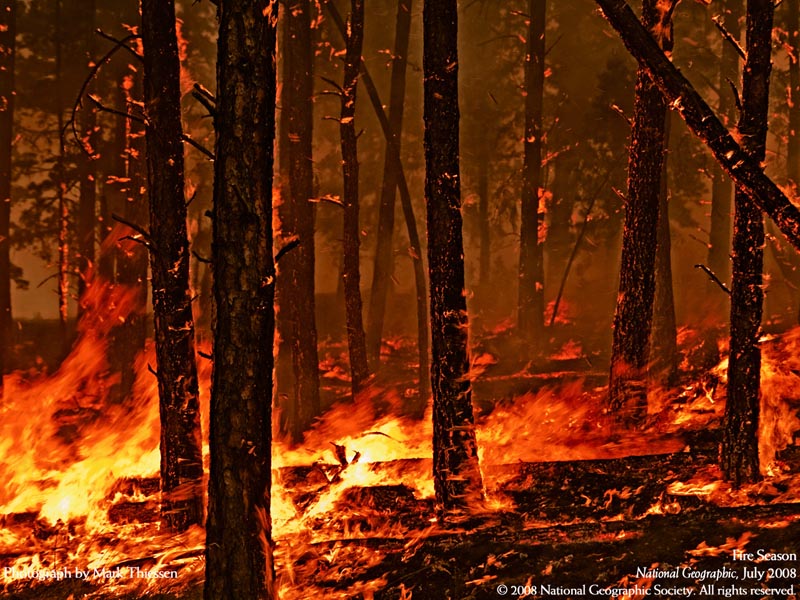
forest fire

Burning trees for energy produces 1.5 times as much carbon as coal – study shows

By Stephen Leahy*

UXBRIDGE, Canada, Sep 24 ’09 (Tierramérica)

Millions of trees, especially from the developing countries of the South, are being shipped to Europe and burned in giant furnaces to meet “green energy” requirements that are supposed to combat climate change.

In the last two months alone, energy companies in Britain have announced the construction of at least six new biomass power generation plants to produce 1,200 megawatts of energy, primarily from burning woodchips.

At least another 1,200 megawatts of wood-fired energy plants, including the world’s largest, in Port Talbot, Wales, are already under construction.

Those energy plants will burn 20 to 30 million tonnes of wood annually, nearly all imported from other regions and equivalent to at least one million hectares of forest.

“Europe is going to cook the world’s tropical forests to fight climate change; it’s crazy,” Simone Lovera, of the non-governmental Global Forest Coalition, which has a southern office in Asunción, Paraguay, told Tierramérica.

This independent environmental journalism depends on public support. Click here learn more.

Europe has committed to reducing its carbon emissions 20 percent by 2020 in an effort to fight climate change. Biofuels and biomass energy will have key roles in achieving those goals, experts say.

Continue reading

James Lovelock: “there will be a sudden shift to a new global climate … 5 or 6C warmer”

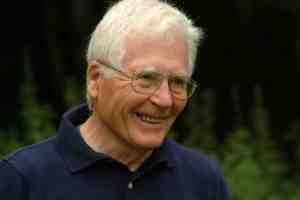
Lovelock_James credit Sandy Lovelock

Stephen Leahy interviews JAMES LOVELOCK the scientist who first proposed the Gaia Hypothesis

TORONTO, June 5 2009 (Tierramérica)

“When the first great climate disaster strikes, I hope we will all pull together just as if our nation were being invaded,” says British scientist James Lovelock in this exclusive Tierramérica interview.

Please throw something in the tip jar before reading on.
This is how I make my living.

As the world marksInternational Environment Day Friday, Lovelock argues that as the climate warms and the carbon content of the atmosphere soars, humanity is facing a far grimmer future that will be upon us sooner than any of the projections made by the Intergovernmental Panel Climate Change (IPCC).

A chemist, physician and biophysicist, Lovelock is one of the world’s foremost environmental scientists and founder of the Gaia Hypothesis, which describes the planet as a living organism, a complex system in which the components of the biosphere and atmosphere interact to regulate and sustain life.

Although his ideas often feed controversy, Lovelock has wide-ranging scientific credentials. As an inventor, he holds more than 50 patents, including the first devices for detecting the presence of ozone-depleting CFCs (chlorofluorocarbons) and pesticide residues in the environment.

He is also the author of many books. The most recent, “The Vanishing Face of Gaia: A Final Warning”, was published in April. Lovelock spoke with Tierramérica’s Stephen Leahy in Toronto.

TIERRAMÉRICA: Why are you critical of the IPCC? Continue reading

Ethanol and Biofuels: Almost Everything You Need to Know

“The U.S. has led the fight to stem global hunger, now we are creating hunger,” said Lester Brown, president of the Earth Policy Institute.

Series of the latest articles that provide almost everything you need to know about why ethanol and biofuels will not reduce global warming but simply drive up fuel and food costs.

maize - mexicoEthanol Worse Than Gasoline

Only Green Part of Most Biofuels is the Wealth (Subsidies) They Generate

Ethanol: The Great Big Green Fraud

International Enviro Standards Needed for Biofuels

Six Experts On Why Ethanol is a Dumb Idea

Food & Fuel: Can Sorghum Be The New Magic Bullet Biofuel??

Biofuels: Another Good Reason to Hate American Policy

(Cellulosic) Greenest Ethanol Still Unproven

UN CONVENTION ON BIOLOGICAL DIVERSITY – EXCLUSIVE COVERAGE OF COP 10 FROM NAGOYA, JAPAN


I was the only North American journalist to go and cover this important conference in Nagoya. People donated enough to help with travel costs so I could write about 10 articles that reached more than 200 million people. Scroll down and look for the COP 10 logo to find those articles.

I’m an independent journalist based in Canada who supports his family and the public interest writing articles about important social & environmental issues. This is now only possible with your support: see How Community Supported Journalism Works. Contributions can be made safely via PayPal or check/cheque. Thank you/Merci. — Stephen

Support Independent Environmental Journalism

Peak Soil: The Silent Global Crisis

30% of farmland can no longer grow food

By Stephen Leahy

(First published in the Earth Island Journal Spring 2008)

A harsh winter wind blew last night, and this morning the thin snow cover has turned into a rich chocolate brown. The dirt covering the snow comes from cornfields near my home that were ploughed following the harvest, a common practice in southern Ontario and in the corn-growing regions of the US Midwest.

A handful of this dirty snow melts quickly, leaving a thin, fine-grained wet mess. It doesn’t look like much, but the mucky sludge in my hand is the prerequisite for life on the planet.

“We are overlooking soil as the foundation of all life on Earth,” says Andres Arnalds, assistant director of the Icelandic Soil Conservation Service. Arnalds is an eloquent spokesperson for the unheralded emergency of soil erosion, a problem that is reducing global food production and water availability, and is responsible for an estimated 30 percent of the greenhouse gases emissions.

“Land degradation and desertification may be regarded as the silent crisis of the world, a genuine threat to the future of humankind.”

This article  depends on public support. Click here learn more.

Continue reading

Cutting CO2 Only Way to Save Dying Corals

By Stephen Leahy

FORT LAUDERDALE, U.S., July 12 2008 (IPS)

The rapid decline of coral reefs around the world offers a potent warning that entire ecosystems can collapse due to human activities, although there is hope for reefs if immediate action is taken, coral experts agreed at the conclusion of a five-day international meeting Friday.

“Reefs are in serious trouble, but don’t write them off,” Terry Hughes, a marine ecologist at Australia’s James Cook University told 3,000 scientists, conservationists and policy makers attending at the 11th International Coral Reef Symposium (ICRS) in Fort Lauderdale, Florida.

“We can save reefs if we take immediate action,” Hughes said.

More than 20 percent of the world’s reefs have died, and large areas are failing due to a combination of climate change, overfishing, pollution and sea level rise. Most of the fabulous corals that attract tourists to the Caribbean are gone and half of remaining reefs in the U.S. are in serious decline.

[Update 08/10 – Here’s a list of Stephen Leahy’s latest articles on corals Coral Reefs and Acid Oceans Series]

We may be facing ocean deserts in the future,” said Guillermo Dias-Pulido of Australia’s University of Queensland.

Continue reading

Denial and Delay: Tips on Detecting Global Warming B.S.

truth-over-fear.jpg

100,000 repetitions of a lie is still a lie

Many of those who deny that burning fossil fuels is altering the climate work diligently to confuse and delay action that would in reality benefit nearly all of us. These professional deniers and their followers can be convincing, citing well-known experts and twisting their views and findings.

So here’s a couple of common sense tips to add to your BS detection system.

Denier Tip #1: Check out suspect claims/sources with a simple Google search

100,000 repetitions or variations of a lie is still a lie. A reader recently told me global warming is really caused by variations in the sun’s activity. His proof was a “science” article from Investor’s Business Daily that said this was the conclusion of the Max Planck Institute for Solar System Research, a well-known research centre in Germany. A quick check of the Institute’s website revealed their actual conclusion: “Solar activity affects the climate but plays only a minor role in the current global warming.” See for yourself: it’s in English and still posted on their website.

Denier Tip # 2: Follow the money. Who benefits from denying climate change?

Among many others, journalist Ross Gelbspan has documented the money trail from the automotive and fossil fuel industry to various right-wing organisations and institutes in his two books, “The Heat is On” and “Boiling Point”.

Ask yourself how climate scientists benefit by concluding that humans are inadvertently changing their climate? Deniers often allege they get grants to do research on climate change. Yes they do, but they could also get grants to research water pollution or the ozone layer.

When scientists conduct research, they are simply asking questions about something and then trying to find answers. They don’t really care what the answers are. They are what they are: Humans are changing the climate.

Scientists are smart people. If they really wanted to make tonnes of money, they’d work on Wall Street, wouldn’t they?

See Last March of the Global Warming Denialists for more on this.

My related articles:

Proof of Anti-Global Warming Cabal: Fossil fuel Interests, Christian Evangelicals and the Media

UN Climate Body (IPCC) Too Slow, Too Cautious