Keystone XL Pipeline Carbon Emissions Top 100 Million Tons a Year

The Keystone XL oil pipeline could put up to 110 million tons of additional climate-heating CO2 into the atmosphere every year for 50 years, according a study publishedSunday in the journal Nature Climate Change.

If Keystone XL was a country, its 110 million tons of CO2 emissions would be comparable to those of the Czech Republic, Greece, and a number of other mid-sized European nations. And it could have a real shot at making the top 35 worst carbon polluting countries in the world.

The study notes that 110 million tons of CO2 is four times more emissions than the US State Department’s highest estimate for the controversial pipeline, which is currently undergoing an environmental review.

The State Department failed to account for the potential emissions from the increase in the global supply of oil, said study co-author Peter Erickson, a researcher with the US office of the Stockholm Environment Institute (SEI), an independent international research institute.

This new study is an update to an SEI working paper Motherboard reported on last December. At that time the estimated CO2 emissions from Keystone were 93 million tons, but that’s climbed higher with the benefit of updated information.

“This time it’s gone through the ringer of peer-review and is a far clearer and more direct version of the previous paper,” Erickson said in an interview. “It’s also generated a lot more media interest this time.”

The study shows how Keystone XL’s projected daily volume of 830,000 barrels of Canada’s bitumen oil could slightly lower oil prices on the global market and increase global consumption. More precisely, for every barrel of increased production, global oil consumption could increase by 0.6 barrels owing to the incremental decrease in global oil prices, Erickson said.

This finding is potentially crucial because of President Obama’s prior statement that he will only approve Keystone, “if this project does not significantly exacerbate the problem of carbon pollution.”

The decision remains largely in Obama’s hands because Keystone XL crosses national borders. The current plan is for a 1,200-mile, 36-inch diameter pipe to be built from Hardisty, Alberta to Steele City, Nebraska. The $7 billion pipeline will bring tar sands bitumen from under the frozen forests and lakes of northern Alberta to the world market, and will help the region’s booming oil operations expand even further. XL is part of a larger 2,500-mile Keystone pipeline system that terminates on the Texas Gulf Coast and is owned and operated by energy company TransCanada.

In 2012, Obama rejected TransCanada’s application because the pipeline route was through Nebraska’s environmentally sensitive Sandhills region. A few months later, TransCanada re-applied with a new pipeline route. The State Department is now doing an environmental review using energy consulting company Environmental Resources Management, which is expected to be completed next year.

Building more oil infrastructure is exactly the wrong thing to be doing when the world is struggling to reduce CO2 emissions. The SEI report pegs global investment in oil and gas infrastructure at $700 billion per year for the next 20 years, based on data from the International Energy Agency, along with considerable investment in coal.

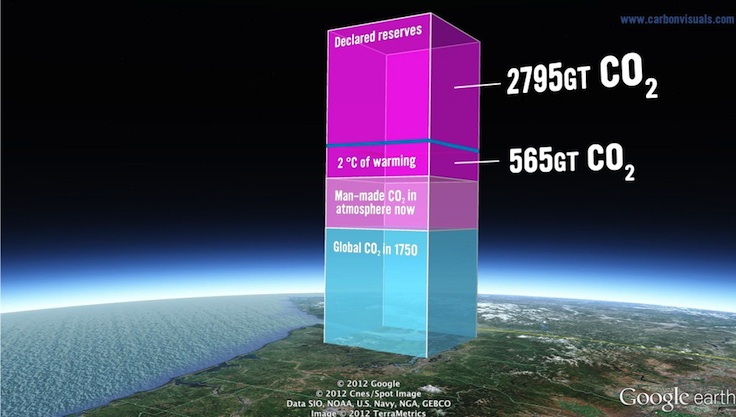
That investment will only burn through our carbon budget faster than we are now. According to the IEA’s 2013 World Energy Outlook, which is one of the top energy reports annually, some two-thirds of our proven fossil fuel reserves must stay in the ground to avoid heating the planet by more than two degrees Celsius by 2050. That’s a threshold set by the US and other nations who have made climate change mitigation pledges.

However, SEI study co-author Michael Lazarus said last December that the CEOs, board members, bankers, and government officials who make the decisions to build new infrastructure won’t even talk about cutting back. “It seems to be off limits to talk about cutting back on fossil fuel extraction,” he said.

Presumably, these folks also aren’t talking about the disastrous environment all of us will be trapped in if we heat the planet by those two degrees and beyond. We can’t quit oil immediately because it will take time to build an alternative energy infrastructure. However, at this point it makes little environmental sense to build new pipelines like Keystone XL to increase access to tar sands bitumen, the world’s dirtiest form of oil.

You’d be shocked to see how your jewellery is made

The Sickest Places in the World

Parts of Indonesia, Argentina and Nigeria are among the top 10 most polluted places on the planet, according to a new report by U.S. and European environmental groups.


The Agbogbloshie e-Wasteland in Ghana. Fires are set to wires and other electronics to release valuable copper and other materials. The fires blacken the landscape, releasing toxic fumes. Credit: Blacksmith Institute

The Agbogbloshie e-Wasteland in Ghana. Fires are set to wires and other electronics to release valuable copper and other materials. The fires blacken the landscape, releasing toxic fumes. Credit: Blacksmith Institute

UXBRIDGE, Canada, Nov 5 2013 (IPS) Parts of Indonesia, Argentina and Nigeria are among the top 10 most polluted places on the planet, according to a new report by U.S. and European environmental groups.

They are extraordinarily toxic places where lifespans are short and disease runs rampant among millions of people who live and work at these sites, often to provide the products used in richer countries.

“People would be shocked to see the conditions under which their lovely jewelry is sometimes made,” said Jack Caravanos, director of research at the New York-based Blacksmith Institute, an independent environmental group that released the list Monday in partnership with Green Cross Switzerland.

Full story: The Sickest Places in the World

No Safe Havens in Increasingly Acid Oceans

churning-ocean-smlOil, gas and coal are contaminating the world’s oceans from top to bottom, threatening the lives of more than 800 million people

By Stephen Leahy

UXBRIDGE, Canada, Oct 15 2013 (IPS) 

Oil, gas and coal are contaminating the world’s oceans from top to bottom, threatening the lives of more than 800 million people, a new study warns Tuesday.

“It took a year to analyse and synthesise all of the studies on the impacts of climate change on ocean species,” Camilo Mora, an ecologist at University of Hawai‘i in Honolulu and lead author, told IPS.

“We are seeing greater changes, happening faster, and the effects are more imminent than previously anticipated.” — Alex Rogers of the University of Oxford

Mora is also lead author of ground-breaking climate study published in Nature last week.

“It was very sad to see all the responses were negative. We were hoping there might be some safe havens,” he said.

The study found that carbon emissions from burning fossil fuels are overheating the oceans, turning them acidic and reducing the amount of oxygen in seawater. This is happening too fast for most marine species to adapt and ocean ecosystems around the world will collapse.

By 2100, no corner of the oceans that cover 70 percent of the Earth’s surface will be untouched.

“The impacts of climate change will be felt from the ocean surface to the seafloor. It is truly scary to consider how vast these impacts will be,” said Andrew Sweetman of the International Research Institute of Stavanger, Norway, co-author of the PLOS Biology study published Oct. 15.

This ambitious study examined all the available research on how current and future carbon emissions are fundamentally altering the oceans. It then looked at how this will impact fish, corals, marine animals, plants and other organisms. Finally the 29 authors from 10 countries analysed how this will affect the 1.4 to 2.0 billion people who live near the oceans or depend on them for their food and income.

“We are making a big mess of the oceans. Climate change is having a major impact illustrating the need for urgent action to reduce emissions,” said Mora. Continue reading

Overweight? Hungry? Blame ‘Hollow Food’


wheat harvest sml

Conventional agriculture produces “hollow food”, with low levels of nutrients and vitamins studies show

By Stephen Leahy

TORONTO, Canada, Mar 4, 2006 (Tierramérica)

(Originally published in 2006)

Organic foods protect children from the toxins in pesticides, while foods grown using modern, intensive agricultural techniques contain fewer nutrients and minerals than they did 60 years ago, according to two new scientific studies.

A U.S. research team from Emory University in Atlanta analysed urine samples from children ages three to 11 who ate only organic foods and found that they contained virtually no metabolites of two common pesticides, malathion and chlorpyrifos. However, once the children returned to eating conventionally grown foods, concentrations of these pesticide metabolites quickly climbed as high as 263 parts per billion, says the study published Feb. 21 (2006).

Organic crops are grown without the chemical pesticides and fertilisers that are common in intensive agriculture. There was a “dramatic and immediate protective effect” against the pesticides while consuming organically grown foods, said Chensheng Lu, an assistant professor at the Rollins School of Public Health at Emory University.

These findings, in addition to the results of another study published in Britain earlier this month, have fueled the debate about the benefits of organically grown food as compared to conventional, mass-produced foods, involving academics, food and agro-industry executives and activists in the global arena.

According to the new British analysis of government nutrition data on meat and dairy products from the 1930s and from 2002, the mineral content of milk, cheese and beef declined as much as 70 percent in that period.

“These declines are alarming,” Ian Tokelove, spokesman for The Food Commission that published the results of the study, told Tierramérica.

The Commission is a British non-governmental organisation advocating for healthier, safer food. The research found that parmesan cheese had 70 percent less magnesium and calcium, beef steaks contained 55 percent less iron, chicken had 31 percent less calcium and 69 percent less iron, while milk also showed a large drop in iron along with a 21 percent decline in magnesium.

Copper, an important trace mineral (an essential nutrient that is consumed in tiny quantities), also declined 60 percent in meats and 90 percent in dairy products.

“It seems likely that intensive farming methods are responsible for this,” Tokelove said from his office in London.

Continue reading

Stop All Investments in Fossil Fuel Infrastructure or All Will Suffer IPCC warns


Carbon overload - have to stop expanding
Carbon overload – have to stop expanding

By Stephen Leahy

UXBRIDGE, Canada, Apr 22 2014 (IPS) 

Hopefully, on Earth Day today, high-level ministers from all countries are thinking about what they can bring to the table at a key set of meetings on climate change in early May.

This will be the first opportunity for governments to discuss their proposed climate action plans in light of the finalIntergovernmental Panel on Climate Change (IPCC) report released last week.

“There is a clear message from science: To avoid dangerous interference with the climate system, we need to move away from business as usual.” — Professor Ottmar Edenhofer 

That report warned that carbon dioxide (CO2) emissions from burning fossil fuels are still rising far too fast, even with more than 650 billion dollars invested in renewable energy in the last three years. However, over the same time period even more money was invested in getting more fossil fuels out of the ground.

The latter investment is keeping humanity and the planet locked onto a devastating path of a global temperature increase of four to five degrees C, the IPCC’s Working Group III report warned.

Scientists and economists say that unlocking ourselves from disaster will require a massive reduction in emissions – between 40 percent and 70 percent – by midcentury. This is can be readily accomplished without inventing any new technology and at a reasonably low cost, reducing global economic growth by a comparatively tiny 0.06 percent.

“It doesn’t cost the world to save the planet,” economist Professor Ottmar Edenhofer, who led the IPCC team, said at a press conference.

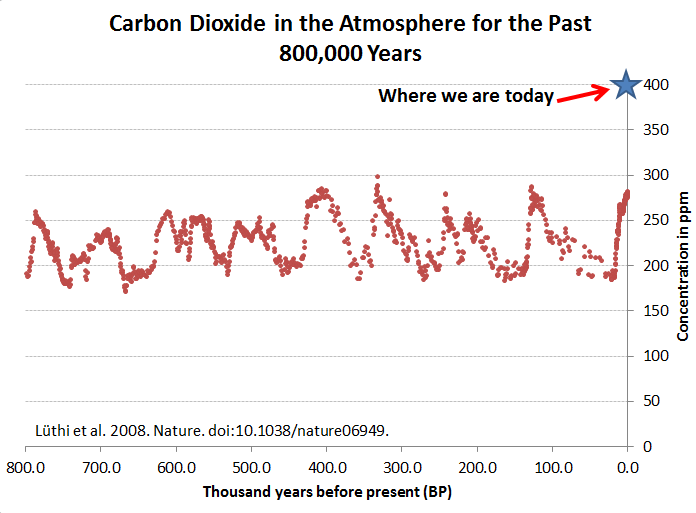
It does mean an end to investments in expanding fossil fuel infrastructure as the annual growth in CO2 emissions from burning oil, coal and gas must peak and decline in the next few years. The atmosphere already has 42 percent more CO2 than it did prior to 1800.

This extra CO2 is trapping more heat from the sun, which is heating up the oceans and land, creating the conditions that spawn super storms and extreme weather. And it will do so for the next 1,000 years since CO2 is a very durable molecule.

“There is a clear message from science: To avoid dangerous interference with the climate system, we need to move away from business as usual,” Edenhofer said.

Continue reading

Nano Worry: Big Concern for Very Small Things

Buckyball Molecule C320, Artwork Laguna Design

By Stephen Leahy

First published 04.07.04 at WIRED.COM

(I wrote this 10 years ago and was one of the first articles about environmental risks of nano techI have not been able to update it )

Nanoparticles called fullerenes — aka buckyballs — are extremely stable arrangements of carbon atoms that look like soccer balls. Eva Oberdörster, an aquatic scientist at Southern Methodist University, has conducted a study that looks at the potential risks of nanomaterials.

The nascent nanotechnology industry collectively cringed last week after a study showed that fish exposed to nanoparticles suffered brain damage. Critics say the much-hyped multibillion-dollar nano industry has a dark side few want to talk about.

“How many more studies showing toxicity are needed before regulators step in?” asks Kathy Jo Wetter of the Winnipeg-based ETC Group. ETC and other environmental groups are calling for a moratorium on the commercial production of nanoparticles.

Nano products are not subject to any special regulations, in part because little is known about the environmental and health implications of nanotechnology, says Kevin Ausman, executive director of the Center for Biological and Environmental Nanotechnology at Rice University in Houston.

Nanotechnology is a catchall term for an enormous range of research and technology measured at the scale of one-thousandth the width of a human hair. At this very small scale, ordinary materials have extraordinary properties promising the semi-fantastic — supercomputers that fit on the head of a pin and fleets of cancer-fighting nanobots — and the more mundane — better paint and eye shadow.

Stain-resistant nanopants and sunscreens and cosmetics using nanosized titanium dioxide particles are already on the market. And the Nanodesu bowling ball is one of the first consumer products that uses nanoparticles called fullerenes — aka buckyballs — which are extremely stable arrangements of carbon atoms that look like soccer balls.

To see what might happen if buckyballs got into the environment, Eva Oberdörster, an aquatic scientist at Southern Methodist University, put some into a fish tank at a concentration of 0.5 parts per million, along with nine largemouth bass. The buckyball-breathing fish experienced significant brain damage after 48 hours. Brain-cell membranes were disrupted, an affliction that has been linked to illnesses such as Alzheimer’s disease in humans.

Oberdörster’s unpublished study, which was released last week, is one of the few completed studies looking at the potential risks of nanomaterials. There is some cause for concern. Two recent studies documented lung damage in animals after they inhaled a type of buckyball called a carbon nanotube. Another showed that nanoparticles can get into the brain if inhaled.

They’re also small enough to cross cell walls and leak into the nucleus, the home of an organism’s DNA. And, in the case of titanium dioxide nanoparticles, they can kill bacteria. That’s good news in a hospital, but bad news in the environment, where bacteria are extremely important for maintaining soil fertility, among other things.

Understanding how nanomaterials and the environment interact is a complex, interdisciplinary problem, says Ausman.

“Some of the ways we normally measure environmental toxicity aren’t applicable to nanotechnology. And there aren’t many researchers who really understand these novel materials.”

One who does is John Bucher, director of federal toxicology research at the National Institute of Environmental Health Sciences. His group will soon begin a series of studies on the environmental health effects of three types of nanoparticles.

“There are so many different types of nanomaterials, some are likely toxic,” says Bucher.

Sorting out the impacts of nanotech won’t be easy, since the properties of nanomaterials are not well-defined yet. Something such as gold — which is normally biologically inert — is highly reactive and likely to disrupt biological processes when it’s nanosized.

And then there’s the problem of trying to detect particles of such a tiny size, says Bucher. Microscopes powerful enough to identify nanoparticles are just being developed.

It will be several years before the National Institute of Environmental Health Sciences toxicology studies are completed.

Ausman thinks regulations will be needed to guide future applications, but not enough is known to establish these yet. In the meantime, the nano industry and the benefits it can bring society shouldn’t be held back over toxicity fears, he says.

“I’m not concerned at this point.”

Global Land Grabbing by Speculators, Investment banks, Pension funds

Kenya green hills CIAT Neil Palmer sml

By Stephen Leahy

UXBRIDGE, Canada, May 10, 2012 (IPS)

Land is the missing element at next month’s big U.N. sustainable development summit known as Rio+20, where nations of the world will meet Jun. 20-22 with the goal of setting a new course to ensure the survival and flourishing of humanity.

However, governments are apparently unaware that a reversal of decades of land reform is underway with speculators, investment banks, pension funds and other powerful financial interests taking control of perhaps 200 million hectares of land from poor farmers in Africa, Latin America and Asia in recent years. Speculators and investors know land is the key to three necessities of life: food, water and energy. But neither land nor community land rights are on the summit agenda.

“Rural people are losing control over land and water because of this global land grab,” said Honduran farmer leader Rafael Alegria of the international farmers’ movement La Via Campesina.

Anywhere from 80 to 227 million hectares of rural, often agrarian land have been taken over by private and corporate interests in recent years, according to an April report released by Friends of the Earth International.

Many small land holders are being displaced in Central America and up to 40 percent of Honduran small farmers live in extreme poverty, according to the U.N. Food and Agriculture Organisation, Alegria told IPS through a translator.

Continue reading

Carbon Emissions: Most Important Number in Human History

terrifying co2 graph

By Stephen Leahy

UXBRIDGE, Canada, Dec 17 2012 (IPS) (Re-posted)

The most important number in history is now the annual measure of carbon emissions. That number reveals humanity’s steady billion-tonne by billion-tonne march to the edge of the carbon cliff, beyond which scientists warn lies a fateful fall to catastrophic climate change.

With the global total of climate-disrupting emissions likely to come in at around 52 gigatonnes (billion metric tonnes) this year, we’re already at the edge, according to new research.

To have a good chance of staying below two degrees C of warming, global emissions should be between 41 and 47 gigatonnes (Gt) by 2020, said Joeri Rogelj, a climate scientist at Switzerland’s Institute for Atmospheric and Climate Science in Zurich.

Only when we see the annual global emissions total decline will we know we’re making the shift to climate protection,” Rogelj told IPS.

Making the shift to a future climate with less than two degrees C of warming is doable and not that expensive if total emissions peak in the next few years and fall into the 41-47 Gt “sweet spot” by 2020, Rogelj and colleagues show in their detailed analysis published Sunday in the journal Nature Climate Change.

The study is the first to comprehensively quantify the costs and risks of emissions surpassing critical thresholds by 2020.

This shift means 65 percent of existing coal power plants will have to be shut down in the next decade or two. Continue reading

Oil, Coal and Gas Industry Destroying Our Childrens’ Future

“moving aerial” of a bike sml

By Stephen Leahy

UXBRIDGE, Canada, Jan 4 2013 (IPS)

Around the world, 2012 was the year of extreme weather, when we unequivocally learned that the fossil fuel energy that powers our societies is destroying them. Accepting this reality is the biggest challenge of the brand new year.

Re-engineering our societies and lifestyles to prosper on green alternatives is the penultimate challenge of this decade. There is no more important task for all of us to engage in because climate change affects everything from food to water availability.

A number of scientific analyses have demonstrated we already have the technology to re-engineer our society to thrive on green alternative energy. The newest of these was published Wednesday in the prestigious journal Nature. It plainly states that politics is the real barrier, not technology nor cost. (It is far cheaper to act than not.)

Keeping global warming to less than two degrees C is mainly dependent on “when countries will begin to take serious action to reduce greenhouse gas emissions”, according to the study “Probabilistic cost estimates for climate change mitigation”.

Climate change has already pushed global temperatures up 0.8 degrees C, with significant consequences. No climate scientist thinks two degrees C will be “safe”. Many countries, especially least-developed countries and small island states, want the global target to be less than 1.5C of heating. Even then large portions of the Arctic and Antarctic will continue to melt raising sea levels, albeit at a slower rate.

Delay in making the shift to non-fossil fuel energy sources will be very costly. Waiting until 2020 to curb global emissions will cost twice as much compared with peaking emissions by 2015, the Nature analysis shows.

Serious action to reduce greenhouse gas emissions means 65 percent of current coal power plants will have to be shut down in the next decade or two, a previous Nature study reported by IPS shows.

US Fossil Emissions now and how much they need to decline

Instead of serious action, global emissions continue to break new records, rising about three percent per year. It appears 2012 will be about 52 gigatonnes (billion metric tonnes of CO2 equivalents). This is our annual climate scorecard, the most important number in human history. That number needs to fall to be between 41 and 47 gigatonnes (Gt) by 2020 to have a reasonable chance of staying below two degrees C of warming. Continue reading

2013 Carbon Emissions On Deadly Path to 5C

global-carbon-budget-2010-e1371236101998

By Stephen Leahy

WARSAW, Nov 19 2013 (IPS)

Burning of fossil fuels added a record 36 billion tonnes of CO2 to the atmosphere in 2013, locking in even more heating of the planet.

Global CO2 emissions are projected to rise 2.1 percent higher than 2012, the previous record high, according to a new report released Tuesday by the Global Carbon Project.

“Going beyond two degrees C is very risky, it’s completely unknown territory.” — Corinne Le Quéré

This increase is slightly less than the 2000-2013 average of 3.1 percent, said lead author Corinne Le Quéré of the Tyndall Centre for Climate Change Research in the UK.

“This is the second year in a row of below average emissions. Perhaps this represents cautious progress,” Le Quéré told IPS.

Still, these hard numbers demonstrate that the U.N. climate talks have failed to curb the growth in emissions. And there is little optimism that the latest talks known as COP19 here in Warsaw will change the situation even with the arrival of high-level ministers Wednesday.

Global emissions continue to be within the highest scenario of the Intergovernmental Panel on Climate Change (IPCC), she said.

“This is a five-degree C trajectory. It’s absolutely tragic for humanity to be on this pathway,” Le Quéré said.

For full story