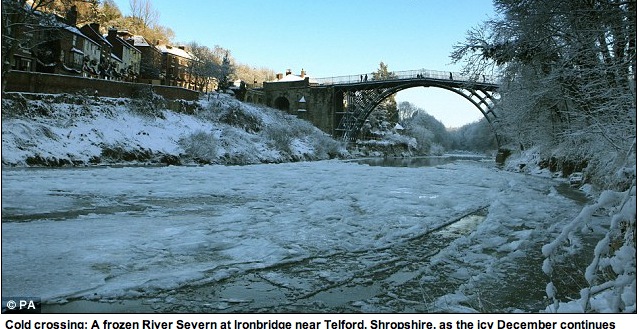
East Coast Blizzard and Europe’s Snowmaggddon Reveal Fingerprints of Climate Change

Coldest Christmas on Record on the UK -18C

In Oslo last June climate researcher’s told me the melting Arctic ice will likely produce colder winters in the eastern United States and Europe. Looks like they were right. Winter freeze up in the sunless Arctic ocean was two months late this year because of a near record ice loss last summer that is expected to continue if not accelerate in future years.

Several research programs have been studying the impacts of this huge loss in Arctic sea ice and presented their findings for first time at the International Polar Year Oslo Science Conference. My summary from 15 June:

Climate change has warmed the entire Arctic region, melting 2.5 million square kilometres of sea ice, and that, paradoxically, is producing colder and snowier winters for Europe, Asia and parts of North America.

“The exceptional cold and snowy winter of 2009-2010 in Europe, eastern Asia and eastern North America is connected to unique physical processes in the Arctic,” said James Overland of the NOAA/Pacific Marine Environmental Laboratory in the United States.

In future, cold and snowy winters will be the rule rather than the exception” in these regions, Overland told IPS.

Thanks to support from readers and the organizers of the conference I was able to attend that polar science conference. No media/publication would front any travel money to help me get there. I was one of a small handful of jurnos there and the first to write a piece documenting the link between global warming and bitter winter weather.

This independent environmental journalism depends on public support. Click here learn how this works.

My full article from Oslo is here: Arctic Melt Down Is Bringing Harder Winters and Permanently Altering Weather Patterns
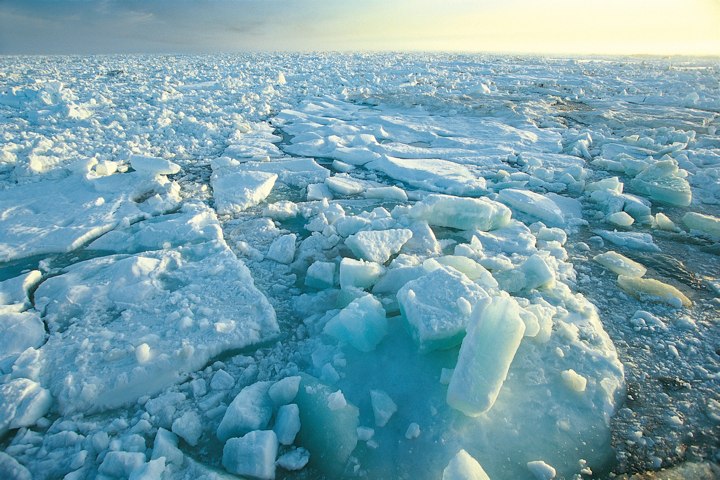
Arctic Ice in Death Spiral, Thaws Permafrost — Risks Climate Catastrophe

2 degrees C of warming could spark runaway global warming

By Stephen Leahy

UXBRIDGE, Canada, Sep 20, 2010 (IPS)

The carbon dioxide emissions from burning fossil fuels have melted the Arctic sea ice to its lowest volume since before the rise of human civilisation, dangerously upsetting the energy balance of the entire planet, climate scientists are reporting.

“The Arctic sea ice has reached its four lowest summer extents (area covered) in the last four years,” said Mark Serreze, director of the National Snow and Ice Data Center in the U.S. city of Boulder, Colorado.

The volume – extent and thickness – of ice left in the Arctic likely reached the lowest ever level this month, Serreze told IPS.

“I stand by my previous statements that the Arctic summer sea ice cover is in a death spiral. It’s not going to recover,” he said.

Is this article of interest? It exists thanks to contributions from readers. Please click here to learn more about Community Supported Journalism.

Continue reading

Arctic Melt Down Is Bringing Harder Winters and Permanently Altering Weather Patterns

Last year’s cold and snowy winter directly connected to warmer Arctic new research reveals

By Stephen Leahy

OSLO, 15 June 2010 (IPS)

Last winter’s big snowfall and cold temperatures in the eastern United States and Europe were likely caused by the loss of Arctic sea ice, researchers concluded at the International Polar Year Oslo Science Conference in Norway in June.

Climate change has warmed the entire Arctic region, melting 2.5 million square kilometres of sea ice, and that, paradoxically, is producing colder and snowier winters for Europe, Asia and parts of North America.

“The exceptional cold and snowy winter of 2009-2010 in Europe, eastern Asia and eastern North America is connected to unique physical processes in the Arctic,” said James Overland of the NOAA/Pacific Marine Environmental Laboratory in the United States.

In future, cold and snowy winters will be the rule rather than the exception” in these regions, Overland told IPS.

[[UPDATE Dec 29 2010 – Winter of 2010-11 appears to follow same pattern, see new post with northern hemisphere temp map for 20 Dec:  Arctic Hothouse Turns Europe into an Icebox]]

Scientists have been surprised by the rapid warming of the Arctic, where annual temperatures have increased two to three times faster than the global average. In one part of the Arctic, over the Barents and Karas Seas north of Scandinavia, average annual temperatures are now 10 degrees C higher than they were in 1990.

Is this article of interest? It exists thanks to contributions from readers. Please click here to learn more about Community Supported Journalism.

Overland explains the warming of the Arctic as the result of a combination of climate change, natural variability, loss of sea ice reflectivity, ocean heat storage and changing wind patterns, which has disrupted the stability of the Arctic climate system. In just 30 years, all that extra heat has shrunk the Arctic’s thick blanket of ice by 2.5 million square kilometres – an area equivalent to more than one quarter the size of the continental U.S.

The changes in the Arctic are now irreversible, he said. Continue reading

Ice, Polar Bears & the Arctic Melt Down That’s Changing the World

polar-bear-snout-wwwfirstpeopleus-smlIce-free summer in the Arctic is just a matter of time – mostly likely within the next 5 years. Here’s a “six-pack” of my recent articles on how global warming is transforming the Arctic:

The Arctic — The Earth’s Freezer — Is Defrosting With Dire Results

The rapidly warming Arctic region is destabilising Earth’s climate in ways science is just beginning to comprehend.

Arctic Leaking Methane a Super-Potent Global Warming Gas — Reaching Feared Tipping Point?“The way we’re going right now, I’m not optimistic that we will avoid some kind of tipping point.ceberg-in-glacier-strait-nunavut-canada-image-credit-sandy-briggs

Arctic Ice Gone in 5 Years – First Time in One Million Years– “We’re going to see huge changes in the Arctic ecosystem”

Things Happen Much Faster in the Arctic — “Things are happening much faster in the Arctic. I think it will be summer ice-free by 2015,” said David Barber, an Arctic climatologist at the University of Manitoba.

Arctic Is the Canary in the Coalmine — The Arctic is “ground zero” for climate change, with temperatures rising far faster than anywhere else on the planet.

Arctic Oil and Gas Rush Alarms Scientists — As greenhouse gas pollution destroys Arctic ecosystems, countries like Canada are spending millions not to halt the destruction but to exploit it.

Oh yeah, and about those polar bears:

Polar Bear (Sow And Cub), Arctic National Wild...

Polar Bears Go Hungry as Icy Habitat Melts Away — The iconic animal of the frozen north, the polar bear, is starving to death because climate change is melting the Arctic Ocean sea ice.

Oil vs Polar Bears in Alaska — A coalition of environmental groups sued the George W. Bush administration Monday for delaying a decision to protect polar bears threatened with extinction

Polar Bears’ Future Bleak in Melting Arctic — “Without taking serious and urgent action to stabilize the climate, there is no future for polar bears” says Andrew Derocher, Chair of the World Conservation Union (IUCN), Polar Bear Specialist Group.

Arctic Leaking Methane a Super-Potent Global Warming Gas — Reaching Feared Tipping Point?

By Stephen Leahy

“The way we’re going right now, I’m not optimistic that we will avoid some kind of tipping point.

— Mark Serreze, senior research scientist at the National Snow and Ice Data Centre

UXBRIDGE, Canada, Mar 5, 2010 (IPS)

The frozen cap trapping billions of tonnes of methane under the cold waters of the Arctic Ocean is leaking and venting the powerful greenhouse gas into the atmosphere, new research shows.

It is not known if this may be one of the first indicators of a feedback loop accelerating global warming.

Researchers estimate that eight million tonnes in annual methane emissions are being released from the shallow East Siberian Arctic Shelf, which is equivalent to all the methane released from the world’s oceans, covering 71 percent of the planet.

On a global scale of methane emissions from the land-based sources – animals, rice paddies, rotting vegetation – the newly measured emissions from the Siberian seabed are less than two percent.

“That’s still very significant,” Natalia Shakhova, a researcher at the University of Alaska in Fairbanks, told IPS. “Before, it was assumed that this region had zero emissions.”

Do you like this article? It is funded by contributions from readers like you. Please click here to make a donation

Methane concentrations measured over the oceans are currently about 0.6 to 0.7 parts per million (ppm), but they are now 1.85 in the Arctic Ocean generally, and between 2.6 and 8.2 ppm in the East Siberian Arctic Shelf, an area roughly two million square kilometres in size, said Shakhova.

Shakhova, and her University of Alaska colleague Igor Semiletov, led eight international expeditions to one of the world’s most remote and desolate regions and published their results in the Mar. 5 edition of the journal Science. Continue reading

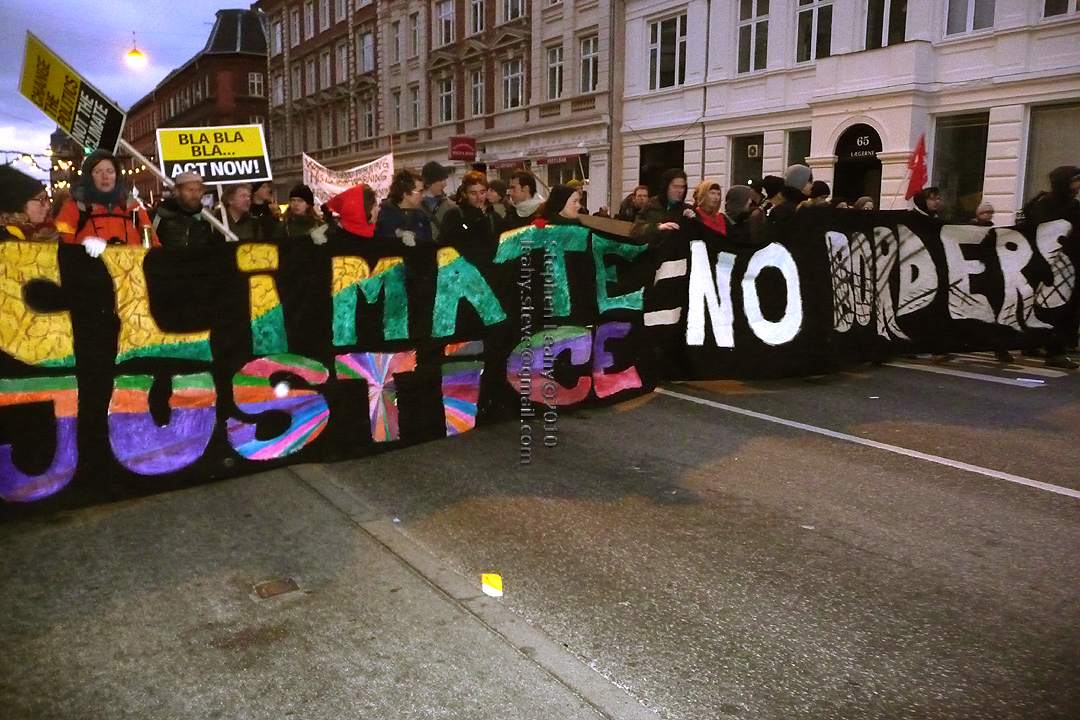
OUR Roof is on Fire: Dangerous Climate Change is Here

It will take lot of us – probably in the streets” to make politicians face the truth, says climate scientist James Hansen.

[Dangerous climate change is already upon us say some of the best scientists we have. But political leaders — and most of the public — don’t get it. This is an attempt to close the chasm between climate reality and climate denial fantasy. I wrote this at the end of the Copenhagen Climate meetings last December thanks in part to financial contributions from readers that allowed me to do the research and interviews. — Stephen]

Our leaders do not get the scale of the problem or the rapidity of the changes.”            — Andrew Weaver, climatologist at Canada’s University of British Columbia

Analysis by Stephen Leahy

COPENHAGEN Dec 22 ,2009 (IPS/TerraViva)

The roof of our house is on fire but our leaders, our economic system and we ourselves are ignoring the alarms and continuing to add more fuel. There are no exit doors in our house; there is nowhere else to go.

Dangerous climate change is already here.

The two-week climate summit in Copenhagen came to an end with disappointing results and details that are still vague.

A ”Copenhagen Accord” was agreed by the US, China, South Africa and India by Friday night. It was unclear which other countries were willing to support it.

But coral reefs are dying, the Arctic is melting and rising sea levels threaten the homes of millions. And we’re on our way to a planet-transforming four-degree C rise in global average temperatures in as soon as 50 years.

Future generations could face an utterly transformed planet, where large areas will be seven to 14 degrees C warmer, making them uninhabitable. In this world-on-fire, the one to two metre sea level rise by 2100 will leave hundreds of millions homeless, according to the latest science presented at the “4 Degrees and Beyond, International Climate Science Conference” at the University of Oxford in September.

That’s the science-based, slap-in-the-face reality as the Copenhagen climate talks fizzle out here with little progress Friday.

Our leaders do not get the scale of the problem or the rapidity of the changes. They don’t get that it must be dealt with now,” said Andrew Weaver, a climatologist at Canada’s University of British Columbia and lead author of the Intergovernmental Panel on Climate Change (IPCC) reports. Continue reading

The Arctic — The Earth’s Freezer — Is Defrosting With Dire Results

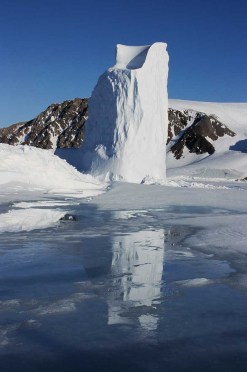
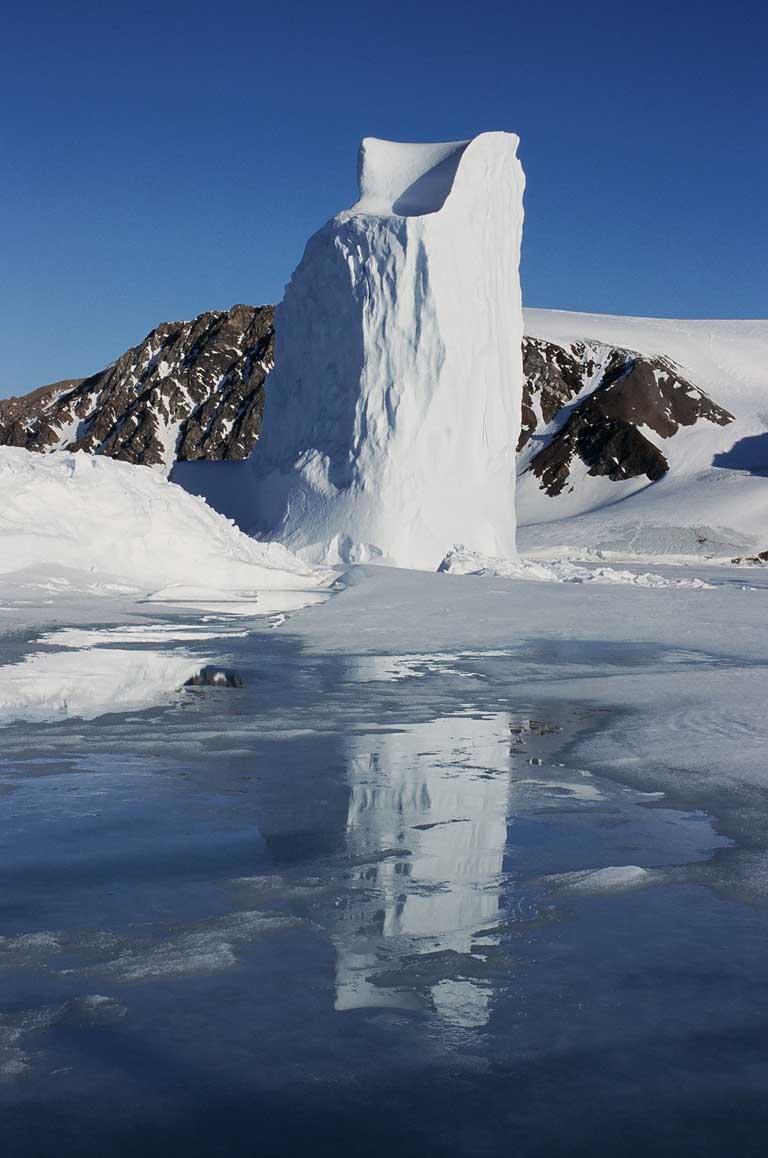
Iceberg in Glacier Strait, Nunavut, Canada, Image credit- Sandy Briggs.By Stephen Leahy

GENEVA, Sep 2 (IPS)

The rapidly warming Arctic region is destabilising Earth’s climate in ways science is just beginning to comprehend.

The entire world is being affected, and without urgent action to cut emissions, a too-warm Arctic could trigger catastrophic, irreversible climate change, top scientists say in a report released Wednesday in Geneva.

“It is crucial to know the full consequences of the Arctic warming, and this is an unprecedented review of the latest science,” said Martin Sommerkorn, an Arctic researcher and senior climate change advisor to World Wildlife Fund International.

“Simply put, if we do not keep the Arctic cold enough, people across the world will suffer the effects,” Sommerkorn told IPS.

Sea level rise of more than one metre, flooding affecting one quarter of the world’s population, and extreme global weather changes are on the way at the current pace of unchecked carbon emissions, the “Arctic Climate Feedbacks: Global Implications” report warns.

A warming Arctic has far wider and more serious consequences than previously believed based on the latest science of the past three years, including the very recent research from International Polar Year 2008-2009.

“There is a large potential that a warming Arctic will make climate change far worse,” said Sommerkorn, who acted as editor of the report written by 10 of the world’s leading climate scientists. Continue reading

Indigenous Wisdom Against Climate Change

1993_-_carrie_dannBy Stephen Leahy*

ANCHORAGE, Alaska, Apr 28 (Tierramérica**)While industrialised countries like Canada continue to emit ever-higher levels of greenhouse-effect gases, indigenous peoples around the world are working to survive and adapt to an increasingly dangerous climate.

Over millennia, indigenous peoples have developed a large arsenal of practices that are of potential benefit today for coping with climate change, including some holistic and refreshingly practical ideas.

Why not give automobiles and planes a day of rest? And then later on, two days of rest. That would cut down on pollution,” suggested Carrie Dann, an elder from the Western Shoshone Nation, whose ancestral lands extend across the western United States.

Dann, winner of the 1993 Right Livelihood Award – known as the Alternative Nobel Prize – for her efforts to protect ancestral lands, made her proposal before the 400 delegates gathered in Anchorage, Alaska, Apr. 20-24 for the Indigenous Peoples’ Global Summit on Climate Change.

Dann warned that Mother Nature is getting warmer and the “fever” needed to be cured. “We see many range (grassland) fires in my territory, it is getting so hot,” she said. Continue reading

Native Peoples Sound Dire Warning On Climate

cracked-earthBy Stephen Leahy*

Drought and hotter weather are making it very difficult to grow the staple crop of maize in most regions of Mexico.

ANCHORAGE, Alaska, Apr 22 (IPS) – Humanity’s hot carbon breath is not just melting the planet’s polar regions, it is disrupting natural systems and livelihoods around the world, indigenous people reported this week at a global meeting on climate change in Anchorage, Alaska.

“We indigenous people are the prow of the ship of humanity in the oncoming waves of climate change,” said Vanessa Marsh of the small Pacific island of Niue.

Indigenous people are here to alert humanity and lead the way in healing Earth, Marsh, a youth delegate, told more than 400 representatives of world’s indigenous peoples here.

Coastal erosion, mud slides, longer droughts and more severe hurricanes are just some of the impacts of climate change affecting the Caribbean region, Chief Charles Williams of the Kalinago people on the island of Dominica told the U.N.-affiliated Indigenous Peoples’ Global Summit on Climate Change.

“Most indigenous people live on the margins…their ‘purses’ are not as strong as others when it comes to coping with climate change,” Williams said. Continue reading

Polar Bears and the Arctic Meltdown

polar-bear-snout-wwwfirstpeopleus-smlA warm Arctic six-pack of 2008 science articles on how global warming is transforming the Arctic:

1. Arctic Ice Gone in 5 Years – First Time in One Million Years — “We’re going to see huge changes in the Arctic ecosystem”

2. Burning Down Our HouseThe roof of our house is on fire while the leaders of our family sit comfortably in the living room below preoccupied with “political realities”.

3. Things Happen Much Faster in the Arctic — “Things are happening much faster in the Arctic. I think it will be summer ice-free by 2015,” said David Barber, an Arctic climatologist at the University of Manitoba.

4. Arctic Is the Canary in the Coalmine — The Arctic is “ground zero” for climate change, with temperatures rising far faster than anywhere else on the planet.

5. Arctic Meltdown Signals Long-Term Trend — Soaring temperatures have led to the collapse of several huge ice shelves in the Canadian Arctic over the past few weeks.

6. Arctic Oil and Gas Rush Alarms Scientists — As greenhouse gas pollution destroys Arctic ecosystems, countries like Canada are spending millions not to halt the destruction but to exploit it.ceberg-in-glacier-strait-nunavut-canada-image-credit-sandy-briggs

Oh yeah, and about those polar bears:

Polar Bears Go Hungry as Icy Habitat Melts Away — The iconic animal of the frozen north, the polar bear, is starving to death because climate change is melting the Arctic Ocean sea ice.

Oil vs Polar Bears in Alaska — A coalition of environmental groups sued the George W. Bush administration Monday for delaying a decision to protect polar bears threatened with extinction

Polar Bears’ Future Bleak in Melting Arctic — “Without taking serious and urgent action to stabilize the climate, there is no future for polar bears” says Andrew Derocher, Chair of the World Conservation Union (IUCN), Polar Bear Specialist Group.