Dwindling Fish Catch Could Leave a Billion Hungry

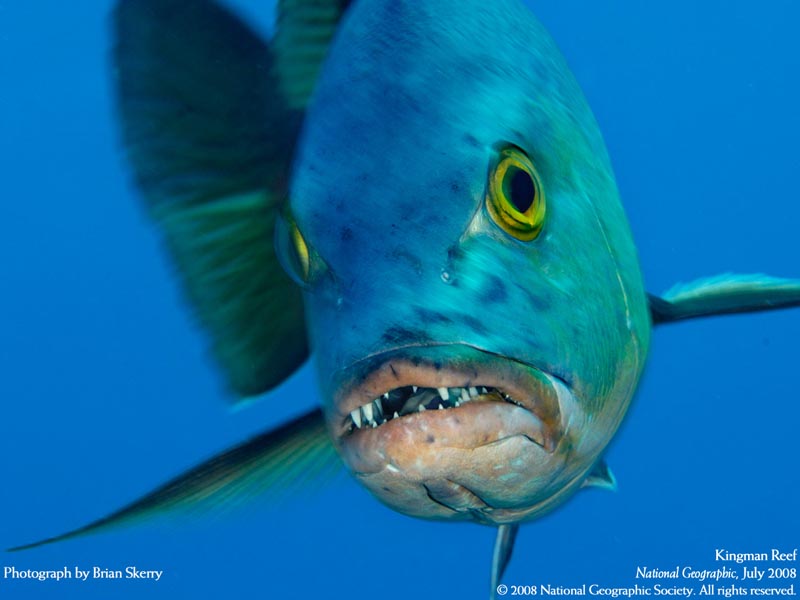
red snapper -- reef fish w teethBy Stephen Leahy

UXBRIDGE, Canada, Oct 9 (IPS)

Without action on climate change “The collapse of fisheries in much of the world would be a sideshow,” Daniel Pauly.

Fish catches are expected to decline dramatically in the world’s tropical regions because of climate change, but may increase in the north, said a new study published Thursday.

This mega-shift in ocean productivity from south to north over the next three to four decades will leave those most reliant on fish for both food and income high and dry.

“The shift is already happening, we’ve been measuring it for the last 20 years,” said Daniel Pauly, a renowned fisheries expert at the University of British Columbia (UBC).

“Major shifts in fish populations will create a host of changes in ocean ecosystems likely resulting in species loss and problems for the people who now catch them,” Pauly told IPS.

In the first major study to examine the effects of climate change on ocean fisheries, a team of researchers from UBC and Princeton University discovered that catch potential will fall 40 percent in the tropics and may increase 30 to 70 percent in high latitude regions, affecting ocean food supply throughout the world by 2055.

The study, published in the journal Global Change Biology, examined the impacts of rising ocean temperatures, changes in salinity and currents resulting from a warming climate. Continue reading

“Europe is going to cook the world’s tropical forests to fight climate change; it’s crazy,” — Millions of Trees Burned for ‘Green Energy’

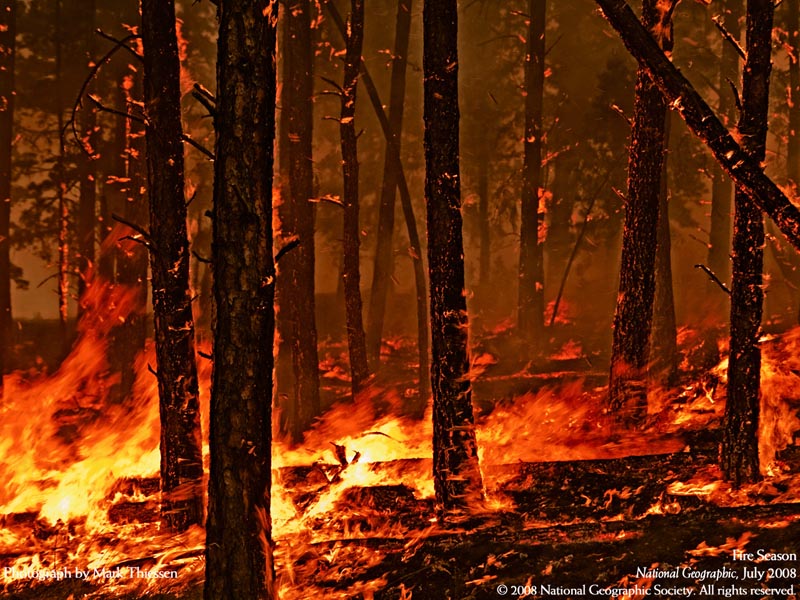
forest fire

Burning trees for energy produces 1.5 times as much carbon as coal – study shows

By Stephen Leahy*

UXBRIDGE, Canada, Sep 24 ’09 (Tierramérica)

Millions of trees, especially from the developing countries of the South, are being shipped to Europe and burned in giant furnaces to meet “green energy” requirements that are supposed to combat climate change.

In the last two months alone, energy companies in Britain have announced the construction of at least six new biomass power generation plants to produce 1,200 megawatts of energy, primarily from burning woodchips.

At least another 1,200 megawatts of wood-fired energy plants, including the world’s largest, in Port Talbot, Wales, are already under construction.

Those energy plants will burn 20 to 30 million tonnes of wood annually, nearly all imported from other regions and equivalent to at least one million hectares of forest.

“Europe is going to cook the world’s tropical forests to fight climate change; it’s crazy,” Simone Lovera, of the non-governmental Global Forest Coalition, which has a southern office in Asunción, Paraguay, told Tierramérica.

This independent environmental journalism depends on public support. Click here learn more.

Europe has committed to reducing its carbon emissions 20 percent by 2020 in an effort to fight climate change. Biofuels and biomass energy will have key roles in achieving those goals, experts say.

Continue reading

Facebookers Last Hope for Environment?

facebook header

‘The only real hope is for a global citizens’ movement unlike anything ever seen on the face of the Earth’ — Erik Assadourian, Vital Signs

By Stephen Leahy

BROOKLIN, Canada, Sep 14 2007 (IPS)

Global trends indicate a looming environmental catastrophe, and engaging high school students around the world may be the only hope say experts.

Governments, the corporate sector and media continue to champion industrial and economic growth at the cost of escalating impacts on the environment, concludes the latest report from the Washington-based Worldwatch Institute, “Vital Signs 2007-2008″.

For a number of years, the “Vital Signs” report has tracked 44 trends that are shaping the future, and they document a record level of industrial growth, says Erik Assadourian, Vital Signs project director.

“‘Vital Signs’ also documents the escalating impacts of such growth on the environment,” Assadourian told IPS in an interview from Barcelona.

The scale of the environmental crisis, in which catastrophic climate change is just one of many, is undermining the ecosystems that support life on Earth.

“Climate change and other environmental problems are symptoms of the root problem, which is the obsession with consumerism,” he said.

Vital Signs reports that in 2005, more wood was removed from forests than in any previous year. Fossil fuel usage dumped 7.6 billion tonnes of carbon emissions into the atmosphere. Meat production hit a record 276 million tonnes (43 kilogrammes per person) in 2006. Rising meat consumption is driving rising soybean demand to feed cattle, which in turn is a driver of deforestation as tropical forests are turned into soy fields.

And on it goes: global seafood consumption breaks records, steel and aluminium production too. None of this is sustainable – another three or four or five planets would be needed to maintain these levels of production and consumption. Continue reading

Content Control: Patents Threaten Traditional Knowledge of Indigenous People

Quechua in Cusco region

“To have potatoes, there must be land, people to work it, a culture to support the people, Mother Earth and the mountain gods…”

By Stephen Leahy*

VIENNA, Jul 6 (Tierramérica)

Indigenous peoples risk losing control over their traditional knowledge if the World Intellectual Property Organisation (WIPO) insists on strict standards for managing access to information.

Patents and other forms of restricting access to knowledge are very worrisome in a time of climate change, says a new report by the London-based International Institute for Environment and Development (IIED).

The study was presented at meetings of the WIPO – a United Nations agency – held Jun. 23-Jul. 3 in Geneva.

Intellectual property standards restrict use of genetic resources when we need flexibility and adaptability to cope with climate change,” said Michel Pimbert, director of IIED’s Sustainable Agriculture, Biodiversity and Livelihoods Programme.

WIPO aims to develop rules for protecting rights over traditional knowledge, such as indigenous knowledge about medicinal plants, which conventional intellectual property laws do not cover.

However, according to IIED’s Krystyna Swiderska, who coordinated the research in Africa, Asia and Latin America, “WIPO’s call for consistency with existing intellectual property standards is a flawed approach as these have been created on Western commercial lines to limit access to inventions such as drugs developed by private companies.”

Intellectual property is about restricting access, creating monopolies and eliminating competition, and it is being pushed by transnational pharmaceutical and seed companies, said Pimbert. Continue reading

Alien Species Cause Extinctions, Increase Poverty, Erode Ecosystems

Saltcedar, an invasive exotic weed, crowds out native vegetation along the Gila River in Arizona.

By Stephen Leahy

UXBRIDGE, Canada, May 21 (IPS) – Continent-hopping alien species are worsening poverty and threaten the agriculture, forestry, fisheries and natural systems that underpin millions of livelihoods in developing countries, warn biodiversity experts.

“The livelihoods for 90 percent of people in Africa directly rely on natural resources such as marine coastal biodiversity,” said Ahmed Djoghlaf, executive secretary of the Convention on Biological Diversity (CBD).

“Around the world more than 1.6 billion people depend directly on forests for their survival,” he told IPS from Montreal.

Biodiversity is not just fuzzy animals and pretty birds. It is the diversity of life on Earth that comprises ecosystems which in turn provide vital ecosystem services including food, fibre, clean water and air.

“Biodiversity is poor countries’ most precious asset,” Djoghlaf stressed. Continue reading

Extraordinary Abundance of Life in Oceans Past

trophy fish 2007By Stephen Leahy

UXBRIDGE, Canada, May 26 (IPS) – Imagine large pods of mighty blue whales and orcas darkening the waters off Cornwall, England, while closer to shore blue sharks and thresher sharks chase herds of harbour porpoise and dolphins.

Pure fantasy? No, in fact that extraordinary abundance of marine life off the English coast was the norm for oceans around the world not so long ago, researchers have now documented.

And then humans began to mine the seas of anything worth eating.

“The impact of fishing over the centuries is far larger than anyone thought,” said Poul Holm, a professor at Trinity College in Dublin and global chair of the History of Marine Animals Population (HMAP) project which part of the 10-year Census of Marine Life.

While many valuable species have been fished out in recent years, that has been happening for hundreds of years around the world based on nine years of research by hundreds of experts.

“In looking back 500 to 2,000 years ago, you get a real sense of the impacts of fishing and the cascading effects on marine ecosystems, some of which may be beyond recovery,” Holm told IPS. Continue reading

Scientists Build a Macroscope of Life on Earth

clown fish anomenes iucnBy Stephen Leahy

UXBRIDGE, Canada, Jun 2 (IPS) – Imagine looking at a Google Maps-like satellite image of the Amazon forest and with a mouse click find out what lives in that bit of forest – what tree and plant species are there, what animals, birds and insects.

You could even look at the DNA of the microbes that live on those insects in this amazing, futuristic online “macroscope of life” on planet Earth.

The information about these Amazonian species, their habitats and even their DNA already exists in most cases. But it is scattered like dry leaves all over the world in dusty museum basements, science labs, libraries and hundreds of electronic databases.

This week, scientists are launching a 10-year global effort to gather and compile the world’s vast storehouse of knowledge about biodiversity into a single online, interactive information system for life on Earth that will take its place alongside the world meteorology data network that pools information to predict the weather. Continue reading

Ethanol and Biofuels: Almost Everything You Need to Know

“The U.S. has led the fight to stem global hunger, now we are creating hunger,” said Lester Brown, president of the Earth Policy Institute.

Series of the latest articles that provide almost everything you need to know about why ethanol and biofuels will not reduce global warming but simply drive up fuel and food costs.

maize - mexicoEthanol Worse Than Gasoline

Only Green Part of Most Biofuels is the Wealth (Subsidies) They Generate

Ethanol: The Great Big Green Fraud

International Enviro Standards Needed for Biofuels

Six Experts On Why Ethanol is a Dumb Idea

Food & Fuel: Can Sorghum Be The New Magic Bullet Biofuel??

Biofuels: Another Good Reason to Hate American Policy

(Cellulosic) Greenest Ethanol Still Unproven

Native Peoples Sound Dire Warning On Climate

cracked-earthBy Stephen Leahy*

Drought and hotter weather are making it very difficult to grow the staple crop of maize in most regions of Mexico.

ANCHORAGE, Alaska, Apr 22 (IPS) – Humanity’s hot carbon breath is not just melting the planet’s polar regions, it is disrupting natural systems and livelihoods around the world, indigenous people reported this week at a global meeting on climate change in Anchorage, Alaska.

“We indigenous people are the prow of the ship of humanity in the oncoming waves of climate change,” said Vanessa Marsh of the small Pacific island of Niue.

Indigenous people are here to alert humanity and lead the way in healing Earth, Marsh, a youth delegate, told more than 400 representatives of world’s indigenous peoples here.

Coastal erosion, mud slides, longer droughts and more severe hurricanes are just some of the impacts of climate change affecting the Caribbean region, Chief Charles Williams of the Kalinago people on the island of Dominica told the U.N.-affiliated Indigenous Peoples’ Global Summit on Climate Change.

“Most indigenous people live on the margins…their ‘purses’ are not as strong as others when it comes to coping with climate change,” Williams said. Continue reading

Indigenous Peoples Demand Greater Role in Climate Debate

native-windmill-art

By Stephen Leahy*


ANCHORAGE, Alaska, Apr 20 (Tierramérica) – While indigenous peoples from around the world are meeting in this Alaskan city to seek a greater role in global climate negotiations, the rapidly warming Arctic is forcing some Inuit villages to be relocated.

“We have centuries of experience in adapting to the climate and our traditional lifestyles have very low carbon footprints,” Victoria Tauli-Corpuz, an indigenous leader from the Philippines and chair of the United Nations Permanent Forum on Indigenous Issues, told Tierramérica.

Carbon-based gases are the principal cause of the greenhouse effect, which leads to climate change. The excessive release of these gases, like carbon dioxide and methane, comes from human activities: the combustion of fossil fuels in industry and transportation, and emissions from livestock production and deforestation.

Some 400 indigenous people, including Bolivian President Evo Morales and observers from 80 nations, are gathered in Anchorage, Alaska for the Apr. 20-24 U.N.-affiliated Indigenous Peoples’ Global Summit on Climate Change.

They will discuss and synthesise ways that traditional knowledge can be used to both mitigate and adapt to climate change.

“Indigenous peoples have contributed the least to the global problem of climate change, but will almost certainly bear the greatest brunt of its impact,” said Patricia Cochran, chair of both the Inuit Circumpolar Council and the April Summit. Continue reading