The Real Price of Farmed Salmon

bear-catching-salmon-low-alex-morton

Stephen Leahy

UXBRIDGE, Canada, 10 Nov (IPS)

Salmon aquaculture is devastating the world’s oceans and an international coalition of scientists, Canadian First Nations and tourism operators have called for a global moratorium.

‘We’ve seen a regional collapse of all sea life in the 20 years since the salmon farms moved in,’ said Chief Bob Chamberlin of the Kwicksutaineuk Ah-kwa-mish Canadian First Nation in the province of British Columbia on Canada’s west coast.

‘I can only shake my head in bewilderment that this is allowed to continue,’ Chamberlin told IPS from Gilford Island in the Broughton Archipelago, where 20 salmon farms are in operation. Continue reading

Say Goodbye to Coral Reefs

severely-degraded-reef-flat-at-kelso-reef-great-barrier-reef-australiaimage-c2a9-cathie-page-very-sml

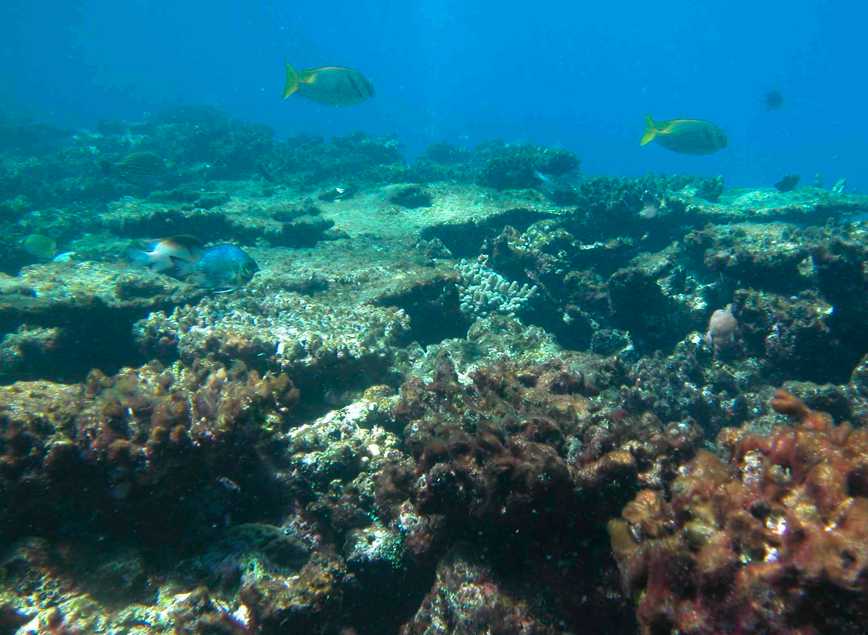
Coral reefs will be the first global ecosystem to collapse in our lifetimes.

By Stephen Leahy

GIJON, Spain, May 22 (IPS) – The one-two punch of climate change that is warming ocean temperatures and increasing acidification is making the oceans uninhabitable for corals and other marine species, researchers said at a scientific symposium in Spain.

And now other regions are being affected. Acidic or corrosive waters have been detected for the first time on the continental shelf of the west coast of North America, posing a serious threat to fisheries, Richard Feely, an oceanographer with the U.S. National Oceanic and Atmospheric Administration (NOAA), told attendees in Gijon, Spain Wednesday.

More than 450 scientists from over 60 countries are participating in the “Effects of Climate Change on the World’s Oceans” symposium.

“Surface waters off the coast of San Francisco had concentrations of carbon dioxide that we didn’t expect to see for at least another 100 years,” Feely told IPS. Continue reading

Arctic Oil and Gas Rush Alarms Scientists

By Stephen Leahy

[See also more recent story: Arctic Ice Gone in 5 Years – First Time in One Million Years; see also other Arctic and oil stories below. US and Canada to start offshore drilling in the Arctic summer 2010 – your support is needed to investigate and report on this. ]

UXBRIDGE, Canada, Sep 8 2008 (IPS)

As greenhouse gas pollution destroys Arctic ecosystems, countries like Canada are spending millions not to halt the destruction but to exploit it.

Late last August, Canada announced a 93.7-million-dollar prospecting programme to map the energy and mineral resources of the region. There are “countless other precious resources buried under the sea ice and tundra,” Prime Minister Stephen Harper said during the announcement. The government’s mapping effort is expected to trigger 469 million dollars in private sector resource exploration and development.

“It is estimated that a quarter of the world’s undiscovered oil and gas lies under the Arctic,” Harper said.

This scramble to exploit some of the most environmentally delicate regions of Earth has alarmed international experts who are meeting this week in Iceland to make recommendations to the United Nations and world governments on how to protect the polar regions.

“Many experts believe this new rush to the polar regions is not manageable within existing international law,” says A.H. Zakri, director of the United Nations University’s Yokohama-based Institute of Advanced Studies (UNU-IAS), co-organisers of the conference with Iceland’s University of Akureyri. Continue reading

Extinction Crisis Serious Threat to Our Health – says Harvard Doc

“Few people realize our health is directly tied to the health of the natural world,” — Dr. Aaron Bernstein, Harvard Medical School

Bernstein and colleagues reveal the latest scientific evidence to make a persuasive case that the current extinction crisis, with species vanishing every day, is a serious threat to humanity equal to, if not greater than, climate change.

Their findings are documented in a new book “Sustaining Life“, see here for complete article.

“When we harm nature, we are harming ourselves,” says Bernstein.

Lose Corals and We Will be Fighting for Our Own Survival

Interview with Marine Scientist Roberto Iglesias-Prieto

By Stephen Leahy

FORT LAUDERDALE, Florida, U.S., Jul 31 (Tierramérica)

“There would be no white sands on the beaches of Cancún without the Mesoamerican reef,” Professor Roberto Iglesias-Prieto, a marine ecophysiologist working at the Institute of Marine Sciences and Limnology of the National Autonomous University of Mexico, told Tierramérica.

Tourism is Mexico’s third leading source of revenue, and the country needs to invest much more in protecting its valuable coral systems, says the expert. But to explain the problems that coral reefs face “it is not enough to be an ecologist; one has to be an economist and political scientist as well,” he adds.

The Mesoamerican reef, which is off the Yucatán Peninsula and is shared by Mexico, Belize, Guatemala and Honduras, extends 1,100 kilometres, making it the largest in the Atlantic Ocean and the second largest in the world, after the Great Barrier Reef east of Australia.

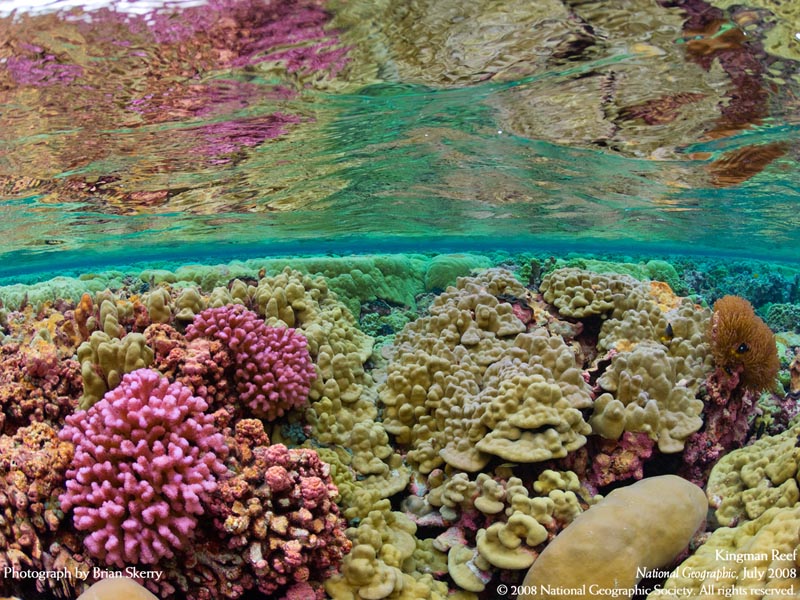
Corals are crucial for the health of oceans and are home to 25 to 33 percent of marine life. The livelihoods of one billion people rely on coral reefs, directly or indirectly.

But the reefs are dying as a result of excessive fishing, pollution and climate change, which is heating up the water and causing acidification.

Few coral reefs will be healthy beyond 2050 if significant reductions in emissions from the burning of fossil fuels do not occur in the near term, most experts in this field agree.

Tierramérica’s Stephen Leahy spoke with Iglesias-Prieto during the 11th International Coral Reef Symposium in July in Fort Lauderdale, Florida.

Is this article of interest? It exists thanks to contributions from readers. Please click here to learn more about Community Supported Journalism.

Continue reading

Wetlands Loss Fuelling CO2 Feedback Loop

By Stephen Leahy

Uxbridge, CANADA, Jul 21 (IPS) – Wetlands are dangerous, scientists say, in the sense that they are ticking carbon bombs best left alone. To help stave off extreme climate change, existing wetlands should be enhanced and new wetlands created so they could capture more carbon.

“Wetlands hold massive stores of carbon — about 20 percent of all terrestrial carbon stocks,” said Eugene Turner, a leading wetlands expert at Louisiana State University’s Coastal Ecology Institute

However, wetlands, including peatlands, continue to be converted to other uses around the world, resulting in large emissions of carbon and methane, a potent greenhouse gas that has 21 times the warming impact of carbon dioxide. 

By itself, climate change is already degrading wetlands, especially in the Arctic and near Arctic regions where the once permanently frozen peatlands are thawing, Turner told IPS prior to the opening of the Eighth INTECOL International Wetlands Conference in Cuiaba, Brazil on Monday. 

“Researchers have been measuring huge releases of carbon and methane up there,” he said. “It’s crazy to add to that by draining or mismanaging other wetlands.” Continue reading

Cutting CO2 Only Way to Save Dying Corals

By Stephen Leahy

FORT LAUDERDALE, U.S., July 12 2008 (IPS)

The rapid decline of coral reefs around the world offers a potent warning that entire ecosystems can collapse due to human activities, although there is hope for reefs if immediate action is taken, coral experts agreed at the conclusion of a five-day international meeting Friday.

“Reefs are in serious trouble, but don’t write them off,” Terry Hughes, a marine ecologist at Australia’s James Cook University told 3,000 scientists, conservationists and policy makers attending at the 11th International Coral Reef Symposium (ICRS) in Fort Lauderdale, Florida.

“We can save reefs if we take immediate action,” Hughes said.

More than 20 percent of the world’s reefs have died, and large areas are failing due to a combination of climate change, overfishing, pollution and sea level rise. Most of the fabulous corals that attract tourists to the Caribbean are gone and half of remaining reefs in the U.S. are in serious decline.

[Update 08/10 – Here’s a list of Stephen Leahy’s latest articles on corals Coral Reefs and Acid Oceans Series]

We may be facing ocean deserts in the future,” said Guillermo Dias-Pulido of Australia’s University of Queensland.

Continue reading

A Third of Corals Face Extinction

By Stephen Leahy
FORT LAUDERDALE, U.S., Jul 10 (IPS) – One third of reef-building corals already face extinction because of climate change, the first-ever global assessment has found.

Reefs are made up of hundreds of coral species, and a two-year study to determine the current status of corals has discovered that 231 of the 704 species assessed will be “red-listed” Thursday. This means these 231 species meet the International Union for Conservation of Nature (IUCN) Red List Criteria for species at risk of extinction in the near future.

Previously, only 10 species of corals had been red-listed, mainly because no proper assessment had been done before.

“We were not expecting the numbers to be that high,” said Suzanne Livingstone of the IUCN’s Global Marine Species Assessment (GMSA) in Norfolk, Virginia. The paper was published Thursday in Science.

If the same assessment of corals had been done 20 years ago, only 13 of the 704 species would have been red-listed, Livingstone told IPS at the 11th International Coral Reef Symposium (ICRS) in Fort Lauderdale, Florida. However, in that short time span, climate change has warmed the oceans and begun to make them more acidic and corals are suffering.

“It’s frightening when you think about it,” she said.

Continue reading

International Enviro Standards Needed for Biofuels

By Stephen Leahy

BONN, Jun 5 (Tierramérica) – The adoption of international standards for the sustainable production of biofuels emerged as a controversial approach at the recent United Nations conference on biodiversity here.

The still-vague proposals suggest that they would “promote the sustainable production, conversion, use, and trade of biofuels”, and revolve around reducing “perverse incentives” like farm subsidies in Europe and the United States.

“In 33 years of ethanol production, Brazil has never bothered to set up sustainability standards,” said Camila Moreno, a researcher with the Brazilian environmental group Terra de Direitos.

Also known as agro-fuels, made from crops like maize, sugarcane and soybeans, they face criticism from those who blame them for the current global food crisis.

The biofuel market is also accused of aggravating the destruction of ecosystems by pushing other crops to cut down forests and expand the farming frontier. Indeed, halting the growing tide of extinctions of plant and animals species was the focus of the Bonn meeting. Continue reading

“We’re Running the Risk of Unstoppable Climate Change” — Oceanographer

Interview with leading marine scientist Chris Reid

“I’m afraid it is going to take a major catastrophe in the developed world…”

GIJON, Spain, Jun 4 (IPS) – Warming seawater, melting sea ice and glaciers, sea level rise, storm intensification, changes in ocean currents, growing “dead zones”, and ocean acidification are just some of the signs that the oceans that cover 71 percent of our watery planet are changing.

Changes in the oceans also means major impacts on the land and the atmosphere. “Policy makers and the public do not realize that the oceans are the drivers of the climate system,” says Chris Reid, recently retired professor of oceanography at the Sir Alister Hardy Foundation for Ocean Science in Plymouth, England.

Reid will be producing a report this summer on the impacts the altered oceans are having and will have on the global climate.

IPS environment correspondent Stephen Leahy spoke to Reid at an international scientific symposium held late last month in Gijon, Spain on the effects of climate change on the world’s oceans.

IPS: What is happening in the oceans that will affect the global climate?

CR: The oceans have absorbed 30 percent of all human emissions of carbon dioxide (CO2) since the start of the industrial age. There is now good evidence that the oceans are absorbing less carbon as a result of climate change. The warming of surface waters, glacial and sea ice meltwater, acidification and so on are inhibiting or slowing a number of the oceans’ mechanisms for absorbing carbon from the atmosphere and safely storing them in the deep ocean.

IPS: How will that affect us?

CR: It means the atmospheric concentrations of CO2 will rise much faster than has been previously projected by climate scientists. Human carbon emissions are already on pace for the worst case scenario as envisioned by the IPCC (Intergovernmental Panel on Climate Change). These changes in the oceans means the rate of warming will increase, bringing even more severe hurricanes and cyclones, flooding events and so on.

IPS: Cyclones like the one that recently devastated Burma?

CR: Yes. Research presented at this meeting shows that South Korea and Japan are experiencing more powerful cyclones. While a single event can’t be precisely connected to climate change, the Burma cyclone fits what is expected with climate change. Continue reading