Burning Down Our House

chilee28094the-fury-of-chaiten-volcano-nat-geoAnalysis by Stephen Leahy

QUEBEC CITY, Canada, Dec 15 (IPS)

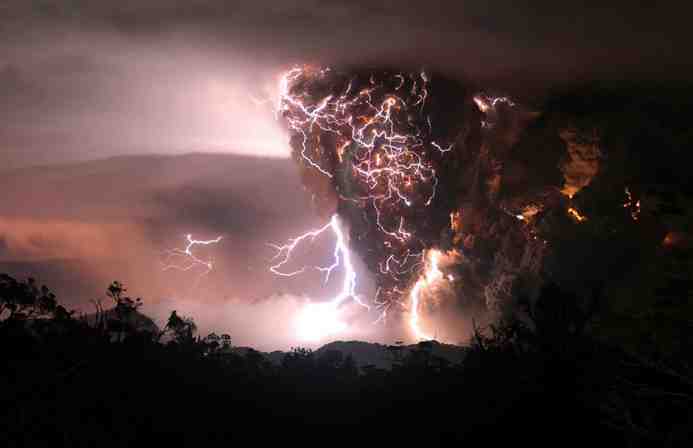
The roof of our house is on fire while the leaders of our family sit comfortably in the living room below preoccupied with “political realities”.

That was essentially the message from 1,000 scientists from around the world along with northern indigenous leaders gathered in Quebec City for the International Arctic Change conference that concluded last weekend.

“Climate change and its impacts are accelerating at unexpected rates with global consequences,” delegates warned in a statement.

Presenting data from hundreds of studies and research projects detailing the Arctic region’s rapid meltdown and cascading ecological impacts, participants urged governments to take “immediate measures to reduce greenhouse gas emissions”.

By happy coincidence, 190 governments were meeting at the same time in Poznan, Poland to do just that: reach an agreement on how much to reduce emissions from the burning of fossil fuels. Except that they decided to do nothing. Continue reading

Climate Change: ‘Things Happen Much Faster in the Arctic’ – Summer Sea Ice Could be Gone Soon

polar-bear-leap-wwwfirstpeopleus-sml

By Stephen Leahy

We’re going to see huge changes in the Arctic ecosystem

QUEBEC CITY, Canada, Dec 13 2008 (IPS)

In just a few summers from now, the Arctic Ocean will lose its protective cover of ice for the first time in a million years, according to some experts attending the International Arctic Change conference here.

A summer ice-free Arctic wasn’t due for another 50 to 70 years under the worst-case climate change scenarios examined by the Intergovernmental Panel on Climate Change (IPCC).

“Things are happening much faster in the Arctic. I think it will be summer ice-free by 2015,” said David Barber, an Arctic climatologist at the University of Manitoba.

Such a “dramatic and serious loss of sea ice will affect everyone on the planet,” Barber told IPS. Continue reading

The Real Price of Farmed Salmon

bear-catching-salmon-low-alex-morton

Stephen Leahy

UXBRIDGE, Canada, 10 Nov (IPS)

Salmon aquaculture is devastating the world’s oceans and an international coalition of scientists, Canadian First Nations and tourism operators have called for a global moratorium.

‘We’ve seen a regional collapse of all sea life in the 20 years since the salmon farms moved in,’ said Chief Bob Chamberlin of the Kwicksutaineuk Ah-kwa-mish Canadian First Nation in the province of British Columbia on Canada’s west coast.

‘I can only shake my head in bewilderment that this is allowed to continue,’ Chamberlin told IPS from Gilford Island in the Broughton Archipelago, where 20 salmon farms are in operation. Continue reading

Bungled Peace-Building in Afghanistan & Iraq Opened Door to Terrorism

US focus In Afghanistan is killing terrorists not peace-building — Canadian expert says 

By Stephen Leahy

(Originally published Jan 31, 2006)

(IPS) – Washington’s attempts to bring security to Iraq and Afghanistan are not only making life harder for local people, they are breeding more terrorists, warn international security experts.

Under its anti-terrorism agenda, the U.S. has centralised power and security in post-conflict Iraq and Afghanistan, which ironically creates perfect conditions for terrorists and criminals.

“There is a great fear that unstable states and post-war societies provide an ideal breeding ground for terrorist training and activity,” said Albrecht Schnabel, a senior fellow with the Research Programme on Human Security in Bern, Switzerland.

“Yet almost three years after the toppling of Saddam Hussein, Iraq is characterised by chaos, violence and disintegration. The methods used to rebuild Iraq’s security sector are simply making matters worse,” he told IPS. Continue reading

Arctic Oil and Gas Rush Alarms Scientists

By Stephen Leahy

[See also more recent story: Arctic Ice Gone in 5 Years – First Time in One Million Years; see also other Arctic and oil stories below. US and Canada to start offshore drilling in the Arctic summer 2010 – your support is needed to investigate and report on this. ]

UXBRIDGE, Canada, Sep 8 2008 (IPS)

As greenhouse gas pollution destroys Arctic ecosystems, countries like Canada are spending millions not to halt the destruction but to exploit it.

Late last August, Canada announced a 93.7-million-dollar prospecting programme to map the energy and mineral resources of the region. There are “countless other precious resources buried under the sea ice and tundra,” Prime Minister Stephen Harper said during the announcement. The government’s mapping effort is expected to trigger 469 million dollars in private sector resource exploration and development.

“It is estimated that a quarter of the world’s undiscovered oil and gas lies under the Arctic,” Harper said.

This scramble to exploit some of the most environmentally delicate regions of Earth has alarmed international experts who are meeting this week in Iceland to make recommendations to the United Nations and world governments on how to protect the polar regions.

“Many experts believe this new rush to the polar regions is not manageable within existing international law,” says A.H. Zakri, director of the United Nations University’s Yokohama-based Institute of Advanced Studies (UNU-IAS), co-organisers of the conference with Iceland’s University of Akureyri. Continue reading

Canada, Home of the World’s Dirtiest Oil

A new multi-million government PR campaign claims Canada is a “clean energy superpower“. Meanwhile oil production from Canada’s oil sands — the world’s dirtiest oil — is ramping up from 1.2 million barrels a day to 3.5 million. Sadly yet another example of a government resorting to the “big lie”.

By the way virtually all of this oil goes to the US market.

I wrote a series of investigative articles for IPS on the enormous environmental impacts of Canada’s oil sands in 2006. That series has been updated and collected into an e-Book format (download for free).

Here’s an excerpt from Oil Stains in the Boreal Forest: The Environmental Cost of Canada’s Oil Sands

THE ‘RECIPE’ TO MAKE A TANK (75 litres/20 gallons) OF OIL SANDS GASOLINE :

* Dig up two tonnes of earth and rock
* Burn up to 1500 cubic feet of natural gas to boil approx 700 litres of fresh water to process the dirt
* Throw away 950 litres of toxic mine tailings and emit 480 kilograms of CO2, the main greenhouse gas causing global warming

REPEAT 1.2 million times a day (one barrel of oil makes about 75 litres of gasoline)

Note: this analysis does not include local air pollution, impacts on wildlife and local people from oil sands operations and pipelines.

Oil Stains in the Boreal Forest

FREE eBook!! Reveals environmental impacts of Canada’s oil sands industry – the world’s largest industrial project.

Canada “acting like USA” Torpedoes International Enviro Agreement

Analysis by Stephen Leahy

“Do Canadians know what their government is doing here? You must tell them.” — Mamadou Mana Diakite of Mali

BONN, Jun 3 (IPS) – Self-interest and petty politicking largely paralysed efforts to solve the urgent problem of the widespread extinction of species, with few concrete achievements after nearly two weeks of 14-hour meetings at the Convention on Biodiversity (CBD) in Bonn that concluded last Friday.

Why? Mainly because a few rich and powerful countries like Japan, Canada, Australia, Brazil and China fought tooth and nail to boost their own self-interest regardless of the environmental and human costs.

Six years ago, more than 160 countries at the April 2002 World Summit on Sustainable Development in Johannesburg agreed on a target of achieving a significant reduction of the current rate of biodiversity loss by 2010. In May 2008, virtually everyone here acknowledged the target will not be met.

Some countries, like Germany and most of the developing world, do understand that species extinction is undermining the vital ecosystem services that nature provides, such as food, fibre, clean water and air. Others, such as Canada, express altruistic sentiments that are belied by their actions. Since decisions at U.N. meetings are by consensus, any country can block decisions on a whim. Or, as is more often the case, countries will block agreement on something they have no connection to simply so they can force concessions on other issues.

“You listen to them debate over every comma and realise they could be arguing over anything,” said Helena Paul of EcoNexus, a British-based environmental group that participated in the CBD meetings. NGOs can observe but are not participants except for the occasional opportunity to express their views. Continue reading

Oil vs Polar Bears in Alaska: Big Oil Sues Govt for Protecting Polar Bear Habitat

[Update Mar 3 2011: An Alaska oil industry trade group representing 15 oil & gas companies sued the US federal government because it banned drilling in 187,157 square miles as polar bear critical habitat. They claim plenty of polar bears without offering any evidence. And it’s not like Alaskan oil interests haven’t run the state for years. My article below documents how 30 million acres of polar bear habitat were auctioned off in a big hurry in 2008. It really is all about oil/gas $ VS survival of polar bears. — Stephen]

[Update: May 1 2010 – Alaska’s polar bears are now official listed as threatened. In April 2010, the Obama administration tried but failed to get the world’s 20-25,000 remaining polar bears listed as endangered species. What a difference a new administration makes .–Stephen]

By Stephen Leahy

BROOKLIN, Canada, Mar 11, 2008 (IPS)

A coalition of environmental groups sued the George W. Bush administration Monday for delaying a decision to protect polar bears threatened with extinction due to the melting ice in its Arctic habitat. Polar bears could be the first species officially threatened by climate change.

The huge loss of summer sea ice in 2007 has caused many scientists to project that the Arctic could be ice-free in summer by as soon as 2012. Although excellent swimmers, polar bears are not very good at catching seals in the water. Seals comprise the main diet for these giant bears, which are far larger than their grizzly bear cousins.

While legally required to make a decision Jan. 9, US Fish and Wildlife (U.S. FWS) officials have been silent. Meanwhile on Feb. 6, 2.6 billion dollars in oil and gas leases were auctioned off to energy companies on nearly 30 million acres of prime polar bear habitat in the Alaska’s Chukchi Sea.

This independent environmental journalism depends on public support. Click here learn more.

Coincidence? I doubt it, but I don’t have the smoking gun to prove it,” said Kassie Siegel of the Centre for Biological Diversity (CBD), an environmental non-governmental organisation based in Joshua Tree, California.

The CBD, along with Greenpeace and the Natural Resources Defence Council, filed the suit for missing the legal deadline for issuing a final decision on whether to list the polar bear under the Endangered Species Act due to global warming.

“There was absolutely no urgency to hold that lease sale and plenty of public opposition to it as well,” Siegel told IPS. Continue reading

Polar Bears’ Future Bleak in Melting Arctic

http://www.firstpeople.us

Lots of folks have been telling me that polar bears are doing ok and don’t need protection under the US Endangered Species Act. Some say polar bear populations are stable in Alaska and increasing in parts of Canada. And there might be 1500 more bears than previous estimates according to a three year study in Nunavut which makes $2 million a year from polar bear trophy hunters. But 1500 isn’t very many more bears and with the Arctic sea ice melting fast the future certainly doesn’t look bright.

As for Alaska consider this fact:

This week scientists announced new findings that the survival rate of polar bear cubs in Alaska’s Beaufort Sea has plummeted. In the late 1980s, 65 percent of polar bear cubs in the southern Beaufort Sea survived their first year. That has fallen to an average of 43 percent in the past five years. — Polar Bears Go Hungry as Icy Habitat Melts Away

“Without taking serious and urgent action to stabilize the climate, there is no future for polar bears” says Andrew Derocher, Chair of the World Conservation Union (IUCN), Polar Bear Specialist Group.

See also this controversy: Oil vs Polar Bears in Alaska

And these updates on the Arctic: Arctic Is the Canary in the Coalmine

Arctic Oil and Gas Rush Alarms Scientists

Arctic Meltdown Signals Long-Term Trend

Inuit Sue America over Climate Change

http://www.firstpeople.us