Green Energy for All by 2030?

WED kidjo smlBy Stephen Leahy

VIENNA, Jun 26 (IPS)

While industrialised countries struggle to switch from climate-damaging, carbon-based energy to greener energy sources, much of the world is desperately energy poor, with 1.6 billion people having no access to electricity and 2.4 billion relying on wood and dung for heat and cooking.

“Over 1.6 million deaths a year are attributed to indoor use of biomass for cooking and heating,” Kandeh Yumkella, director-general of the United Nations Industrial Development Organisation (UNIDO), told more than 600 participants from 80 countries at the Vienna Energy Conference this week in Austria’s capital city.

The conference concluded with a recommendation to create a 20-year plan to end energy poverty by 2030.

Women and children in many parts of the world have little choice but to spend hours each day in search of firewood, trapped in a vicious cycle of deforestation that increases erosion and reduces the fertility of their land. “Energy interacts with all of the development challenges we face,” said Yumkella.

The developing world – and especially those without access to electricity – must be part of the new green energy revolution, he said. “We can’t leave people out. We must have climate justice and energy justice,” he told IPS in an interview.

For complete story see  Green Energy for All by 2030?
Green Energy Investments Beat Fossil Fuel For First Time in History

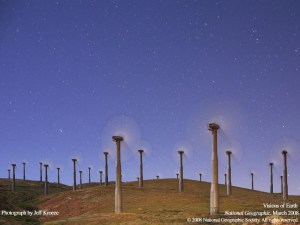
wind turbines at night USABy Stephen Leahy

UXBRIDGE, Canada, Jun 5 (IPS) 

The world has turned a green corner toward a more sustainable future, with investments in clean energy outpacing fossil fuel power generation for the first time.

Despite the global economic crisis, a record 155 billion dollars was invested in clean energy companies and projects worldwide last year, mainly in wind and solar, according to a new report from the U.N. Environment Programme (UNEP).

More remarkably, that investment in clean energy topped 2007’s record investments by five percent, in large part as a result of investments by China, Brazil and other emerging economies.

Achim Steiner, UNEP’s executive director, says that “2008 was the first year where there was more investment in non-carbon energy sources than in high carbon and nuclear energy.”

“That’s hugely significant,” Steiner told IPS in an interview.

UNEP has been calling for a “Global Green New Deal” to jump-start the global economy and use the various economic stimulus packages to make investments in clean technologies and ‘natural’ infrastructure such as forests and soils. Experts argue that this is the best bet for real growth, combating climate change and sparking an employment boom in the 21st century.

“There are literally millions of new jobs that could be created in the next few years,” Steiner said. Continue reading

You Go First Carbon Politics Threatens Us All

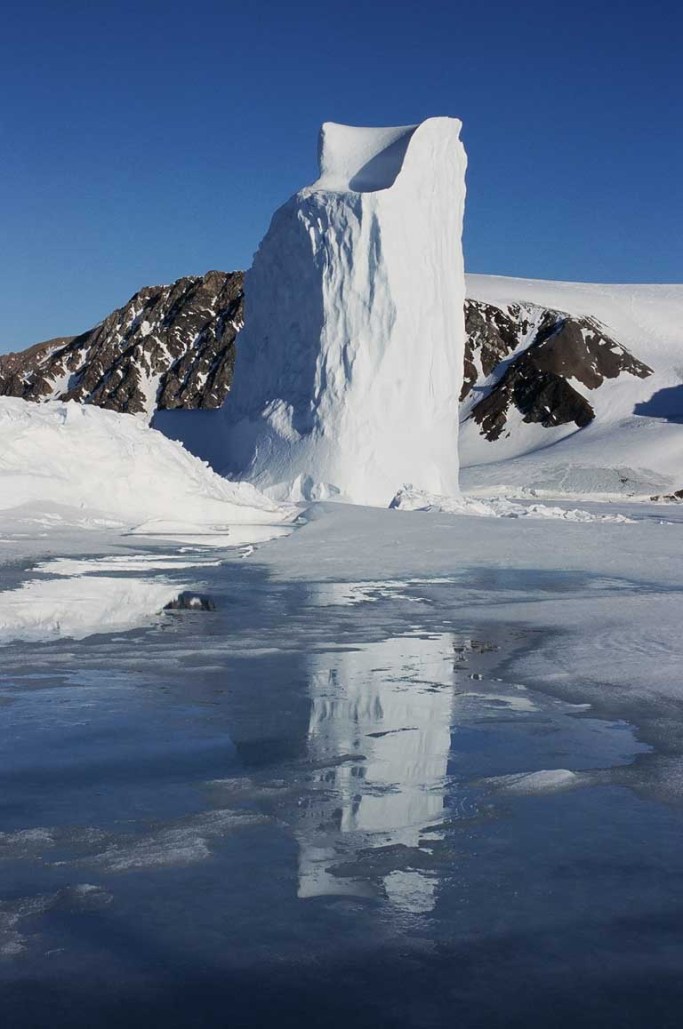
mage showing iceberg off Baffin Island, Nunavut, Canada with meltwater ponds in the foreground. Arctic warming has been associated with a rapid decline in Arctic summer sea ice extent. Image credit- Sandy BriggsBy Stephen Leahy

NY-ÅLESUND, Svalbard, Norway, Jun 15 (IPS)

Political and business leaders may agree in principle that climate change is a serious threat, but there is a startling lack of consensus and a ‘you-go-first’ attitude on taking action, even amongst a small group of high-level decision makers disconnected from their cell phones here in the Arctic.

“We want to reduce China’s CO2 (carbon dioxide) emissions, but we are a market-driven economy,” Liu Yanhua, China’s vice minister for science and technology, told 30 participants at the Ny-Ålesund Symposium located at a scientific research centre called Kings Bay on the western coast of Spitsbergen Island about 1,200 kilometers from the North Pole.

“Climate change is a matter of economy, of energy,” said Yanhua, a former scientist at the Chinese Institute of Geography.

It is also an issue of generational equity, since at current rates all fossil fuels will be consumed in 50 to 80 years, leaving nothing for future generations, he said.

China’s CO2 emissions have soared 150 percent in the last 20 years, Yanhua acknowledged, and are now the highest of any country, including the United States. China’s carbon intensity – the amount of carbon emitted per unit of production – is 10 times higher than Germany’s and major efficiency improvements are needed, he said. Continue reading

Science vs Politics at the Edge of the North Pole

SN852510

By Stephen Leahy

NY-ÅLESUND, Svalbard, Norway, Jun 14 (IPS)

Spectacular views of mountains and glaciers here in the world’s most northerly permanent human settlement contrasted with business and political leaders’ pessimism and concern about the enormous gap between the action on climate that science deems necessary and what politics considers realistic.

“We must push beyond the politically feasible,” said Tora Aasland, Norway’s minister of research and higher education.

SN852503“Here we are at the edge of the North Pole where climate change is easier to see…How do we communicate the urgency of our situation?” Aasland asked several dozen attendees at a recent high-level symposium in Ny-Ålesund, on the western coast of Spitsbergen Island about 1,200 kilometers from the North Pole.

She emphasised that we already know what to do and how to do it, including reducing fossil fuel energy use, improving energy efficiency, and investing in new technologies like carbon capture and storage.

Taking action on climate is imperative and an ambitious international agreement is urgently needed based on what scientists say is required to stabilise the climate system, participants concluded in a final statement. However, the current series of international climate negotiations in Bonn, Germany have bogged down and are on the edge of collapse, several participants noted. Continue reading

James Lovelock: “there will be a sudden shift to a new global climate … 5 or 6C warmer”

Lovelock_James credit Sandy Lovelock

Stephen Leahy interviews JAMES LOVELOCK the scientist who first proposed the Gaia Hypothesis

TORONTO, June 5 2009 (Tierramérica)

“When the first great climate disaster strikes, I hope we will all pull together just as if our nation were being invaded,” says British scientist James Lovelock in this exclusive Tierramérica interview.

Please throw something in the tip jar before reading on.
This is how I make my living.

As the world marksInternational Environment Day Friday, Lovelock argues that as the climate warms and the carbon content of the atmosphere soars, humanity is facing a far grimmer future that will be upon us sooner than any of the projections made by the Intergovernmental Panel Climate Change (IPCC).

A chemist, physician and biophysicist, Lovelock is one of the world’s foremost environmental scientists and founder of the Gaia Hypothesis, which describes the planet as a living organism, a complex system in which the components of the biosphere and atmosphere interact to regulate and sustain life.

Although his ideas often feed controversy, Lovelock has wide-ranging scientific credentials. As an inventor, he holds more than 50 patents, including the first devices for detecting the presence of ozone-depleting CFCs (chlorofluorocarbons) and pesticide residues in the environment.

He is also the author of many books. The most recent, “The Vanishing Face of Gaia: A Final Warning”, was published in April. Lovelock spoke with Tierramérica’s Stephen Leahy in Toronto.

TIERRAMÉRICA: Why are you critical of the IPCC? Continue reading

Alien Species Cause Extinctions, Increase Poverty, Erode Ecosystems

Saltcedar, an invasive exotic weed, crowds out native vegetation along the Gila River in Arizona.

By Stephen Leahy

UXBRIDGE, Canada, May 21 (IPS) – Continent-hopping alien species are worsening poverty and threaten the agriculture, forestry, fisheries and natural systems that underpin millions of livelihoods in developing countries, warn biodiversity experts.

“The livelihoods for 90 percent of people in Africa directly rely on natural resources such as marine coastal biodiversity,” said Ahmed Djoghlaf, executive secretary of the Convention on Biological Diversity (CBD).

“Around the world more than 1.6 billion people depend directly on forests for their survival,” he told IPS from Montreal.

Biodiversity is not just fuzzy animals and pretty birds. It is the diversity of life on Earth that comprises ecosystems which in turn provide vital ecosystem services including food, fibre, clean water and air.

“Biodiversity is poor countries’ most precious asset,” Djoghlaf stressed. Continue reading

New $Billion Cash Hand Out To Fossil Fuel Companies Under ‘Green’ Economic Stimulus Plans

Shell in Curacao, Netherlands - Humane Care Fondation, Curacao[Updated: Monday Sept 28/09

Last Friday at the G20 countries agreed to phase out subsidies for oil and other carbon dioxide-spewing fossil fuels in the “medium term” as part of efforts to combat global warming. This article documents NEW taxpayer subsidies to some of the world’s richest corporations]


By Stephen Leahy

UXBRIDGE, Canada, May 29 2009 (IPS)

Despite the economic slow down, growing numbers of world leaders are calling for urgent action on climate change while many governments used their economic stimulus packages to increase subsidies to the fossil fuel industry.

Consider Europe, with the strongest public commitment to reduce carbon emissions that are causing climate change.

In the past five years, 8 billion U.S. dollars of public money went to Europe’s fossil fuel companies mainly to the natural gas sector. And in May the European Parliament approved an additional 3.35 billion dollars in subsides as part of Europe’s 225 billion dollars economic recovery plan, according to a new research report by Friends of the Earth Europe.

“We Europeans are supposedly leading the world on the path to a new green economy but we’re putting billions of euros into fossil fuel sector that’s taking us in the opposite direction,” Darek Urbaniak of Friends of the Earth Europe.

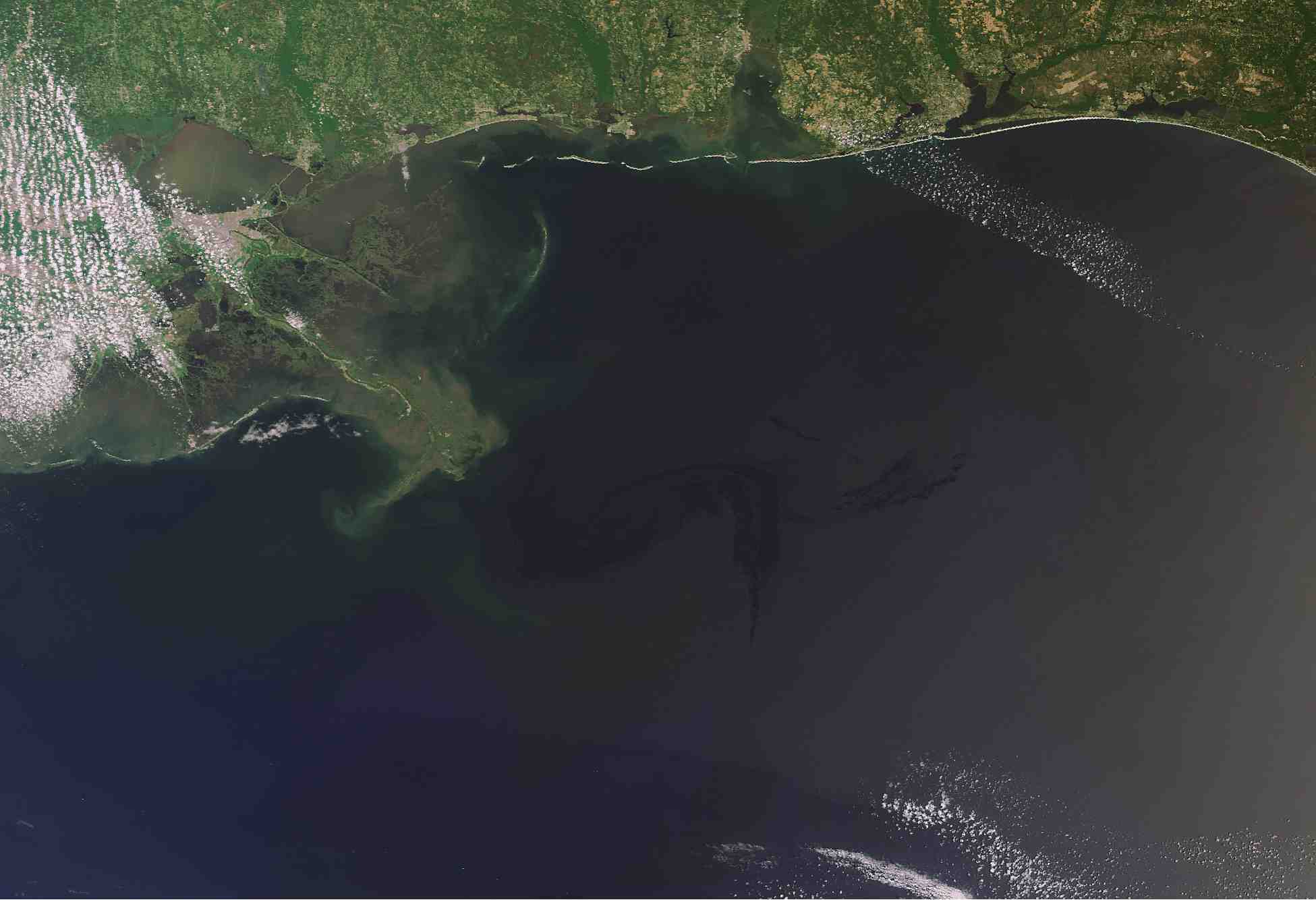
gulf spill nears coast Apr 30 2010 - ESA

Its complete hypocrisy,” Urbaniak told IPS from Brussels.

Perhaps recognising this fact, global business leaders at the World Business Summit on Climate Change that concluded May 26 called on governments to “strive to end the current perverse subsidies that favour high-emissions transport and energy”.
Continue reading

Snow Cover Turning to Lakes in the Himalayas

Iceberg in Glacier Strait, Nunavut, Canada, Image credit- Sandy Briggs.By Stephen Leahy

UXBRIDGE, Canada, May 7 (IPS) – As climate change takes hold, even the mighty Himalayas and Hindu Kush mountain ranges are now losing their snow and ice.

These are the world’s greatest repositories of snow and ice outside of the polar regions, and yet they may melt away in just 20 to 30 years, leaving more than a billion people desperately short of water, experts concluded in San Diego this week.

“There’s been a super-rapid decline in the glaciers of the region,” said Charles Kennel, senior strategist at the University of California San Diego Sustainability Solutions Institute and former director of Scripps Institution of Oceanography.

Kennel told IPS that nearly all of the 20,000 glaciers in the Himalaya-Hindu Kush mountain ranges are in retreat and the meltwater from some has created enormous lakes held back by rockslides that will inevitably burst, endangering anyone living in the valleys below. The World Wildlife Fund calculates there are 2,000 glacial lakes forming in Nepal and around 20 are in danger of bursting. Several have already flooded valleys in the past two decades in Nepal and Tibet.

“We are trying to make it known that the Himalayas are to the issue of the world’s water supply problem what the Amazon rain forest is to the issue of deforestation,” he said in reference to the “Ice, Snow, and Water” workshop convened at UC San Diego this week that included scientists from India, Nepal, Singapore and China. Continue reading

Deep CO2 Cuts May Be Last Hope for Acid Oceans

(Report from the World Oceans Conference in Indonesia)

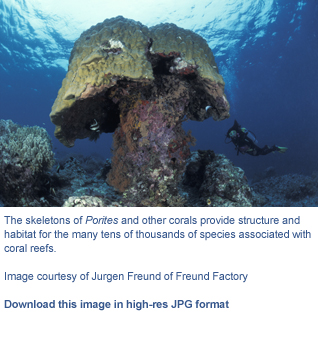
gbr cap mushroom death4By Stephen Leahy

UXBRIDGE, Canada, May 15 (IPS) –

Ocean acidification offers the clearest evidence of dangers of climate change.

And yet the indisputable fact that burning fossil fuels is slowly turning the oceans into an acid bath has been largely ignored by industrialised countries and their climate treaty negotiators, concluded delegates from 76 countries at the World Oceans Conference in Manado, Indonesia.

Oceans and coastal areas must be on the agenda at the crucial climate talks in Copenhagen in December, they wrote in a declaration. “We must come to the rescue of the oceans,” declared Indonesian President Susilo Bambang Yudhoyono at the opening of high-level government talks on Thursday in the northern city of Manado.

It is fair to say most international climate negotiators aren’t aware of the impacts of climate change on the oceans, said Carl Gustaf Lundin, head of the IUCN’s Global Marine Programme.

“Very few people understand that carbon emissions are making the oceans acidic,” Lundin told IPS.

Continue reading

Heading for +2 degrees C (3.6 degrees F) Carbon Use Must Peak by 2015 Scientists Warn

Carbon overload - have to stop expanding
Carbon overload – have to stop expanding

By Stephen Leahy

“We shouldn’t forget that a 2-degree C global mean warming would take us far beyond the natural temperature variations that life on Earth has experienced since we humans have been around.”

ANCHORAGE, Alaska, Apr 30 (IPS)

Climate scientists are calling for a phase-out of fossil fuels because humans are now pumping so much carbon dioxide (CO2) into the atmosphere that the ‘2-degree-C climate balloon’ will burst otherwise, new studies show.

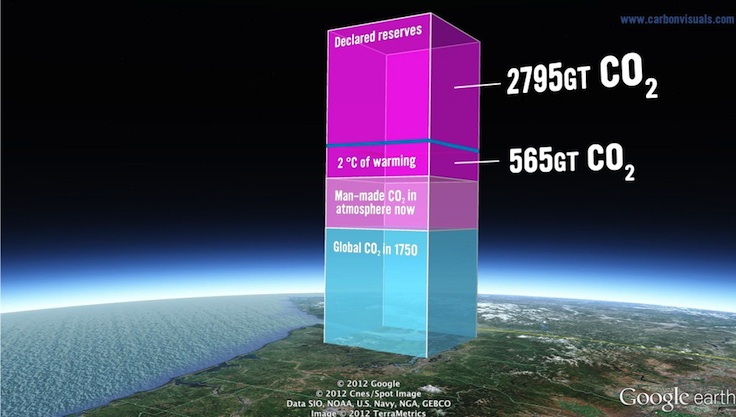
That 2-degree C climate balloon has a maximum capacity of less than 1,400 gigatonnes of CO2 total emissions from the year 2000 to 2050, Malte Meinshausen and colleagues report in the current issue of Nature. The European Union and others consider a global temperature rise of more than 2 degrees C as dangerous and potentially catastrophic. Temperatures are already 0.8 C warmer than the pre-industrial period.

UPDATE Nov 2009 Prospect of a four-degree Celsius rise in global average temperatures in 50 years is alarming – but not alarmist, climate scientists now believe. Four Degrees of Devastation

The reality is that global emissions for the last seven years amounted to almost 250 gigatonnes of these long-lived greenhouse gases, meaning that the current and growing rates of fossil fuel emissions would burst the balloon in about 20 years – or less. Even if emissions are held to 1,400 gigatonnes maximum for the next 40 years, there is still a 50-percent probability of exceeding 2 degrees C, said Meinshausen, lead author of the study and climate researcher at the Potsdam Institute for Climate Impact Research.

Indigenous peoples from around the world also called for a phase-out of fossil fuels at the conclusion of the first Indigenous Peoples’ Global Summit on Climate Change in Anchorage, Alaska, that concluded last week.

“That call is well-supported by the evidence in this study,” Meinshausen told IPS.

Is this article of interest? It exists thanks to contributions from readers. Please click here to learn more about Community Supported Journalism.

Continue reading