More than 20,000 people from 190 nations attended the international climate meeting in Cancun, Mexico and it received one ten second clip on US network TV
Coverage of environment and science has been gutted. If there is coverage it rarely digs below the surface. It’s not just TV, it’s all media. After 18 years of being published in major publications on two continents, I now count myself lucky to get $150 to $200 for an in-depth article. The few independent media outlets are either non-profits or struggling.
Urgent environmental issues didn’t go away just because most media stopped covering them.
Many, many people tell me: “we need people like you to write about these issues”.
I’d like to do more but it is impossible to continue without your support for what I call Community Supported Journalism. People directly support independent journalists who craft honest and thoughtful articles about important subjects the mainstream media ignores or gloss over.
Community Supported Environmental Journalism Works
In 2010 dozens of people offered their help, donating $5,750 which helped ensure many breaking international stories were covered including the first media reports on the global die-off of corals and how climate change may be bringing colder winters to Europe and eastern North America. Those donors — who are really partners — enabled me to cover important international meetings like the UN Convention on Biodiversity, UN climate change conference, scientific meetings and much more.
Please join us. Consider a donation of just $10 a month to support enviro journalism that serves the public interest.
Contributions can be made safely and easily via PayPal* or Credit Card*. [You can cancel at any time, automatically. No need to contact me]
We need people like you. In tough economic times, where information flow is increasingly channeled and controlled, you perform a simply critical role. Hang in there. You are an admirable role model for the future.”
– E. Ann Clark, Associate Professor, University of Guelph.
“Stephen Leahy has done a superb job exposing the enormous sums the US government is spending on corporate welfare for big oil.”
Ross Gelbspan, Pulitzer-prize winning editor and author of The Heat is On
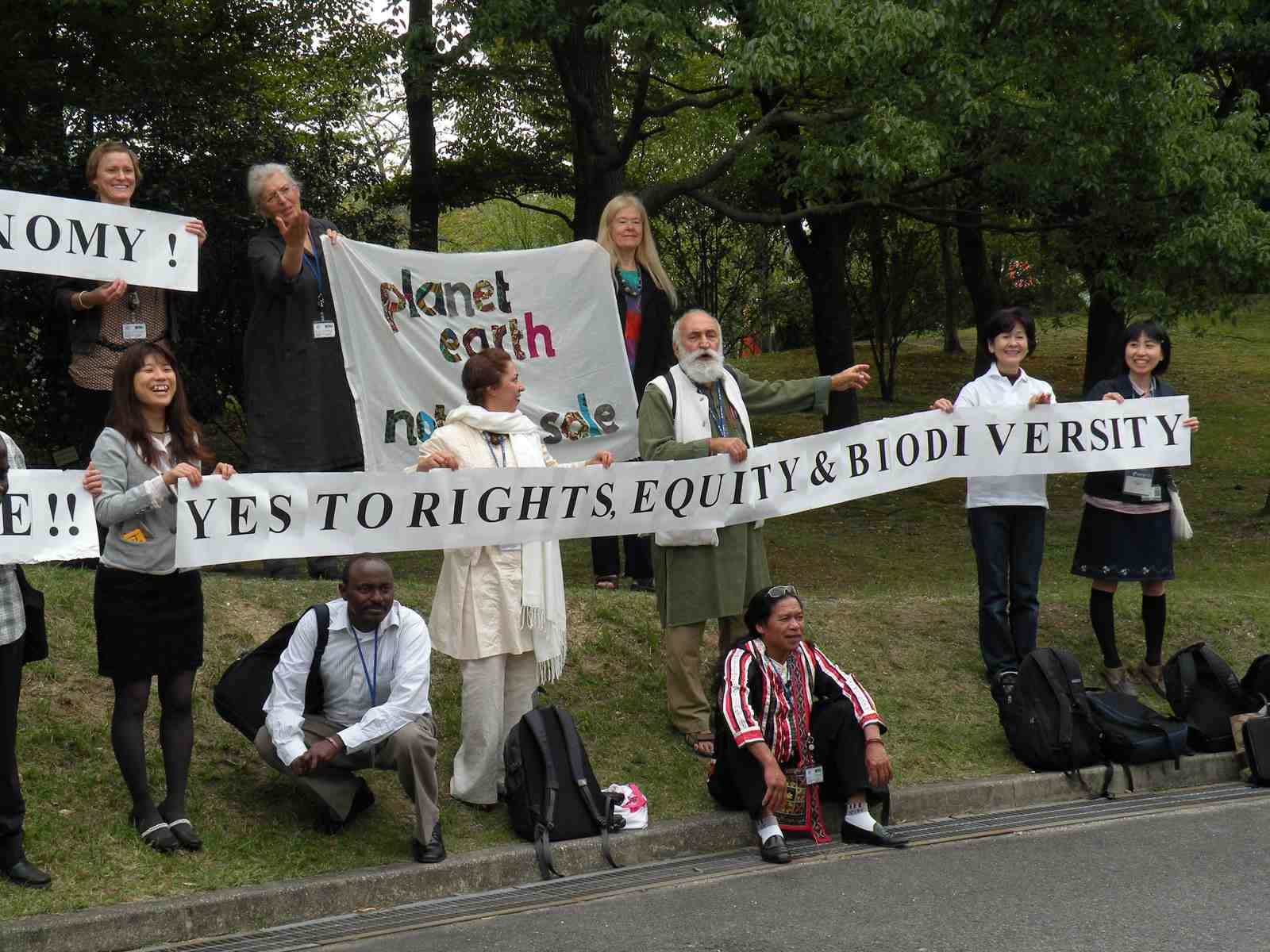
The accelerating destruction of natural habitats will take millions of years to recover from, scientists have warned.
This may be the last chance to apply the brakes, Achim Steiner, executive director of the U.N. Environment Programme, reminded delegates representing the 193 member countries of the U.N. Convention on Biological Diversity (CBD).
“This meeting is being held to address a very simple fact: we are destroying life on this Earth,” Steiner said at the opening plenary meeting Monday. “It is absolutely essential that nations work together here.”
Ryu Matsumoto, Japan’s environment minister, warned that the world was about to reach a threshold where the loss of biodiversity would become irreversible.
“We’re now close to a tipping point on biodiversity,” he said. “We may cross that in the next 10 years.”
With 16,000 participants, the Oct. 18-29 gathering is by far the biggest international meeting on biodiversity. The term biodiversity refers to the variety of plants, animals and other species that provide a wide range of services to humanity.
Children begged world leaders to craft a new climate treaty and left Copenhagen empty-handed. Their story.
By Stephen Leahy
COPENHAGEN, Dec 5 2009 (IPS/TerraViva)
Young people from 44 countries are demanding that world leaders take decisive action on climate change. The time for talk is over, they declared at the end of a weeklong Children’s Climate Forum here.
“Our plates are empty due to drought. Our future is at risk, and we demand that something be done,” they wrote in a declaration titled“Our World, Our Future” signed by 164 participants aged 14 to 17 at the conclusion of the forum.
“I don’t want my future compromised by inaction on climate,” said Bipra Biswambhara, 16, of India.
Biswambhara and many of her fellow delegates were “shocked to learn how many people and parts of the world are already affected by climate change”, she told TerraViva. “We youth are committed to taking action in our home communities,” she said.
“We must have pity for future generations to come,” said Mohamed Axam Maumoon, 15, of the Maldives, a low-lying chain of islands that will likely vanish under rising oceans if temperatures rise two degrees C.
“We are not alone, everyone is being affected,” Maumoon said. As a result there was a strong feeling of cooperation and common cause throughout the week, he said. “If we all work together we can have a bright future.” Continue reading →
Drug Wars Make Societies More Violent Not Safer Studies Show
By Stephen Leahy
UXBRIDGE, Canada, Apr 29, 2010 (IPS)
The war on drugs is a complete failure everywhere, according a comprehensive review of 20 years of scientific literature released at the Harm Reduction 2010 conference in Liverpool, England that wraps up Thursday.
“The war on drugs does not work, period,” said Dr. Julio Montaner, president of the International AIDS Society.
“We must take an evidence-based approach to dealing with the drug market, because current strategies are not working and people are paying for ill-considered policies with their lives,” Montaner said in a release.
An examination of all English-language scientific literature dating back more than 20 years reveals that drug law enforcement dramatically escalates drug-market violence. Contrary to conventional wisdom, a startling 82 percent of the studies found the various wars on drugs in countries and internationally simply increase violence. Continue reading →
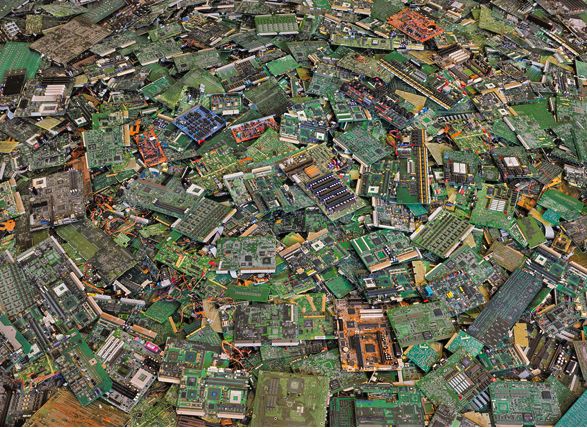
Circuit Boards – Chris Jordan “Intolerable Beauty: Portraits of American Mass Consumption http://www.chrisjordan.com
By Stephen Leahy
BERLIN, Jun 3, 2010 (IPS)
Rising global wealth spells disaster for the planet, with environmental impacts growing roughly 80 percent with a doubling of income, reports the first comprehensive study of consumption.
It adds to the mountain of evidence that the gospel of economic growth must be urgently transformed into the new gospel of resource-efficient green economies, a U.N. expert panel concluded Wednesday.
What are the biggest planetary criminals?
Fossil fuel use and agriculture, the study found. Ironically, these are also the two most heavily subsidised sectors, noted Ernst von Weizsaecker of Norwegian University of Science and Technology, and co-chair of the International Panel for Sustainable Resource Management.
“In the case of CO2, a doubling of wealth typically increases environmental pressure 60 to 80 percent, sometimes more in emerging economies,” von Weizsaecker said in an interview.
Rising affluence has also triggered a shift in diets towards meat and dairy products so that livestock now consumes much of the world’s crops and indirectly consumes 70 percent of the fresh water and produce much of the fertiliser pollution, von Weizsaecker said from Brussels.
“It is clear that a meat-based diet uses more land and fertiliser and emits far more CO2 than a vegetarian diet,” said von Weizsaecker.
The study also found that rich countries like Japan, the United States and many in the European Union are now “exporting” a large part or most of their true environmental impacts to developed countries by importing goods and food from those countries.
In a spiral of destructive co-dependency, China’s rising CO2 emissions and deforestation in Malaysia are in part a direct result of North American and European consumption of the goods made there.
“International trade clearly shows rich countries are outsourcing their impacts,” von Weizsaecker said.
“Given this fact, perhaps the current way of structuring agreements on emission reduction targets is becoming obsolete,” said Ashok Khosla, co-chair of the panel and president of the World Conservation Union (IUCN)
At the household level, it is the goods and services consumed, not the fossil fuel used for cars or homes, that accounts for most of the environmental impacts. This is despite energy and material efficiency gains over the past two decades. Efficiency has improved on a per dollar expenditure basis but people are consuming more, which drowns out any efficiency gains, said panel expert Sangwon Suh of the University of California, Santa Barbara.
“Policy makers cannot just look at direct emissions, they need to look at a full life cycle of their consumption and incorporate those impacts into their decision making,” Suh told IPS.
Representing the world’s foremost experts, the panel synthesised a comprehensive library of the most authoritative global studies to provide science-based assessments of products, materials and economic and lifestyle activities, producing the greatest harm to the planet.
“It is the first global assessment of what kind of consumption activities have the biggest impacts,” Suh said.
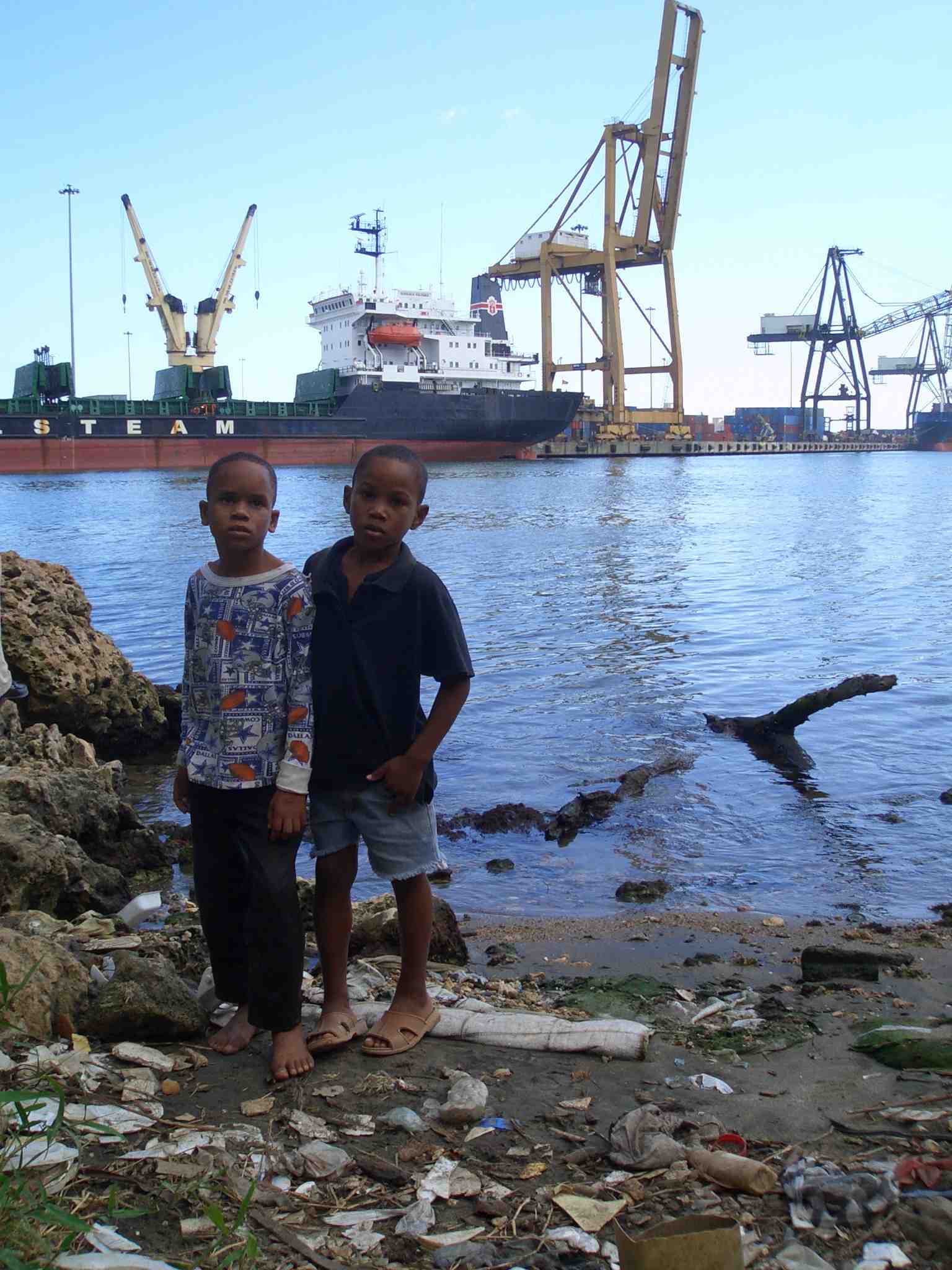
Children poisoned by lead from battery waste in Dominican Republic
Fossil fuel use and agriculture topped the list in the149-page report, followed by the heavily subsidised industrial fishing industry and the production and consumption of materials like metals and plastics. While the latter do cause severe damage locally all over the world, shockingly these are not that significant compared to global impacts of fossil fuel and agriculture, the report noted.
The purpose of this U.N. Environment Programme-sponsored study was to identify the “hot spots” in terms of environmental impacts so that policy makers can use this information to reform policies, said Suh.
“Setting priorities would seem prudent and sensible in order to fast track a low-carbon, resource-efficient green economy,” said Achim Steiner, UNEP’s executive director, which hosted the panel.
“Decoupling growth from environmental degradation is the number one challenge facing governments,” Steiner said in a statement.
However, this decoupling is not happening, the report shows. And it will not happen in the future without strong policy interventions, said von Weizsaecker.
Policy makers and economists will need to abandon their obsession with economic growth as the solution to all problems, writes Clive Hamilton in a new book “Requiem for a Species”. Growth has become a powerful symbol of success and modernity even though in reality it is neither, says Hamilton, a writer and academic at the Australian National University.
If someone is murdered, it adds about one million dollars to the GDP of rich countries when costs of police, courts, and prisons are factored in, according to his research.
“Murder is good for the economy. So is environmental destruction,” he writes.
It will take extraordinary leadership to reverse the consumption-driven society where children are bombarded with advertising – 17 billion dollars annually in the U.S. alone, Hamilton notes.
The same over-consumption brainwashing is well underway in the developing world. Shopping has become a form of recreation amongst China’s growing middle class and wealthy elite, who bought more than 12 percent of the world’s luxury goods in 2005, second only to the U.S., he says.
“Faced with the scale of the challenge, far more transformational measures need to be taken. Currently, we are fiddling – or fiddling around the edges – while Rome burns,” said Khosla.
60 percent of children — as many as 20,000 — displaced by Hurricane Katrina 5 years ago either have serious emotional disorders, behavioral issues or are experiencing significant housing instability according to new report.
Five years ago Hurricane Katrina and the flooding of New Orleans caused the evacuation of 1.5 million Gulf Coast residents. After a year, 500,000 people remained displaced, many residing in highly transitional shelters, including the notorious FEMA trailer parks. Now at the five-year mark, substantial consequences from this prolonged displacement have resulted in widespread mental health issues in children living in the region, according to a new study by the National Center for Disaster Preparedness (NCDP).
Economic experts consistently underestimate the real and long term impacts of weather disasters that are worsening and become more frequent due to climate change. We have yet to really comprehend those impacts and dangerously underestimate the real costs of climatic change. — Stephen
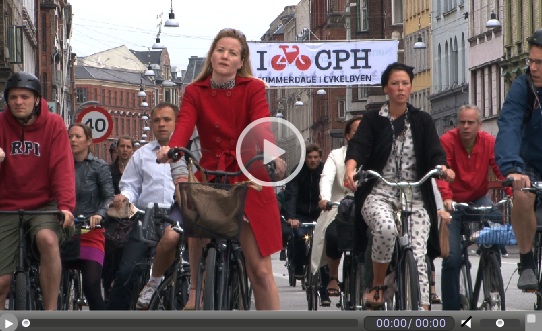
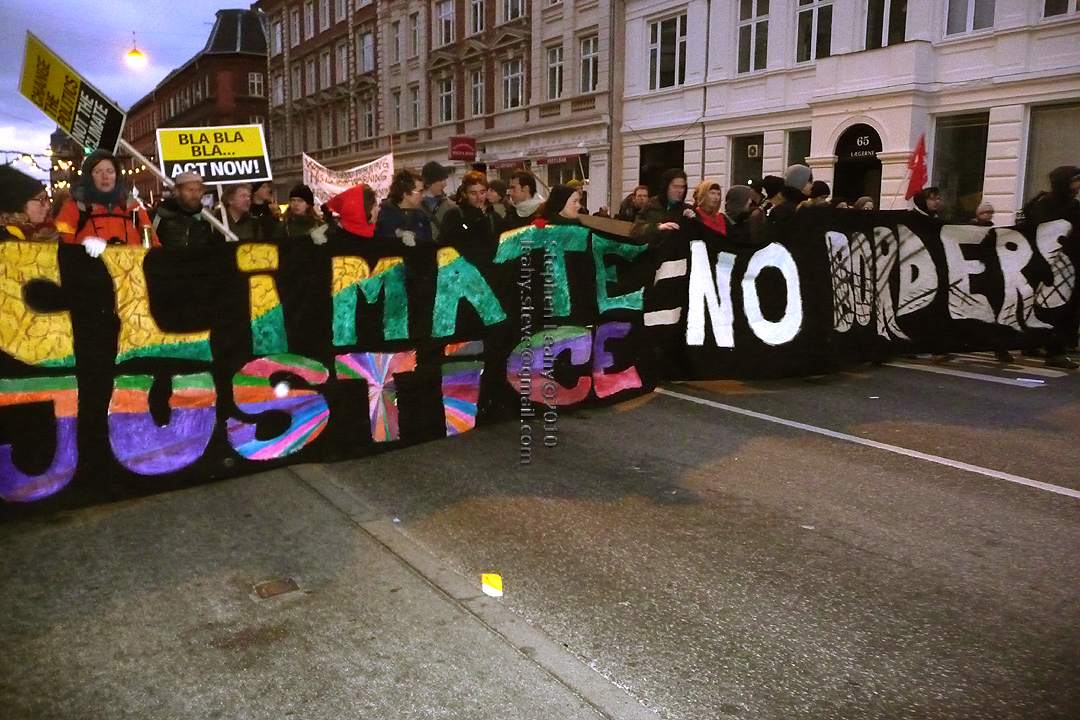
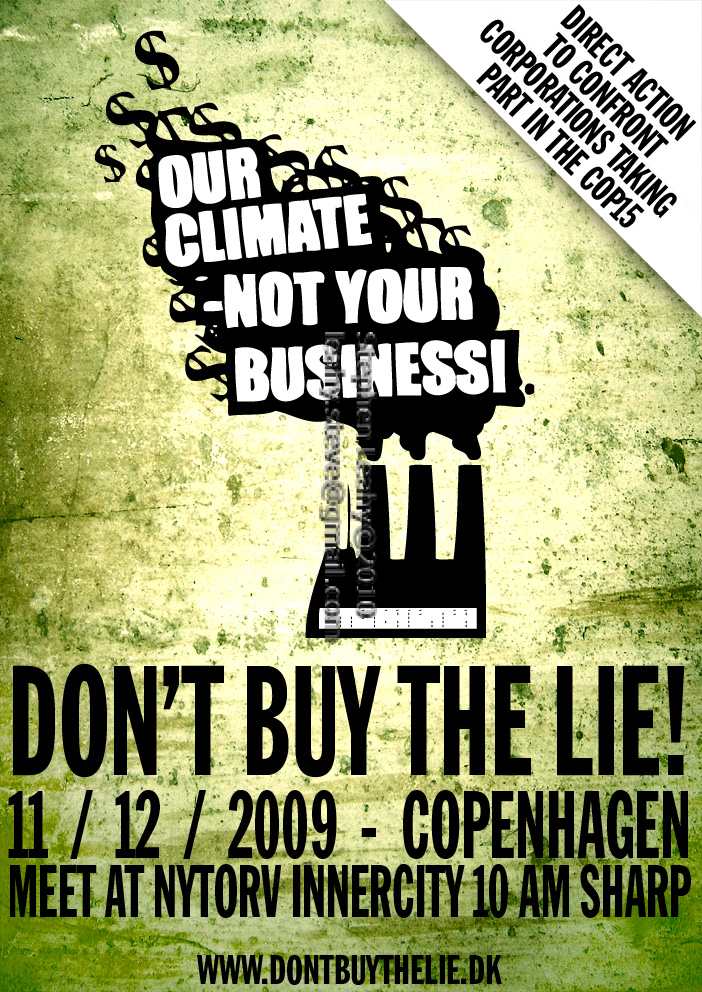
Copenhagen has a fantastic bike culture — 60+ % commute to work every day plus they have a great subway system too. It is cold and wet a lot of the year but people dress for it and were frankly a hell of lot warmer than I was walking when I was there for three weeks in December while covering the climate summit.
One Saturday morning before Christmas I was amazed to see a family of four on two bikes with their groceries and a 2-metre Christmas tree happily pedaling for home . In North America we think we need a van or at least a pick up truck
Sadly I didn’t get a chance to ride in Copenhagen but this should be a model for other cities around the world. Copenhagen did it in 40 years and it is truly amazing. — Steve
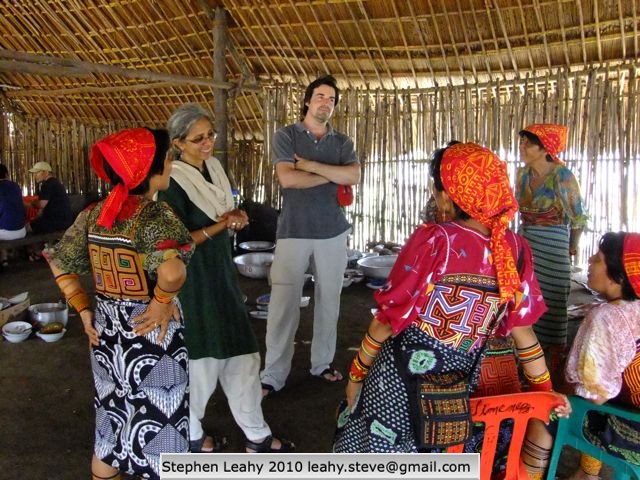
Returned from Panama a few days ago. I was offline for a week in a village in autonomus Kuna Yala territory on an island in the south Caribbean Ocean with no electricity, no roads, vehicles….just the sounds of the ocean and children playing. It was an amazing experience amongst unique group of Indigenous people still living by their traditional ways with a very strong emphasis on family, community and reciprocity.
Thanks to travel funding from an educational organization I was able to be at a unique workshop on the island where 18 indigenous people from around the world came to share their experiences in dealing with climate change. They are also documenting how their traditional knowledge is helping them adapt. What is often forgotten by those of us in the north is the lengthening of summer seasons, shortening winter, or changes in rainfall that are minor inconveniences for us often spell disaster for those who are subsistence farmers.
CONTRIBUTION UPDATE:
Special thanks to Ken of Ottawa, James from Toronto, Richard of Oshawa, Aidan who lives in Germany, Siri of London UK, Michael of Toronto, David of Salmon Arm and Catherine from Atikokan for your recent support. It is heartening to receive your encouragement and desire to help ensure I can continue to write and report on these important issues for everyone.
There are some very important articles I’m hoping to write this year so help out if you can.
Contributions can be made via PayPal or Credit Card here:
(NOTE: For ocean lovers there is a major conference on Oceans this May –there are new prospects of international governance to hopefully end the ruthless rush to get the last fish. But will need $1000 to be able to get there)
Why do media run nonsensical “scandals” about climate science?
Why does the public put up with it?
Those are some of the questions posed on Alex Smith’s fine syndicated weekly Radio Ecoshock Show has three expert viewpoints in his one hour show OUR PRODUCT IS DOUBT
Clive Hamilton on “Requiem for a Species, Why We Resist the Truth About Climate Change.” The madness of masses & media.
Stanford’s Prof. Stephen Schneider on death threats, & threats from Senators (calling climate scientists “criminals”).
It will take lot of us – probably in the streets” to make politicians face the truth, says climate scientist James Hansen.
[Dangerous climate change is already upon us say some of the best scientists we have. But political leaders — and most of the public — don’t get it. This is an attempt to close the chasm between climate reality and climate denial fantasy. I wrote this at the end of the Copenhagen Climate meetings last December thanks in part to financial contributions from readers that allowed me to do the research and interviews. — Stephen]
“Our leaders do not get the scale of the problem or the rapidity of the changes.” — Andrew Weaver, climatologist at Canada’s University of British Columbia
The roof of our house is on fire but our leaders, our economic system and we ourselves are ignoring the alarms and continuing to add more fuel. There are no exit doors in our house; there is nowhere else to go.
Dangerous climate change is already here.
The two-week climate summit in Copenhagen came to an end with disappointing results and details that are still vague.
A ”Copenhagen Accord” was agreed by the US, China, South Africa and India by Friday night. It was unclear which other countries were willing to support it.
But coral reefs are dying, the Arctic is melting and rising sea levels threaten the homes of millions. And we’re on our way to a planet-transforming four-degree C rise in global average temperatures in as soon as 50 years.
Future generations could face an utterly transformed planet, where large areas will be seven to 14 degrees C warmer, making them uninhabitable. In this world-on-fire, the one to two metre sea level rise by 2100 will leave hundreds of millions homeless, according to the latest science presented at the “4 Degrees and Beyond, International Climate Science Conference” at the University of Oxford in September.
That’s the science-based, slap-in-the-face reality as the Copenhagen climate talks fizzle out here with little progress Friday.
“Our leaders do not get the scale of the problem or the rapidity of the changes. They don’t get that it must be dealt with now,” said Andrew Weaver, a climatologist at Canada’s University of British Columbia and lead author of the Intergovernmental Panel on Climate Change (IPCC) reports. Continue reading →

 More than 20,000 people from 190 nations attended the international climate meeting in Cancun, Mexico and it received one ten second clip on US network TV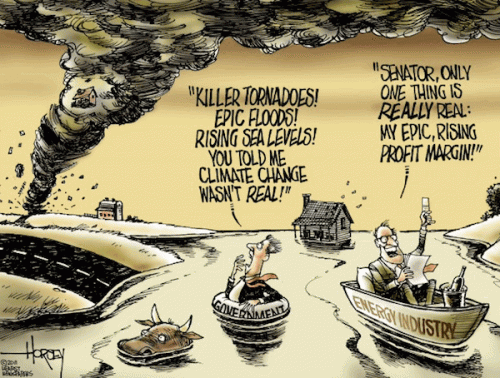







 Stephen Leahy, International Environmental Journalist
