Plastic Circulating Endlessly in Oceans Killing Huge Numbers of Birds, Turtles, Fish and Marine Animals

“Degradable or compostable plastic should be banned….bio-plastics simply break down into microplastic particles”– scientist
By Stephen Leahy

HONOLULU, Hawaii, U.S., Mar 24, 2011 (IPS)

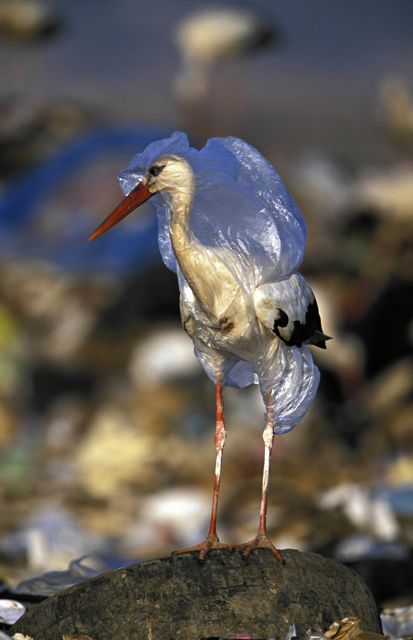
That plastic bottle or plastic take-away coffee lid that has 20 minutes of use can spend decades killing countless seabirds, marine animals and fish, experts reported here this week.

On remote Pacific island atolls, diligent albatross parents unknowingly fill their chicks’ bellies with bits of plastic that resemble food. The chicks die of malnutrition, and when their bodies decay all those plastic bottle tops, disposable lighters, and the ubiquitous bits of plastic detritus get back into the environment in a cruel perversion of ‘recycling’.

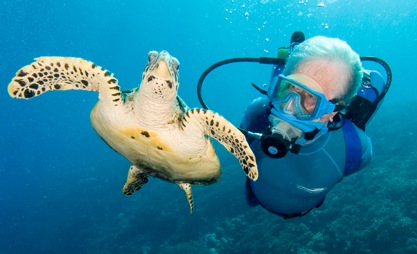
There is now so much plastic in the oceans it is likely that virtually every seabird has plastic in its belly if its feeding habits mean it mistakes plastic bits for food. The same is true for sea turtles, marine animals or fish, experts say.

Northern fulmars, a common seabird numbering in the millions, have a collective 45 tonnes worth of plastic bits in their bellies, estimates Jan Andries van Franeker, a biologist with the Institute for Marine Resources and Ecosystem Studies at the University of Wageningen in Holland.

At least 95 percent of fulmars in the North Sea where van Franeker has been working for three decades have one to several dozen bits of plastic in their stomachs. The same is true for related species like the tiny Wilson’s storm petrels, which unknowingly transport an estimated 35 tonnes of plastic from their wintering grounds in the North Atlantic to breeding grounds in the Antarctic, he says.

“If a seabird’s feeding habits mean it could mistake plastic for food, then it will likely have plastic in its stomach,” he said in an interview at the week long Fifth International Marine Debris Conference, which ends Friday in Honolulu, Hawaii. Continue reading
Reducing Fossil Fuel Use Only Way to Save Dying Corals

Another important reason why continuing to burn more fossil fuels is very dangerous for all of us. Excerpts from July 2008 article — Stephen 

‘The world’s fossil fuel economy is like the Titanic — we know its going to hit an iceberg but it takes a very long time to stop a really big ship..’

By Stephen Leahy

FORT LAUDERDALE, U.S., July 12, 2008 (IPS)

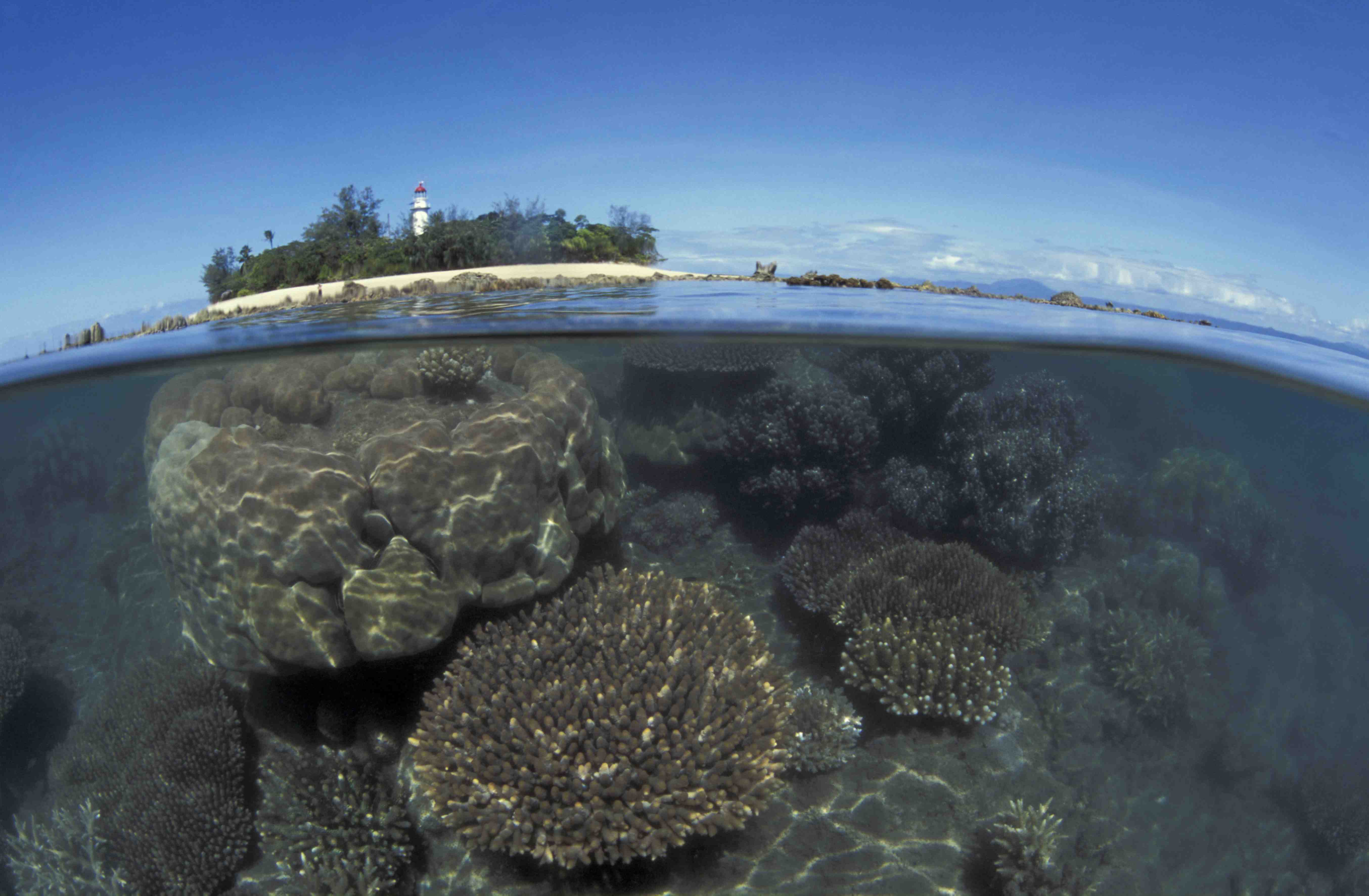
The rapid decline of coral reefs around the world offers a potent warning that entire ecosystems can collapse due to human activities, although there is hope for reefs if immediate action is taken, coral experts agreed at the conclusion of a five-day international meeting Friday.

“Reefs are in serious trouble, but don’t write them off,” Terry Hughes, a marine ecologist at Australia’s James Cook University told 3,000 scientists, conservationists and policy makers attending at the 11th International Coral Reef Symposium (ICRS) in Fort Lauderdale, Florida.

“We can save reefs if we take immediate action,” Hughes said.

More than 20 percent of the world’s reefs have died, and large areas are failing due to a combination of climate change, overfishing, pollution and sea level rise. Most of the fabulous corals that attract tourists to the Caribbean are gone and half of remaining reefs in the U.S. are in serious decline.

[Update 2010 – Here’s a list of Stephen Leahy’s latest articles on corals Coral Reefs and Acid Oceans Series]

We may be facing ocean deserts in the future,” said Guillermo Dias-Pulido of Australia’s University of Queensland.

Continue reading

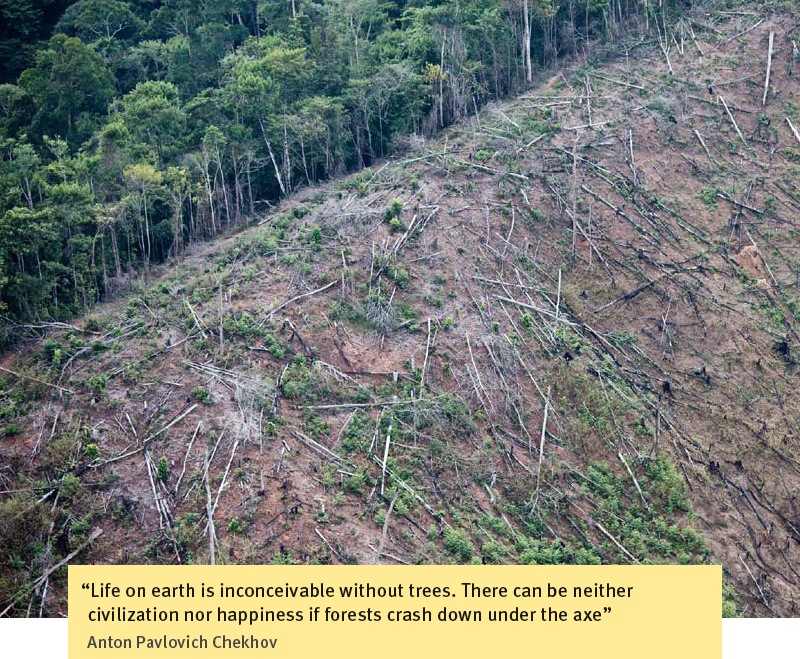
Rwanda Wins Gold for Forest Conservation Blueprint

By Stephen Leahy

UXBRIDGE, Canada, Sep 26, 2011 (IPS)

Government policies are seldom lauded, yet Rwanda’s forest policy has resulted in a 37-percent increase in forest cover on a continent better known for deforestation and desertification.

Rwanda’s National Forest Policy has also resulted in reduced erosion, improved local water supplies and livelihoods, while helping ensure peace in a country still recovering from the 1994 genocide.

Now Rwanda can also be known as the winner of the prestigious Future Policy Award  for 2011.

“Rwanda has sought not only to make its forests a national priority, but has also used them as a platform to revolutionise its stances on women’s

rights and creating a healthy environment,” said Wangari Maathai, Nobel Peace Prize Laureate and founder of the Green Belt Movement.

She issued a statement for the award ceremony in New York City last week just days before her death from cancer in Nairobi Monday at the age of 71. “Rwanda has been a very divided country since the 1994 genocide but this policy is helping to bring peace and value to the people,” said Alexandra Wandel, director of the World Future Council, which administers the Future Policy Awards.

The World Future Council is an international policy research organisation based in Hamburg, Germany that provides decision-makers with effective policy solutions.

“Our aim is to inspire other countries to adapt these successful policies to their individual needs.” said Wandel told IPS. Continue reading

Rich Countries Largely Live Off Financial Transactions

[Excerpts from my Dec 2010 article on how rich countries move money around and produce little while preventing green development in Africa  — Stephen]

“The world’s big economies are largely living off financial transactions which are unconnected to development,” warns Supachai Panitchpakdi, secretary-general of United Nations Conference on Trade and Development.

In a rejection of failed neoliberal economic policies, Panitchpakdi said strong national policies on investments, taxation, protection of local industries, including subsidies, and changes to less restrictive intellectual property regimes are what is needed to green economies in Africa and elsewhere.

“Green economic development underpins environmental protection, economic growth and development,” he said.

Here’s a startling fact based in a new energy study:

Universal Access to Electricity Less Than Cost of Fossil Fuel Subsidies

Nature is our reality. The economy is simply a game we invented.

Put a glass lid over Japan, Germany or England and they wouldn’t last long.

[excerpts from my Nov 2010 article on why losing species matters to everyone — Stephen]

Japan imports more than 60 percent of its food and most of Europe’s ecosystems have been trashed, with only 17 percent in reasonable shape, according to a first-ever assessment. The only reason those countries haven’t collapsed is they are rich enough to help themselves to nature’s ecological resources and services like food, timber, materials from the rest of the world.

Countries of the North are like desperate bio-pirates, addicted to plundering the richer ecosystems of the South for food, raw materials and cheap labour. Increasingly, the South is resisting and seeking redress. Part of that redress, and the only way to end the escalating loss of species – an estimated 5,000 to 30,000 extinctions per year – is to transform the growth economy

“Japan played a central role in the growth economy. We need to move to a subsistence economy,” Mushakoji told IPS.

……From:

An Awakening to the Unravelling of the Web Life

Fight Against Marine Garbage Runs Into Plastics Lobby – Cousteau “shocked” by state of oceans

This is my final article in the Trashing the Ocean series. It looks at the results of the first major international effort to deal with the issue in 11 years. It’s less than satisfying effort largely due to the plastics lobby.  One of the unofficial solutions:  buy local and create local, sustainable communities says the guy who ‘discovered’ the pacific garbage patch. — Stephen

There are three to six kilogrammes of marine trash for every kilogramme of plankton…. California nearly became the first U.S. state to ban plastic bags, but a multi-million-dollar lobby effort by industry killed the proposed legislation

By Stephen Leahy

HONOLULU, Hawaii, U.S., Mar 28, 2011 (IPS)

Every day, billions of plastic bags and bottles are discarded, and every day, millions of these become plastic pollution, fouling the oceans and endangering marine life.

No one wants this, but there is wide disagreement about how to stop it.

“Every time I stick my nose in the water, I am shocked. I see less and less fish and more and more garbage,” said Jean-Michel Cousteau, son of the legendary marine ecologist Jacques Cousteau, who has spent four decades making documentaries and educating people about the oceans.

On trips to the remote and uninhabited northwestern Hawaiian Islands, Cousteau found miles and miles of plastic bottles, cigarette lighters, television tubes, spray cans, broken toys, and thousands of other pieces of plastic on the beaches and thousands of tonnes of derelict fishing nets in the reefs.

“We are using the oceans as a universal sewer,” he told some 440 participants from the plastics manufacturing, food and beverage sectors, environmental organisations, scientists and policy-makers from over 35 countries at the Fifth International Marine Debris Conference in Honolulu, Hawaii, which ended Mar. 25.

Jean-Michel Cousteau

This independent environmental journalism depends on public support. Click here learn more.

Humanity is risking its own health and survival in treating the oceans this way, Cousteau said. The oceans are the source of life on our planet. Through evaporation, oceans are the most important source of fresh water while phytoplankton generates at least half the oxygen we breathe.

“No one is away from the ocean. We are all intimately connected by every breath we take,” he said.

Continue reading

Inheriting the Whirlwind of Extreme Events

This article looks at the huge upswing in extreme events around the world. Imagine this: the worst-ever tornado season, the worst flooding, and worst heatwave  have hit the US this year. And they may yet experience one the worst hurricane seasons. “24 Hours of Reality” online broadcast documented this Sept 15 to help people clear their heads of the fossil fuel propaganda and open their eyes to the crisis we are facing.  — Stephen

There are four anti-climate change lobbyists in Washington for every member of Congress.”

By Stephen Leahy

UXBRIDGE, Canada, Sep 15, 2011 (IPS)

The dramatic increase in extreme weather that has affected hundreds of millions across the planet is one of the clearest signs that burning billions of tonnes fossil fuels has seriously and permanently disrupted the global climate, experts say.

That is the reality former U.S. vice president Al Gore is focusing on Thursday through an unprecedented live online event called “24 Hours of Reality” broadcast from 24 time zones and reaching millions of viewers in multiple languages.

“In 30 years of weather forecasting I have never seen extreme weather events like those in the last two years globally,” said Jeff Masters, co-founder and Director of Meteorology for Weather Underground, the web’s first commercial weather service.

“I never thought we could have the greatest outbreak of tornados, the worst-ever flooding, record heatwaves and droughts all in one year,” Masters told IPS at a press conference last week in reference to the multi-billion-dollar extreme weather the U.S. has endured this year.

“The hurricane season is only half over and is on pace to be a record year as well,” he said.

Masters and other climate experts say is the “new normal” for the coming decades is the reason why. Burning of oil, gas, coal puts billions of tonnes of carbon dioxide into the atmosphere, where it traps more of the sun’s heat in what is known as the greenhouse effect.

This independent environmental journalism depends on public support. Click here learn more.

That additional heat warms the oceans and air and allows more moisture to be retained in the atmosphere, scientists have long since proven. The enormous amounts of additional heat and moisture now trapped in the atmosphere are the potent fuel for extreme events.

“More than 1,400 high temperature records were broken in July in the eastern U.S.,” said Jerry Meehl, a senior scientist at the National Center for Atmospheric Research. Continue reading

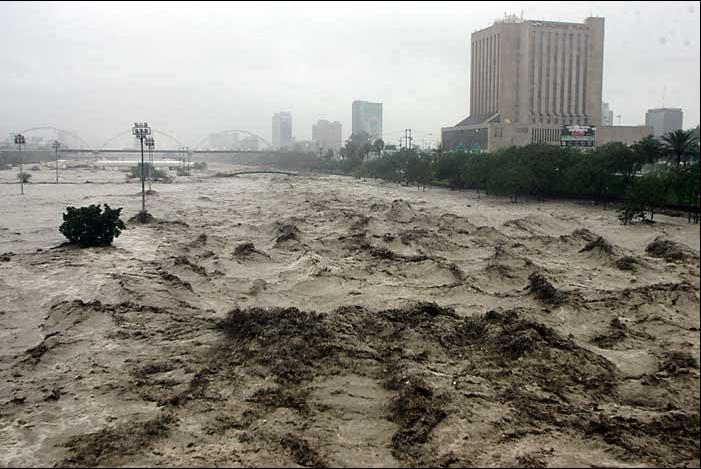
Hundreds of Millions May Soon Be Fleeing the Floodwaters

More than 5 million affected by flooding in Pakistan Sept 2011 - a repeat of 2010.

Climate disruption shrinking areas where people can live.

Mexico faces $10 billion in storm/flood damage to roads, schools, clinics, etc every year

By Stephen Leahy

OSLO, Jun 9, 2011 (IPS)

Mass migration will inevitably be part of human adaptation to climate change, experts agree, since parts of the world will become uninhabitable in the coming decades.

Last year, 38 million people were displaced by climate-related disasters such as the flooding in Pakistan and China.

“Human displacement due to climate change is happening now. There is no need to debate it,” Jonas Gahr Støre, Norway’s minister of foreign affairs, told over 200 delegates attending the Nansen Conference on Climate Change and Displacement in the 21st Century in Oslo Jun. 6-7.

Governments and the humanitarian community need to understand this fact – and that it will get much worse in the coming decades, Støre said.

This independent environmental journalism depends on public support. Click here learn more.

Without major emissions reductions, climate change could get far worse than anyone is prepared to think about.

“It may be more realistic to consider four degrees C of warming rather than two degrees C,” suggested Harald Dovland, former head of the Norwegian Delegation to the United Nations climate change negotiations.

The world has already warmed 0.8C and will rise to least 1.6 C even if all emissions of carbon and other greenhouse gases ended today, James Hansen, head of NASA’s Goddard Institute for Space Studies, told the conference.

A four-degree C warmer world is a very different planet and risks runaway climate change. Even two degrees C is not safe, Hansen said. 

“The last time the planet was two degrees C warmer was during the Pliocene (five to 2.4 million years ago) and sea levels were 25 metres higher,” he said. “If we burn all the fossil fuels (coal, oil, natural gas) we’re creating conditions that future generations will be unable to cope with.”

Even though a four-degree C warmer world “is choosing the suicidal path”, experts must avoid fuelling xenophobia with predictions of mass migrations and conflicts, says Francois Gemenne, research fellow at the Institute for Sustainable Development and International Relations in Paris.

“This also feeds into a security agenda of panic and paranoia,” Gemenne said.

At least 20 percent of humanity will be at high risk of severe flooding due to sea level rise and extreme rainfall events in the coming decades.

“Too many people live in low-lying deltas and other parts of the world that are becoming too dangerous to live in,” said Gemenne. They will be forced to move and often this movement will be permanent.

Rather than building walls and barriers, countries and the international community need to encourage people to move to safer ground. “Lift the barriers so that people can use migration to adapt to climate change,” he urged delegates.  Continue reading

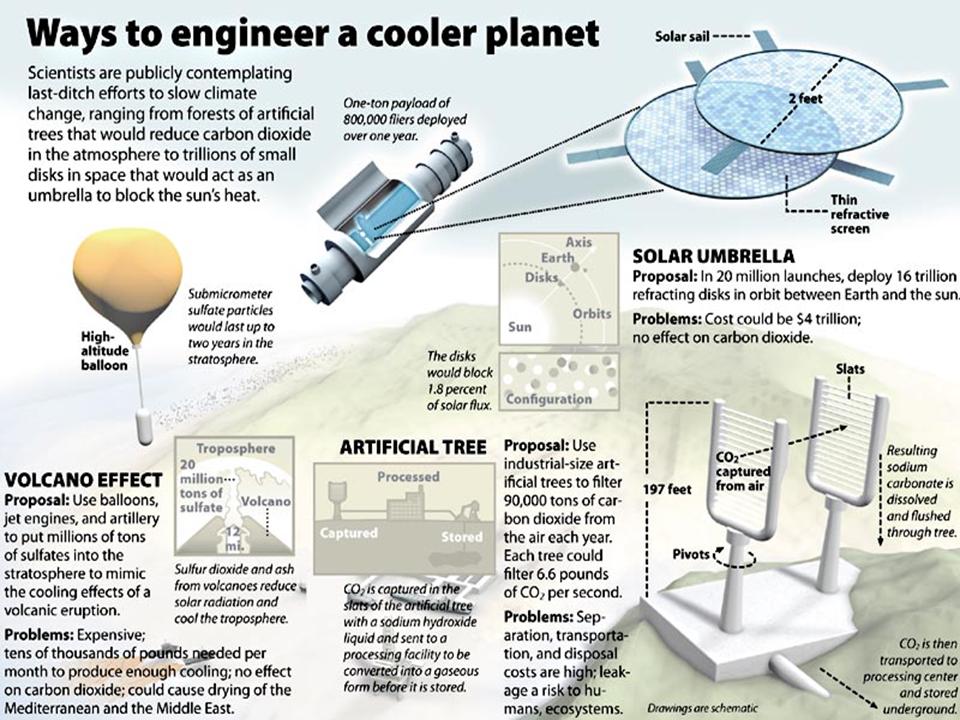
Geoengineering for a Desperate Planet — UN Declares Global Moratorium

By Stephen Leahy*

NAGOYA, Japan, Oct 25, 2010 (Tierramérica)

[Update from Nagoya 30 October 2010. Global moratorium passes.]

Delegates to the world summit on biodiversity here are calling for a moratorium on climate engineering research, like the idea of putting huge mirrors in outer space to reflect some of the sun’s heating rays away from the planet.

Climate engineering or geoengineering refers to any large-scale, human- made effort to manipulate the planet to adapt to climate change.

Representatives from Africa and Asia expressed concern about the negative impacts of geoengineering during the opening week of the 10th Conference of Parties (COP 10) to the United Nations Convention on Biological Diversity (CBD), Oct. 18-29. They were joined by civil society organisations in calling for a moratorium on geoengineering experiments.

The geoengineering proposals include installing giant vertical pipes in the ocean to bring cold water to the surface, pumping vast amounts of sulphates into the stratosphere to block sunlight, or blowing ocean salt spray into clouds to increase their reflectivity.

[Previously posted – Full Story here] 

Colombian Forest Project Reaps Credits… and Criticism

Procuenca reforestation

By Stephen Leahy*

UXBRIDGE, Canada, May 6, 2010 (Tierramérica)

The “Procuenca Initiative” in the Andes region of western Colombia may be the first in the world to sell certified forest carbon credits with a biodiversity protection component. But alarms are sounding about the potential negative social and environmental consequences.

Under way since 2001, the programme will begin to operate in the international market next year, having received official registration Apr. 16 under the Clean Development Mechanism (CDM).

Part of the Kyoto Protocol on Climate Change, in force since 2005, the CDM allows industrialised countries to earn credits for reducing emissions of greenhouse gases by investing in projects in developing countries that expand their capacity to absorb the carbon emissions.

Procuenca is expected to auction credits for some 350,000 tonnes of carbon that has been sequestered since the project began, initiative director Francisco Ocampo told Tierramérica through a translator.

At the current market value of 20 dollars per tonne, the total would be 7 million dollars for a struggling community, one that is still suffering from the collapse of coffee prices more than a decade ago.

“This project demonstrates the international importance of these forests for carbon storage,” said Ocampo. Continue reading