Paris Climate Talks: Global Warming Explained in 60 Seconds or Less

cop21 logo sml

One night in a bar a Russian journalist who I’d just met says:  “This global warming is too complicated for people to know if it’s real or not”.

“You don’t think climate change is happening?” I asked with surprise since we were both covering a big United Nations climate conference.

“No one has been able to give me a good explanation to prove it’s real,” said Yuri (not his real name).

“I can explain it to you in less than one minute,” I replied.

Yuri was sceptical but I went ahead and said:

“The moon has no atmosphere so it is scorching hot (+100C) during the day and bitterly cold (-150C) at night. The Earth has an atmosphere made up of oxygen, nitrogen, carbon dioxide (CO2) and other gases. Over 150 years ago scientists proved that CO2 traps heat from the sun. We also know without any doubt that burning fossil fuels like oil, gas and coal emits CO2.

Measurements, not computer models or theories, measurements show that there is now 42% more CO2 in the atmosphere than 150 years ago before massive use of fossil fuels. That extra CO2 is like putting another blanket on at night even though you are already nice and warm. The Earth is now 1.0 C hotter on average according to the latest measurements. Heat is a form of energy and with so much more energy in our atmosphere our weather system is becoming supercharged resulting in stronger storms, worse heat waves, major changes in when and where rain falls and more.

That’s it.

After a long silence Yuri says “I guess that makes sense…”.

I’m not sure he was convinced but the truth is that climate change is not that complicated.

One additional thing to know is that CO2 is forever. Every little CO2 molecule we add to the atmosphere will continue to trap the sun’s heat for hundreds and thousands of years.

First published Aug 2015

Paris Climate Talks – Most Countries Want 1.5C Target not 2.0C


Wrapping Day 2 of COP 21
 

Majority of Countries want 1.5 C target not 2.0C

Leaders of 30 nations began the Paris climate negotiations with a call to cut CO2 emissions dramatically to keep the global average temperature rise below 1.5C. These countries are part of Climate Vulnerable Forum (CVF) — countries highly vulnerable to impacts of climate change.

The call for a global target of 1.5C is supported by 106 of the 195 countries in Paris this week. They also call for 100 percent renewable energy and a full decarbonization of the global economy by 2050.

Important to note that 2.0C is a political target not a scientific one. Moreover climate science does support 1.5C as a safer level of climatic change than 2.0. Currently global warming is 1.0C.cop21 logo sml 

Leaders Inspired Speeches but BAU for Negotiators
Monday saw 150 leaders making speeches about the need for urgent action. However in the negotiating rooms today it was business as usual crawling along at a snail’s pace with negotiators apparently oblivious to their leaders impassioned speeches and pleas for urgent action said Saleemul Huq is the Director of the International Centre for Climate Change & Development (ICCCAD) in Bangladesh.

Renewables Everyone’s Favorite Energy Technology

Billions and billions of dollars are being promised for renewables:
U.S. President Barack Obama, French President Francois Hollande and 18 other world leaders launched Mission Innovation, a $20-billion commitment to accelerate public and private clean energy innovation worldwide.

Bill Gates and other tech billionaires unveiled the Breakthrough Energy Coalition, to bring billions of dollars to help new, clean energy technologies come to market.

India’s prime minister announced an international solar alliance of over 120 countries. 

Tuesday also featured a focus on forests


Deforestation accounts for at least 12 percent of CO2 emissions and among developing countries it’s often the largest source of emissions. Today the Lima-Paris Action Agenda “Forest Focus” launched a number of forest protection initiatives including a commitment Germany, Norway and the United Kingdom, to provide $5 billion from 2015 to 2020, if forest countries demonstrate measured, reported and verified emission reductions.

First posted on Climate News Mosaic Live Blog

What a Difference Six Years Makes: Copenhagen to Paris

IMGP5790
Climate March 100% is Possible – Ottawa, Canada. Credit: Renee Leahy
The Paris climate talks began today following a weekend where a record-breaking 785,000 people in 175 countries marched in support of strong climate action. In addition almost 1.8 million people of faith signed a petition for compassionate climate action.With nearly 150 Heads of State on hand the COP 21 negotiations began Monday. Hopes are high there will be a strong, new global agreement to tackle climate change. Unlike six years ago in Copenhagen at COP 15, there is now broad public support for action on climate and virtually all leaders now take the issue very seriously.cop21 logo smlOne of the very first side meetings outside of the negotiations today featured the World Bank, the leaders of Germany, Mexico, Chile, Canada and others calling for a global price on carbon. [Watch it here]The world simply cannot afford to continue polluting the atmosphere with carbon said World Bank President Jim Yong Kim.

“We need to drastically cut CO2 emissions… or we will push another 100 million people into poverty” Kim said.

Global price on carbon inevitable

Putting a price on carbon is now seen as an inevitable in the creation of a low carbon economy that will eventually take the world to zero CO2 emissions he said.

“The price of solar has fallen 50 per cent since Copenhagen,” said Keya Chatterjee of the US Climate Action Network.

There has also been huge growth in the numbers of climate activists and in public support for real action on climate over the past six years Chatterjee said in a press conference.

The only question now is how much has political will grown, she said.

A great deal of political will is needed to overcome the many remaining obstacles to a comprehensive, ambitious, and universal climate agreement. These obstacles include finance, equity, legal status of the agreement and so on will become clear over the next two weeks.

For now hope is also back after a six year absence.

First posted on Climate News Mosaic Live Blog

Climate News Mosaic Live Blog of Paris Climate Talks


cop21 logo sml

A historic climate change conference is taking place in Paris, France from November 30 to December 11th. World leaders from more than 195 nations will meet to work on a new international climate deal, with the aim of keeping global warming below 2 degrees Celsius.

The award-winning Climate News Mosaic (CNM) will provide a free daily live blog to track all progress, major announcements and events, latest scientific reports, as well as happenings in and outside of the conference halls with stories, photos, videos, soundbites from experienced journalists from different countries.

The live blog will also feature climate news updates, reactions and short reports from a variety of countries for a unique mix of global and local coverage.

The Climate News Mosaic (CNM) is the award-winning collaboration of independent environmental journalists from Canada, the Philippines, Germany, Italy, Costa Rica, Brazil and many more. In 2014 CNM won the international HostWriter Prize for its collaborative coverage of the UN Climate Change Conference in Warsaw (COP 19). The live blog was hosted on nine news sites including the Inter Press News Service, Climate Home, Earth Journalism Network.

Stay up-to-date. Follow @climatemosaic on Twitter for the latest news and information in follow-up to the summit and elsewhere (hashtag: #climate2015)

Host the CNM Live Blog

Would you be interested in hosting the Climate News Mosaic COP 21 live blog  your website? A small snippet of open source code from Germany’s Sourcefabric is all that’s needed. Please contact CNM co-founder Stephen Leahy 

Global Warming Explained in 60 Seconds or Less

derek me cop15 sml logo
Derek and Stephen Leahy at entrance to UN climate conference COP 15 in Copenhagen

One night in a bar a Russian journalist who I’d just met says:  “This global warming is too complicated for people to know if it’s real or not”.

“You don’t think climate change is happening?” I asked with surprise since we were both covering a big United Nations climate conference.

“No one has been able to give me a good explanation to prove it’s real,” said Yuri (not his real name).

“I can explain it to you in less than one minute,” I replied.

Yuri was sceptical but I went ahead and said:

“The moon has no atmosphere so it is scorching hot (+100C) during the day and bitterly cold (-150C) at night. The Earth has an atmosphere made up of oxygen, nitrogen, carbon dioxide (CO2) and other gases. Over 150 years ago scientists proved that CO2 traps heat from the sun. We also know without any doubt that burning fossil fuels like oil, gas and coal emits CO2.

Measurements, not computer models or theories, measurements show that there is now 42% more CO2 in the atmosphere than 150 years ago before massive use of fossil fuels. That extra CO2 is like putting another blanket on at night even though you are already nice and warm. The Earth is now 1.0 C hotter on average according to the latest measurements. Heat is a form of energy and with so much more energy in our atmosphere our weather system is becoming supercharged resulting in stronger storms, worse heat waves, major changes in when and where rain falls and more.

That’s it.

After a long silence Yuri says “I guess that makes sense…”.

I’m not sure he was convinced but the truth is that climate change is not that complicated.

One additional thing to know is that CO2 is forever. Every little CO2 molecule we add to the atmosphere will continue to trap the sun’s heat for hundreds and thousands of years.

Road to Paris: Plain Talk Briefing on the UN Climate Treaty Negotiations

What:    A candid, 15 minute explanation on why the UN climate negotiations are so difficult and the likely result in Paris. Intended for a general audience.

Who:     Stephen Leahy is an independent, environmental journalist who has covered climate negotiations around the world. He is co-winner of the 2012 Prince Albert/United Nations Global Prize for reporting on Climate Change.

Where: Part of a public forum in Toronto June 2014 titled CLIMATE CHANGE EMERGENCY.

Thanks to Peter Biesterfeld for making the recording.

Costs You $50-75 To Drive 100 Km (62 miles) – Don’t Blame Gas Prices

cost_of_vehicle_ownership

Smartest Thing You Can Do Is Dump Your Car

By Stephen Leahy

Uxbridge Cosmos, Feb 2013

Cars and trucks are extraordinarily expensive. The full cost of driving 100 km is between between $50 and $75 when fuel, wear and tear, insurance, depreciation, and repairs are included. The cost of owning and operating a car, van, SUV or truck ranges between $9,000 to $15,000 a year depending on the purchase price of the vehicle according to automobile clubs like the CAA . That’s a big chunk of aftertax income spent each and every year. Double this for two-car families.

If you pay $50 at the pump about $33 will go directly to oil companies. The gas station gets around a dollar and the rest is for provincial and federal taxes.

Finally ask yourself how many hours a day your vehicle isn’t being used? Most are parked 22 hours a day.

Why not give your car a day off once a week? A ‘No Car Day’ is easy to do, saves money and reduces emissions of climate-heating carbon dioxide (CO2). The average passenger vehicle emits around 4.8 tonnes of CO2 a year.

The biggest savings by far is to get rid of one vehicle. When you consider the full costs of ownership, the $9 000 to $15,000 saved will let you rent vehicles or taking taxi as needed with plenty of cash left over. For maximum savings use the bus or train. A bus from Uxbridge is only $10 to downtown Toronto — 75 km one way. Using your car that 75 km trip really costs $45 not including parking.

New study – drive less lose weight guaranteed: If drivers nationwide traveled 1 mile less by car each day, not only would fuel consumption fall, but annual health care costs could drop by billions of dollars as fewer people would be classified as obese or overweight, Jacobson estimates.

My related articles:

EcoMobility Gaining Ground As Cars/Roads Become Too Expensive

Cars Kill More Children Than Malaria — Leading Cause of Death Ages 5 to 14

Lend Your Car, Save, and Save the World

Bike vs Car on a Hot Planet

Learn About Your Water Footprint with Author Stephen Leahy – Tues April 28


Whitby Public LibraryScreen Shot 2014-07-20 at 10.28.00 AM

Tuesday, April 28 at 7pm

405 Dundas Street West, Whitby, ON, L1N 6A1

Meeting Room 1B


Critically Acclaimed New Book Investigating The Enormous Amounts Of  ‘Hidden’ Water We Consume Every Day

It takes more than 7,600 liters (2,000 gallons) of water to make a single pair of jeans. That morning cup of coffee required 140 liters (37 gallons) of water before it found its way to your table—water that was used to grow, process and ship the coffee beans. When we spend money on food, clothes, cellphones or even electricity, we are buying water  — a shockingly large amount of water.

WATER IS MORE VALUABLE AND USEFUL THAN OIL

Your Water Footprint: The Shocking Facts About How Much Water We Use To Make Everyday Products reveals how water is essential to our way of life in ways we never imagined. While water usage continues to soar, shortages now affect more than 3 billion people including millions of Americans and Canadians. A decade from now 3 out of 5 people will face water shortages.

Your Water Footprint provides essential information to reduce your water use which will help you save money, be prepared for shortages and ensure our children and grandchildren will have abundant fresh water.  Water-wise choices is all about smart substitutions and changes, rather than sacrifice and self-denial.

 National Geographic Interviews Stephen Leahy About Your Water Footprint

“…a brilliant and shocking exposé on precisely how much water we use…” – Publishers Weekly

…exceptionally lucid narration with arresting, full-page info graphics”  — Booklist

70% of C02 Emissions from Cities But Fighting to be Climate Leaders

David Cadman and Park Won Soon at the ICLEI World Congress 2015 in Seoul, South Korea

By Stephen Leahy

Report from 2015 World Congress: National Governments Should Be Helping Green Cities  

Cities are responsible for 70 per cent of global CO2 emissions but they can save the planet by greening one community at a time said Vancouver’s David Cadman at the close of the ICLEI World Congress 2015, the triennial sustainability summit of local governments in Seoul, South Korea.

“We can do it. We must do it,” Cadman, the retiring president of Local Governments for Sustainability, told some 1,500 delegates from nearly 1,000 cities and local governments in 96 countries on April 11.

The majority of climate actions and most plans to reduce CO2 emissions are happening at the city level, Cadman told DeSmog Canada in Seoul.

Vancouver and 50 other cities have committed to 100 per cent renewable energy and 500 more are part of ICLEI’s Cities Climate Registry that documents verifiable CO2 emission reduction actions and commitments that amounted to 2.8 billion tons a year in 2014.

Cadman, a former City of Vancouver councillor, has been president of ICLEI since 2006. It’s an international organization headquartered in Bonn, Germany, with 280 staff and 23 other offices scattered around the globe. ICLEI, which stands for International Council for Local Environmental Initiatives, started 25 years ago in Toronto to help cities become more sustainable. It now goes by the more manageable name of “Local Governments for Sustainability,” but still uses the original acronym.

Canada’s federal and provincial governments were very strong supporters in the early days but the past decade has been very different.

Canada Chained to Fossil Fuel Sector

“We seem to be chained to the fossil energy industry in Canada and it’s pulling us down. Cities and organizations can hardly dare to speak out about this now,” he said.

Germany was only too happy to bring ICLEI to Bonn eight years ago and has been generous with its support, along with the European Union. Now the organization is experiencing what is being called an “Asian pivot,” with the mayor of Seoul, Park Won Soon, as the new president.

Park has helped Seoul to become one of the world’s leaders on sustainable development. With 11 million people and growing fast, Seoul will reduce its energy use and increase renewable generation including rolling out 40,000 solar panels to households by 2018 and 15,000 electric vehicles. By 2030, CO2 emissions will be cut 40 per cent.

“Action on climate will be by local governments no matter what national governments decide,” Park Won Soon told DeSmog Canada.

“We need to act quickly, we need to act energetically,” the mayor said.

China’s megacities are also joining ICLEI. At the congress, Hailong Li, deputy secretary general of the China Eco-city Council said the country will have 100 low-carbon eco-cities by 2017. That will drive down the costs of energy efficiency and renewable energy, Li said.

China also intends to become an expert on eco-construction and to market its expertise to the rest of the developing world.

By 2030 another 3.5 billion people will be living in cities so it is absolutely critical that the infrastructure be sustainable said Cadman who will continue to be active as special representative to the new ICLEI President.

“I’m 70 now and need to reduce my workload. My wife says she’d like me to be around a bit longer.”

Canadian cities could also do more and sooner if they had the support of provincial and federal governments, he said. That may be changing at the provincial level with growing support for various forms of carbon taxes that will help generate funds and financial incentives to reduce emissions.

“The provinces are doing the heavy-lifting on climate while the Harper government sits on the sidelines.”

Fossil fuels are in decline — divestment is taking off and investments are shifting to renewable energy. There’ll be no pipelines to the West Coast and no new investments in the oilsands, Cadman said.

Even in B.C., the hoped-for markets for LNG may not exist with China building gas pipelines to tap reserves in Iran and Russia, he said.

“Canada needs to move away from selling raw resources, but is any political party ready to go there?”

“It doesn’t cost the world to save the planet” — Economist

mar 28 2015 mona loa C02 png

UXBRIDGE, Canada, Apr 22 2014 (IPS)

Hopefully, on Earth Day today, high-level ministers from all countries are thinking about what they can bring to the table at a key set of meetings on climate change in early May.

This will be the first opportunity for governments to discuss their proposed climate action plans in light of the final Intergovernmental Panel on Climate Change (IPCC) report released last week.

“There is a clear message from science: To avoid dangerous interference with the climate system, we need to move away from business as usual.” — Professor Ottmar Edenhofer

That report warned that carbon dioxide (CO2) emissions from burning fossil fuels are still rising far too fast, even with more than 650 billion dollars invested in renewable energy in the last three years. However, over the same time period even more money was invested in getting more fossil fuels out of the ground.

The latter investment is keeping humanity and the planet locked onto a devastating path of a global temperature increase of four to five degrees C, the IPCC’s Working Group III report warned.

Scientists and economists say that unlocking ourselves from disaster will require a massive reduction in emissions – between 40 percent and 70 percent – by midcentury. This is can be readily accomplished without inventing any new technology and at a reasonably low cost, reducing global economic growth by a comparatively tiny 0.06 percent.

“It doesn’t cost the world to save the planet,” economist Professor Ottmar Edenhofer, who led the IPCC team, said at a press conference.

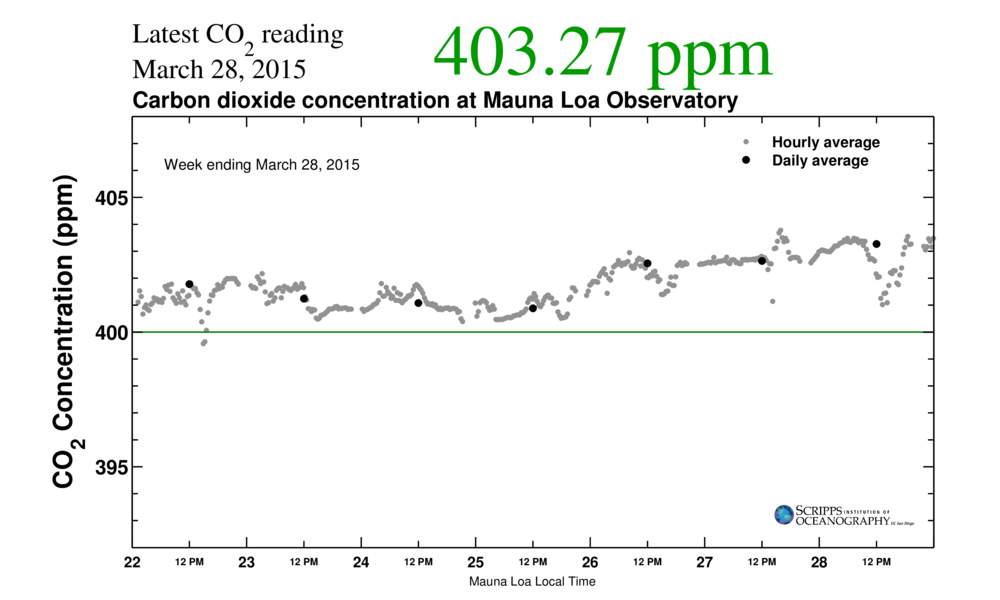
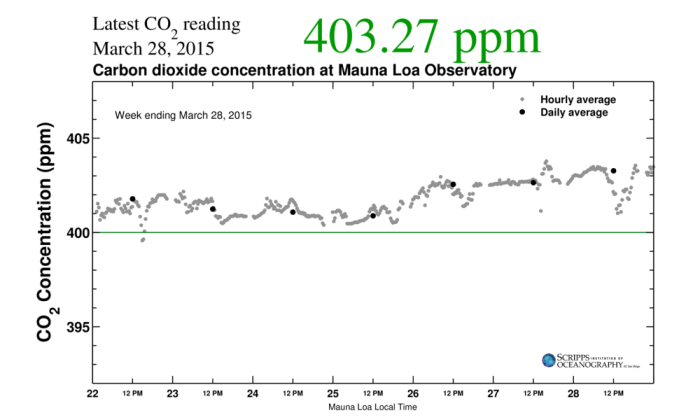
It does mean an end to investments in expanding fossil fuel infrastructure as the annual growth in CO2 emissions from burning oil, coal and gas must peak and decline in the next few years. The atmosphere already has 42 percent more CO2 than it did prior to 1800.

This extra CO2 is trapping more heat from the sun, which is heating up the oceans and land, creating the conditions that spawn super storms and extreme weather. And it will do so for the next 1,000 years since CO2 is a very durable molecule.

Current emissions are adding two percent more heat-trapping CO2 each year. That will push humanity’s ‘CO2 contribution’ to 50 percent four years from now.

“There is a clear message from science: To avoid dangerous interference with the climate system, we need to move away from business as usual,” Edenhofer said.

The IPCC’s first report released last September as part of its Fifth Assessment Report (AR5) clearly stated once again that the climate is changing rapidly as a result of human activity and urgent action is needed.

This was followed last month with a strong confirmation that climate impacts are already occurring on every continent and throughout the world’s oceans. This second report warned that one of the major impacts will be declines in food production unless emissions begin to decline.

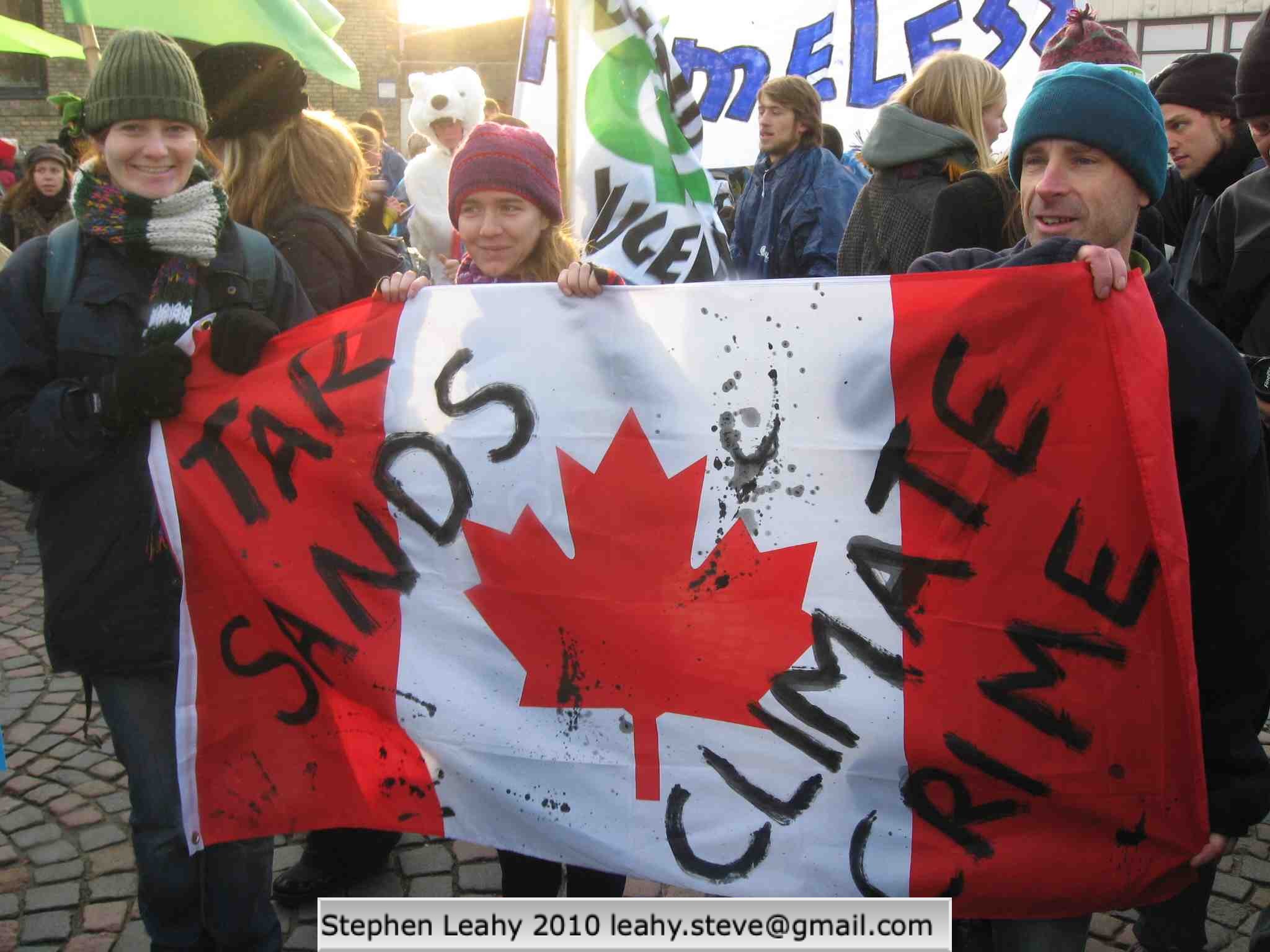
The fossil fuel sector, the richest in human history, appears to be ignoring the IPCC warnings.tar sands flag copenhagen sml0000

Earlier this month, oil giant ExxonMobil issued a report to its shareholders saying it does not believe the world will curb CO2 emissions and plans to extract and sell all of its 25.2 billion barrels worth of oil and gas in its current reserves. And it will continue investments hunting down more barrels.

“All of ExxonMobil’s current hydrocarbon reserves will be needed, along with substantial future industry investments, to address global energy needs,” said William Colton, ExxonMobil’s vice president in a statement.

The IPCC agrees oil, gas and coal will still be used in future but there is a CO2 maximum to have a reasonable chance of staying below two degrees C. That fossil energy cap won’t be enough to meet global energy needs so Working Group III recommends shifting to large-scale bioenergy and biofuels, waste incineration, nuclear power and carbon capture and storage (CCS).

These energy sources are controversial and risky. Large-scale bioenergy and biofuels needs huge areas of land and vast quantities of water and will compete with food production.

Studies show ethanol results in more emissions than burning gasoline. Even making ethanol from the leftovers of harvested corn plants released seven percent more CO2 than gasoline while depleting the soil, a new study revealed in Nature Climate Change this week.

The IPCC acknowledges bioenergy and biofuels can increase emissions, destroy livelihoods and damage the environment, says Rachel Smolker of Biofuelwatch, an environmental NGO.

“It is a shame they put so much stock in something that would make things worse rather than better,” Smolker told IPS.

Given all this, what climate action plans are governments going to propose when they meet in Abu Dhabi on May 4 and 5th? This is an informal ‘put your cards on the table’ regarding a new set of commitments on emission reduction targets and action plans to be made public at the U.N. Climate Summit in September.

Current reduction targets will not avoid four degrees C, most experts agree.

In hopes of getting countries to increase their reduction targets, U.N. Secretary-General Ban Ki-moon asked governments to bring new proposals to New York City in September. With the current U.N. Climate Change Convention meetings deadlocked on key issues, the New York Summit is intended to kick-start political momentum for an ambitious, global, legal climate treaty in 2015.

The May get-together titled the “Abu Dhabi Ascent” is the only meeting before the Summit where governments, and invited members of the private sector and civil society will come together to explore how to get ambitious action to reduce emissions.

The Abu Dhabi meeting will be a window into the future of humanity: ascent or descent?

first published as Charting a Course for Survival, or Oblivion?