Rwanda Wins Gold for Forest Conservation Blueprint

By Stephen Leahy

UXBRIDGE, Canada, Sep 26, 2011 (IPS)

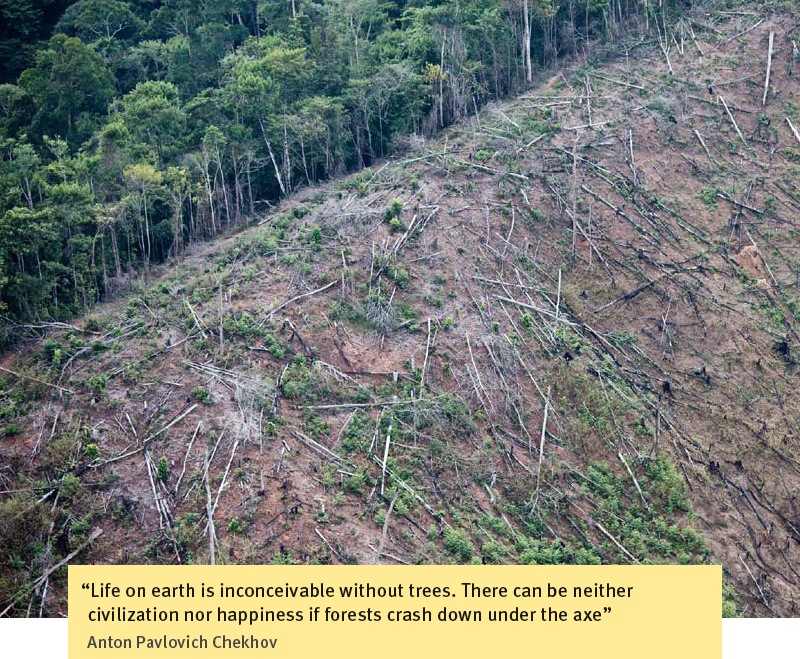
Government policies are seldom lauded, yet Rwanda’s forest policy has resulted in a 37-percent increase in forest cover on a continent better known for deforestation and desertification.

Rwanda’s National Forest Policy has also resulted in reduced erosion, improved local water supplies and livelihoods, while helping ensure peace in a country still recovering from the 1994 genocide.

Now Rwanda can also be known as the winner of the prestigious Future Policy Award  for 2011.

“Rwanda has sought not only to make its forests a national priority, but has also used them as a platform to revolutionise its stances on women’s

rights and creating a healthy environment,” said Wangari Maathai, Nobel Peace Prize Laureate and founder of the Green Belt Movement.

She issued a statement for the award ceremony in New York City last week just days before her death from cancer in Nairobi Monday at the age of 71. “Rwanda has been a very divided country since the 1994 genocide but this policy is helping to bring peace and value to the people,” said Alexandra Wandel, director of the World Future Council, which administers the Future Policy Awards.

The World Future Council is an international policy research organisation based in Hamburg, Germany that provides decision-makers with effective policy solutions.

“Our aim is to inspire other countries to adapt these successful policies to their individual needs.” said Wandel told IPS. Continue reading
Keystone Pipeline All About Exporting Oil Overseas – Report


 The United States is awash in oil with four times as many oil rigs pumping domestic oil today than eight years ago and declining  demand

Canada needs overseas markets for its dirty oil

[Excerpts from my September 2nd article on the proposed Keystone XL pipeline — Stephen]

The only reason U.S. citizens may be forced to endure a risky, Canadian-owned oil pipeline called Keystone XL is so oil companies with billion-dollar profits can get the dirty oil from Canada’s tar sands down to the Gulf of Mexico to export to Europe, Latin America or Asia, according to a new report by Oil Change International released Wednesday.

“Keystone XL will not lessen U.S. dependence on foreign oil, but rather transport Canadian oil to American refineries for export to overseas markets,” concludes the report, titled “Exporting Energy Security“.

….

“The oil industry would have done the Northern Gateway [pipeline] first but gambled that resistance to the [Keystone XL] pipeline would be far weaker in the mid-west,” he told IPS.

They were wrong.

Read full article:

U.S. Awash in Oil and Lies, Report Charges | More Oil Development Risks Catastrophe – Scientists Say

Fight Against Marine Garbage Runs Into Plastics Lobby – Cousteau “shocked” by state of oceans

This is my final article in the Trashing the Ocean series. It looks at the results of the first major international effort to deal with the issue in 11 years. It’s less than satisfying effort largely due to the plastics lobby.  One of the unofficial solutions:  buy local and create local, sustainable communities says the guy who ‘discovered’ the pacific garbage patch. — Stephen

There are three to six kilogrammes of marine trash for every kilogramme of plankton…. California nearly became the first U.S. state to ban plastic bags, but a multi-million-dollar lobby effort by industry killed the proposed legislation

By Stephen Leahy

HONOLULU, Hawaii, U.S., Mar 28, 2011 (IPS)

Every day, billions of plastic bags and bottles are discarded, and every day, millions of these become plastic pollution, fouling the oceans and endangering marine life.

No one wants this, but there is wide disagreement about how to stop it.

“Every time I stick my nose in the water, I am shocked. I see less and less fish and more and more garbage,” said Jean-Michel Cousteau, son of the legendary marine ecologist Jacques Cousteau, who has spent four decades making documentaries and educating people about the oceans.

On trips to the remote and uninhabited northwestern Hawaiian Islands, Cousteau found miles and miles of plastic bottles, cigarette lighters, television tubes, spray cans, broken toys, and thousands of other pieces of plastic on the beaches and thousands of tonnes of derelict fishing nets in the reefs.

“We are using the oceans as a universal sewer,” he told some 440 participants from the plastics manufacturing, food and beverage sectors, environmental organisations, scientists and policy-makers from over 35 countries at the Fifth International Marine Debris Conference in Honolulu, Hawaii, which ended Mar. 25.

Jean-Michel Cousteau

This independent environmental journalism depends on public support. Click here learn more.

Humanity is risking its own health and survival in treating the oceans this way, Cousteau said. The oceans are the source of life on our planet. Through evaporation, oceans are the most important source of fresh water while phytoplankton generates at least half the oxygen we breathe.

“No one is away from the ocean. We are all intimately connected by every breath we take,” he said.

Continue reading

U.S. Awash in Oil and Lies, Report Charges | More Oil Development Risks Catastrophe

Canada’s Alberta Tar Sands Mining Pits

By Stephen Leahy

UXBRIDGE, Canada, Sep 2, 2011 (IPS)

With four times as many oil rigs pumping domestic oil today than eight years ago and declining domestic demand, the United States is awash in oil.

The country’s oil industry is primarily interested in who will pay the most on the global marketplace. They call that “energy security” when it suits, but in reality it is “oil company security” through maximising profits, say energy experts like Steve Kretzman of Oil Change International, an NGO that researches the links between oil, gas and coal companies and governments.

The only reason U.S. citizens may be forced to endure a risky, Canadian-owned oil pipeline called Keystone XL is so oil companies with billion-dollar profits can get the dirty oil from Canada’s tar sands down to the Gulf of Mexico to export to Europe, Latin America or Asia, according to a new report by Oil Change International released Wednesday.

“Keystone XL will not lessen U.S. dependence on foreign oil, but rather transport Canadian oil to American refineries for export to overseas markets,” concludes the report, titled “Exporting Energy Security“.

Little of the 700,000 to 800,000 barrels of tar sands oil pumped through the 2,400-kilometre, seven-billion-dollar Keystone XL will end up in U.S. gas tanks because the refineries on the Gulf Coast are all about expanding export markets. One huge refinery operator called Valero has been touting the potential export revenues of tar sands oil to investors, the report found.

Because Keystone XL crosses national borders, President Barack Obama has to issue a permit declaring the pipeline serves the “national interest” in order to be approved.

“The only way Keystone XL could be considered in the national interest is if you equate that with profits for the oil industry,” said Kretzman, who wrote the report. Continue reading

Can Obama Take First Step to Break Addiction to Oil? (And Win First Battle Against Big Oil?)

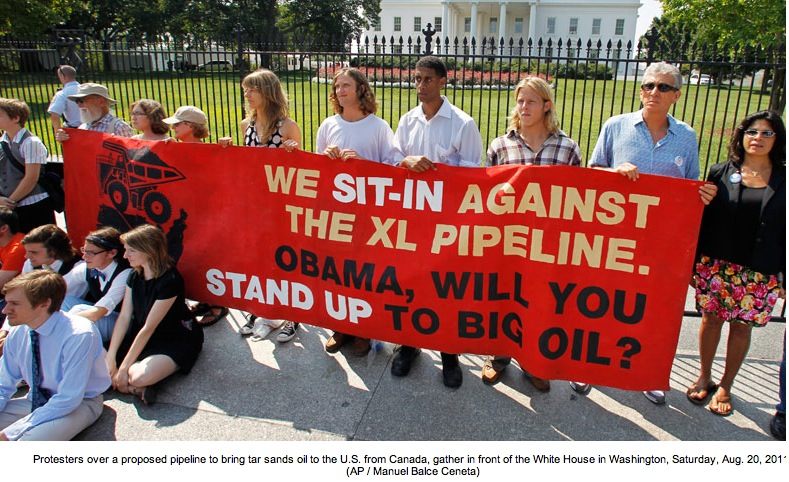
Sept 3 protest at white house

‘…unless river of money from Big Oil is diverted there is no way to deal with climate change’

Analysis by Stephen Leahy

UXBRIDGE, Canada, Aug 31, 2011 (IPS)

The United States’ biggest environmental groups put aside their differences last week to make an urgent intervention on the country’s addiction to oil. The first step on the long road to recovery, they say, is to stop the proposed construction of the Keystone XL pipeline that will “mainline” the world’s dirtiest oil from northern Canada into the U.S. heartland.

“This (Keystone) is a terrible project,” they wrote in a letter to President Barack Obama, citing dangers to the climate, the risks of disastrous spills and leaks, and the economic damage that will come from continued dependence on fossil fuel.

Oil from the Keystone XL will dump an estimated 150 million tonnes of carbon dioxide (CO2) annually into the atmosphere – more than most countries. Scientists warn that approval of the project will further fuel the extreme weather that has already resulted in over one billion dollars in damages recorded this year in nine separate extreme weather events in the U.S.

And that doesn’t include the estimated 20 to 45 billion dollars in costs from Hurricane Irene last weekend, mainly due to extensive flooding.

Carbon dioxide (CO2) emissions from fossil fuels do not cause hurricanes, tornados or droughts, but they do trap additional heat and water vapour that fuels those events, climate scientists have proven time and time again.

Asked about the impacts of adding another 150 million tonnes of CO2 into the atmosphere, German climate scientist Malte Meinshausen, a researcher at the Potsdam Institute for Climate Impact Research, told IPS that it will warm the planet for hundreds of years and lead to higher sea levels and “more pronounced droughts and floods”.

Continue reading

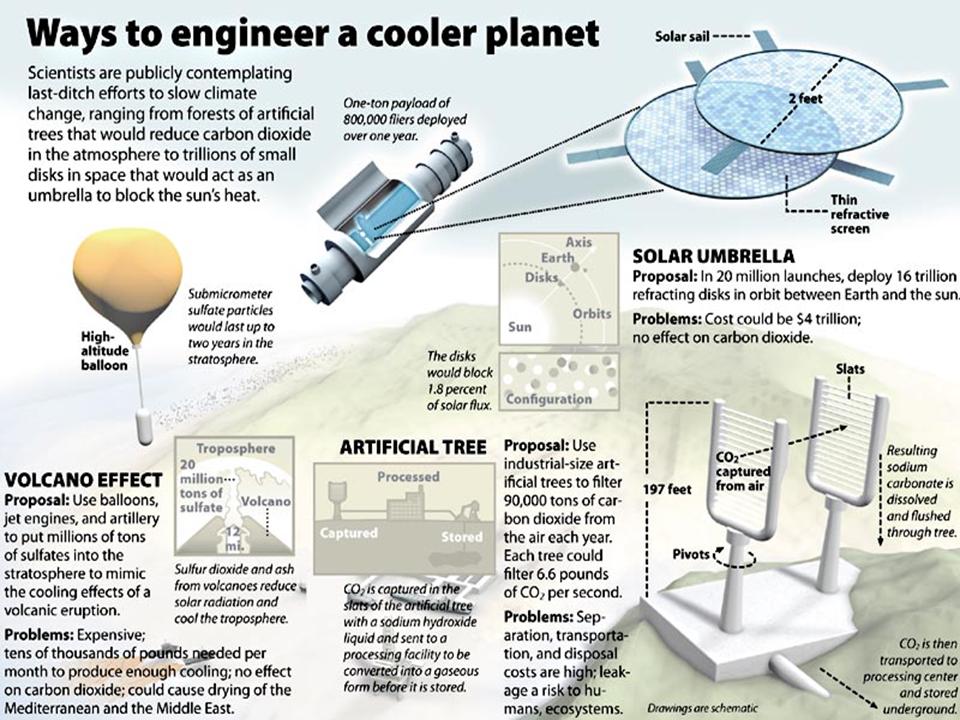
Geoengineering for a Desperate Planet — UN Declares Global Moratorium

By Stephen Leahy*

NAGOYA, Japan, Oct 25, 2010 (Tierramérica)

[Update from Nagoya 30 October 2010. Global moratorium passes.]

Delegates to the world summit on biodiversity here are calling for a moratorium on climate engineering research, like the idea of putting huge mirrors in outer space to reflect some of the sun’s heating rays away from the planet.

Climate engineering or geoengineering refers to any large-scale, human- made effort to manipulate the planet to adapt to climate change.

Representatives from Africa and Asia expressed concern about the negative impacts of geoengineering during the opening week of the 10th Conference of Parties (COP 10) to the United Nations Convention on Biological Diversity (CBD), Oct. 18-29. They were joined by civil society organisations in calling for a moratorium on geoengineering experiments.

The geoengineering proposals include installing giant vertical pipes in the ocean to bring cold water to the surface, pumping vast amounts of sulphates into the stratosphere to block sunlight, or blowing ocean salt spray into clouds to increase their reflectivity.

[Previously posted – Full Story here] 

April Heat Wave and Drought Breaks European Records

From the coldest December ever recorded to the warmest, driest April  Britain is just one of the countries being whipsawed by extreme weather. Normally wet Scotland is experiencing rare wildfires outbreaks this week. Europe’s wheat crop is at high risk due to very hot and dry temps.

My recent science articles explaining why weather extremes are becoming more common:

Why Our Weather is Weird ‘n Wild and Why It Is Getting Worse

The Yin and Yang of Climate Extremes We Will See More of

Will Year of Climate Extremes End Without Progress on Tackling Climate Change?

Bounce the Bottle – Back to the Tap: The Campus Ban On Bottled Water

“Queen’s University became the tenth Canadian post-secondary institute to commit to end the sale and distribution of bottled water on campus, sending the industry a clear message that campuses are backing the tap,” says Water Access Group Member Professor Steven Moore.

Students, staff and faculty are … asking college and university administrations to instead promote investment in accessible public water infrastructure, says press release.

For more visit Inside the Bottle – has great video: “The Story of Bottled Water” – Stephen

My previous post explains why getting rid of plastic water bottles are important for our health and environment (and water tastes much better in steel or glass).

The New Campus Cool: Water Fountains for Drinking – Uni bans bottled water

Record-breaking temps 20C above norm in Arctic in January

Arctic Hothouse Turns UK, Europe, Eastern North America into an Icebox

It remains shockingly warm in much of the eastern Arctic (See my previous post that explains what is happening Arctic Hothouse Turns Europe into an Icebox )

Iqaluit one of the most northern communities in Canada is +2.1.C  (Jan 6) — a whopping 20C above normal as it has been for weeks. Normal night temps are -30C. This winter heat wave is creating havoc with rain instead of snow throughout much of the eastern Arctic.

Part of the reason is the heat stored in the Arctic ocean from this summer’s ice melt has delayed the annual freeze up. Here is the very latest satellite measurements which show the Arctic sea ice extent for December as the lowest on record.

This is affecting winter weather in many places such as Britain which had its coldest Dec in 100 years. And yes, climate change is a major player in all this.

For more on this see Joe Romm’s take on Climate Progress.

This is part of Community Supported Environmental Journalism, independent reporting supported by citizens in several countries thru one-time, weekly or monthly or in-kind donations.

Media Fails on Climate Change in 2010 – How You Can Ensure 2011 Will Be Better

Few people understand the serious danger climate change poses all of us largely because media have done a poor job in covering it. In 2010, US TV media pretended it had all gone away – no more global warming…poof, bad dream, moving on.

From the must-bookmark The Daily Climate:

Drexel University professor Robert Brulle has analyzed nightly network news since the 1980s. Last year’s climate coverage was so miniscule, he said, that he’s doubting his data.

….

Coverage of December’s United Nations climate talks in Cancun is Exhibit A: Total meeting coverage by the networks consisted of one 10-second clip, Brulle said. By contrast, 2009’s Copenhagen talks generated 32 stories totaling 98 minutes of airtime. “I’m trying to check it again and again,” Brulle said of the 2010 data. “It’s so little, it’s stunning.”

Newspapers do little better with a huge decline in the US/Canada in 2010 which had some of the lowest level of coverage in the world, lower than Asia and the Pacific according to this graph. Continue reading