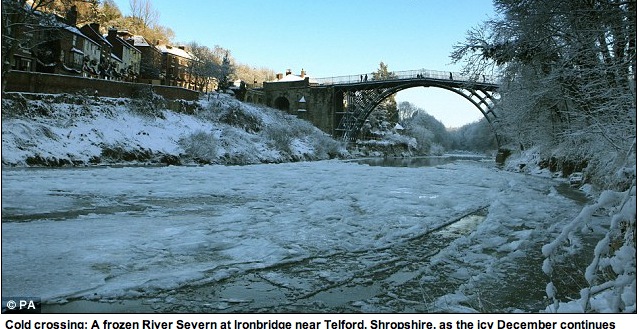
In Oslo last June climate researcher’s told me the melting Arctic ice will likely produce colder winters in the eastern United States and Europe. Looks like they were right. Winter freeze up in the sunless Arctic ocean was two months late this year because of a near record ice loss last summer that is expected to continue if not accelerate in future years.
Several research programs have been studying the impacts of this huge loss in Arctic sea ice and presented their findings for first time at the International Polar Year Oslo Science Conference. My summary from 15 June:
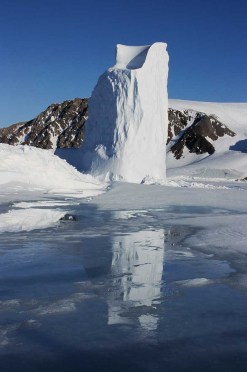
Climate change has warmed the entire Arctic region, melting 2.5 million square kilometres of sea ice, and that, paradoxically, is producing colder and snowier winters for Europe, Asia and parts of North America.
“The exceptional cold and snowy winter of 2009-2010 in Europe, eastern Asia and eastern North America is connected to unique physical processes in the Arctic,” said James Overland of the NOAA/Pacific Marine Environmental Laboratory in the United States.
“In future, cold and snowy winters will be the rule rather than the exception” in these regions, Overland told IPS.
Thanks to support from readers and the organizers of the conference I was able to attend that polar science conference. No media/publication would front any travel money to help me get there. I was one of a small handful of jurnos there and the first to write a piece documenting the link between global warming and bitter winter weather.
Millions of kids are condemned to die or suffer severe brain damage because there is no money to clean up toxic sites and neighborhoods. One or two billion dollars would solve the problem permanently but health advocates have to beg and plead to get maybe $20-$30 million. Wall Street’s 2010 bonus and salaries are estimated to total a record-breaking $144 billion for just 36 firms according to Wall Street Journal.
Don’t you think they could donate 1 per cent of their ‘earnings’? — Stephen
By Stephen Leahy
UXBRIDGE, Canada, Nov 11, 2010 (IPS)
One of the world’s biggest health threats is also one of the least recognised – more than 100 million people who literally breathe and eat toxic pollutants like lead, mercury, chromium every day, according to the first-ever detailed assessment.
By contrast, global attention and billions of dollars are focused on AIDS, tuberculosis and malaria, which affect comparable numbers of people.
“These pollution problems can be dealt with affordably and effectively,” Robinson told IPS.
Past clean-up projects designed by the groups range from the very low-tech, low-cost to more technical engineering projects involving soil removal at playgrounds and groundwater remediation, he said. Continue reading →
One of Japan’s closest allies declared over the weekend that all of its oceans – more than 600,000 square kilometres – would be a sanctuary for whales, dolphins, dugongs, sharks and other species.
“There will be no hunting or harassment of marine mammals and other species in our waters,” said the Honourable Harry Fritz, minister of the environment, natural resources and tourism of the Republic of Palau.
Japan has long sought to overturn the global ban on commercial whaling and has actively solicited and received Palau’s support for many years. Japan is its second largest source of development aid after the United States. Japanese tourists frequent the islands since many people speak some Japanese.
“Palau now supports conserving marine mammals, along with sharks and other species,” said Susan Lieberman, director of international policy for the Pew Environment Group, a large U.S. NGO.
“This is a very significant announcement,” Lieberman told IPS.
As a journalist my experience with the IPCC over past decade has been that their communication is terrible. The Summary for Policy Makers report is unreadable except by the most dedicated jurno with good salary and few deadlines…
Secondly public statements by IPCC are so qualified with caveats to require telepathy to parse the real meanings.
Finally compared to my reading of the latest science the IPCC is woefully out of date and conservative to a fault.
In my view much of the current criticism of the IPCC is misdirected and done so to deliberately confuse the public about the reality of the near and present danger of climate change.
I have interviewed scientists and other experts about how the findings and integrity of climate science/scientists have been systematically attacked and distorted by those with vested interests:
Summary of the InterAcademy Council Review from the excellent Australian science blog Climate Shifts:
The long-awaited review of the IPCC has been delivered by the InterAcademy Council (an Amsterdam-based organization of the world’s science academies). Contrary to the misguided expectations of the denialist community, the Inter-Academy Council has concluded that the periodic assessment reports of the IPCC have been successful overall. There is some need, however, for improving some of the reporting process and for developing a better set of processes to deal with the growing scientific and political complexity of the climate change issue.
Here is the press release posted today by the InterAcademy Council (IAC).
Ice-free summer in the Arctic is just a matter of time – mostly likely within the next 5 years. Here’s a “six-pack” of my recent articles on how global warming is transforming the Arctic:
Things Happen Much Faster in the Arctic — “Things are happening much faster in the Arctic. I think it will be summer ice-free by 2015,” said David Barber, an Arctic climatologist at the University of Manitoba.
Arctic Is the Canary in the Coalmine — The Arctic is “ground zero” for climate change, with temperatures rising far faster than anywhere else on the planet.
Arctic Oil and Gas Rush Alarms Scientists— As greenhouse gas pollution destroys Arctic ecosystems, countries like Canada are spending millions not to halt the destruction but to exploit it.
Oil vs Polar Bears in Alaska — A coalition of environmental groups sued the George W. Bush administration Monday for delaying a decision to protect polar bears threatened with extinction
Polar Bears’ Future Bleak in Melting Arctic — “Without taking serious and urgent action to stabilize the climate, there is no future for polar bears” says Andrew Derocher, Chair of the World Conservation Union (IUCN), Polar Bear Specialist Group.
So big green thumbs up to the University of Ottawa and its student federation announcement — Stephen
No More Sales of Bottled Water
Students, faculty, staff and other members of the uOttawa community are encouraged to find alternatives to bottled water, such as filling up cups, glasses and re-usable bottles at the nearest fountain or tap on campus.
Since 2008, the University of Ottawa has invested over $100,000 to revitalize its water fountains. An additional $75,000 will be invested next year.
The improvements include gooseneck fountains for quick and easy filling of re-usable bottles, new fountains near food service outlets, upgrades to existing fountains. The fountains are wheelchair accessible, have increased waster pressure and better refrigeration.
Circuit Boards – Chris Jordan “Intolerable Beauty: Portraits of American Mass Consumption http://www.chrisjordan.com
By Stephen Leahy
BERLIN, Jun 3, 2010 (IPS)
Rising global wealth spells disaster for the planet, with environmental impacts growing roughly 80 percent with a doubling of income, reports the first comprehensive study of consumption.
It adds to the mountain of evidence that the gospel of economic growth must be urgently transformed into the new gospel of resource-efficient green economies, a U.N. expert panel concluded Wednesday.
What are the biggest planetary criminals?
Fossil fuel use and agriculture, the study found. Ironically, these are also the two most heavily subsidised sectors, noted Ernst von Weizsaecker of Norwegian University of Science and Technology, and co-chair of the International Panel for Sustainable Resource Management.
“In the case of CO2, a doubling of wealth typically increases environmental pressure 60 to 80 percent, sometimes more in emerging economies,” von Weizsaecker said in an interview.
Rising affluence has also triggered a shift in diets towards meat and dairy products so that livestock now consumes much of the world’s crops and indirectly consumes 70 percent of the fresh water and produce much of the fertiliser pollution, von Weizsaecker said from Brussels.
“It is clear that a meat-based diet uses more land and fertiliser and emits far more CO2 than a vegetarian diet,” said von Weizsaecker.
The study also found that rich countries like Japan, the United States and many in the European Union are now “exporting” a large part or most of their true environmental impacts to developed countries by importing goods and food from those countries.
In a spiral of destructive co-dependency, China’s rising CO2 emissions and deforestation in Malaysia are in part a direct result of North American and European consumption of the goods made there.
“International trade clearly shows rich countries are outsourcing their impacts,” von Weizsaecker said.
“Given this fact, perhaps the current way of structuring agreements on emission reduction targets is becoming obsolete,” said Ashok Khosla, co-chair of the panel and president of the World Conservation Union (IUCN)
At the household level, it is the goods and services consumed, not the fossil fuel used for cars or homes, that accounts for most of the environmental impacts. This is despite energy and material efficiency gains over the past two decades. Efficiency has improved on a per dollar expenditure basis but people are consuming more, which drowns out any efficiency gains, said panel expert Sangwon Suh of the University of California, Santa Barbara.
“Policy makers cannot just look at direct emissions, they need to look at a full life cycle of their consumption and incorporate those impacts into their decision making,” Suh told IPS.
Representing the world’s foremost experts, the panel synthesised a comprehensive library of the most authoritative global studies to provide science-based assessments of products, materials and economic and lifestyle activities, producing the greatest harm to the planet.
“It is the first global assessment of what kind of consumption activities have the biggest impacts,” Suh said.
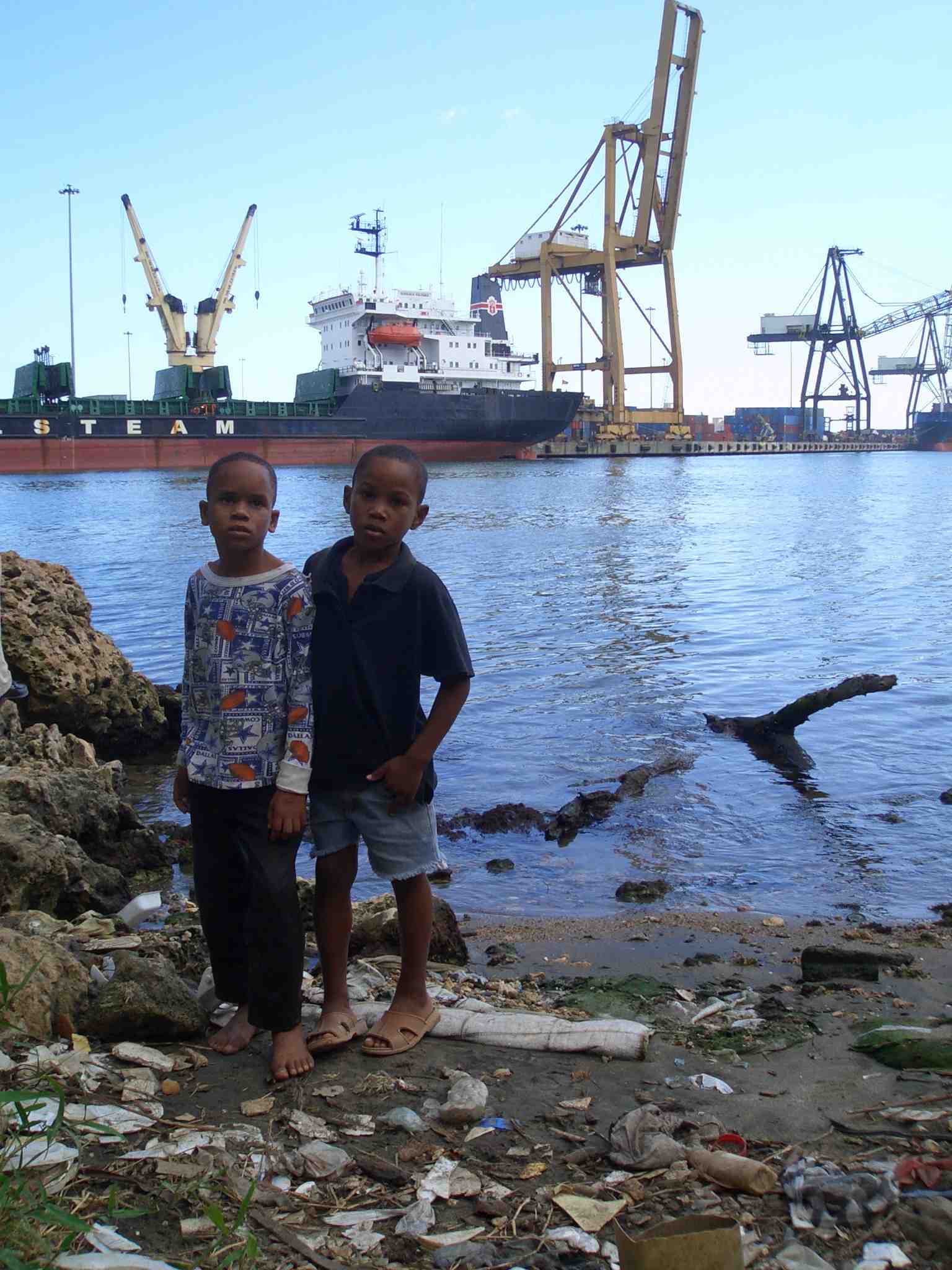
Children poisoned by lead from battery waste in Dominican Republic
Fossil fuel use and agriculture topped the list in the149-page report, followed by the heavily subsidised industrial fishing industry and the production and consumption of materials like metals and plastics. While the latter do cause severe damage locally all over the world, shockingly these are not that significant compared to global impacts of fossil fuel and agriculture, the report noted.
The purpose of this U.N. Environment Programme-sponsored study was to identify the “hot spots” in terms of environmental impacts so that policy makers can use this information to reform policies, said Suh.
“Setting priorities would seem prudent and sensible in order to fast track a low-carbon, resource-efficient green economy,” said Achim Steiner, UNEP’s executive director, which hosted the panel.
“Decoupling growth from environmental degradation is the number one challenge facing governments,” Steiner said in a statement.
However, this decoupling is not happening, the report shows. And it will not happen in the future without strong policy interventions, said von Weizsaecker.
Policy makers and economists will need to abandon their obsession with economic growth as the solution to all problems, writes Clive Hamilton in a new book “Requiem for a Species”. Growth has become a powerful symbol of success and modernity even though in reality it is neither, says Hamilton, a writer and academic at the Australian National University.
If someone is murdered, it adds about one million dollars to the GDP of rich countries when costs of police, courts, and prisons are factored in, according to his research.
“Murder is good for the economy. So is environmental destruction,” he writes.
It will take extraordinary leadership to reverse the consumption-driven society where children are bombarded with advertising – 17 billion dollars annually in the U.S. alone, Hamilton notes.
The same over-consumption brainwashing is well underway in the developing world. Shopping has become a form of recreation amongst China’s growing middle class and wealthy elite, who bought more than 12 percent of the world’s luxury goods in 2005, second only to the U.S., he says.
“Faced with the scale of the challenge, far more transformational measures need to be taken. Currently, we are fiddling – or fiddling around the edges – while Rome burns,” said Khosla.
The enormous fossil fuel subsidies are rarely acknowledged when complaints are raised about costs of renewable energy. This report shown below says subsidies for fossil fuel are 12X that for green energy but this is a gross underestimate based on the experts I’ve interviewed in June for this article Free Ride for Oil and Coal Industry May Be Over.
Subsidies experts in Switzerland told me that “two-billion-dollars-a-day public subsidy for carbon-based fuels is a very conservative estimate..”
In reality big oil and coal get more like 20X the money green energy. So let’s do some real pricing: electricity from coal 5 cents kWh X 20 for subsidies (not to mention free use of the atmosphere /environment for its CO2, mercury etc waste products.) Corporate welfare at its best.
Wind 5-6 cents kWh; Solar 10-15 cents kWh…
Fossil energy continues to get NEW subsidies seeNew $Billion Cash Hand Out To Fossil Fuel Companies Under ‘Green’ Economic Stimulus Plans.
— Stephen
Global subsidies for fossil fuels dwarf support given to renewable energy sources such as wind and solar power and biofuels, Bloomberg New Energy Finance said.
Governments last year gave $43 billion to $46 billion of support to renewable energy through tax credits, guaranteed electricity prices known as feed-in tariffs and alternative energy credits, the London-based research group said today in a statement. That compares with the $557 billion that the International Energy Agency last month said was spent to subsidize fossil fuels in 2008.
“One of the reasons the clean energy sector is starved of funding is because mainstream investors worry that renewable energy only works with direct government support,” said Michael Liebreich, chief executive of New Energy Finance. “This analysis shows that the global direct subsidy for fossil fuels is around ten times the subsidy for renewables.”
Yet another study that confirms the urgent need to switch to cleaner energy sources for health reasons. Here we have unborn children affected by the air pollution their mothers breathe. Burning fossil fuels releases polycyclic aromatic hydrocarbons (PAHs) which we all breathe in but these chemicals affect the mental development of unborn children. Other new studies show smog causes increases in heart attacks, and reduces blood’s ability to transport oxygen.
So why the high-profile fight over climate change and urgent need to reduce fossil fuel use? Might it happen that fossil energy companies desperate to protect hundreds of billions of dollars of profits, actively encourage (if not directly fund) confusion regarding the inconvenient scientific results on climate and public health? — Stephen
April 2010 — A study by the Columbia Center for Children’s Environmental Health (CCCEH) carried out in Krakow, Poland has found that prenatal exposure to pollutants can adversely affect children’s cognitive development at age 5, confirming previous findings in a New York City (NYC) study.
Researchers report that children exposed to high levels of polycyclic aromatic hydrocarbons (PAHs) in Krakow had a significant reduction in scores on a standardized test of reasoning ability and intelligence at age 5. The study findings are published today online in Environmental Health Perspectives. Continue reading →
Is this why there is no independent assessment of the BP oil well cap and surrounding sea floor?
Three of every four oil and gas lobbyists worked for federal government that’s probably why oil spill liability was capped at a ridiculous $50 million – an amount that wouldn’t cover the cost of a couple of oil spill skimmers.
Three out of every four lobbyists who represent oil and gas companies previously worked in the federal government, a proportion that far exceeds the usual revolving-door standards on Capitol Hill, a Washington Post analysis shows.
Key lobbying hires include 18 former members of Congress and dozens of former presidential appointees. For other senior management positions, the industry employs two former directors of the Minerals Management Service, the since-renamed agency that regulates the industry, and several top officials from the Bush White House. Federal inspectors once assigned to monitor oil drilling in the Gulf of Mexico have landed jobs with the companies they regulated.
Surprise, surprise BP threw even more money — +$1.7 million April to June –– at its lobbyists. And it works. Money unfortunately does buy influence in DC otherwise why aren’t US govt and/or independent science submersibles on the scene of the spill to verify BPs claims??
How could any level of government take the word a polluter that everything is cleaned up without bothering to CHECK to see if it is?
Even worse in my opinion: Why isn’t the media screaming for independent assessment of the leaking well head and surrounding area? (Twenty years ago they would have.)








 No More Sales of Bottled Water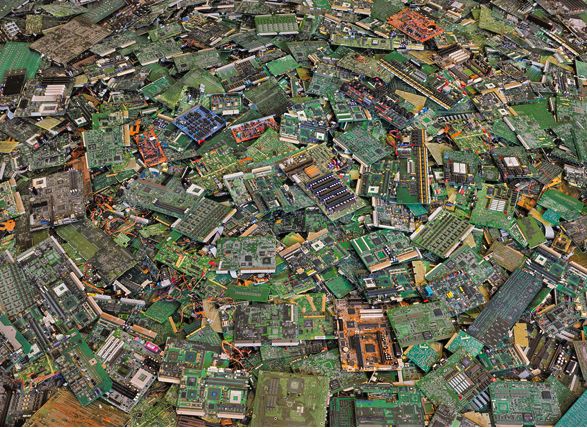



 Stephen Leahy, International Environmental Journalist