North-South Divide Again Clouds Biodiversity Talks


By Stephen Leahy

NAGOYA, Japan, Oct 19, 2010 (IPS)

The accelerating destruction of natural habitats will take millions of years to recover from, scientists have warned.

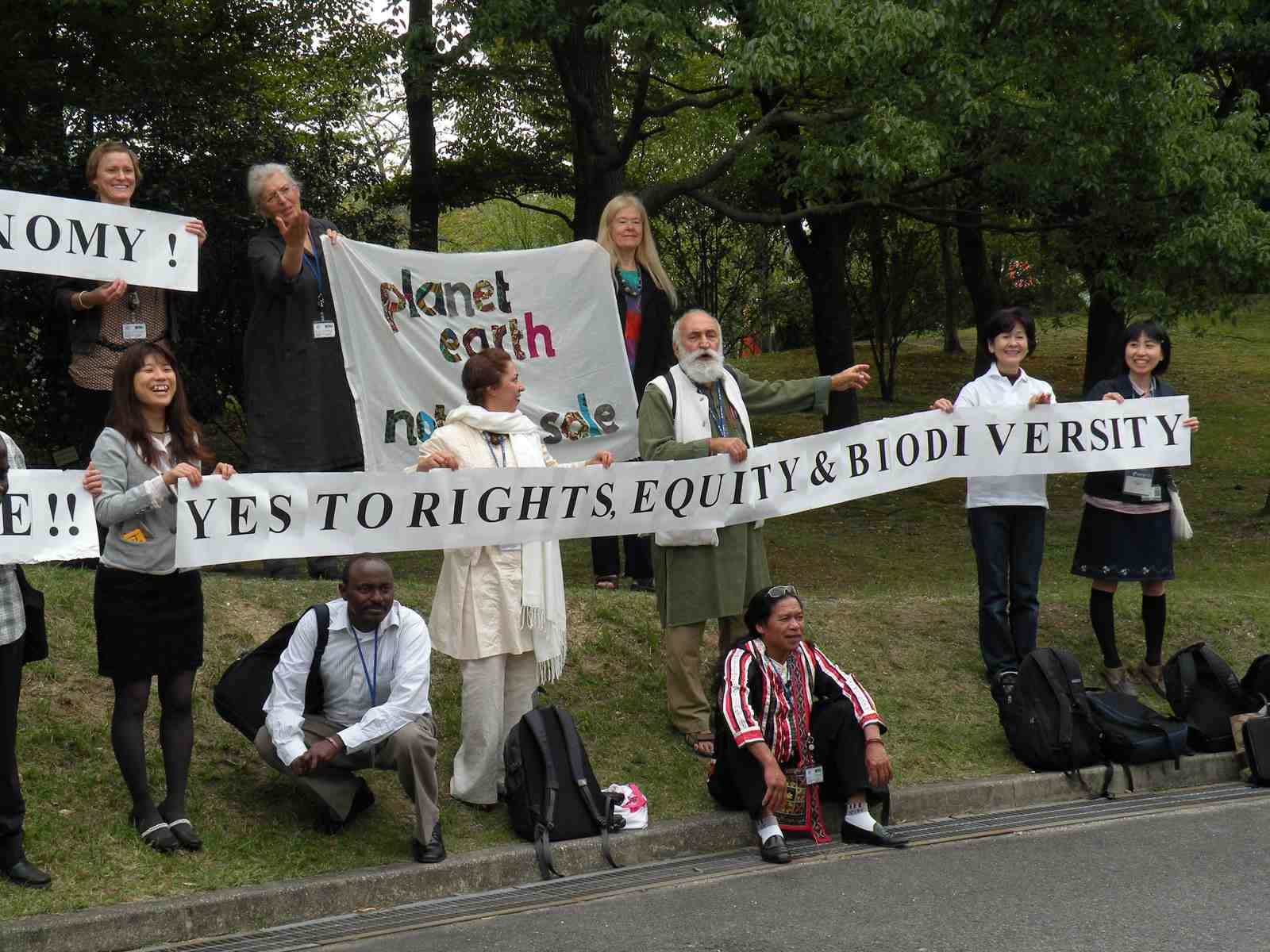
This may be the last chance to apply the brakes, Achim Steiner, executive director of the U.N. Environment Programme, reminded delegates representing the 193 member countries of the U.N. Convention on Biological Diversity (CBD).

“This meeting is being held to address a very simple fact: we are destroying life on this Earth,” Steiner said at the opening plenary meeting Monday. “It is absolutely essential that nations work together here.”

Ryu Matsumoto, Japan’s environment minister, warned that the world was about to reach a threshold where the loss of biodiversity would become irreversible.

“We’re now close to a tipping point on biodiversity,” he said. “We may cross that in the next 10 years.”

With 16,000 participants, the Oct. 18-29 gathering is by far the biggest international meeting on biodiversity. The term biodiversity refers to the variety of plants, animals and other species that provide a wide range of services to humanity.

Is this article of interest? It exists thanks to contributions from readers. Please click here to learn more about Community Supported Journalism. Continue reading

Locally-Run Protected Areas Could Reverse Fisheries’ Death Spiral


Great Barracuda and Jacks, Diamond Rock, Saba,...
Image via Wikipedia


One third of all species of sharks, rays and reef-building corals are facing extinction while governments spend $27 billion subsidizing overfishing

By Stephen Leahy

UXBRIDGE, Canada, Sep 15, 2010 (IPS)

Local fishers objected to the creation of a new no-fishing marine protected area off the coast of Belize in 1996. Today they are benefiting from the bounty of fish spilling out of the Laughing Bird Caye National Park. Tourism has also boomed, illustrating the multiple benefits and value of marine protected areas, according to a new series of reports released Wednesday by Conservation International (CI).

“The ocean is in crisis but we can’t see it with our own eyes so we’re not aware of what is happening,” said Leah Bunce Karrer, co-author and director of the Marine Management Area Science Programme at CI.

“Marine managed areas offer a solution which could significantly reduce ocean degradation while benefiting local communities,” Karrer told IPS.

Is this article of interest? It exists thanks to contributions from readers. Please click here to learn more about Community Supported Journalism.

One third of all species of sharks, rays and reef-building corals are facing extinction. “Most people don’t realise that,” said Gregory Stone, chief ocean scientist at CI.

“As species disappear, entire ecosystems are altered in negative ways we don’t even want to imagine,” Stone said.

Only a fraction of one percent of the world’s oceans are effectively protected even though there is growing scientific consensus of the need to protect at least 20 percent of the seas. Continue reading

Local Decisions To Protect Nature Boosts Economy, Quality of Life and Secure Jobs — Global Study

Multi-trillion-dollar ecosystem services can boost local economies and quality of life

By Stephen Leahy

UXBRIDGE, Canada, Sep 10, 2010 (IPS)

What do New York City, Vienna, Quito and Rio de Janeiro have in common? They all get their high quality drinking water through aqueducts connected to protected areas in nearby hills and mountains.

Twenty years ago, a rapidly expanding New York City determined it was far cheaper to protect and restore the source of its water supply, the Catskill/Delaware forests and wetlands, than spend six to eight billion dollars on a water treatment plant.

Cities are dependent on nature. There are many examples of how the ecosystem services provided by nature can provide cost-effective solutions for local municipal services, according to a new major study titled “TEEB report for Local and Regional Policy Makers” released Thursday in India, Brazil, Belgium, Japan and South Africa.

Is this article of interest? It exists thanks to contributions from readers. Please click here to learn more about Community Supported Journalism.

However, the study notes that few politicians and public officials realise that factoring in the planet’s multi-trillion-dollar ecosystem services into their policy-making can help save cities and regional authorities’ money while boosting the local economy, enhancing quality of life, securing livelihoods and generating employment.

All economic activity and most of human well-being whether in an urban or non-urban setting is based on a healthy, functioning environment,” said Pavan Sukhdev, study leader of The Economics of Ecosystems and Biodiversity (TEEB) initiative hosted by the United Nations Environment Programme. Continue reading

Russia’s Heat Wave Agony a “Wake-Up Call” to the World

Heat Waves Put Global Food Supply At Risk

[New Article]

By Stephen Leahy

VIENNA, Aug 11, 2010 (IPS)

A wind turbine on an acre of northern Iowa farmland could generate 300,000 dollars worth of greenhouse-gas-free electricity a year. Instead, the U.S. government pays out billions of dollars to subsidise grain for ethanol fuel that has little if any impact on global warming, according to Lester Brown.

“The smartest thing the U.S. could do is phase out ethanol subsidies,” says Brown, the founder of the Washington-based Earth Policy Institute, in reference to rising food prices resulting from the unprecedented heat wave in western Russia that has decimated crops and killed at least 15,000 people.

“The lesson here is that we must take climate change far more seriously, make major cuts in emissions and fast before climate change is out of control,” Brown, one of the world’s leading experts on agriculture and food, told IPS.

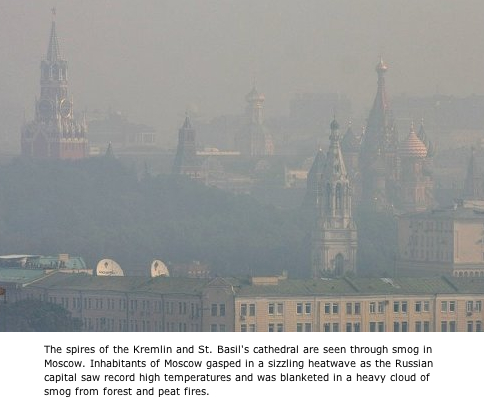
Average temperatures during the month of July were eight degrees Celsius above normal in Moscow, he said, noting that “such a huge increase in temperature over an entire month is just unheard of.”

Do you find this article interesting? It is funded by contributions from readers. Please click here to learn more about Community Supported Journalism.

On Monday, Moscow reached 37 C when the normal temperature for August is 21 C. It was the 28th day in a row that temperatures exceeded 30 C. Continue reading

Food Prices Soar (again) – Governments Starved Ag Research of Funding for Last 20 Years

By Stephen Leahy

[New Article]

MONTPELLIER, France, Apr 14, 2010 (IPS)

How’s this for short-sighted:

A billion people go hungry every day, food prices have climbed 30 to 40 percent, climate change is reducing agricultural production – and for the past two decades, the world has slashed investments in publicly-funded agriculture until it is a pittance in most countries.

“Moral outrage is needed. We must abolish this… It can be done. It must be done,”Ismail Serageldin Website, Egypt and a former World Bank economist, told nearly 700 World Food Prize laureates, ministers, scientists and a few representatives from development and farmer organisations at the first Global Conference on Agricultural Research for Development (GCARD) last month here in southern France.

“This is the launching pad to transform hunger in our time,” Serageldin concluded.

The “rocket” on the launching pad is a major transformation of the 500 million dollars of public funds for international agricultural research carried out by the Consultative Group on International Agricultural Research (CGIAR), an alliance comprising some 8,000 researchers in 100 countries.

For the past year, a global consultation process involving over 2,000 stakeholders from 200 countries has produced a draft plan for reform that promises to meet the needs of the world’s 500 million poor small farmers who feed the two billion poorest people.

Called ambitious and far-reaching by proponents, the “Montpellier Road Map” sets the priorities for “linking science and innovation to the needs of farmers and the rural poor”.

Critics say it resembles little more than a passionate shuffling of the status quo. As the French say like to say: “Plus ça change; plus c’est la même chose” (the more things change, the more they stay the same).
Continue reading

Climate Change May Mean More Mexican Immigration: Scientific American

Some will say this study is  just a wild assumption – that you can’t untangle ‘normal’ droughts from impacts of climate change. First  remember climate change is a force multiplier: it makes droughts and floods far worse than normal. And secondly it is pretty obvious that if temps climb much higher in most parts of Mexico there will be major crop failures and then what are people supposed to do? Lay down and die? They are going to move — wouldn’t you?  — Stephen

From Sci Am magazine:

A reduction in crop yields could spur even more migration from south to north, a new analysis finds

By David Biello

Climate change’s impacts on crop yields may force as many as seven million Mexicans to emigrate to the U.S. over the next 70 years, according to research published July 26 in the Proceedings of the National Academy of Sciences. The study is among the first to attempt to put hard numbers on questions about “environmental refugees” that may be caused by climate change.

“There is a significant response of emigration from Mexico to past climate variations,” says atmospheric scientist Michael Oppenheimer of Princeton University, an author of the study. “Climate changes predicted by the global circulation models would cause several percent of the Mexican population to move north [if] all other factors are held constant.”

via Climate Change May Mean More Mexican Immigration: Scientific American.

Turning Forests Into Carbon Profits To Protect The Global Climate?

By Stephen Leahy*

MONTPELLIER, France, Apr 7, 2010 (Tierramérica)

Billions of dollars are being mobilised to protect and increase the world’s forests under a climate protection mechanism known as REDD (Reduced Emissions from Deforestation and Degradation). But many experts are unsure that it will work, and some fear it could end in disaster.

According to Anne Larson, who works in Nicaragua as an associate at the Indonesia-based Centre for International Forestry Research (CIFOR), “REDD presents lots of risks.”

“Most countries are simply not ready. They do not have policies to protect the rights of local and indigenous peoples, to determine land tenure or even work out who owns the ‘carbon rights’ to a forest,” Larson told participants at an international conference on smallholder and community forestry in Montpellier, France, in late March.

Under the REDD initiative, richer countries would pay to maintain forests in tropical regions to offset their own carbon emissions. Carbon dioxide from human activities is one of the main gases that produce the greenhouse effect.

The wealthy countries would be granted “carbon credits” towards achieving their carbon reduction commitments to combat climate change. Continue reading

Free Markets Cause Chronic Hunger in Africa — There’s Plenty of Food but No Money

Written a few years ago but still relevant today. Ideology causes hunger not lack of food.

Free Markets Cause Chronic Hunger in Africa -- There's Plenty of Food but No Money By Stephen Leahy

BROOKLIN, Canada, Oct 20, 2006 (IPS)

[World Bank and International Monetary Fund free-market doctrines responsible for much of Africa’s hunger experts say]

It is a world of paradox and plenty: 852 million people are starving while one billion people are overweight, with 300 million of them considered medically obese. And the numbers of people whose health are at serious risk due to starvation or from obesity is rising rapidly. Wh … Read More

Fish Companies Push Hard to Halt Tuna Collapse

By Stephen Leahy*

VICTORIA, Seychelles, Feb 8, 2010 (IPS)

In the Seychelles’ only cannery, the din of thousands of empty tuna cans rattling on narrow metal troughs is incredible as they bustle along, soon to be filled with Skipjack tuna that only days ago were swimming freely in the inky blue Indian Ocean.

At one end of the Indian Ocean Tuna Limited processing plant – the world’s second largest – cranes offload nets full of frozen tuna from huge international fishing boats called purse seiners while at the other end of the plant, 5,000 cans of tuna roll off the line every minute.

That’s a lot of tuna – roughly 400 metric tonnes a day. Can the Indian Ocean tuna bounty, which amounts to more than 20 percent of the world’s tuna, be sustained?

That was the key question at the first-ever Seychelles Tuna Conference that ended last weekend. It brought together nearly 200 scientists, fishers, environmentalists and policy makers here in Victoria, Africa’s smallest capital city, located 1,800 km east of Somalia and practically in the middle of the Indian Ocean.

“The boats are much more efficient today and the tuna stocks are declining and there is much less tuna than before, ” said Alain Fonteneau, a scientist with the L’Institut de recherche pour le développement, in Montpellier, France, who opened the conference. Continue reading

A Tipping Point on Species Loss?

By Stephen Leahy

UXBRIDGE, Canada, Jan 13, 2010 (IPS)

Humanity is destroying the network of living things that comprise our life support system. While this sawing-through-the-branch-we’re-perched-on is largely unintentional, world leaders can’t say they didn’t know what’s going on: 123 countries promised to take urgent action in 2003 but have done little to stem the rising tide of extinctions in what’s known as the extinction or biodiversity crisis.

Species are going extinct at 1,000 times their natural pace due to human activity, recent science has documented, with 35 to 40 species vanishing each day, never to be seen again.

“The question of preserving biological diversity is on the same scale as climate protection,” German Chancellor Angela Merkel said in a speech in Berlin Monday at the official launch of the United Nations’ International Year of Biodiversity.

This week’s official launch will be followed by the first major event of the International Year, a high-profile meeting at the Paris headquarters of the U.N. Educational, Scientific and Cultural Organisation, Jan. 20-21.

“We need a sea change. Here, now, immediately – not some time in the future,” Merkel said.

While climate has been the focus in 2009, this year will be a global celebration of and action on biodiversity, Ahmed Djoghlaf, executive secretary of the Convention on Biological Diversity (CBD), told IPS from Berlin.

Continue reading