What if our air was 30% more acidic like the Oceans? May be 120% more acidic by 2060

Bleached coastal corals. Bantry Bay, Australia. R Leahy 2006

[2°C is a death sentence for corals scientists agree due to ocean acidification and bleaching resulting from emissions of carbon dioxide into the atmosphere. However the developed nations of the world have set 2 degrees C as the climate stabilization target not that any of them have figured out how to reach this target. It is as if the oceans don’t matter. This reflects a fundamental ignorance about life on Earth, an assumption that we can lose or seriously damage entire ecosystems without suffering any consequences.

This story shows we need to get serious about tackling emission reductions (below 2C) and preserving anything that sequesters or traps carbon because these will be tremendously valuable in a climate-changed world . — Steve

By Stephen Leahy*

COPENHAGEN, Dec 11 (IPS/TerraViva)

What would it be like if the air we breathe was 30 percent more acidic? The oceans are already 30 percent more acidic, and on their way to becoming 120 percent more acidic in 50 years at the current rates of carbon dioxide emissions.

Acidification is already affecting coral reefs, algae and plankton, the base of many marine food chains, according to a new report released here by the International Union for Conservation of Nature (IUCN).

“In the last 10 years, the growth of coral reefs in many areas has declined 15 percent,” said Carl Gustaf Lundin, head of the IUCN’s Global Marine Programme.

“That’s a dramatic shift,” Lundin told TerraViva.

The oceans absorb some carbon dioxide (CO2) from the atmosphere, but the vast quantity being emitted – mainly from the burning of fossil fuels – has altered basic ocean chemistry, turning it sour. That’s also affecting shell-forming plankton and disrupting the growth rates of other species, Lundin said.

The stated goal of many countries to stabilise global temperatures within an increase of no more than 2.0 degrees C. is still “a death sentence for most coral reefs”, he said. The 2.0 C. target implies a level of CO2 in the atmosphere of 450 parts per million (ppm), well up from the historical average of 280 ppm. Continue reading

Small Farmers Can Feed AND Cool the World – Industrial Agriculture Emits Almost 50% of Greenhouse Emissions

Agriculture and Food System Change needed to combat Climate Change

Women need to part of the solution

[UPDATE: Feb 2010. Small farmers can cool and feed the world according to Via Campesina. They may be right. After all industrial food production is about making profits not feeding the world nor is it concerned about carbon emissions. Shockingly the GRAIN study in this article did NOT include methane emissions from livestock, so the impact of big ag on climate is likely greater still.

Industrial agriculture is widely acknowledged to be unsustainable — check out this three-year international scientific assessment I covered in 2008 that will revolutionize farming as we know it. The food system is broken but the only reforms I hear about from governments, agribusiness and big NGOs are the same old solutions: new seeds and hi-tech equipment, more GMOs and maybe throw in some nanotech. Small farmers can already deliver what we need if we let them. — Stephen.]

By Stephen Leahy

COPENHAGEN, Dec 12’09 (IPS/TerraViva)

Industrial agriculture may emit nearly half of climate-heating greenhouse gases, but that reality has gone unrecognised by negotiators at the climate treaty talks here, say farmers with La Via Campesina, an international movement of hundreds of millions of small-scale peasant farmers.

“Small-scale farmers use 80 percent less energy than large monocultures,” said Chavannes Jean-Baptiste, a Haitian farmer with Mouvement de Paysan, through a translator.

“Peasant farmers from La Via Campesina and others can help cool the planet,” Jean-Baptiste told a press conference at the Klimaforum09, the alternative climate action talks being held here in Copenhagen Dec. 7-18.

Chavannes Jean-Baptiste, a Haitian farmer with Mouvement de Paysan

Unlike the official talks, set in a remote location surrounded by police and razor wire, Klimaforum09 is being held in the city’s community centre and is free and open to the public.

System Change for Climate Change” – that’s the phrase most often heard at the Klimaforum09 and in parts of Copenhagen.

La Via Campesina’s claim that industrial agriculture is by far the biggest source of carbon emissions is based on a recent study that looked at all emissions from the global food system.

This includes oil-dependent industrial farming, together with the expansion of the meat industry, the destruction of world’s savannahs and forests to grow agricultural commodities, the use of fossil fuel energy to transport and process food, and the extensive use of chemical fertilisers.

This independent environmental journalism depends on public support. Click here learn more.

The study was conducted by GRAIN, an international non-governmental organisation that promotes the sustainable management and use of agricultural biodiversity to support local communities. Continue reading

Plants Finally Get DNA Barcodes — Genetic profiles to fight illegal logging

By Stephen Leahy*

MÉRIDA, Mexico, Nov 20 (Tierramérica)

Advances made in genetic profiling could be used to fight illegal timber trading, provide authentication of herbal medicines and map entire food chains, according to experts at a conference of the Mexican Academy of Sciences.

“It’s taken four years, but the new science of DNA (deoxyribonucleic acid) barcoding now has the crucial 'marker' for plants,” said David Schindel, executive secretary of the Consortium for the Barcode of Life (CBOL).

“Biodiversity scientists are using DNA technology to unravel mysteries, much like detectives use it to solve crimes,” Schindel told Tierramérica from Mexico City, where CBOL was co-host of the Nov. 10-12 conference of the Mexican Academy of Sciences with the Biology Institute of the Autonomous National University of Mexico (UNAM).

“This work in Mexico and elsewhere is enormously important,” says Patricia Escalante, chair of the Institute’s zoology department.

“Barcoding is a tool to identify species faster, more cheaply, and more precisely than traditional methods,” Escalante stated in a press release. Continue reading

Study: ‘Biotech Crops Bring Big Jump in Pesticide Use But Not Yields’ — hmm what would Monsanto say?

Report Failure to Yield: Evaluating the Performance of Genetically Engineered Crops reveals North America’s use of genetically engineered crops has promoted increased use of pesticides, an epidemic of herbicide-resistant weeds and more chemical residues in foods. Despite the biotechnology’s loud and well advertised claims they are the only hope for feeding the world and protect the environment.

Despite 20 years of research and 13 years of commercialization, genetic engineering has failed to significantly increase U.S. crop yields.

[Originally released April 2009 I did not get a chance to write about it then.]

It reviewed two dozen academic studies and is the first report to closely evaluate the overall effect genetic engineering has had on crop yields in relation to other agricultural technologies.

The report was released by nonprofits The Organic Center (TOC), the Union for Concerned Scientists (UCS) and the Center for Food Safety (CFS

My related articles:

Monsanto, Dow Stacking the Deck, Critics Say

The most complex genetically engineered corn (maize) yet has been approved for use next year in Canada and the United States without its potential health and environmental risks being investigated,

Organic farming more profitable and better than conventional systems – U of Wisconsin

Study concludes: governmental policy that supports mono-culture systems is outdated and support should be shifted to programs that promote crop rotations and organic farming practices.

Organic Agriculture Reduces Climate Change, Poverty and Hunger

Organic Provides 3X More Food Per Acre in Poor Countries – podcast

Overweight? Hungry? Blame “Hollow Food”

Organic Cure for Brain-damaging Pesticides Found in US Children

Male Infertility Linked to Pesticides

GM Crops Creating Pest Problems Around World

Dwindling Fish Catch Could Leave a Billion Hungry

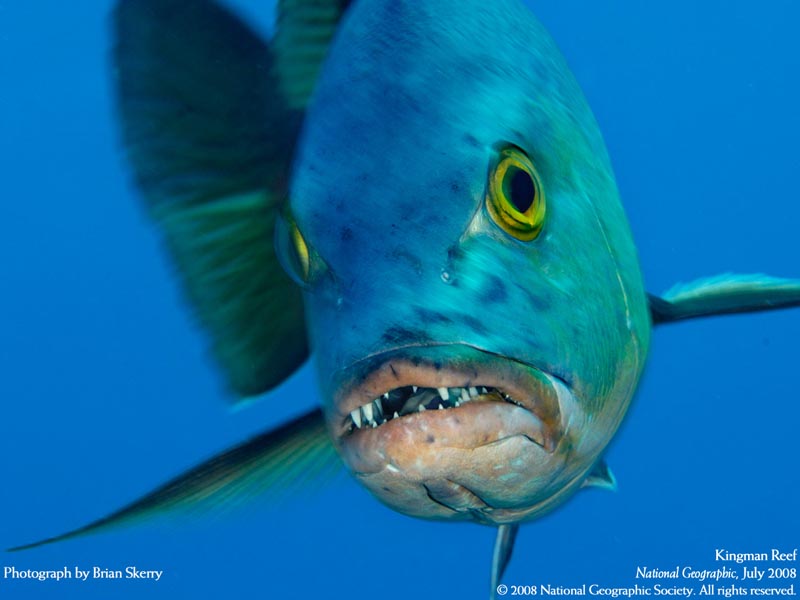
red snapper -- reef fish w teethBy Stephen Leahy

UXBRIDGE, Canada, Oct 9 (IPS)

Without action on climate change “The collapse of fisheries in much of the world would be a sideshow,” Daniel Pauly.

Fish catches are expected to decline dramatically in the world’s tropical regions because of climate change, but may increase in the north, said a new study published Thursday.

This mega-shift in ocean productivity from south to north over the next three to four decades will leave those most reliant on fish for both food and income high and dry.

“The shift is already happening, we’ve been measuring it for the last 20 years,” said Daniel Pauly, a renowned fisheries expert at the University of British Columbia (UBC).

“Major shifts in fish populations will create a host of changes in ocean ecosystems likely resulting in species loss and problems for the people who now catch them,” Pauly told IPS.

In the first major study to examine the effects of climate change on ocean fisheries, a team of researchers from UBC and Princeton University discovered that catch potential will fall 40 percent in the tropics and may increase 30 to 70 percent in high latitude regions, affecting ocean food supply throughout the world by 2055.

The study, published in the journal Global Change Biology, examined the impacts of rising ocean temperatures, changes in salinity and currents resulting from a warming climate. Continue reading

+4 Degrees C By 2060? Alarming But Not Alarmist

07_00_01_News_Panonoramica

By Stephen Leahy

UXBRIDGE, Canada, Oct 9, 2009 (IPS)

The prospect of a four-degree Celsius rise in global average temperatures in 50 years is alarming – but not alarmist, climate scientists now believe.

Eighteen months ago, no one dared imagine humanity pushing the climate beyond an additional two degrees C of heating, but rising carbon emissions and inability to agree on cuts has meant science must now consider the previously unthinkable.

“Two degrees C is already gone as a target,” said Chris West of the University of Oxford’s UK Climate Impacts Programme.

“Four degrees C is definitely possible…This is the biggest challenge in our history,” West told participants at the “4 Degrees and Beyond, International Climate Science Conference” at the University of Oxford last DeadTrees CO2 release naturalweek.

A four-degree C overall increase means a world where temperatures will be two degrees warmer in some places, 12 degrees and more in others, making them uninhabitable.

It is a world with a one- to two-metre sea level rise by 2100, leaving hundreds of millions homeless. This will head to 12 metres in the coming centuries as the Greenland and Western Antarctic ice sheets melt, according to papers presented at the conference in Oxford.

Four degrees of warming would be hotter than any time in the last 30 million years, and it could happen as soon as 2060 to 2070.

“Political reality must be grounded in physical reality or it’s completely useless,” John Schellnhuber, director of the Potsdam Institute for Climate Impact Research, told the conference.

Schellnhuber recently briefed U.S. officials from the Barack Obama administration, but he says they chided him that his findings were “not grounded in political reality” and that “the [U.S.] Senate will never agree to this”.

He had told them that the U.S. must reduce its emissions from its current 20 tonnes of carbon per person average to zero tonnes per person by 2020 to have an even chance of stabilising the climate around two degrees C.

China’s emissions must peak by 2020 and then go to zero by 2035 based on the current science, he added.

“Policymakers who agreed to a two-degree C goal at the G20 summit easily fool themselves about what emission cuts are needed,” Schellnhuber said.

Even with a two-degree rise, most of the world’s coral reefs will be lost, large portions of the ocean will become dead zones, mountain glaciers will largely vanish and many other ecosystems will be at risk, Schellnhuber warned. And there is the risk of reaching a tipping point where the warming rapidly accelerates. Continue reading

Carbon Emissions Can Be Reduced 80% by 2020 – Lester Brown has a plan and he’s not crazy

LesterBrown smlStephen Leahy interviews LESTER BROWN, founder of the Earth Policy Institute

UXBRIDGE, Canada, Oct 7 2009 (IPS)

Lester Brown says his views sometimes appear extreme – because the mainstream media largely doesn’t understand the urgency and challenges in avoiding catastrophic climate change.

The founder and president of the Washington-based Earth Policy Institute, he is also considered by many to be one of the world’s most influential thinkers.

“It looks like I’m a radical because the mainstream media aren’t reflecting the reality of our situation,” Brown says.

A farmer from the eastern U.S. state of New Jersey, Brown entered the U.S. Civil Service in the 1960s, becoming an expert on foreign agricultural policy before leaving to found the Worldwatch Institute in 1974.

The winner of many awards and honourary degrees, Brown is the author of 50 books. In 2001, he founded the Earth Policy Institute to provide a roadmap for achieving an environmentally sustainable economy.

His most recent book is “Plan B 4.0: Mobilizing to Save Civilization”, the fourth and perhaps most urgent version of the Plan B series, available for download at the institutes’s website. In Plan 4.0, Brown calls for carbon emissions cuts of 80 percent by 2020.

“We cannot afford to let the planet get much hotter,” he explains simply. Continue reading

Food Supply In Deep Trouble – Agriculture Most Vulnerable to Climate Change

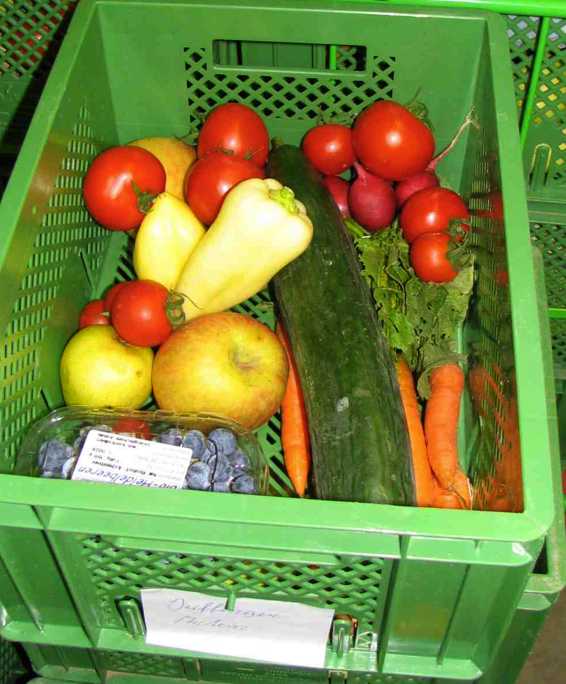
veg food basketBy Stephen Leahy

UXBRIDGE, Canada, Oct 2 (IPS)

Rocketing food prices and hundreds of millions more starving people will be part of humanity’s grim future without concerted action on climate change and new investments in agriculture, experts reported this week.

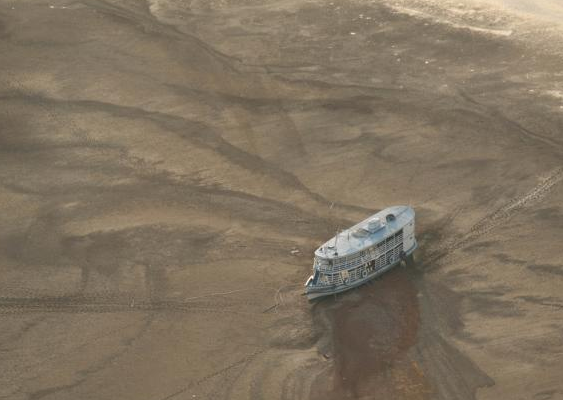
The current devastating drought in East Africa, where millions of people are on the brink of starvation, is a window on our future, suggests a new study looking at the impacts of climate change.

“Twenty-five million more children will be malnourished in 2050 due to effects of climate change,” such as decreased crop yields, crop failures and higher food prices, concluded the International Food Policy Research Institute (IFPRI) study.

“Of all human economic activities, agriculture is by far the most vulnerable to climate change,” warned the report’s author, Gerald Nelson, an agricultural economist with IFPRI, a Washington-based group focused on global hunger and poverty issues.

The report, “Quantifying the Costs of Agricultural Adaptation to Climate Change“, may be the “most comprehensive assessment of the impact of climate change on agriculture to date”, as IFPRI claims, but researchers concede that there is no current way to quantify all of the future repercussions of changing weather patterns on the food supply.

A critical component of agriculture is knowing the best time to plant seeds, for example. Farmers rely on their past experience and weather records. But one of the most robust science findings is that climate change has and will produce significant increases in weather variability.

This means extremes like droughts or floods will happen more often or last longer, and extreme temperature shifts are more likely. The past is no longer a reliable guide for farmers because the fundamental conditions in the atmosphere have been altered – far more heat is being trapped in the atmosphere today because of carbon dioxide and other greenhouse gases than at any time since the dawn of agriculture.

Nelson told IPS that the IFPRI report is a “conservative estimate” of the potential impacts and does not include impacts of pests and disease, loss of farmland due to rising sea levels or loss of water from melting glaciers. Continue reading

Climate Survival Means Anticipating and Adapting

Alberto Cesar AraujoBy Stephen Leahy

GENEVA, Sep 8 (IPS)

Imagine being able to know months in advance when and where floods or droughts may occur.

That is what over 150 countries participating in the third World Climate Conference, which concluded last Friday in Geneva, pledged to achieve through the creation of a Global Framework for Climate Services.

Today is a landmark day for making climate services available to all people,” said Michel Jarraud, secretary-general of the World Meteorological Organisation (WMO), convener of the conference, told over 2,000 climate scientists, sectoral experts and decision-makers.

“Climate services” is the long-distance cousin to weather services or weather forecasting. New technology and better climate science has opened the window to very long range forecasting of climate events like droughts weeks and months in advance.

This year, scientists were able to anticipate unprecedented flooding of the Red River Valley in the United States Midwest months in advance, enabling local communities to prepare and avoid the worst consequences, said Jane Lubchenko, a noted ecologist, administrator of the National Oceanographic and Atmospheric Administration (NOAA) and head of the U.S. delegation.

“Imagine farmers able to determine what to plant and where, based on drought forecasts three to five years in the future, or coastal communities able to plan for sea level rise and storm intensity,” Lubchenco told IPS.

The proposed Global Framework for Climate Services will “strengthen production, availability, delivery and application of science-based climate prediction and services”.

Continue reading

Alien Species Cause Extinctions, Increase Poverty, Erode Ecosystems

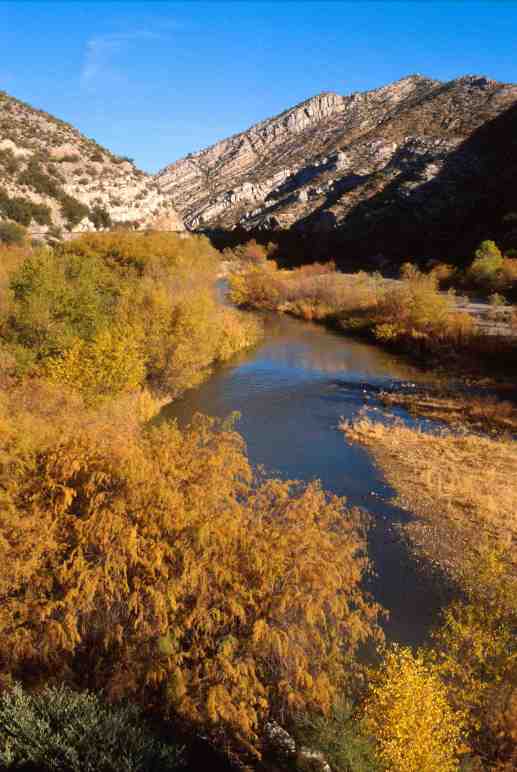
Saltcedar, an invasive exotic weed, crowds out native vegetation along the Gila River in Arizona.

By Stephen Leahy

UXBRIDGE, Canada, May 21 (IPS) – Continent-hopping alien species are worsening poverty and threaten the agriculture, forestry, fisheries and natural systems that underpin millions of livelihoods in developing countries, warn biodiversity experts.

“The livelihoods for 90 percent of people in Africa directly rely on natural resources such as marine coastal biodiversity,” said Ahmed Djoghlaf, executive secretary of the Convention on Biological Diversity (CBD).

“Around the world more than 1.6 billion people depend directly on forests for their survival,” he told IPS from Montreal.

Biodiversity is not just fuzzy animals and pretty birds. It is the diversity of life on Earth that comprises ecosystems which in turn provide vital ecosystem services including food, fibre, clean water and air.

“Biodiversity is poor countries’ most precious asset,” Djoghlaf stressed. Continue reading