The New Beast in the Forest Brings Hope and Threats to Indigenous Peoples

Deforestation for oil palm plantation West Kalimantan, Indonesia. Photo Karmele Llano SanchezInternational Animal Rescue

by Stephen Leahy

First published at National Geographic’s NewsWatch

“REDD is the new beast in the forest,” said Patrick Anderson of the Forest Peoples Programme in Indonesia here at Climate Change Mitigation with Local Communities and Indigenous peoples workshop in Cairns, Australia.

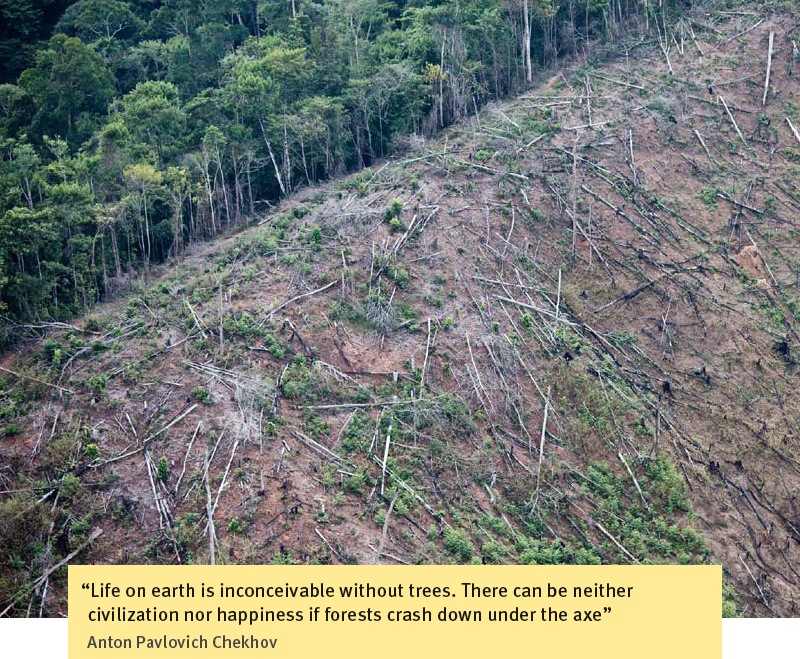
Deforestation gobbles up an area the size of Greece (13 million hectares) every year. As if that loss wasn’t bad enough, it also produces huge amounts of greenhouse gas emissions — a whopping 15 to 20 percent of all global emissions. That’s second only to the burning of fossil fuels.

Sadly, in our economic system, trees are worth far more dead as paper, lumber, furniture, etc., than alive.

In an attempt to reverse this, countries in the United Nations have agreed to create a financial value for the carbon stored in forests in a program called REDD: Reducing Emissions from Deforestation and Forest Degradation.

This is how it works. Trees take heat-trapping carbon out of the atmosphere as they grow and store it for as long as the trees live. Instead of cutting down trees and selling the wood, the carbon trapped in the living trees can be sold as “carbon credits” on an open market.

A steel, cement, or coal-fired power company in the U.S. or a European country can then buy those credits instead of reducing its carbon emissions. The current price is around $10 per tonne but this fluctuates.

For example, the newly established Carbon Tax in Australia sets the price at $23 per ton in the first year of operations. (One hectare of tropical forest stores between 250-500 tonnes of carbon but varies considerably. An average car emits 1.5 tonne of carbon per year.)


‘Abriculture’ Using Forests to Feed Indigenous Peoples and Fight Climate Change

Seith Fourmile of Gimuy-Walubarra Yidinji Nation of Cairns, Jenny Lynch Abriculture Development Officer in Cairns.  Photo: Stephen Leahy

Forests can not only suck climate-heating carbon out of the atmosphere, they are also an important source of food for many Indigenous peoples.

“Western food is making our people sick. Our bodies are adapted to eating bush foods,” said Seith Fourmile of the Gimuy-Walubarra Yidinji Nation of Cairns.

Australia’s Aboriginal or Torres Strait Islander peoples suffer from rates of diabetes three to four times greater than other Australians. Rates of high blood pressure, cardiovascular, and kidney diseases are also higher. Similar health problems have been found among Alaska’s Eskimo and Canada’s Inuit peoples.

The world’s forests “offer a cornucopia of 80,000 species of plants as foods,” writes botanist and medical biochemist Diana Beresford-Kroeger in her book The Global Forest. Western foods rely on just a few species, while oral knowledge of the other thousands of species is rapidly being lost, according to Beresford-Kroger.

Click for full story


Global Warming to Ignite the Carbon Bomb in Northern Forests

Anaktuvuk River peat fire 2007

“In a warmer world, there will be more fire”

Fires already burn an area larger than India every year.

By Stephen Leahy

VANCOUVER, Feb 29, 2012 (IPS)

Rising temperatures are drying out northern forests and peatlands, producing bigger and more intense fires. And this will only get much worse as the planet heats up from the use of ever larger amounts of fossil fuels, scientists warned last week at the end of the major science meeting in Vancouver.

“In a warmer world, there will be more fire. That’s a virtual certainty,” said Mike Flannigan, a forest researcher at the University of Alberta, Canada.

“I’d say a doubling or even tripling of fire events is a conservative estimate,” Flannigan told IPS.

While Flannigan’s research reveals forest fire risk may triple in future, a similar increase in peat fires will be far more dangerous. There are millions of square kilometres of tundra and peatlands in the northern hemisphere and they hold more than enough carbon to ramp up global temperatures high enough to render most of the planet uninhabitable if they burn.

A forest fire in Indonesia that ignited peatlands in 1997 smouldered for months, releasing the equivalent of 20 to 40 percent of the worldwide fossil fuel emissions for the entire year, he said.

“There is the potential for significant releases of carbon and other greenhouse gases (from future peat fires),” Flannigan said.

If peat fires release large amounts of carbon, then temperatures will rise faster and higher, leading to further drying of forests and peat, and increasing the likelihood of fires in what is called a positive feedback, he said.

When the increased fire from global warming was first detected in 2006, Johann Goldammer of the Global Fire Monitoring Center at Germany’s Freiburg University called the northern forest a “carbon bomb”. 

“It’s sitting there waiting to be ignited, and there is already ignition going on,” Goldammer said according to media reports in 2006.

Please put something in the tip jar before reading on.
This is how I make my living.

Continue reading

Every six seconds a hungry child dies | UN Tries to Halt Land Degradation Crisis

By Stephen Leahy

CHANGWON, South Korea, Oct 25, 2011 (IPS)

Every six seconds a child dies of hunger-related causes.

That disturbing reality seems as remote as the moon here in the ultra-modern Changwon Convention Centre, where delegates struggled to create effective ways to stem the ongoing decline of food-producing lands.

Each year, 12 million hectares of land are lost where 20 million tonnes of grain might have been grown, according to the United Nations Convention to Combat Desertification. And that loss of food-producing lands is unlikely to change in the near future, even as the final gavel fell in the early morning hours of Oct. 22 at the end the two-week biannual 10th Conference of the Parties (COP 10).

“This conference has been highly successful,” said Lee Don Koo, minister of the Korean Forest Service and COP 10 president and host.

It was certainly the largest international gathering on land degradation, with 6,450 participants from 161 countries, including 83 ministers and deputy ministers. Lee Don Koo said this meeting sent a strong message to the world community about the need for strong, sustainable land management and for the pressing need to set targets to reduce land degradation.

“Our goal is to build a land-degradation-neutral world,” said Luc Gnacadja, executive secretary of the UNCCD. The target date to reach that goal is 2030, Gnacadja told IPS.

Gnacadja would like countries to officially adopt this goal at the RIO+20 conference in June 2012 in Brazil.

It has taken nearly 20 years to get to the point where there is agreement on 11 scientific indicators to measure land degradation and its impacts. Development and implementation of those indicators will take some years yet. The Convention has yet to address the economic and policy drivers of land degradation, acknowledged Antonio Rocha Magalhães, chair of the Committee on Science and Technology. Continue reading

“Fracking” for Shale Gas: The Bridge to Global Warming Disaster

Switching from coal to gas can increase global warming – NCAR

[UPDATE JAN 20 2012: New study published in journal Climatic Change shows large volumes of methane released during fracking]

By Stephen Leahy 

DURBAN, South Africa, Dec 5, 2011 (Tierramérica)

Hydraulic fracturing or “fracking” is being used to tap the last remaining natural gas deposits across large areas of the United States and western Canada, fueling continued dependence on hydrocarbons instead of a shift to genuinely clean energy sources to cool the planet.

Called shale gas, these deposits represent a new and enormous source of fossil fuel.

“Fracking is driving exploration and drilling all over the United States,” said Gwen Lachelt of the non-governmental organisation Earthworks’ Oil & Gas Accountability Project.

“The oil and gas industry is marching across America from Texas to North Dakota and from the east coast to California,” Lachelt told Tierramérica.

There may be as much as 23,427 billion cubic metres (bcm) in recoverable gas from U.S. shale formations, according to the Annual Energy Outlook 2011, released in April by the U.S. Energy Information Administration (EIA).

The United States will consume 650 bcm of natural gas this year, the EIA projected. Globally, it estimates reserves of “unconventional gas” – the oil and gas industry term for shale gas and coal bed methane – at 915,000 bcm, with 100,000 bcm in Latin America.

However, that estimate is already out of date due to developments in fracking technology and exploration. The EIA estimate of shale gas in the United States in 2009 was less than half the 2011 estimate.

Fracking uses horizontal drilling and hydraulic fracturing with high pressure water and chemicals to fracture gas-bearing shale rock.

Holes are drilled vertically as little as 100 metres and as much as 3,000 metres into the shale, and then horizontally 1,000 metres along the shale formation. Chemicals and large amounts of water are pumped underground at high enough pressure to fracture the shale, releasing the gas into the pipeline.

The “dash for gas” as the industry pundits like to say is being driven by potential exports to Asia and the mistaken belief that natural gas is the “transition fuel” from coal to a low-carbon economy.

It is true that natural gas is “cleaner” in that it releases about 40 to 45 percent less carbon dioxide than coal does to produce the same amount of energy.
However, gas from fracking has a higher carbon footprint because more energy is needed to get the gas and because methane leaks out.

Methane has 25 times the warming impact of carbon dioxide.

Switching from coal to gas as an energy source could result in increased global warming, not less, according to the study “Coal to Gas: The Influence of Methane Leakage”, released in September by the U.S. National Center for Atmospheric Research (NCAR).

This is mainly due to the methane leakage problem, which is common but unregulated.

[UPDATE JAN 20 2012: New study published in journal Climatic Change shows large volumes of methane released during fracking]

Selling Nature to Save Nature and Ourselves?

Humanity faces unprecedented challenge of climate change combined with food, water and energy shortages

“Markets are preconditioned on inequality and will only make matters worse”

By Stephen Leahy

THE HAGUE, Jul 5, 2011 (IPS)

Avoiding the coming catastrophic nexus of climate change, food, water and energy shortages, along with worsening poverty, requires a global technological overhaul involving investments of 1.9 trillion dollars each year for the next 40 years, said experts from the U.N. Department of Economic and Social Affairs (UN-DESA) in Geneva Tuesday.

“The need for a technological revolution is both a development and existential imperative for civilisation,” said Rob Vos, lead author of a new report, “The Great Green Technological Transformation”.

Absent in the U.N. report is a call for the other necessary transformation: what to do with the market-driven economic system that has put humanity on this catastrophic collision course? Attempts to “green” capitalism are failing and will fail, according to many of the more than 200 social science researchers at a groundbreaking international conference in The Hague titled NATURE INC? QUESTIONING THE MARKET PANACEA IN ENVIRONMENTAL POLICY AND CONSERVATION Jun. 30 to Jul. 2.

“We must start tackling and questioning some core capitalist dictums, such as consumerism, hyper-competition, the notion that ‘private’ is always better, and especially economic growth,” says Bram Büscher, the conference co-organiser and researcher at the Institute of Social Studies (ISS) at Erasmus University in The Hague, Netherlands.

Equally important is to stop looking at nature as a collection of economic objects and services that “must only benefit some specific idea of human economic progress”, Büscher told IPS.

Governments, the World Bank, the United Nations and development agencies, international conservation organisations and others have all come to see markets as the only way to mobilise enough money to end deforestation, increase the use of alternative energy, boost food production, alleviate poverty, reduce pollution and solve a host of other serious and longstanding problems.

Started as a small gathering of academics, Nature Inc? became a major event as hundreds of experts from around the world wished to participate. Büscher believes the main reason for this is that many are actively doing research on environmental and conservation issues and are increasingly running into new market schemes like carbon credit trading, payments for ecosystem services, biodiversity derivatives and new conservation finance mechanisms, and so on.

“Payments for ecosystem services are the newest tropical ‘miracle’ crop,” said Kathleen McAfee of San Francisco State University.

The market is putting new values on tropical forests as carbon sinks, reservoirs of biodiversity or ecotourism destinations, McAfee said during the conference. Continue reading

Brazil’s Forest Code and Land Speculators To Amp Up Amazon Deforestation Rates

90% of Forest in Apuí Converted into Pasture But the Real Profit is in Land Sales

By Stephen Leahy*

UXBRIDGE, Canada, Jul 28, 2011 (Tierramérica)

Many migrants from southern Brazil who clear forests in Brazil’s state of Amazonas are making their living as small-scale land speculators and not as farmers or as cattle ranchers, new research has found.

This on-the-ground reality and the proposed changes to Brazil’s Forest Code are likely to ramp up deforestation rates again, despite the country’s commitment to reduce deforestation 80 percent by 2020, experts say.

The Forest Code (Law 4771) was adopted in 1965 and has undergone numerous reforms, the most recent in 2001. This past May 24, an overwhelming majority in the Chamber of Deputies voted in favor of a bill to relax its requirements with regard to forest conservation. The bill is currently under study in the Senate. [Update Dec 28 2011]

A detailed study conducted in the municipality of Apuí along the Transamazon Highway in Amazonas found that many families in the region earned little income from cattle.

Instead, they were clearing the land in order to claim land titles to sell the land to large corporate ranchers, according to the study “Forest Clearing Dynamics and the Expansion of Landholdings in Apuí, a Deforestation Hotspot on Brazil’s Transamazon Highway”, published in the journal Ecology and Society in June.

From the early 1990s the population of Apuí has tripled, and the municipality has had some of the highest rates of deforestation in all of the state of Amazonas. Approximately 90 per cent of the area has been converted into pasture, the study found.

“These families are always moving into new forest areas to deforest so they can claim land title. And after a few years they sell it for a much higher price,” said study co-author Gabriel Carrero of the Institute for Conservation and Sustainable Development of Amazonas (IDESAM). Continue reading

Rwanda Wins Gold for Forest Conservation Blueprint

By Stephen Leahy

UXBRIDGE, Canada, Sep 26, 2011 (IPS)

Government policies are seldom lauded, yet Rwanda’s forest policy has resulted in a 37-percent increase in forest cover on a continent better known for deforestation and desertification.

Rwanda’s National Forest Policy has also resulted in reduced erosion, improved local water supplies and livelihoods, while helping ensure peace in a country still recovering from the 1994 genocide.

Now Rwanda can also be known as the winner of the prestigious Future Policy Award  for 2011.

“Rwanda has sought not only to make its forests a national priority, but has also used them as a platform to revolutionise its stances on women’s

rights and creating a healthy environment,” said Wangari Maathai, Nobel Peace Prize Laureate and founder of the Green Belt Movement.

She issued a statement for the award ceremony in New York City last week just days before her death from cancer in Nairobi Monday at the age of 71. “Rwanda has been a very divided country since the 1994 genocide but this policy is helping to bring peace and value to the people,” said Alexandra Wandel, director of the World Future Council, which administers the Future Policy Awards.

The World Future Council is an international policy research organisation based in Hamburg, Germany that provides decision-makers with effective policy solutions.

“Our aim is to inspire other countries to adapt these successful policies to their individual needs.” said Wandel told IPS. Continue reading

Keystone Pipeline All About Exporting Oil Overseas – Report


 The United States is awash in oil with four times as many oil rigs pumping domestic oil today than eight years ago and declining  demand

Canada needs overseas markets for its dirty oil

[Excerpts from my September 2nd article on the proposed Keystone XL pipeline — Stephen]

The only reason U.S. citizens may be forced to endure a risky, Canadian-owned oil pipeline called Keystone XL is so oil companies with billion-dollar profits can get the dirty oil from Canada’s tar sands down to the Gulf of Mexico to export to Europe, Latin America or Asia, according to a new report by Oil Change International released Wednesday.

“Keystone XL will not lessen U.S. dependence on foreign oil, but rather transport Canadian oil to American refineries for export to overseas markets,” concludes the report, titled “Exporting Energy Security“.

….

“The oil industry would have done the Northern Gateway [pipeline] first but gambled that resistance to the [Keystone XL] pipeline would be far weaker in the mid-west,” he told IPS.

They were wrong.

Read full article:

U.S. Awash in Oil and Lies, Report Charges | More Oil Development Risks Catastrophe – Scientists Say

Nature is our reality. The economy is simply a game we invented.

Put a glass lid over Japan, Germany or England and they wouldn’t last long.

[excerpts from my Nov 2010 article on why losing species matters to everyone — Stephen]

Japan imports more than 60 percent of its food and most of Europe’s ecosystems have been trashed, with only 17 percent in reasonable shape, according to a first-ever assessment. The only reason those countries haven’t collapsed is they are rich enough to help themselves to nature’s ecological resources and services like food, timber, materials from the rest of the world.

Countries of the North are like desperate bio-pirates, addicted to plundering the richer ecosystems of the South for food, raw materials and cheap labour. Increasingly, the South is resisting and seeking redress. Part of that redress, and the only way to end the escalating loss of species – an estimated 5,000 to 30,000 extinctions per year – is to transform the growth economy

“Japan played a central role in the growth economy. We need to move to a subsistence economy,” Mushakoji told IPS.

……From:

An Awakening to the Unravelling of the Web Life