Drug Wars Make Societies More Violent Not Safer Studies Show
By Stephen Leahy
UXBRIDGE, Canada, Apr 29, 2010 (IPS)
The war on drugs is a complete failure everywhere, according a comprehensive review of 20 years of scientific literature released at the Harm Reduction 2010 conference in Liverpool, England that wraps up Thursday.
“The war on drugs does not work, period,” said Dr. Julio Montaner, president of the International AIDS Society.
“We must take an evidence-based approach to dealing with the drug market, because current strategies are not working and people are paying for ill-considered policies with their lives,” Montaner said in a release.
An examination of all English-language scientific literature dating back more than 20 years reveals that drug law enforcement dramatically escalates drug-market violence. Contrary to conventional wisdom, a startling 82 percent of the studies found the various wars on drugs in countries and internationally simply increase violence. Continue reading →
Last year’s cold and snowy winter directly connected to warmer Arctic new research reveals
By Stephen Leahy
OSLO, 15 June 2010 (IPS)
Last winter’s big snowfall and cold temperatures in the eastern United States and Europe were likely caused by the loss of Arctic sea ice, researchers concluded at the International Polar Year Oslo Science Conference in Norway in June.
Climate change has warmed the entire Arctic region, melting 2.5 million square kilometres of sea ice, and that, paradoxically, is producing colder and snowier winters for Europe, Asia and parts of North America.
“The exceptional cold and snowy winter of 2009-2010 in Europe, eastern Asia and eastern North America is connected to unique physical processes in the Arctic,” said James Overland of the NOAA/Pacific Marine Environmental Laboratory in the United States.
“In future, cold and snowy winters will be the rule rather than the exception” in these regions, Overland told IPS.
[[UPDATE Dec 29 2010 – Winter of 2010-11 appears to follow same pattern, see new post with northern hemisphere temp map for 20 Dec: Arctic Hothouse Turns Europe into an Icebox]]
Scientists have been surprised by the rapid warming of the Arctic, where annual temperatures have increased two to three times faster than the global average. In one part of the Arctic, over the Barents and Karas Seas north of Scandinavia, average annual temperatures are now 10 degrees C higher than they were in 1990.
Overland explains the warming of the Arctic as the result of a combination of climate change, natural variability, loss of sea ice reflectivity, ocean heat storage and changing wind patterns, which has disrupted the stability of the Arctic climate system. In just 30 years, all that extra heat has shrunk the Arctic’s thick blanket of ice by 2.5 million square kilometres – an area equivalent to more than one quarter the size of the continental U.S.
The changes in the Arctic are now irreversible, he said. Continue reading →
Some will say this study is just a wild assumption – that you can’t untangle ‘normal’ droughts from impacts of climate change. First remember climate change is a force multiplier: it makes droughts and floods far worse than normal. And secondly it is pretty obvious that if temps climb much higher in most parts of Mexico there will be major crop failures and then what are people supposed to do? Lay down and die? They are going to move — wouldn’t you? — Stephen
From Sci Am magazine:
A reduction in crop yields could spur even more migration from south to north, a new analysis finds
By David Biello
Climate change’s impacts on crop yields may force as many as seven million Mexicans to emigrate to the U.S. over the next 70 years, according to research published July 26 in the Proceedings of the National Academy of Sciences. The study is among the first to attempt to put hard numbers on questions about “environmental refugees” that may be caused by climate change.
“There is a significant response of emigration from Mexico to past climate variations,” says atmospheric scientist Michael Oppenheimer of Princeton University, an author of the study. “Climate changes predicted by the global circulation models would cause several percent of the Mexican population to move north [if] all other factors are held constant.”
“No maple leaf is big enough to hide the shame of Canada’s summit of broken promises” — Oxfam
Canada spent $1.2 billion hosting G8/G20 Summits
By Stephen Leahy
BERLIN, Jun 26, 2010 (IPS)
The G8 bloc of wealthy nations promised five billion dollars Saturday for health and nutrition programmes that benefit women and children in developing countries.
The five-year Muskoka initiative announced at the annual G8 meeting, this year outside of Toronto, is intended to help prevent the deaths of hundreds of thousands of women and babies who currently die during childbirth each year. Nearly eight million children, mostly in Sub-Saharan Africa and South Asia, die before they reach the age of five.
Flavia Bustreo, director of the Geneva-based Partnership for Maternal, Newborn and Child Health, which represents more than 300 global and national organisations, welcomed the world’s richest countries’ focus on maternal and child health, which is a historical first, she said.
However, she told IPS from Geneva, “The glass is half-full when it comes to their financial commitment.”
Oxfam and other NGOs also charge that G8 donor nations have been playing a shell game – making multi-billion-dollar commitments at such meetings but without increasing their overall spending on overseas development aid.
“No maple leaf is big enough to hide the shame of Canada’s summit of broken promises,” said Mark Fried, spokesperson for Oxfam. Continue reading →
Think about everything that nature provides – air, water, plants and animals that sustain us. Such gifts should not be taken lightly for they can vanish or be degraded. With our numbers and powerful technologies we are ‘the bull in nature’s china shop’.
3 Rules to dial down the temperature on our global greenhouse:
1. Reduce.
Reduce fossil fuel consumption everywhere.
2. Eliminate.
Eliminate all non-essential activities and products that involve burning fossil fuel.
3. Demand.
Demand that business and government provide transport, activities and products that use minimize fossil fuel use.
Reduce. Eliminate. Demand. R.E.D.
May you always cherish this Earth and share in her joys.
Stephen
[I’m an independent journalist based in Canada who supports his family and the public interest writing articles about important environmental issues. This is now only possible with your support (see Collapse of Media). A small contribution ($5, $10, $20) is the ONLY way this can continue. PayPal or Credit Card Or contact me for mailing address.]
“The way we’re going right now, I’m not optimistic that we will avoid some kind of tipping point.”
— Mark Serreze, senior research scientist at the National Snow and Ice Data Centre
UXBRIDGE, Canada, Mar 5, 2010 (IPS)
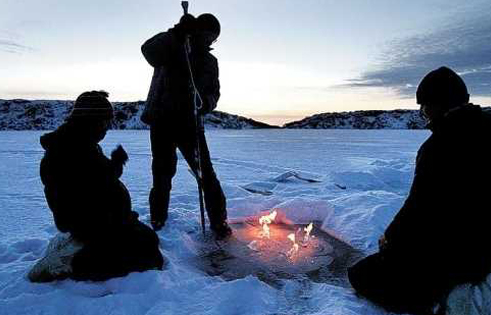
The frozen cap trapping billions of tonnes of methane under the cold waters of the Arctic Ocean is leaking and venting the powerful greenhouse gas into the atmosphere, new research shows.
It is not known if this may be one of the first indicators of a feedback loop accelerating global warming.
Researchers estimate that eight million tonnes in annual methane emissions are being released from the shallow East Siberian Arctic Shelf, which is equivalent to all the methane released from the world’s oceans, covering 71 percent of the planet.
On a global scale of methane emissions from the land-based sources – animals, rice paddies, rotting vegetation – the newly measured emissions from the Siberian seabed are less than two percent.
“That’s still very significant,” Natalia Shakhova, a researcher at the University of Alaska in Fairbanks, told IPS. “Before, it was assumed that this region had zero emissions.”
Methane concentrations measured over the oceans are currently about 0.6 to 0.7 parts per million (ppm), but they are now 1.85 in the Arctic Ocean generally, and between 2.6 and 8.2 ppm in the East Siberian Arctic Shelf, an area roughly two million square kilometres in size, said Shakhova.
Shakhova, and her University of Alaska colleague Igor Semiletov, led eight international expeditions to one of the world’s most remote and desolate regions and published their results in the Mar. 5 edition of the journal Science. Continue reading →
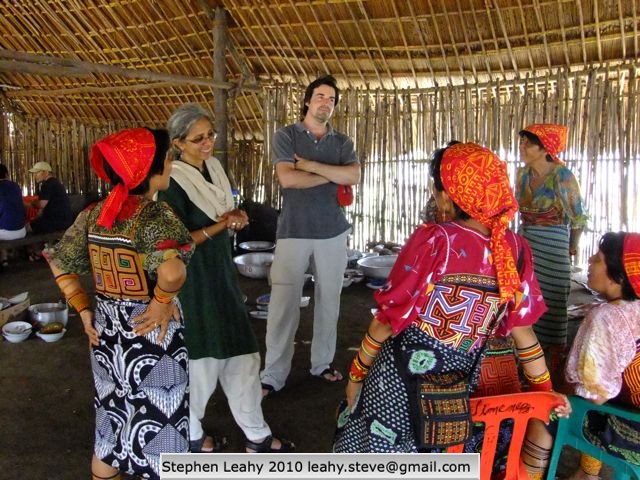
Returned from Panama a few days ago. I was offline for a week in a village in autonomus Kuna Yala territory on an island in the south Caribbean Ocean with no electricity, no roads, vehicles….just the sounds of the ocean and children playing. It was an amazing experience amongst unique group of Indigenous people still living by their traditional ways with a very strong emphasis on family, community and reciprocity.
Thanks to travel funding from an educational organization I was able to be at a unique workshop on the island where 18 indigenous people from around the world came to share their experiences in dealing with climate change. They are also documenting how their traditional knowledge is helping them adapt. What is often forgotten by those of us in the north is the lengthening of summer seasons, shortening winter, or changes in rainfall that are minor inconveniences for us often spell disaster for those who are subsistence farmers.
CONTRIBUTION UPDATE:
Special thanks to Ken of Ottawa, James from Toronto, Richard of Oshawa, Aidan who lives in Germany, Siri of London UK, Michael of Toronto, David of Salmon Arm and Catherine from Atikokan for your recent support. It is heartening to receive your encouragement and desire to help ensure I can continue to write and report on these important issues for everyone.
There are some very important articles I’m hoping to write this year so help out if you can.
Contributions can be made via PayPal or Credit Card here:
(NOTE: For ocean lovers there is a major conference on Oceans this May –there are new prospects of international governance to hopefully end the ruthless rush to get the last fish. But will need $1000 to be able to get there)
[Rage does feel appropriate at times with the continuing mis-information regarding climate change and the IPCC. While some focus on looking for typos in 3000 page report, the real issue is an overwhelming need to bring our economic system in line with the reality that we have but one planet to live on. Economists like Tim Jackson, who I met in Copenhagen, and others are taking on this vitally important task but are getting little media attention. — Stephen]
Stephen Leahy interviews British economist TIM JACKSON*
Tim Jackson: “The climate treaty wasn’t the only thing that failed in Copenhagen.”
TORONTO, Canada, Jan 28, 2010 (Tierramérica)
“Rage is sometimes the appropriate response” to the failure of the world’s leaders to craft a new climate treaty at the Copenhagen summit, says British economist Tim Jackson.
The Copenhagen Accord, the outcome of the 15th Conference of Parties (COP15) to the United Nations Framework Convention on Climate Change in December, not only revealed global environmental governance as a fiction, but also demonstrated a continuing blind adherence to the mantra of economic growth, says Jackson
Professor of sustainable development and director of the Research Group on Lifestyles, Values and Environment at Surrey University in Britain, Jackson also serves as British government advisor and economics commissioner for the Sustainable Development Commission.
In addition, Jackson is a professional playwright with numerous radio-writing credits for the BBC, based in London.
Tierramérica’s Stephen Leahy spoke with Jackson by phone about his new, controversial book “Prosperity without Growth: Economics for a Finite Planet”, the Copenhagen Accord and prospects for a real climate treaty, continuing a conversation they began last month in Copenhagen.
Q: Your book “Prosperity without Growth” argues that economic growth in developed countries is making people less happy and destroying the Earth itself.
A: It’s clear the continued pursuit of growth endangers the ecosystems on which we depend for long-term survival.
There is also ample evidence that increasing material wealth in developed countries is not making people any happier, but just the opposite in some countries. Beyond a certain level of income, there is no correlation of greater income with greater happiness.
Q: If the era of economic growth is over, what will take its place?
A: Wealth and prosperity need to be redefined along the lines of (1998 Nobel laureate in economics) Amartya Sen’s “capability for flourishing.” Flourishing is defined as having enough to eat, being part of a community, worthwhile employment, decent housing, access to education and medical services.
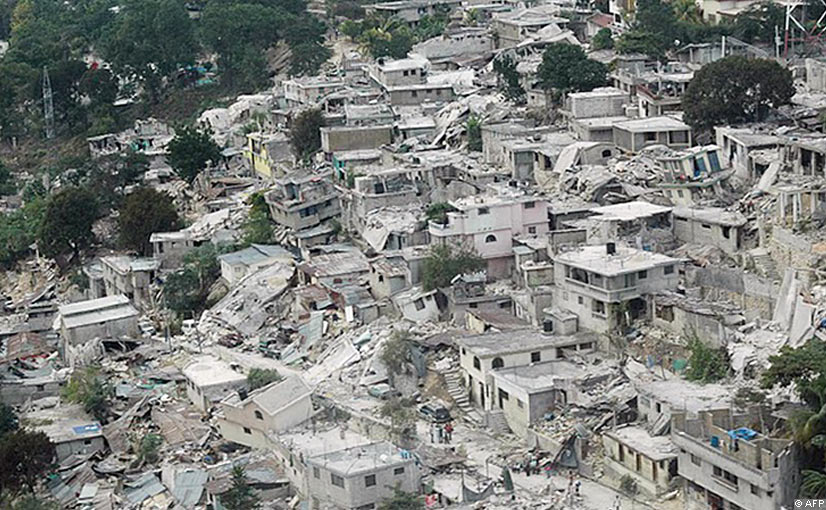
[When I wrote about the 4 hurricanes that pounded Haiti over 2 months in 2008, experts said things couldn’t get any worse…. There was emergency aid in 2008, people were fed but little was done in the months after the storms to help Haiti up off its knees, to be able to feed itself. This is the last chance Haiti and for the world. There were many trillions for financial sector and many billions for the auto industry: surely the world can spare a billion or two for Haiti? Surely we all can spare $50 or $100 for Haiti. — Steve]
Haiti needs our help – here are easy and safe ways for you to do something important
The best way to help is by donating through one of these high-rated effective and financially stable charities.
The Canadian Red Cross and the International Committee of the Red Cross (ICRD) are accepting donations to support Red Cross relief efforts in Haiti. Donations can be earmarked to the Haiti Earthquake fund. The Red Cross response includes evacuation support, search and rescue efforts and providing shelter and first aid. Local Red Cross volunteers continue to work around the clock to help the many people affected by this disaster.
The humanitarian organization delivers medical care to people caught in crisis. Donations to its Haiti relief efforts will go toward repairing the obstetrics and trauma hospitals in Haiti that were damaged in the earthquake. They also will go to transporting an additional 70 doctors and medical supplies to the island in an effort to set up makeshift emergency medical response centers. To donate, go to doctorswithoutborders.org or call 1-888-392-0392.
The national committee for UNICEF is responsible for the organization’s fundraising. UNICEF uses the money for health care, clean water, nutrition, education and emergency relief. The organization has issued a statement that “Children are always the most vulnerable population in any natural disaster, and UNICEF is there for them.” 64% of Haiti’s population is less than 18 years old. UNICEF requests donations for relief for children in Haiti via their Haiti Earthquake Fund. You can also call 1-800-4UNICEF.
Bleached coastal corals. Bantry Bay, Australia. R Leahy 2006
[2°C is a death sentence for corals scientists agree due to ocean acidification and bleaching resulting from emissions of carbon dioxide into the atmosphere. However the developed nations of the world have set 2 degrees C as the climate stabilization target not that any of them have figured out how to reach this target. It is as if the oceans don’t matter. This reflects a fundamental ignorance about life on Earth, an assumption that we can lose or seriously damage entire ecosystems without suffering any consequences.
This story shows we need to get serious about tackling emission reductions (below 2C) and preserving anything that sequesters or traps carbon because these will be tremendously valuable in a climate-changed world . — Steve
By Stephen Leahy*
COPENHAGEN, Dec 11 (IPS/TerraViva)
What would it be like if the air we breathe was 30 percent more acidic? The oceans are already 30 percent more acidic, and on their way to becoming 120 percent more acidic in 50 years at the current rates of carbon dioxide emissions.
“In the last 10 years, the growth of coral reefs in many areas has declined 15 percent,” said Carl Gustaf Lundin, head of the IUCN’s Global Marine Programme.
“That’s a dramatic shift,” Lundin told TerraViva.
The oceans absorb some carbon dioxide (CO2) from the atmosphere, but the vast quantity being emitted – mainly from the burning of fossil fuels – has altered basic ocean chemistry, turning it sour. That’s also affecting shell-forming plankton and disrupting the growth rates of other species, Lundin said.
The stated goal of many countries to stabilise global temperatures within an increase of no more than 2.0 degrees C. is still “a death sentence for most coral reefs”, he said. The 2.0 C. target implies a level of CO2 in the atmosphere of 450 parts per million (ppm), well up from the historical average of 280 ppm. Continue reading →






 Stephen Leahy, International Environmental Journalist
