Canada Uses Foreign Aid to Promote Its Mining/Energy Sector

mining gaia

The absorption of Canada’s aid agency into the foreign affairs and international trade ministry has been widely condemned

By Stephen Leahy

Monday 25 March 2013 17.37 GMT theguardian.com

Following the unexpected announcement that the Canadian International Development Agency (Cida) will be folded into the ministry of foreign affairs and international trade, the Canadian government has made it clear there must be a direct return on its aid “investment”, primarily access to resources in other countries.

“It is a fundamental change. Canada is tying aid to its commercial interests. This is going to leave a bitter taste out there,” says Samantha Nutt, executive director of War Child Canada, which has received CIDA funding for more than a decade.

As Nutt acknowledges, all aid is politicised to some extent. But Canada has taken this to a new level. Civil society aid organisations working with CIDA are no longer aid delivery partners but sub-contractors, bidding on aid programmes and increasingly forced to work with the private sector, says Nutt.

“This puts Canadian aid organisations in ethical conflict. How can they criticise the actions of the mining companies they have to work with to get funding to help the poor?”

Cida’s fate has startled not only Canada’s foreign aid community but, by all accounts, Cida staff, who learned of the agency’s fate through the media.

The new department of foreign affairs, trade and development will continue to tackle poverty in developing countries with its $4.8 billion aid budget intact, the government said.

“This is Canadian money … Canadians are entitled to derive a benefit,” said international co-operation minister Julian Fantino last December, adding that Cida is working with the private sector to help Canada “maintain a global advantage”.
Full story

Who Wants a Sustainable, Pollution-Free New York by 2030?

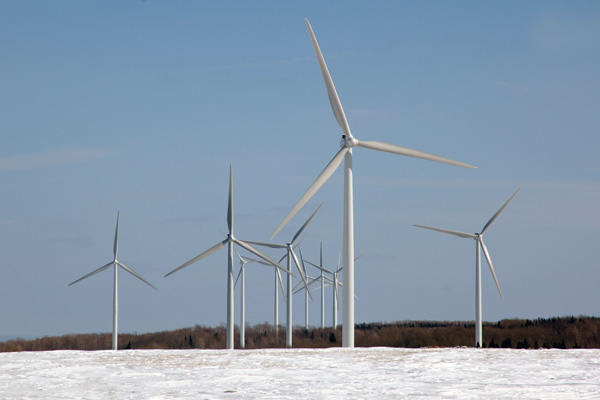
Wind turbines on the Tug Hill plateau in upstate New York

By Stephen Leahy

UXBRIDGE, Canada, Mar 19 2013 (IPS)

As usual, midtown Manhattan is packed with whisper-quiet cars and trams while thousands walk the streets listening to the birds of spring sing amongst the gleaming, grime-free skyscrapers in the crystal-clear morning air.

Welcome to New York City in April 2030.

I think the public will be 100 percent behind this, if they know about it.

This is not a fantasy. It is a perfectly doable goal, said Stanford University energy expert Mark Jacobson. In fact, the entire state of New York could be powered by wind, water and sunlight based on a detailed plan Jacobson co-authored.

It’s not only doable, powering New York on green energy is “sustainable and inexpensive” and would save lives and health costs, Jacobson told IPS.

Each year, air pollution kills 4,000 people in New York State and costs the public 33 billion dollars in health costs, according to the study Jacobson co-authored with experts from all over the U.S. It will be published in the journal Energy Policy.

Full Story

Canada Losing Its Seasons — Winter is in full retreat

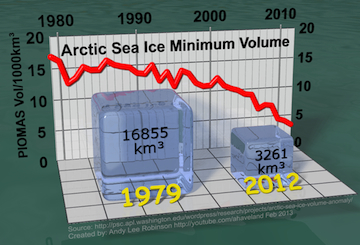
arctic-sea-ice-min-volume-comparison-1979-2012-small

By Stephen Leahy

UXBRIDGE, Canada, Mar 11 2013 (IPS) 

“Canada is not a country, it’s winter,” Canadians say with pride. But the nation’s long, fearsome winters will live only in memory and song for Canadian children born this decade.Winters are already significantly warmer and shorter than just 30 years ago. The temperature regimes and plant life of the south have marched more than 700 kilometres northward, new research shows.

The frozen north is leaving and won’t be back for millennia due to heat-trapping carbon emissions from burning fossil fuels, experts say.

By 2091, the north will have seasons, temperatures and possibly vegetation comparable to those found today 20 to 25 degrees of latitude further south, said Ranga Myneni of the Department of Earth and Environment, Boston University.

“If we don’t curb carbon emissions, Arctic Sweden might be more like the south of France by the end of the century,” Myneni, co-author of the Nature Climate Change study published Sunday, told IPS.

Full story here

Killer Heat Waves and Floods Linked to Climate Change

Projected drought and dry regions in 2060-2069

By Stephen Leahy

UXBRIDGE, Canada, Feb 27 2013 (IPS) 

Killer heat waves, floods and storms are increasingly caused by climate change, new research reveals.

Scientists in Germany say they have found how greenhouse gases from burning fossil fuels are helping to trap the jet stream, resulting in extraordinary weather such as the 2010 Pakistan flood and the 2011 heat wave in the United States.

Human-driven climate change repeatedly disturbs the flow of atmospheric waves around the globe’s Northern hemisphere, said lead author Vladimir Petoukhov of the Potsdam Institute for Climate Impact Research (PIK) in Germany.

Giant atmospheric waves called Rossby waves are meanders in the strong, high-altitude winds known as jet streams and have a major influence on weather. These wave movements are caused by the difference in temperatures between the cold air from the Arctic and hot air from the tropics. 

When the waves shift north, they suck warm air from the tropics to Europe, Russia, or the U.S., and when they swing down, they do the same thing with cold air from the Arctic, said Petoukhov.

“During several recent extreme weather events, these planetary waves almost freeze in their tracks for weeks,” he said. “So instead of bringing in cool air after having brought warm air in before, the heat just stays.”

Thawing Permafrost May Be “Huge Factor” in Global Warming

Siberian permafrost -- Ted Schuur
Siberian permafrost — Ted Schuur

UXBRIDGE, Canada, Feb 14 2013 (IPS)

Thawing permafrost is emitting more climate-heating carbon faster than previously realised. Scientists have now learned that when the ancient carbon locked in the ice thaws and is exposed to sunlight, it turns into carbon dioxide 40 percent faster.

“This really changes the trajectory of the debate” over when and how much carbon will be released as permafrost thaws due to ever warmer temperatures in the Arctic, says researcher Rose Cory of the University of North Carolina.

There are 13 million square kilometres of permafrost in Alaska, Canada, Siberia and parts of Europe. As previously reported by IPS, a 2011 study estimated that global warming could release enough permafrost carbon to raise global temperatures three degrees C on top of what will result from human emissions from oil, gas and coal.

Human emissions are headed for four degrees C of global heating,warned the International Energy Agency (IEA) this week. A rapid “decarbonization of electricity supply” is needed to avoid that future, the IEA said as it released a new book titled “Electricity in a Climate-Constrained World”.

“The solutions are well-known: increased energy efficiency, greater research and development of low-carbon energy production, and putting a realistic price on carbon,” the book says

Full story here

Weird Weather Will Only Get Weirder

New York City flooding

By Stephen Leahy

UXBRIDGE, Canada, Jan 29 2013 (IPS) 
 
Weird is the only way to describe January temperatures whipsawing between record warm and arctic cold over a span of a few days. Experts say that is what climate change looks like: weird, record-shattering weather.

Here’s a fact that goes beyond weird to astonishing. Anyone who is 27 years old or younger has never lived through a month that was colder than the global 20th century average. In other words, we’ve had 334 consecutive months with above average temperatures, according to the U.S. National Oceanic and Atmospheric Administration.

Last summer, the Arctic sea ice shrunk to half of what it used to be during summers only three decades ago. Our planet’s weather is driven largely by the two cold polar regions and the warm tropics. With the Arctic defrosting, it should be no surprise our weather is getting weird. And that it’s not going to get better.

“We’re all scared…But we must tell the truth” — Experts Fear Collapse of Global Civilisation

terrifying co2 graph

By Stephen Leahy

UXBRIDGE, Canada, Jan 11 2013 (IPS)

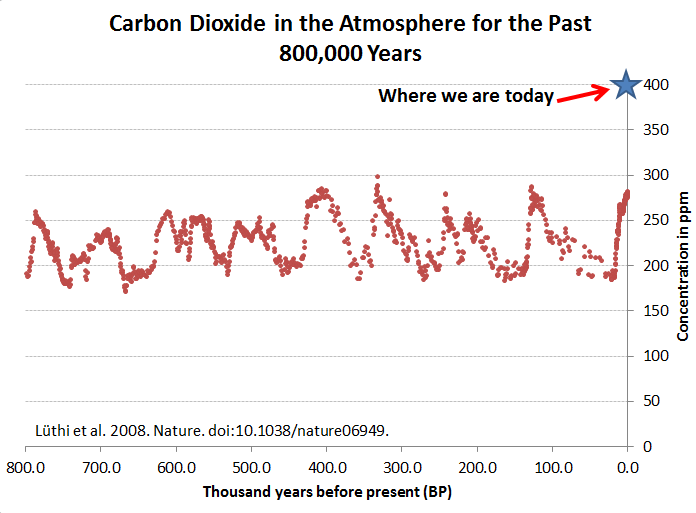
Experts on the health of our planet are terrified of the future. They can clearly see the coming collapse of global civilisation from an array of interconnected environmental problems.

“We’re all scared,” said Paul Ehrlich, president of the Center for Conservation Biology at Stanford University.

“But we must tell the truth about what’s happening and challenge people to do something to prevent it,” Ehrlich told IPS.

Global collapse of human civilisation seems likely, write Ehrlich and his partner Anne Ehrlich in the prestigious science journal, Proceedings of the Royal Society.

This collapse will take the form of a “…gradual breakdown because famines, epidemics and resource shortages cause a disintegration of central control within nations, in concert with disruptions of trade and conflicts over increasingly scarce necessities”, they write.

Already two billion people are hungry today. Food production is humanity’s biggest industry and is already being affected by climate and other environmental problems. “No civilisation can avoid collapse if it fails to feed its population,” the authors say.

Escalating climate disruption, ocean acidification, oceanic dead zones, depletion of groundwater and extinctions of plants and animals are the main drivers of the coming collapse, they write in their peer-reviewed article “Can a collapse of global civilisation be avoided?” published this week.

Dozens of earth systems experts were consulted in writing the 10-page paper that contains over 160 references.

“We talked to many of the world’s leading experts to reflect what is really happening,” said Ehrlich, who is an eminent biologist and winner of many scientific awards.

Our reality is that current overconsumption of natural resources and the resulting damage to life-sustaining services nature provides means we need another half of a planet to keeping going. And that’s if all seven billion remain at their current living standards, the Ehrlichs write.

If everyone lived like a U.S. citizen, another four or five planets would be needed.

Global population is projected to increase by 2.5 billion by 2050. It doesn’t take an expert to conclude that collapse of civilisation will be unavoidable without major changes.

We’re facing a future where billions will likely die, and yet little is being done to avoid certain disaster, he said.

“Policy makers and the public aren’t terrified about this because they don’t have the information or the knowledge about how our planet functions,” he said. Continue reading

Pollution as big a health problem as malaria or TB, finds report

Haina, Dominican Republic - Children are developmentally impaired as a result of lead poisoning
Haina, Dominican Republic – Children are developmentally impaired as a result of lead poisoning

Industrial pollutants harm the health of 125 million people,

many of whom live in the developing world and work in mining

Stephen Leahy

guardian.co.uk, Wednesday 24 October 2012 12.30 BST

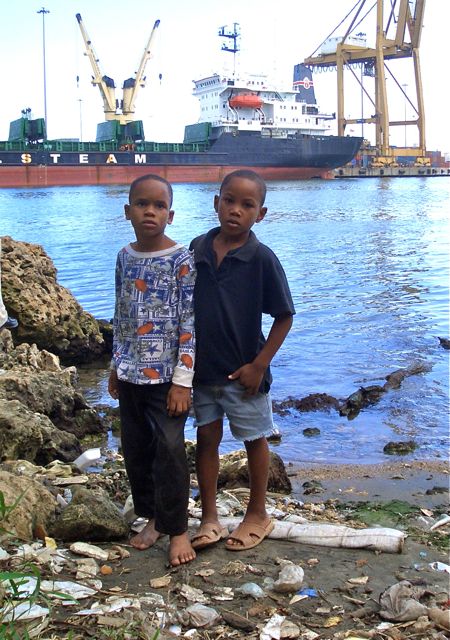
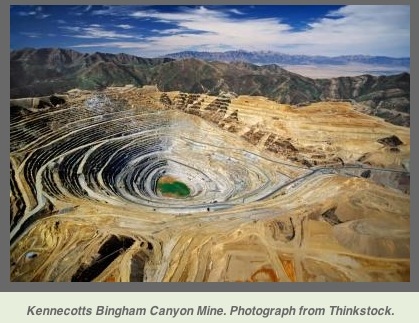
Waste from mining, lead smelters, industrial dumps and other toxic sites affects the health of an estimated 125 million people in 49 low- and middle-income countries. This unrecognised health burden is on the scale of malaria or tuberculosis (TB), a new report has found.

This year’s World’s worst pollution problems (pdf) report was published on Tuesday by the Blacksmith Institute in partnership with Green Cross Switzerland. It documents, for the first time, the public health impact of industrial pollutants – lead, mercury, chromium, radionuclides and pesticides – in the air, water and soil of developing countries.

“This is an extremely conservative estimate,” said Bret Ericson of the Blacksmith Institute, a small international NGO based in New York City. “We’ve investigated 2,600 toxic sites in the last four years, [but] we know there are far more.”

The US has an estimated 100,000-300,000 toxic sites, mainly factories or industrial areas, but toxic sites in the low- and middle-income countries assessed in the report are often in residential areas. “We see a lot of disease when we go into these communities,” said Ericson. “But we were surprised the health burden was so high – as much as malaria.”

Click to read full story:  Pollution as big a health problem as malaria or TB, finds report | Global development | guardian.co.uk.

Governments Fail to Take Steps to Steer Away From Looming Crisis

ttfiscal carbon cliff

Rio+20 should have been about life, about the future of our children”

By Stephen Leahy

RIO DE JANEIRO, Jun 19 2012 (IPS)

“Very disappointing.” That was the term business and non-governmental organisations used to describe the formal intergovernmental negotiations at the Rio+20 Earth Summit as of Tuesday.

With overwhelming scientific evidence showing that the Earth’s ability to support human life is at serious risk, the Rio+20 summit is being held to help chart a safe course that will steer away from disaster and bring a better future people around the globe.

After two years, negotiators from more than 190 nations agreed Tuesday to a 49-page draft of the document “The Future We Want”, intended to be the roadmap for this transformation. This document will be presented to heads of states in Rio de Janeiro to revise and finalise by the summit’s conclusion on Friday.

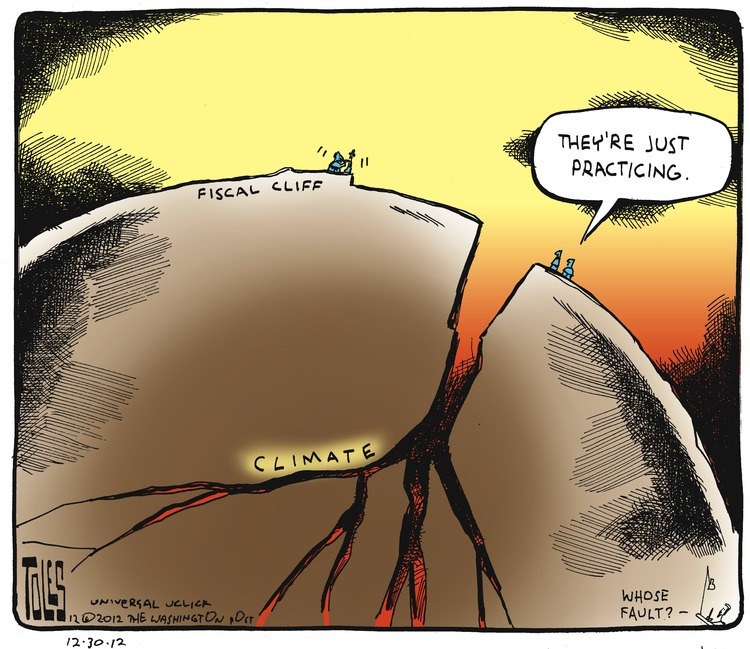
Yet the draft document leaves out a 30-billion-dollar fund proposed by a group of developing countries known as the G77 to finance the transition to a green economy. Nor does it define tangible Sustainable Development Goals (SDGs), which will be substituted for the Millennium Development Goals, which expire in 2015.

“This (the revised text) is extremely disappointing….There is no vision, no money and really no commitments here,” said Lasse Gustavsson, head of the Rio+20 delegation from WWF International, which works to stop environmental degradation worldwide.

Rio+20 should have been about life, about the future of our children, of our grandchildren. It should have been about forest, rivers, lakes, oceans that we are all depending on for our food, water and energy security,” Gustavsson told TerraViva.

Instead, two years of work have resulted in merely a long document that commits to virtually nothing but more meetings, he said.Rio+20 logo

“This document is a great disappointment. There’s no ambition and little reference to the planetary boundaries we face,” said Kiara Worth, representing the U.N.’s Major Group on Children and Youth at Rio+20.

“The voices of civil society and future generations is going unheard. We ought to call this Rio minus 20 because we are going backwards,” Worth told TerraViva. Continue reading

“We Should be Shaking in Our Boots” – UN Environment Official

Construction of the Trans-Amazonian Highway, Brazil -- sml Photo by Hans Silvester

Earth’s Ability to Support Us At Risk – An Indictment of Governments We Elected

By Stephen Leahy

RIO DE JANEIRO, Jun 19 2012 (IPS)

The science is crystal clear: humans are threatening Earth’s ability to support mankind, and a new world economy is urgently needed to prevent irreversible decline, said scientists and other experts at an event on the sidelines of the Rio+20 Earth Summit.

Yet the Global Environment Outlook report, or GEO 5, which was launched on June 6 and assessed 90 of the most important environmental objectives, found that significant progress had been made only in four in the 20 years since the first landmark summit in Rio in 1992.

Achim Steiner, the executive director of the United Nations Environment Programme (UNEP) said the results of GEO 5 were “depressing, even to me”.

“This ought to have us shaking in our boots,” Steiner told TerraViva at the Fair Ideas conference that concluded Sunday. ”It is an indictment of our behaviour over the past 20 years and of the governments we elected. We need an honest conversation about why we are not turning things around.”rio banner sml

Instead, “what’s happening right now in the RioCentro (Rio+20 official site) is that science is being picked out of the text of the final agreement,” Johan Rockström, executive director of the Stockholm Resilience Centre in Sweden, told the conference.

Rockström said he had received updates from the negotiations that the United States and some of the world’s least developed countries were attacking the science showing humanity is pushing up against “planetary boundaries”.

Climate is only one of those “planetary boundaries”. Another is the ongoing decline of biodiversity, where so many plants and animals are going extinct that the Earth’s living systems, upon which humanity depends, are unravelling. Fresh water is another planetary boundary. Water is a limited resource, yet water use has increased six-fold in the past century.

“The science is absolutely clear: we are up against the edges of the planet’s ability to support us and approaching irreversible tipping points,” Rockström said. Continue reading