Time Running Out on Vows to Act on Climate Scientists Warn

Alleyway, RLeahy 2007

By Stephen Leahy

COLUMBUS, Ohio, Sep 24 (IPS)

Promises are easy to make.

But promises by world leaders will not halt the heat-trapping carbon emissions that are dialing-up global temperatures and altering the climate, say critics and climate researchers meeting in this U.S. Midwestern city.

As evidenced at the U.N. leader’s summit on climate change in New York Tuesday, the world’s big economies are refusing to commit to actions that will prevent this and future generations from inheriting a hostile climate no other humans have ever faced.

Do we have the social and political will to deal with a problem that we will only see partially in our lifetimes?” wonders Don McConnell, president of Battelle Energy Technology, the world’s largest non-profit research centre.

“What most don’t realise is that the biggest impact from climate change will be shifts in precipitation, not temperature increase,” McConnell told IPS at the McCormick Energy Solutions Conference at Ohio State University this week.
Continue reading

The Arctic — The Earth’s Freezer — Is Defrosting With Dire Results

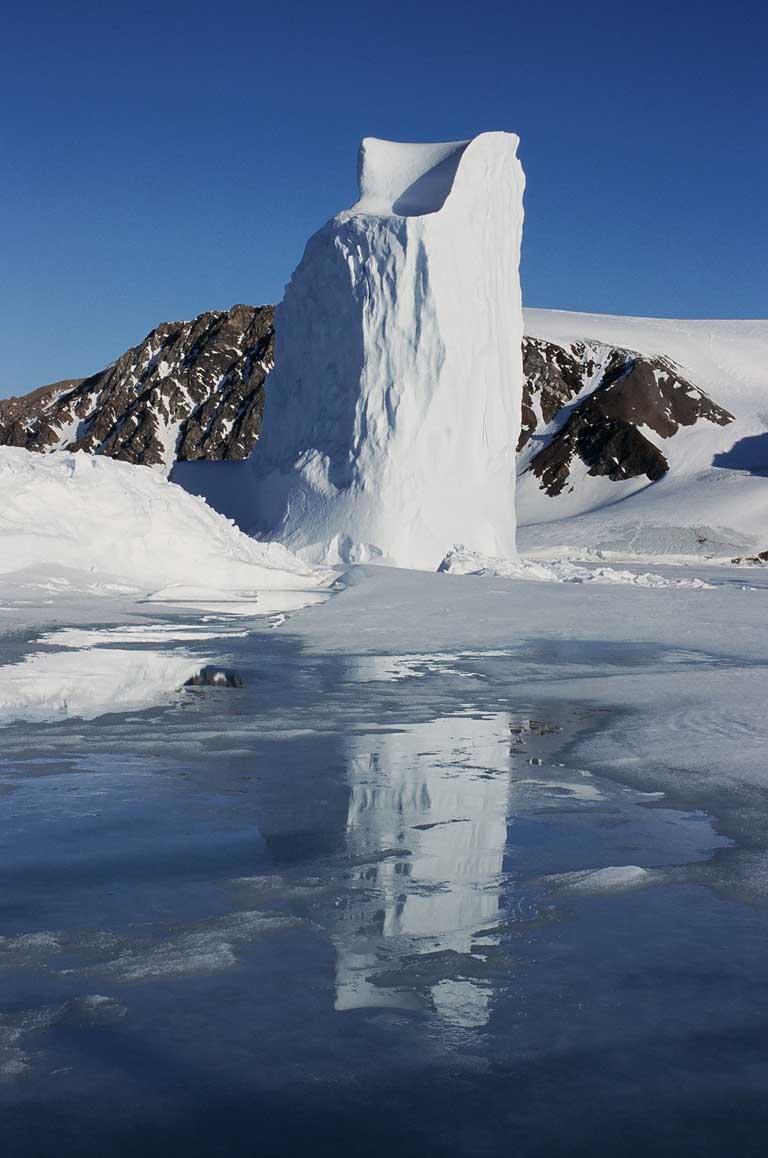
Iceberg in Glacier Strait, Nunavut, Canada, Image credit- Sandy Briggs.By Stephen Leahy

GENEVA, Sep 2 (IPS)

The rapidly warming Arctic region is destabilising Earth’s climate in ways science is just beginning to comprehend.

The entire world is being affected, and without urgent action to cut emissions, a too-warm Arctic could trigger catastrophic, irreversible climate change, top scientists say in a report released Wednesday in Geneva.

“It is crucial to know the full consequences of the Arctic warming, and this is an unprecedented review of the latest science,” said Martin Sommerkorn, an Arctic researcher and senior climate change advisor to World Wildlife Fund International.

“Simply put, if we do not keep the Arctic cold enough, people across the world will suffer the effects,” Sommerkorn told IPS.

Sea level rise of more than one metre, flooding affecting one quarter of the world’s population, and extreme global weather changes are on the way at the current pace of unchecked carbon emissions, the “Arctic Climate Feedbacks: Global Implications” report warns.

A warming Arctic has far wider and more serious consequences than previously believed based on the latest science of the past three years, including the very recent research from International Polar Year 2008-2009.

“There is a large potential that a warming Arctic will make climate change far worse,” said Sommerkorn, who acted as editor of the report written by 10 of the world’s leading climate scientists. Continue reading

Early Warning Systems for the Coming Climate Storm

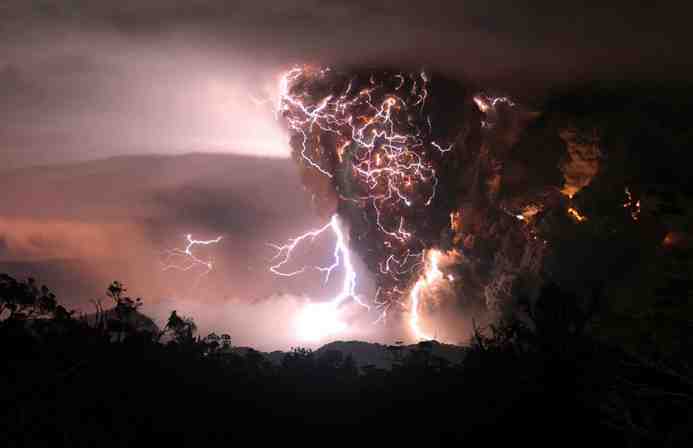
Chile—The fury of Chaitén volcano - nat geoBy Stephen Leahy

GENEVA, Aug 31 (IPS)

Climate change is here. The challenge in Geneva this week is to find ways to help the world cope with a climate that will have more and worse extremes in terms of temperatures, floods, and storms.

More than 2,500 experts and policy-makers from 150 countries are attending the Aug. 31-Sep. 4 World Climate Conference to discuss how to improve weather forecasting and long-range seasonal weather projections, especially to help poor nations in areas such as agriculture.

“Until now, the way that we deliver climate information to some sectors has been ad hoc. What we need is a formal system that all people can trust to access vital information that can save their lives and protect property and economies,” said Michel Jarraud, secretary- general of the World Meteorological Organisation (WMO), which is convening the World Climate Conference this week in Geneva.

The WMO has proposed that a global climate services system be created to boost observations and research for monitoring the climate and new information tools that will provide sector- and regional-specific products and services, Jarraud told IPS.

The first two “World Climate Conferences” in 1979 and 1990 were organised by the WMO and played the key roles in the creation of the U.N. climate secretariat, and the Intergovernmental Panel on Climate Change.

This “Global Framework” system could help reduce losses caused by extreme weather and climate events such as heat waves, sandstorms, cyclones, drought and floods which will become more frequent and more intense as the climate continues to warm, he said.

“Extreme weather events and changing climatic conditions affect all of us, frequently resulting in humanitarian disasters and heavy losses,” said Swiss President Hans-Rudolf Merz.

For full article:  CLIMATE CHANGE: Early Warning Systems for the Coming Storm.

2020 Climate Deadline Is the Crucial “Litmus Test”

Chile—The fury of Chaitén volcano - nat geo

The atmosphere and the climate is a public good, a commons, and can’t be protected by the private sector.”

— Marianne Haug, Oxford Institute for Energy

By Stephen Leahy

VIENNA, Jun 29 2009 (IPS)

“So who here thinks there will be a meaningful deal in Copenhagen?”

Few of the more than 600 energy ministers, officials and experts from 80 countries attending the Vienna Energy Conference raised their hands in response to the conference moderator’s question about the final round of climate negotiations this December in Copenhagen.

“I don’t think there will be agreement on an emissions cap,” said Andre Amado, Brazil’s vice-minister for energy, science and technology.

Greenhouse gas emissions from the burning of fossil fuels must peak between 2015 and 2020 and then decline to prevent dangerous, irreversible climate change, scientists have warned. A strong international agreement on emissions targets for both the industrialised and developing world is widely believed to be the only way to ensure emissions peak and then decline.

“There will be agreement on technology transfer and reducing barriers for technology transfers,” to assist developing countries in cutting their emissions and adapting to the changing climate, Amado told participants last week in Austria’s capital city.

Continue reading

Science vs Politics at the Edge of the North Pole

SN852510

By Stephen Leahy

NY-ÅLESUND, Svalbard, Norway, Jun 14 (IPS)

Spectacular views of mountains and glaciers here in the world’s most northerly permanent human settlement contrasted with business and political leaders’ pessimism and concern about the enormous gap between the action on climate that science deems necessary and what politics considers realistic.

“We must push beyond the politically feasible,” said Tora Aasland, Norway’s minister of research and higher education.

SN852503“Here we are at the edge of the North Pole where climate change is easier to see…How do we communicate the urgency of our situation?” Aasland asked several dozen attendees at a recent high-level symposium in Ny-Ålesund, on the western coast of Spitsbergen Island about 1,200 kilometers from the North Pole.

She emphasised that we already know what to do and how to do it, including reducing fossil fuel energy use, improving energy efficiency, and investing in new technologies like carbon capture and storage.

Taking action on climate is imperative and an ambitious international agreement is urgently needed based on what scientists say is required to stabilise the climate system, participants concluded in a final statement. However, the current series of international climate negotiations in Bonn, Germany have bogged down and are on the edge of collapse, several participants noted. Continue reading

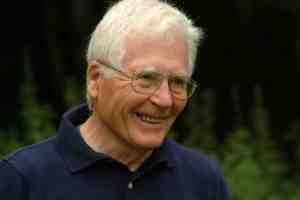
James Lovelock: “there will be a sudden shift to a new global climate … 5 or 6C warmer”

Lovelock_James credit Sandy Lovelock

Stephen Leahy interviews JAMES LOVELOCK the scientist who first proposed the Gaia Hypothesis

TORONTO, June 5 2009 (Tierramérica)

“When the first great climate disaster strikes, I hope we will all pull together just as if our nation were being invaded,” says British scientist James Lovelock in this exclusive Tierramérica interview.

Please throw something in the tip jar before reading on.
This is how I make my living.

As the world marksInternational Environment Day Friday, Lovelock argues that as the climate warms and the carbon content of the atmosphere soars, humanity is facing a far grimmer future that will be upon us sooner than any of the projections made by the Intergovernmental Panel Climate Change (IPCC).

A chemist, physician and biophysicist, Lovelock is one of the world’s foremost environmental scientists and founder of the Gaia Hypothesis, which describes the planet as a living organism, a complex system in which the components of the biosphere and atmosphere interact to regulate and sustain life.

Although his ideas often feed controversy, Lovelock has wide-ranging scientific credentials. As an inventor, he holds more than 50 patents, including the first devices for detecting the presence of ozone-depleting CFCs (chlorofluorocarbons) and pesticide residues in the environment.

He is also the author of many books. The most recent, “The Vanishing Face of Gaia: A Final Warning”, was published in April. Lovelock spoke with Tierramérica’s Stephen Leahy in Toronto.

TIERRAMÉRICA: Why are you critical of the IPCC? Continue reading

Ethanol and Biofuels: Almost Everything You Need to Know

“The U.S. has led the fight to stem global hunger, now we are creating hunger,” said Lester Brown, president of the Earth Policy Institute.

Series of the latest articles that provide almost everything you need to know about why ethanol and biofuels will not reduce global warming but simply drive up fuel and food costs.

maize - mexicoEthanol Worse Than Gasoline

Only Green Part of Most Biofuels is the Wealth (Subsidies) They Generate

Ethanol: The Great Big Green Fraud

International Enviro Standards Needed for Biofuels

Six Experts On Why Ethanol is a Dumb Idea

Food & Fuel: Can Sorghum Be The New Magic Bullet Biofuel??

Biofuels: Another Good Reason to Hate American Policy

(Cellulosic) Greenest Ethanol Still Unproven

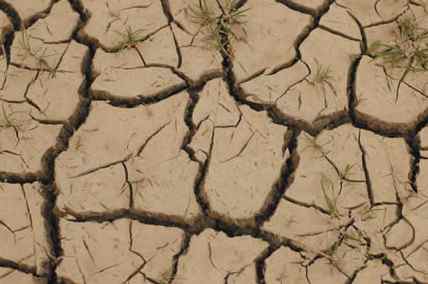
Peak Soil: The Silent Global Crisis

30% of farmland can no longer grow food

By Stephen Leahy

(First published in the Earth Island Journal Spring 2008)

A harsh winter wind blew last night, and this morning the thin snow cover has turned into a rich chocolate brown. The dirt covering the snow comes from cornfields near my home that were ploughed following the harvest, a common practice in southern Ontario and in the corn-growing regions of the US Midwest.

A handful of this dirty snow melts quickly, leaving a thin, fine-grained wet mess. It doesn’t look like much, but the mucky sludge in my hand is the prerequisite for life on the planet.

“We are overlooking soil as the foundation of all life on Earth,” says Andres Arnalds, assistant director of the Icelandic Soil Conservation Service. Arnalds is an eloquent spokesperson for the unheralded emergency of soil erosion, a problem that is reducing global food production and water availability, and is responsible for an estimated 30 percent of the greenhouse gases emissions.

“Land degradation and desertification may be regarded as the silent crisis of the world, a genuine threat to the future of humankind.”

This article  depends on public support. Click here learn more.

Continue reading

Arctic Oil and Gas Rush Alarms Scientists

By Stephen Leahy

[See also more recent story: Arctic Ice Gone in 5 Years – First Time in One Million Years; see also other Arctic and oil stories below. US and Canada to start offshore drilling in the Arctic summer 2010 – your support is needed to investigate and report on this. ]

UXBRIDGE, Canada, Sep 8 2008 (IPS)

As greenhouse gas pollution destroys Arctic ecosystems, countries like Canada are spending millions not to halt the destruction but to exploit it.

Late last August, Canada announced a 93.7-million-dollar prospecting programme to map the energy and mineral resources of the region. There are “countless other precious resources buried under the sea ice and tundra,” Prime Minister Stephen Harper said during the announcement. The government’s mapping effort is expected to trigger 469 million dollars in private sector resource exploration and development.

“It is estimated that a quarter of the world’s undiscovered oil and gas lies under the Arctic,” Harper said.

This scramble to exploit some of the most environmentally delicate regions of Earth has alarmed international experts who are meeting this week in Iceland to make recommendations to the United Nations and world governments on how to protect the polar regions.

“Many experts believe this new rush to the polar regions is not manageable within existing international law,” says A.H. Zakri, director of the United Nations University’s Yokohama-based Institute of Advanced Studies (UNU-IAS), co-organisers of the conference with Iceland’s University of Akureyri. Continue reading

Cutting CO2 Only Way to Save Dying Corals

By Stephen Leahy

FORT LAUDERDALE, U.S., July 12 2008 (IPS)

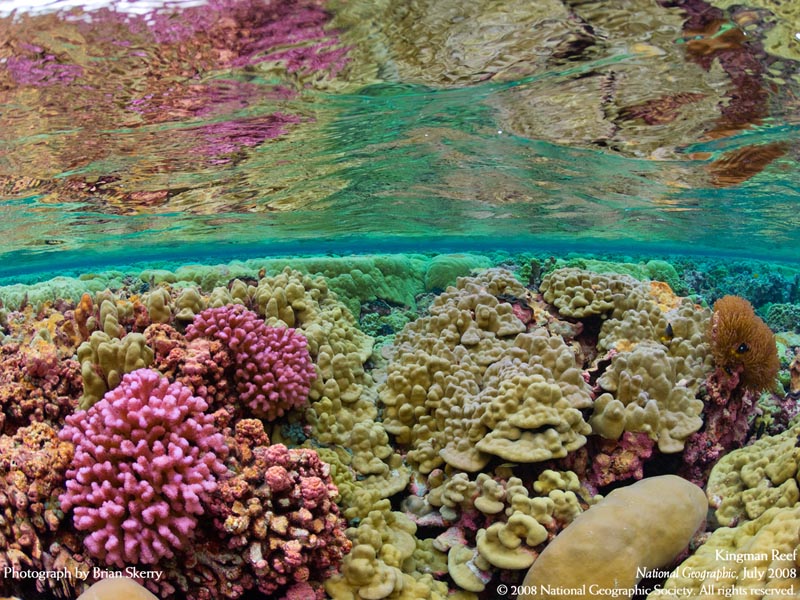
The rapid decline of coral reefs around the world offers a potent warning that entire ecosystems can collapse due to human activities, although there is hope for reefs if immediate action is taken, coral experts agreed at the conclusion of a five-day international meeting Friday.

“Reefs are in serious trouble, but don’t write them off,” Terry Hughes, a marine ecologist at Australia’s James Cook University told 3,000 scientists, conservationists and policy makers attending at the 11th International Coral Reef Symposium (ICRS) in Fort Lauderdale, Florida.

“We can save reefs if we take immediate action,” Hughes said.

More than 20 percent of the world’s reefs have died, and large areas are failing due to a combination of climate change, overfishing, pollution and sea level rise. Most of the fabulous corals that attract tourists to the Caribbean are gone and half of remaining reefs in the U.S. are in serious decline.

[Update 08/10 – Here’s a list of Stephen Leahy’s latest articles on corals Coral Reefs and Acid Oceans Series]

We may be facing ocean deserts in the future,” said Guillermo Dias-Pulido of Australia’s University of Queensland.

Continue reading