Wisdom of Elders Better Than Science or the Internet: “They Still Know How to Cook Mammoth”

Petr Kaurgin, a Chukchi reindeer herder from Siberia. Photo: Citt Williams

by Stephen Leahy

First published at National Geographic’s NewsWatch

 “Our elders are the best source of information. Better than science or the internet,” said Petr Kaurgin, a Chukchi reindeer herder from the remote Turvaurgin nomadic tribal community in north-eastern Siberia.

Kaurgin delivered his message to climate scientists from Intergovernmental Panel on Climate Change (IPCC) and other Indigenous peoples at the closing of the Climate Change Mitigation with Local Communities and Indigenous peoples workshop here in Cairns, Australia.

“We need to listen to the wisdom of the elders. We can use everything in nature. But we must not break or destroy things, ” he said through a translator.

It was -45C when Kaurgin left his home to bring his people’s message to climate experts here in the hot, wet tropical part of Australia. The IPCC is the world authority on the science of climate change. And along with the United Nations University (UNU) organized the workshop to figure out how to incorporate Indigenous peoples’ traditional knowledge.

“When we love the land where we live only then we are happy,” he said.

Kaurgin’s people and other local Siberian communities have been experiencing the impacts of climate change such as melting permafrost for the last 20 years said Tero Mustonen, Head of the Village of Selkie in North Karelia, Finland.

For complete article see Nat Geo’s NewsWatch

The New Beast in the Forest Brings Hope and Threats to Indigenous Peoples

Deforestation for oil palm plantation West Kalimantan, Indonesia. Photo Karmele Llano SanchezInternational Animal Rescue

by Stephen Leahy

First published at National Geographic’s NewsWatch

“REDD is the new beast in the forest,” said Patrick Anderson of the Forest Peoples Programme in Indonesia here at Climate Change Mitigation with Local Communities and Indigenous peoples workshop in Cairns, Australia.

Deforestation gobbles up an area the size of Greece (13 million hectares) every year. As if that loss wasn’t bad enough, it also produces huge amounts of greenhouse gas emissions — a whopping 15 to 20 percent of all global emissions. That’s second only to the burning of fossil fuels.

Sadly, in our economic system, trees are worth far more dead as paper, lumber, furniture, etc., than alive.

In an attempt to reverse this, countries in the United Nations have agreed to create a financial value for the carbon stored in forests in a program called REDD: Reducing Emissions from Deforestation and Forest Degradation.

This is how it works. Trees take heat-trapping carbon out of the atmosphere as they grow and store it for as long as the trees live. Instead of cutting down trees and selling the wood, the carbon trapped in the living trees can be sold as “carbon credits” on an open market.

A steel, cement, or coal-fired power company in the U.S. or a European country can then buy those credits instead of reducing its carbon emissions. The current price is around $10 per tonne but this fluctuates.

For example, the newly established Carbon Tax in Australia sets the price at $23 per ton in the first year of operations. (One hectare of tropical forest stores between 250-500 tonnes of carbon but varies considerably. An average car emits 1.5 tonne of carbon per year.)


‘Abriculture’ Using Forests to Feed Indigenous Peoples and Fight Climate Change

Seith Fourmile of Gimuy-Walubarra Yidinji Nation of Cairns, Jenny Lynch Abriculture Development Officer in Cairns.  Photo: Stephen Leahy

Forests can not only suck climate-heating carbon out of the atmosphere, they are also an important source of food for many Indigenous peoples.

“Western food is making our people sick. Our bodies are adapted to eating bush foods,” said Seith Fourmile of the Gimuy-Walubarra Yidinji Nation of Cairns.

Australia’s Aboriginal or Torres Strait Islander peoples suffer from rates of diabetes three to four times greater than other Australians. Rates of high blood pressure, cardiovascular, and kidney diseases are also higher. Similar health problems have been found among Alaska’s Eskimo and Canada’s Inuit peoples.

The world’s forests “offer a cornucopia of 80,000 species of plants as foods,” writes botanist and medical biochemist Diana Beresford-Kroeger in her book The Global Forest. Western foods rely on just a few species, while oral knowledge of the other thousands of species is rapidly being lost, according to Beresford-Kroger.

Click for full story


Climate Scientists to Attend Native Knowledge ‘Boot Camp’ in Australia

By Stephen Leahy

First published at National Geographic NewsWatch

In what may be a ‘clash of worldviews,’ representatives from indigenous and local communities are holding a climate workshop with physicists, computer modellers, and other climate scientists from the Intergovernmental Panel on Climate Change (IPCC) in Cairns, Australia 26-28 March.

This is a unique opportunity for Native peoples to discuss their traditional knowledge and experiences as it relates to climate change.

Indigenous peoples are amongst the most affected by current and future climate change but their experiences and knowledge have largely been ignored by science experts at the IPCC. The workshop, Climate Change Mitigation with Local Communities and Indigenous Peoples: Practices, Lessons Learned and Prospects, is a significant effort to change this.

There are an estimated 350 million indigenous peoples according to the United Nations. They legally own more than 11% of the world’s forests and those coincide with areas that hold up to 80% of the world’s terrestrial biodiversity. Traditional knowledge is a different but no less valid way of understanding the world. However, very few scientists of the thousands who have worked with the IPCC have any experience with traditional knowledge.

The IPCC is working on its next big report (to be released in 2014) and has acknowledged that its Fifth Assessment Report needs to look at how climate change will impact indigenous peoples, their role in reducing carbon emissions (mitigation) and what barriers they face in adapting to current and future climate impacts.

The Cairns workshop will focus on how indigenous peoples can help reduce global carbon emissions. It is being held in collaboration with the IPCC, indigenous organizations, the United Nations University (UNU), the Australian government and others.

Follow the workshop on Facebook or Twitter

Canada’s Harper Government Guts Environment, Science and Monitoring Programs

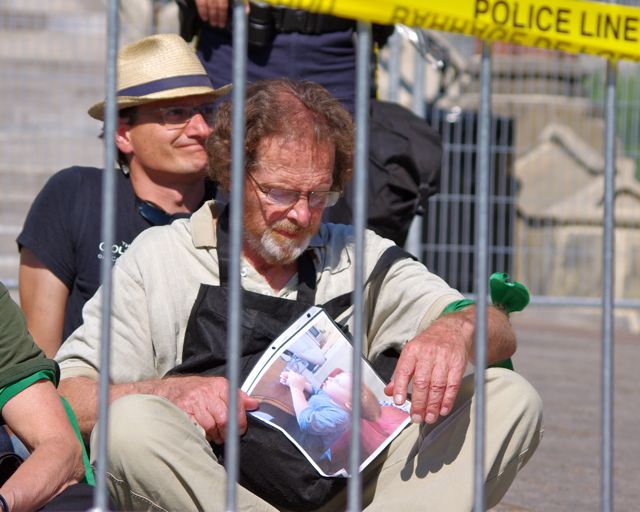
Man w picture of grandchild was arrested for protesting against tar sands expansion, Sept 2011 Ottawa, Canada - Pix by R Leahy

Environment budget slashed while PM Harper’s office places a gag order on government scientists. (And a $60 billion order for military equipment)

By Stephen Leahy

UXBRIDGE, Canada, Nov 9, 2011 (IPS)

Canada’s Stephen Harper government is spending more than 60 billion dollars on new military jets and warships while slashing more than 200 million dollars in funding for research and monitoring of the environment.

Amongst the programmes now crippled is Canada’s internationally renowned ozone monitoring network, which was instrumental in the discovery of the first-ever ozone hole over Canada last spring. Loss of ozone has been previously linked to increases in skin cancer.

“The proposed cuts go so far the network won’t be able to do serious science,” said Thomas Duck, an atmospheric scientist at Halifax’s Dalhousie University.

Canada was the pioneer in ozone monitoring, developing the first accurate ozone measuring tool that led to the discovery that the world’s ozone layer was dangerously thinning in the 1970s, which in turn led to the successful Montreal Protocol on Ozone Depleting Substances.

Canada has about one-third of the ozone monitoring stations in the Arctic region. It also hosts the world archive of ozone data, which is heavily relied on by scientists around the world.

“There’s only one guy running the entire archive, and he’s received a lay-off notice letter,” Duck told IPS.

Ozone monitoring and research is part of Environment Canada, the government department charged with protecting the environment, conservation and providing weather and meteorological information.

“Canada can’t afford to pay scientists but we can line the pockets of big oil?

That is totally backwards.”

Continue reading

The Quiet Crisis: Lost Foodlands Cover Area Larger Than Canada and China Combined – Two Billion People Affected

12 Million Hectares Lost Every Year to Desertification

Dealing with desertification has a long history of failure.

By Stephen Leahy

CHANGWON, South Korea, Oct 13, 2011 (IPS)

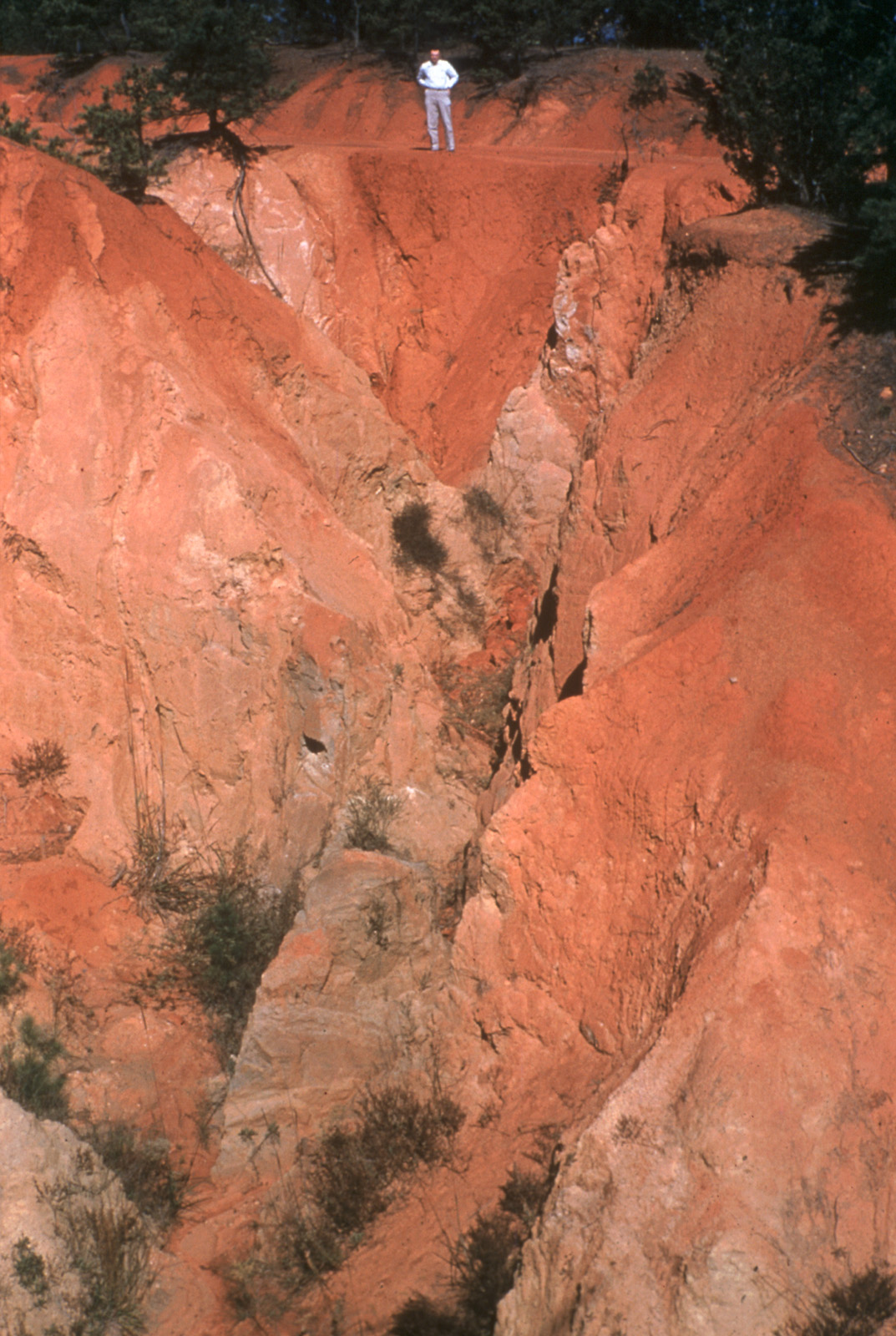
Degradation of land is the world’s quiet crisis, undercutting food production, increasing water scarcity, impoverishing hundreds of millions of people and affecting two billion overall. Nearly 20 million square kilometres of the earth’s arable lands – an area twice the size of Canada – have already been degraded.

Each year, 12 million hectares of land, where 20 million tons of grain could have been grown, are lost to desertification. Unless this trend is reversed soon, feeding the world’s growing population will be impossible, experts say. However, the global community has failed for over two decades to address this serious challenge.

Now, delegates from 193 countries are meeting in South Korea under the United Nations Convention to Combat Desertification (UNCCD) to review progress on a ten-year plan to reverse the ongoing decline in the quality and quantity of land in food-producing regions.

During the 10th Conference of the Parties (COP 10) under the UNCCD, delegates will also consider creating a scientific body like the Intergovernmental Panel on Climate Change to serve as the global authority on desertification and land degradation.

“The UNCCD will take bold steps towards delivering critical services to the two billion people that face negative impacts of desertification, land degradation and drought,” Luc Gnacadja, executive secretary of the UNCCD, told delegates during the opening session of COP 10 that began Oct. 10 and concludes Oct. 21.

Land degradation is mainly the consequence of poor land management in conjunction with changes in rainfall. Erosion and degradation most often result from ploughing fields, removing crop residues after harvest and overgrazing. It is akin to tire wear on cars – a gradual, less noticeable process with potentially catastrophic consequences if ignored for too long.

“People do not notice land degradation until there is a crisis,” said Pier Paolo Roggero, a scientist at University of Sassari in Italy. Continue reading

Brazil’s Forest Code and Land Speculators To Amp Up Amazon Deforestation Rates

90% of Forest in Apuí Converted into Pasture But the Real Profit is in Land Sales

By Stephen Leahy*

UXBRIDGE, Canada, Jul 28, 2011 (Tierramérica)

Many migrants from southern Brazil who clear forests in Brazil’s state of Amazonas are making their living as small-scale land speculators and not as farmers or as cattle ranchers, new research has found.

This on-the-ground reality and the proposed changes to Brazil’s Forest Code are likely to ramp up deforestation rates again, despite the country’s commitment to reduce deforestation 80 percent by 2020, experts say.

The Forest Code (Law 4771) was adopted in 1965 and has undergone numerous reforms, the most recent in 2001. This past May 24, an overwhelming majority in the Chamber of Deputies voted in favor of a bill to relax its requirements with regard to forest conservation. The bill is currently under study in the Senate. [Update Dec 28 2011]

A detailed study conducted in the municipality of Apuí along the Transamazon Highway in Amazonas found that many families in the region earned little income from cattle.

Instead, they were clearing the land in order to claim land titles to sell the land to large corporate ranchers, according to the study “Forest Clearing Dynamics and the Expansion of Landholdings in Apuí, a Deforestation Hotspot on Brazil’s Transamazon Highway”, published in the journal Ecology and Society in June.

From the early 1990s the population of Apuí has tripled, and the municipality has had some of the highest rates of deforestation in all of the state of Amazonas. Approximately 90 per cent of the area has been converted into pasture, the study found.

“These families are always moving into new forest areas to deforest so they can claim land title. And after a few years they sell it for a much higher price,” said study co-author Gabriel Carrero of the Institute for Conservation and Sustainable Development of Amazonas (IDESAM). Continue reading

Gov’ts Fail to Invest in Hungriest, Poorest Regions Creating Crisis After Crisis

By Stephen Leahy

CHANGWON, South Korea, Oct 21, 2011 (IPS)

For millennia, people have coped with drought in the Horn of Africa, comprised mainly of drylands. Yet today, more than 13 million people there are starving because of political instability, poor government policies and failure to invest in the world’s poorest people, say experts here in Changwon.

2.5 billion dollars in humanitarian aid is needed to cope with a devastating hunger crisis in parts of Djibouti, Ethiopia, Kenya and Somalia.

Two billion people, half of whom are extremely impoverished, live in drylands around the world, according to Anne Juepner of the Drylands Development Centre at the UN Development Programme (UNDP) in Nairobi.

“Drylands are not wastelands, as is often thought. More than half of the world’s cattle, sheep, goats and most of its grains are grown in drylands,” Juepner told IPS in an interview outside of the United Nations Convention to Combat Desertification 10th Conference of the Parties (COP 10) in Changwon.

Juepner is here to launch UNDP’s “The Forgotten Billion”, a report to call attention to the fact that despite its productivity, drylands that comprise one third of the world’s land mass are also home to world’s poorest and most at-risk people. Continue reading

Can Obama Take First Step to Break Addiction to Oil? (And Win First Battle Against Big Oil?)

Sept 3 protest at white house

‘…unless river of money from Big Oil is diverted there is no way to deal with climate change’

Analysis by Stephen Leahy

UXBRIDGE, Canada, Aug 31, 2011 (IPS)

The United States’ biggest environmental groups put aside their differences last week to make an urgent intervention on the country’s addiction to oil. The first step on the long road to recovery, they say, is to stop the proposed construction of the Keystone XL pipeline that will “mainline” the world’s dirtiest oil from northern Canada into the U.S. heartland.

“This (Keystone) is a terrible project,” they wrote in a letter to President Barack Obama, citing dangers to the climate, the risks of disastrous spills and leaks, and the economic damage that will come from continued dependence on fossil fuel.

Oil from the Keystone XL will dump an estimated 150 million tonnes of carbon dioxide (CO2) annually into the atmosphere – more than most countries. Scientists warn that approval of the project will further fuel the extreme weather that has already resulted in over one billion dollars in damages recorded this year in nine separate extreme weather events in the U.S.

And that doesn’t include the estimated 20 to 45 billion dollars in costs from Hurricane Irene last weekend, mainly due to extensive flooding.

Carbon dioxide (CO2) emissions from fossil fuels do not cause hurricanes, tornados or droughts, but they do trap additional heat and water vapour that fuels those events, climate scientists have proven time and time again.

Asked about the impacts of adding another 150 million tonnes of CO2 into the atmosphere, German climate scientist Malte Meinshausen, a researcher at the Potsdam Institute for Climate Impact Research, told IPS that it will warm the planet for hundreds of years and lead to higher sea levels and “more pronounced droughts and floods”.

Continue reading

Rampant Speculation Inflated Food Price Bubble – Wall St./Grain Traders Pushing Price Rises

“Hunger is not a food production problem. It is an income problem”

By Stephen Leahy

UXBRIDGE, Canada, Jan 28, 2011 (IPS)

Billions of dollars are being made by investors in a speculative “food bubble” that’s created record food prices, starving millions and destabilising countries, experts now conclude.

[This is the second of a multi-part series investigating what is driving food prices higher]

Wall Street investment firms and banks, along with their kin in London and Europe, were responsible for the technology dot-com bubble, the stock market bubble, and the recent U.S. and UK housing bubbles. They extracted enormous profits and their bonuses before the inevitable collapse of each.

Now they’ve turned to basic commodities. The result? At a time when there has been no significant change in the global food supply or in food demand, the average cost of buying food shot up 32 percent from June to December 2010, according to the U.N. Food and Agriculture Organisation (FAO).

This independent environmental journalism depends on public support. Click here learn more.

Nothing but price speculation can explain wheat prices jumping 70 percent from June to December last year when global wheat stocks were stable, experts say.

“There is no food shortage in the world. Food is simply priced out of the reach of the world’s poorest people,” said Robert Fox of Oxfam Canada in reference to the estimated one billion people who go hungry.

“Hunger is not a food production problem. It is an income problem,” Fox told IPS. Continue reading