In Corrupt Global Food System, Farmland Is the New Gold and Africans the New Share-croppers

$ Billions Made Speculating on Food

“Africans have become share-croppers, exporting coffee, cotton, flowers and now food while going hungry”

By Stephen Leahy

UXBRIDGE, Canada, Jan 13, 2011 (IPS)

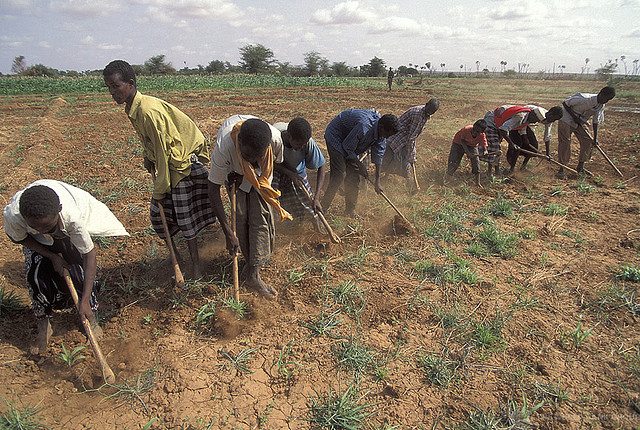
Famine-hollowed farmers watch trucks loaded with grain grown on their ancestral lands heading for the nearest port, destined to fill richer bellies in foreign lands. This scene has become all too common since the 2008 food crisis.

[This is the first of a multi-part series investigating what is driving food prices higher]

Food prices are even higher now in many countries, sparking another cycle of hunger riots in the Middle East and South Asia last weekend. While bad weather gets the blame for rising prices, the instant price hikes of recent times are largely due to market speculation in a corrupt global food system.

The 2008 food crisis awoke much of the world’s investment community to the profitable reality that hungry people will do almost anything, even sell their own children, in order to eat. And with the global financial crisis, food and farmland became the “new gold” for some of the biggest investors, experts agree.

In 2010, wheat futures rose 47 percent, U.S. corn was up more than 50 percent, and soybeans rose 34 percent.

This independent environmental journalism depends on public support. Click here learn more.

On Wednesday, U.S.-based Cargill, the world’s largest agricultural commodities trader, announced a tripling of profits. The firm generated 1.49 billion dollars in three months between September and November 2010.

Meanwhile, U.S. Treasury Bills pay a return of less than one percent. Continue reading
Amazon Drought Accelerating Climate Change

World’s Forests Losing Their Green. Billions of tonnes of CO2 Released

By Stephen Leahy

UXBRIDGE, Canada, Feb 3, 2011 (IPS)

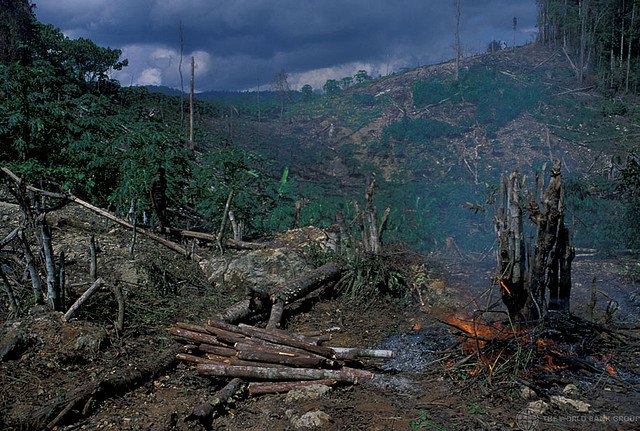
Last year’s severe drought in the Amazon will pump billions of tonnes of additional carbon dioxide (CO2) into the atmosphere, a new report has found.

Researchers calculate that millions of trees died in 2010, which means the Amazon is soaking up much less CO2 from the atmosphere, and those dead trees will now release all the carbon they’ve accumulated over 300 or more years.

The widespread 2010 drought follows a similar drought in 2005 which itself will put an additional five billion tonnes of CO2 into the atmosphere, Simon Lewis of University of Leeds in the UK and colleagues calculate in a study published Thursday in Science. The United States emitted 5.4 billion tonnes of CO2 from fossil fuel use in 2009.

The two droughts will end up adding an estimated 13 billion tonnes of additional CO2 – equivalent to combined emissions in 2009 from China and the U.S. – and likely accelerating global warming.

“New growth in the region will not offset those releases,” Lewis told IPS.

This independent environmental journalism depends on public support. Click here learn more.

After the 2005 drought, Lewis and Brazilian scientist Paulo Brando from the Amazon Environmental Research Institute (IPAM) led teams of researchers on the ground to assess the impacts. They determined that only a few trees died per hectare, and so while the forest canopy cover looked relatively unchanged, there had been a significant change in the forest’s carbon balance. Continue reading

Cancún Climate Summit Gives Fossil Fuels a Free Pass

Burning just 25 per cent of proven reserves is road to climate disaster scientists say

By Stephen Leahy*

CANCÚN, Mexico, Dec 7, 2010 (Tierramérica)

The main cause of climate change is the burning of fossil fuels, so why are billions of dollars being invested to find and produce more oil, coal and natural gas?

That is the question posed by Canadian indigenous representatives at the alternative civil society meet, Klimaforum, held parallel to the United Nations-sponsored climate summit under way in the Mexican resort city of Cancún.

“Canada’s tar sands project emits 40 million tonnes of carbon every year, with ambitious growth plans pushing that to nearly 140 million tonnes by 2020. The entire country of Denmark emits just 52 million tonnes,” said Melina Laboucan- Massimo.

The activist comes from the Lake Lubicon Cree band of First Nations in the province of Alberta, where thousands of square kilometres of tar-laden soil and sands underlying pristine boreal forests and marshes are being mined.

Canada is not being censured for this flagrant disregard for the global climate at the 16th Conference of Parties (COP 16) to the UN Framework Convention on Climate Change, she said.

The nearly 200 national delegations gathered for COP 16 (Nov. 29-Dec. 10) aim to stabilise emissions of greenhouse- effect gases to prevent climate change, but there is little hope of success.

In fact, at the Cancún summit no country is being challenged for expanding operations of oil, coal or natural gas or looking for new deposits.

Burning just one-quarter of the proven reserves of oil, gas and coal will push the global climate beyond the two degrees Celsius of average warming, scientists have predicted.

This article was brought to you in part by J. Bowers of the United Kingdom

Due to the high costs of covering such important events, support is needed from readers like you. Please consider making a small automatic monthly contribution as a fair exchange for these articles – for more information.

Continue reading

A Reporter’s Diary: EXCLUSIVE COVERAGE OF UN CONVENTION ON BIOLOGICAL DIVERSITY FROM NAGOYA, JAPAN

NOTE: The following are excerpts from my personal notes to friends and supporters written during the heat, confusion and massive information dump of a major international conference. Often written late at night I attempted to offer some personal perspective into what was going on and what I was up to. — Stephen

Tuesday, 19 Oct – Geopolitical obstacles getting in the way

I’m here at the big UN conference on biodiversity. It’s 430 am here, the first day ended about 9 pm. It’s 12-ring cat circus like the Copenhagen climate meeting but the mood here is more positive. There are similar geopolitical obstacles getting in the way of slowing the loss of species and ecosystems. Another major difference is the lack of little public awareness of the fact that we cannot continue to shred nature’s web of life without suffering dire consequences.

I’ll try and do my bit – write 10 -12 articles over next two weeks. I wanted to thank a couple of supporters who helped out to cover some of the travel costs. I want to keep you informed of what’s going on here but these notes take a couple of hours to do.

This week is a story about an important development in Africa: In sincere efforts to make one last major attempt to transform Africa’s poverty and hunger are we imposing our worldview on Africa yet again? Bill Gates and others are donating hundreds of millions to create a New Green Revolution for Africa. This difficult and controversial story took over a week to do and wrote the final draft during my 17 hr flight here.

My other story connects the dots between extreme weather this summer and climate change. No single storm is directly attributable to CC BUT without CC it is unlikely the Russian heat wave and floods in Pakistan would have occurred. (PS those were events were two sides of the same coin)

Finally I received a number of letters, mostly positive but a couple saying I was too negative in last week’s article ‘Don’t Worry Be Happy’ Canada Sees Global Warming “Prosperity” Instead of Calamity’. Any organization that puts out a chart of climate impacts at 4 – 5C of global warming and fails to mention the scale of the calamity that would result is delusional or deceptive. Some take the stunningly selfish and naive view we can ‘adapt’ by turning up the AC.

Do consider making a small automatic monthly contribution as a fair exchange for these articles.

Greenest wishes, Steve


Wednesday, 20 Oct – Diversity R Us

There is an astonishing diversity of people here. Last nite I talked to an Amazonian Indian who took 10 days to get here, had wine accidentally spilled on me by a reindeer herder from Finland and found the lost passport of a Brazilian diplomat. And that is a five minute snap shot. It is a very big world with so many different people it is incredible they have all come here to try and address a common issue. That they can’t agree on what kinds of actions and how to implement should not come as a surprise.

Sunday, 24 Oct – Canada won’t play nice (yet again)

Canada is blocking agreement on a key measure to get a new international agreement to protect biodiversity here. This is not new. In recent years Canada has gone out its way to snub international UN agreements including the outright refusal to fulfill its legal obligations under the Kyoto Protocol. Hard to believe the same government lobbied hard for a seat on the UN security council and actually expected to be rewarded.

Sadly there is no one reporting for Canadian publications to document the irony. (And as a result Canadian’s aren’t really aware of what their government is up to.) Continue reading

An Awakening to the Unravelling of the Web Life – Will Action Follow?

Youth Demand Need a Voice.  Halting Biodiversity Decline Impossible Without Economic Transformation

Analysis by Stephen Leahy 

NAGOYA, Japan, Nov 1, 2010 (IPS)

The international community has finally awoken to the other great trans-boundary challenge of our time, with a new international agreement to halt the unravelling of the web of life that sustains humanity.

The new agreement by 193 nations that are part of the U.N. Convention on Biological Diversity includes a commitment to reduce the rate of species loss by half by 2020, as well as the historic Nagoya Protocol on access and benefit sharing of genetic resources.

This awakening only applies to the few early risers. The vast majority remain asleep, unaware of our utter dependence on the living things that are the one and only source of oxygen, water, food and fuel. And unaware that nature is our reality while the economy is simply a complicated game we created.

Japan imports more than 60 percent of its food and most of Europe’s ecosystems have been trashed, with only 17 percent in reasonable shape, according to a first-ever assessment. The only reason those countries haven’t collapsed is they are rich enough to help themselves to nature’s ecological resources and services like food, timber, materials from the rest of the world.

Put a glass lid over Japan, Germany or England and they wouldn’t last long.

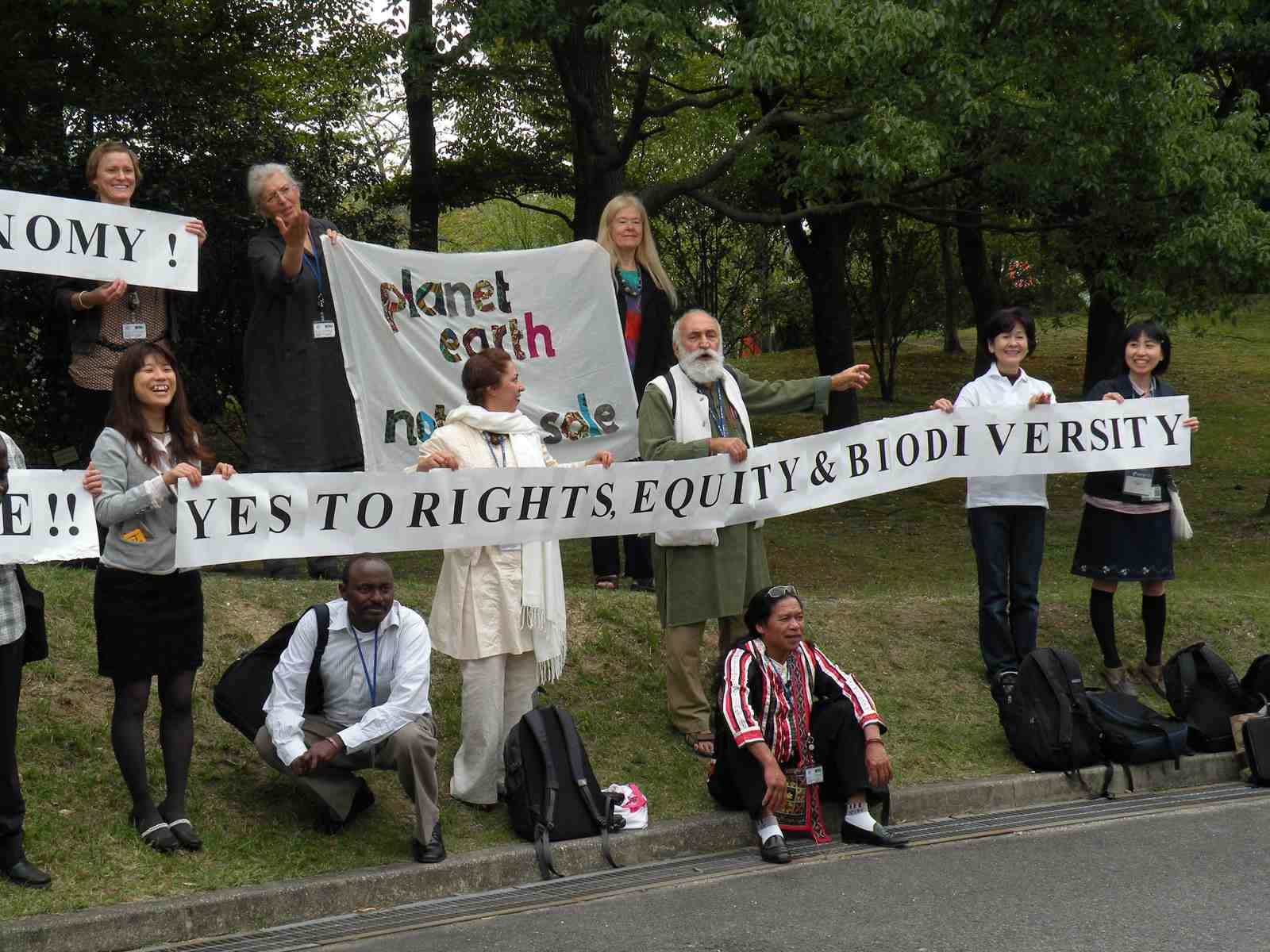
“We exploited the biological resources abroad, especially in the South. This is why we, the people of Aichi, Nagoya, must apologise…for the deterioration of the ecosystems and biodiversity we have caused,” says a public appeal by civil society from Nagoya, the host city of the U.N. Convention on Biological Diversity (CBD) for the last two weeks of October.

The Japanese government wanted no part of this apology, says Kinhide Mushakoji, one of the organisers and a professor at the Osaka University of Economics and Law. The appeal was signed by 156 organisations in Japan.
Continue reading

Biodiversity Pact Signed To Halt Species Extinctions and Protect the Web of Life

By Stephen Leahy*

NAGOYA, Japan, Oct 31, 2010 (Tierramérica)

The delegates to the 10th Conference of Parties (COP 10) to the Convention on Biological Diversity ended up with a relatively weak plan for the Herculean task of halting the disappearance of species. The exception was a pact on the use of genetic resources.

Delegates from 193 countries agreed to put under protection 17 percent of land and 10 percent of oceans by 2020 to stop the loss of plant and animal diversity in their ecosystems.

Currently less than 10 percent of land and less than one percent of the oceans are protected. Previous targets had been 25 and 15 percent, respectively

But among the items agreed was the “Nagoya Protocol on Access to Genetic Resources and the Fair and Equitable Sharing of Benefits Arising from Their Utilisation,” the most notable achievement of COP 10 — which had been in negotiations for 18 years.

The Nagoya Protocol establishes mechanisms for making use of the genetic material in plants, animals and microbes for food, medicines, industrial products, cosmetics and other applications.

Is this article of interest? It exists thanks to contributions from readers. Please click here to learn more about Community Supported Journalism.

Continue reading

Runaway Global Economy Decimating Nature — World Bank Offers A Solution

By Stephen Leahy

NAGOYA, Japan, Oct 28, 2010 (IPS)

One-fifth of all birds, fish and animals are threatened with extinction – as many as six million unique and irreplaceable forms of life – an authoritative new assessment warned Wednesday.

Deforestation, agricultural expansion, overfishing, invasive alien species and climate change are the specific causes, but the main engine of destruction is an economic system that is blind to the reality that there is no economy or human well-being without nature, experts here say.

“Without global conservation efforts the situation would be massively worse,” noted Simon Stuart, chair of the International Union for Conservation of Nature (IUCN) Species Survival Commission, which launched the study at the 10th Conference of the Parties to the Convention on Biological Diversity (CBD) in Nagoya, Japan.

Published in the peer-reviewed journal Science, it is the most comprehensive assessment ever done of the world’s vertebrates – mammals, birds, amphibians, reptiles and fishes – Stuart said.

Every year, 52 species of mammals, birds and amphibians move one step down a three-step path to extinction, according to the study, which utilised data for 25,000 species from the IUCN Red List of Threatened Species.

Southeast Asia has experienced the most dramatic recent losses, largely driven by the planting of export crops like oil palm, commercial hardwood timber operations, agricultural conversion to rice paddies and unsustainable hunting, the study found. Parts of Central America, the tropical Andes of South America, and even Australia have also all experienced marked losses, in particular due to the impact of the deadly chytrid fungus on amphibians.

“The backbone of biodiversity is being eroded,” said the eminent U.S. ecologist and writer Edward O. Wilson of Harvard University.

Is this article of interest? It exists thanks to contributions from readers. Please click here to learn more about Community Supported Journalism.

Continue reading

Dams Come At a Price of Hi-Quality Food — Hard to Put a Price-tag on Healthy Rivers

By Stephen Leahy

NAGOYA, Japan, Oct 22, 2010 (IPS)

Damming a river may bring electric power, but it often comes at the price of high-quality food fisheries, experts say. When dams are proposed for power, flood control or irrigation, the often devastating impacts on fisheries in rivers and lakes are ignored or discounted.

“It is very difficult to put a dollar value on what inland fisheries represent because it is much more than the landed value of the fish at the dock,” says Yumiko Kura of the WorldFish Center office in Phnom Penh, Cambodia.

Kura is co-author of a new report, “Blue Harvest: Inland Fisheries as an Ecosystem Service”, which highlights the wide-ranging importance of inland fisheries in diets, especially among children, and not just in terms of protein but in supplying micronutrients, notably vitamin A, calcium, iron and zinc.

“Detailed studies in Bangladesh for example have shown that daily consumption of small fish contributes 40 percent of the total daily household requirement of vitamin A and 31 percent of calcium,” according the report released Friday at a side event at the 10th Conference of the Parties to the Convention on Biological Diversity.

In addition, it notes there are more than 60 million full- and part-time jobs in fishing and other activities such as processing, with over half these jobs carried out by women.

Is this article of interest? It exists thanks to contributions from readers. Please click here to learn more about Community Supported Journalism. Continue reading

Blame Canada: Seeks to Drop Native Peoples from New Biodiversity Pact

Awarding Winner Poster - CBD COP 10 Nagoya - Copyright Stephen Leahy

By Stephen Leahy

NAGOYA, Japan, Oct 21, 2010 (IPS)

Blame Canada if countries fail to agree to a new binding treaty to curb the rapid loss of plant, animal and species that form the intricate web of life that sustains humanity.

That is the view of indigenous representatives from Canada in response to a late night move by the Canadian delegation to strike a reference to indigenous peoples’ rights at the U.N. Convention on Biological Diversity (CBD) members’ conference here.

“Canada is stalling progress here, weakening our rights and fighting against a legally-binding protocol on access and benefit sharing,” said Armand MacKenzie, executive director of the Innu Council of Nitassinan, the indigenous inhabitants in northeastern Canada.

“Their opposition threatens global biodiversity… people need to speak out,” MacKenzie told IPS.

A protocol on access and benefit sharing (ABS) without a guarantee of the rights of indigenous people and local communities “would be totally void”, said Paulino Franco de Carvalho, head of the Brazilian delegation.

“Brazil will not accept any agreement on biodiversity without a fair ABS protocol…. We are not bluffing on that, I must be very clear,” Franco de Carvalho said in a press conference.

Is this article of interest? It exists thanks to contributions from readers. Please click here to learn more about Community Supported Journalism. Continue reading

North-South Divide Again Clouds Biodiversity Talks


By Stephen Leahy

NAGOYA, Japan, Oct 19, 2010 (IPS)

The accelerating destruction of natural habitats will take millions of years to recover from, scientists have warned.

This may be the last chance to apply the brakes, Achim Steiner, executive director of the U.N. Environment Programme, reminded delegates representing the 193 member countries of the U.N. Convention on Biological Diversity (CBD).

“This meeting is being held to address a very simple fact: we are destroying life on this Earth,” Steiner said at the opening plenary meeting Monday. “It is absolutely essential that nations work together here.”

Ryu Matsumoto, Japan’s environment minister, warned that the world was about to reach a threshold where the loss of biodiversity would become irreversible.

“We’re now close to a tipping point on biodiversity,” he said. “We may cross that in the next 10 years.”

With 16,000 participants, the Oct. 18-29 gathering is by far the biggest international meeting on biodiversity. The term biodiversity refers to the variety of plants, animals and other species that provide a wide range of services to humanity.

Is this article of interest? It exists thanks to contributions from readers. Please click here to learn more about Community Supported Journalism. Continue reading