Ozone Treaty May Hold Key to Halting Climate Change

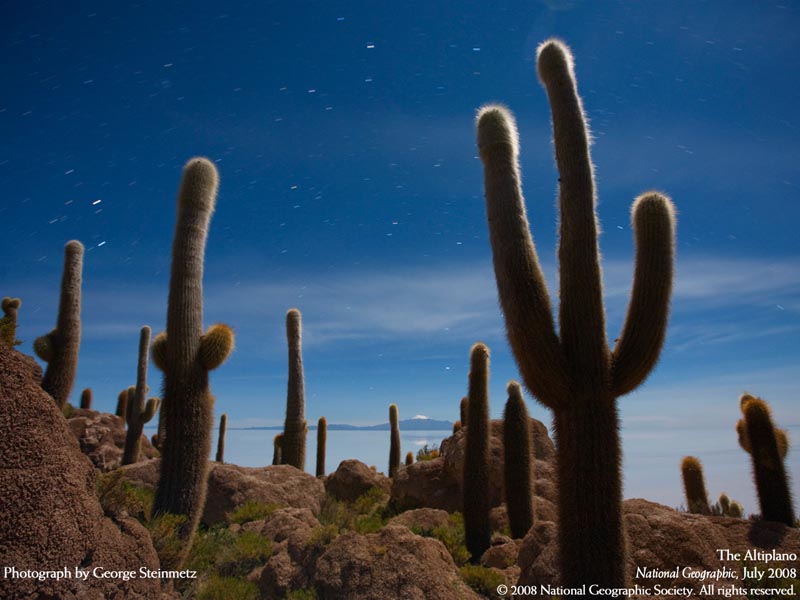
moonlit cactus - peruBy Stephen Leahy

UXBRIDGE, Canada, Aug 25 (IPS)

Will the world take the easy step to phase out “super” greenhouse gases – hydrofluorocarbons (HFCs) – using the existing Montreal Protocol ozone treaty?

Doing so would be equivalent to preventing the release of 118 to 224 billion metric tonnes of carbon dioxide by 2050, according to a report by the Environmental Investigation Agency.

That’s vitally important.

The latest science shows humanity cannot put more than another 700 billion tonnes into the atmosphere over the next 40 years without risking dangerous climate change. At current rates of carbon emissions, that limit will be exceeded in half that time.

“An HFC phase-down under the Montreal Protocol will do far more for climate protection than the Kyoto Protocol has accomplished in its entire history or than Copenhagen will achieve in the next decade,” said Samuel LaBudde, senior U.S. climate campaigner for the non-profit Environmental Investigation Agency (EIA).

“And it will do so at a fraction of the cost of securing reductions in other sectors and much faster as well,” LaBudde told IPS.

The leaders of the U.S., Canada, and Mexico committed to “work together under the Montreal Protocol to phase down the use of HFCs” earlier this month at the North American Summit in Guadalajara, Mexico. This follows a similar commitment made by G8 leaders in July.

Primarily used in refrigerators and air conditioners, HFCs are the standard replacement chemicals for those that were thinning the protective ozone layer in the upper atmosphere. Although HFCs pose no ozone risks, they typically have a global warming potential hundreds or even many thousands of times greater than carbon dioxide (CO2), hence the “super greenhouse gas” label.

The number of the world’s estimated 1.5 -1.8 billion refrigerators, 1.1 billion home and 400 million mobile (auto) air conditioners is expected to grow dramatically as developing nations like China and India modernise and increase use of HFCs.

A July study in the Proceedings of the National Academy of Sciences reveals that such a skyrocketing use of HFCs will have a significant impact on the climate at projected growth rates by 2050, negating much of future efforts to reduce carbon emissions.

“Phasing down HFCs under the Montreal Protocol is a brilliant strategy,” said Durwood Zaelke, president of the Institute for Governance & Sustainable Development, an international environmental NGO.

“This is the treaty that never fails to deliver. It’s already phased out 96 chemicals by 97 percent, and it’s ready to tackle these super greenhouse gases,” Zaelke said in a release.

Two small island nations, the Federated States of Micronesia and Mauritius, were the first to campaign to amend the Montreal Protocol to tackle HFCs at a July meeting of signatories. Ironically, under the Protocol, richer countries provide financing to poor countries to replace ozone-destroying refrigerants with HFCs.

Many country delegates felt it is the responsibility of the Montreal Protocol to prevent the further commercialisation and prolific use of HFCs even though it is not an ozone-depleting chemical.

“The support of North American leaders is appreciated,” said Ambassador Yosiwo George from the Federated States of Micronesia. The tiny Pacific island nation is threatened by rising sea levels from global warming and is advocating for a 90 percent HFC phase out by 2030.

For full story see here

Early Warning Systems for the Coming Climate Storm

Chile—The fury of Chaitén volcano - nat geoBy Stephen Leahy

GENEVA, Aug 31 (IPS)

Climate change is here. The challenge in Geneva this week is to find ways to help the world cope with a climate that will have more and worse extremes in terms of temperatures, floods, and storms.

More than 2,500 experts and policy-makers from 150 countries are attending the Aug. 31-Sep. 4 World Climate Conference to discuss how to improve weather forecasting and long-range seasonal weather projections, especially to help poor nations in areas such as agriculture.

“Until now, the way that we deliver climate information to some sectors has been ad hoc. What we need is a formal system that all people can trust to access vital information that can save their lives and protect property and economies,” said Michel Jarraud, secretary- general of the World Meteorological Organisation (WMO), which is convening the World Climate Conference this week in Geneva.

The WMO has proposed that a global climate services system be created to boost observations and research for monitoring the climate and new information tools that will provide sector- and regional-specific products and services, Jarraud told IPS.

The first two “World Climate Conferences” in 1979 and 1990 were organised by the WMO and played the key roles in the creation of the U.N. climate secretariat, and the Intergovernmental Panel on Climate Change.

This “Global Framework” system could help reduce losses caused by extreme weather and climate events such as heat waves, sandstorms, cyclones, drought and floods which will become more frequent and more intense as the climate continues to warm, he said.

“Extreme weather events and changing climatic conditions affect all of us, frequently resulting in humanitarian disasters and heavy losses,” said Swiss President Hans-Rudolf Merz.

For full article:  CLIMATE CHANGE: Early Warning Systems for the Coming Storm.

2020 Climate Deadline Is the Crucial “Litmus Test”

Chile—The fury of Chaitén volcano - nat geo

The atmosphere and the climate is a public good, a commons, and can’t be protected by the private sector.”

— Marianne Haug, Oxford Institute for Energy

By Stephen Leahy

VIENNA, Jun 29 2009 (IPS)

“So who here thinks there will be a meaningful deal in Copenhagen?”

Few of the more than 600 energy ministers, officials and experts from 80 countries attending the Vienna Energy Conference raised their hands in response to the conference moderator’s question about the final round of climate negotiations this December in Copenhagen.

“I don’t think there will be agreement on an emissions cap,” said Andre Amado, Brazil’s vice-minister for energy, science and technology.

Greenhouse gas emissions from the burning of fossil fuels must peak between 2015 and 2020 and then decline to prevent dangerous, irreversible climate change, scientists have warned. A strong international agreement on emissions targets for both the industrialised and developing world is widely believed to be the only way to ensure emissions peak and then decline.

“There will be agreement on technology transfer and reducing barriers for technology transfers,” to assist developing countries in cutting their emissions and adapting to the changing climate, Amado told participants last week in Austria’s capital city.

Continue reading

Umweltjournalist — German Translations of My IPS Articles

Berlin Olympic Stadium 2007By popular request — yes there have been many requests — I will be posting my 2008-09 Inter Press News Service (IPS) articles that have been translated in German by professional translators (not bablefish or some other software). The 20 or so articles will be posted over the next couple of weeks on this new site: Stephen Leahy — Umweltjournalist

Please pass the link on to any one who might be interested.

It’s diverse world of species, ideas and languages, so I have also posted selected articles in various languages on these sites so that people can read them in their native language whenever possible.

I can only write in English, and even then that’s always a struggle. Note not all of my articles are translated into all languages.

Auf Wiedersehen, Stephen

Dutch

Espanol

Francias

Italiano

Portugues

Desperately Seeking Leadership on Climate

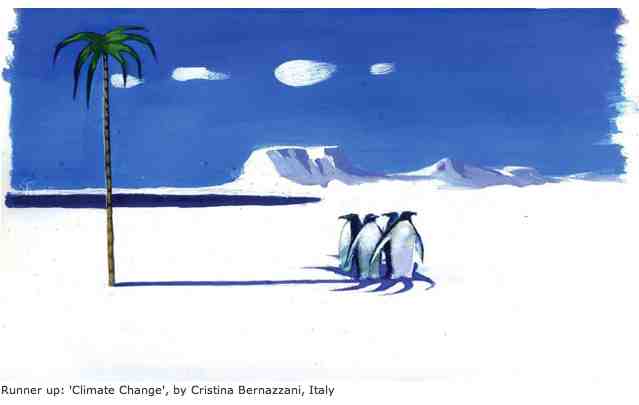
penguin palm tree

Civil society will have to provide unrelenting leadership if  global carbon emissions are to peak in less than 10 years and go ‘negative’, experts say.

By Stephen Leahy

UXBRIDGE, Canada, Jan 15 2009 (IPS)

Global emissions of carbon dioxide must reach a peak in less than 10 years and then begin a rapid decline to nearly zero by 2050 to avoid catastrophic disruption to the world’s climate, according to a new report.

Emissions of carbon dioxide will actually need to “go negative” – with more being absorbed than emitted – during the second half of this century, according to “State of the World 2009: Into a Warming World” released by the U.S.-based Worldwatch Institute this week.

“2009 is a pivotal year to deal with climate change,” said Christopher Flavin, president of well-respected Worldwatch Institute (WI), a U.S.-based environmental think tank.

“Humanity will face grave danger if we don’t move forward now,” Flavin told IPS.

Climate change is happening faster and with larger impacts than previously predicted, concludes the 26th annual “State of the World” report, devoted entirely to the challenges and opportunities of global climate change.

Even an additional warming of 2 degrees Celsius poses unacceptable risks to key natural and human systems, warned climate scientist W.L. Hare, one of the report’s 47 contributors.

SN852512 Continue reading

You Go First Carbon Politics Threatens Us All

mage showing iceberg off Baffin Island, Nunavut, Canada with meltwater ponds in the foreground. Arctic warming has been associated with a rapid decline in Arctic summer sea ice extent. Image credit- Sandy BriggsBy Stephen Leahy

NY-ÅLESUND, Svalbard, Norway, Jun 15 (IPS)

Political and business leaders may agree in principle that climate change is a serious threat, but there is a startling lack of consensus and a ‘you-go-first’ attitude on taking action, even amongst a small group of high-level decision makers disconnected from their cell phones here in the Arctic.

“We want to reduce China’s CO2 (carbon dioxide) emissions, but we are a market-driven economy,” Liu Yanhua, China’s vice minister for science and technology, told 30 participants at the Ny-Ålesund Symposium located at a scientific research centre called Kings Bay on the western coast of Spitsbergen Island about 1,200 kilometers from the North Pole.

“Climate change is a matter of economy, of energy,” said Yanhua, a former scientist at the Chinese Institute of Geography.

It is also an issue of generational equity, since at current rates all fossil fuels will be consumed in 50 to 80 years, leaving nothing for future generations, he said.

China’s CO2 emissions have soared 150 percent in the last 20 years, Yanhua acknowledged, and are now the highest of any country, including the United States. China’s carbon intensity – the amount of carbon emitted per unit of production – is 10 times higher than Germany’s and major efficiency improvements are needed, he said. Continue reading

James Lovelock: “there will be a sudden shift to a new global climate … 5 or 6C warmer”

Lovelock_James credit Sandy Lovelock

Stephen Leahy interviews JAMES LOVELOCK the scientist who first proposed the Gaia Hypothesis

TORONTO, June 5 2009 (Tierramérica)

“When the first great climate disaster strikes, I hope we will all pull together just as if our nation were being invaded,” says British scientist James Lovelock in this exclusive Tierramérica interview.

Please throw something in the tip jar before reading on.
This is how I make my living.

As the world marksInternational Environment Day Friday, Lovelock argues that as the climate warms and the carbon content of the atmosphere soars, humanity is facing a far grimmer future that will be upon us sooner than any of the projections made by the Intergovernmental Panel Climate Change (IPCC).

A chemist, physician and biophysicist, Lovelock is one of the world’s foremost environmental scientists and founder of the Gaia Hypothesis, which describes the planet as a living organism, a complex system in which the components of the biosphere and atmosphere interact to regulate and sustain life.

Although his ideas often feed controversy, Lovelock has wide-ranging scientific credentials. As an inventor, he holds more than 50 patents, including the first devices for detecting the presence of ozone-depleting CFCs (chlorofluorocarbons) and pesticide residues in the environment.

He is also the author of many books. The most recent, “The Vanishing Face of Gaia: A Final Warning”, was published in April. Lovelock spoke with Tierramérica’s Stephen Leahy in Toronto.

TIERRAMÉRICA: Why are you critical of the IPCC? Continue reading

Alien Species Cause Extinctions, Increase Poverty, Erode Ecosystems

Saltcedar, an invasive exotic weed, crowds out native vegetation along the Gila River in Arizona.

By Stephen Leahy

UXBRIDGE, Canada, May 21 (IPS) – Continent-hopping alien species are worsening poverty and threaten the agriculture, forestry, fisheries and natural systems that underpin millions of livelihoods in developing countries, warn biodiversity experts.

“The livelihoods for 90 percent of people in Africa directly rely on natural resources such as marine coastal biodiversity,” said Ahmed Djoghlaf, executive secretary of the Convention on Biological Diversity (CBD).

“Around the world more than 1.6 billion people depend directly on forests for their survival,” he told IPS from Montreal.

Biodiversity is not just fuzzy animals and pretty birds. It is the diversity of life on Earth that comprises ecosystems which in turn provide vital ecosystem services including food, fibre, clean water and air.

“Biodiversity is poor countries’ most precious asset,” Djoghlaf stressed. Continue reading

Extraordinary Abundance of Life in Oceans Past

trophy fish 2007By Stephen Leahy

UXBRIDGE, Canada, May 26 (IPS) – Imagine large pods of mighty blue whales and orcas darkening the waters off Cornwall, England, while closer to shore blue sharks and thresher sharks chase herds of harbour porpoise and dolphins.

Pure fantasy? No, in fact that extraordinary abundance of marine life off the English coast was the norm for oceans around the world not so long ago, researchers have now documented.

And then humans began to mine the seas of anything worth eating.

“The impact of fishing over the centuries is far larger than anyone thought,” said Poul Holm, a professor at Trinity College in Dublin and global chair of the History of Marine Animals Population (HMAP) project which part of the 10-year Census of Marine Life.

While many valuable species have been fished out in recent years, that has been happening for hundreds of years around the world based on nine years of research by hundreds of experts.

“In looking back 500 to 2,000 years ago, you get a real sense of the impacts of fishing and the cascading effects on marine ecosystems, some of which may be beyond recovery,” Holm told IPS. Continue reading

New $Billion Cash Hand Out To Fossil Fuel Companies Under ‘Green’ Economic Stimulus Plans

Shell in Curacao, Netherlands - Humane Care Fondation, Curacao[Updated: Monday Sept 28/09

Last Friday at the G20 countries agreed to phase out subsidies for oil and other carbon dioxide-spewing fossil fuels in the “medium term” as part of efforts to combat global warming. This article documents NEW taxpayer subsidies to some of the world’s richest corporations]


By Stephen Leahy

UXBRIDGE, Canada, May 29 2009 (IPS)

Despite the economic slow down, growing numbers of world leaders are calling for urgent action on climate change while many governments used their economic stimulus packages to increase subsidies to the fossil fuel industry.

Consider Europe, with the strongest public commitment to reduce carbon emissions that are causing climate change.

In the past five years, 8 billion U.S. dollars of public money went to Europe’s fossil fuel companies mainly to the natural gas sector. And in May the European Parliament approved an additional 3.35 billion dollars in subsides as part of Europe’s 225 billion dollars economic recovery plan, according to a new research report by Friends of the Earth Europe.

“We Europeans are supposedly leading the world on the path to a new green economy but we’re putting billions of euros into fossil fuel sector that’s taking us in the opposite direction,” Darek Urbaniak of Friends of the Earth Europe.

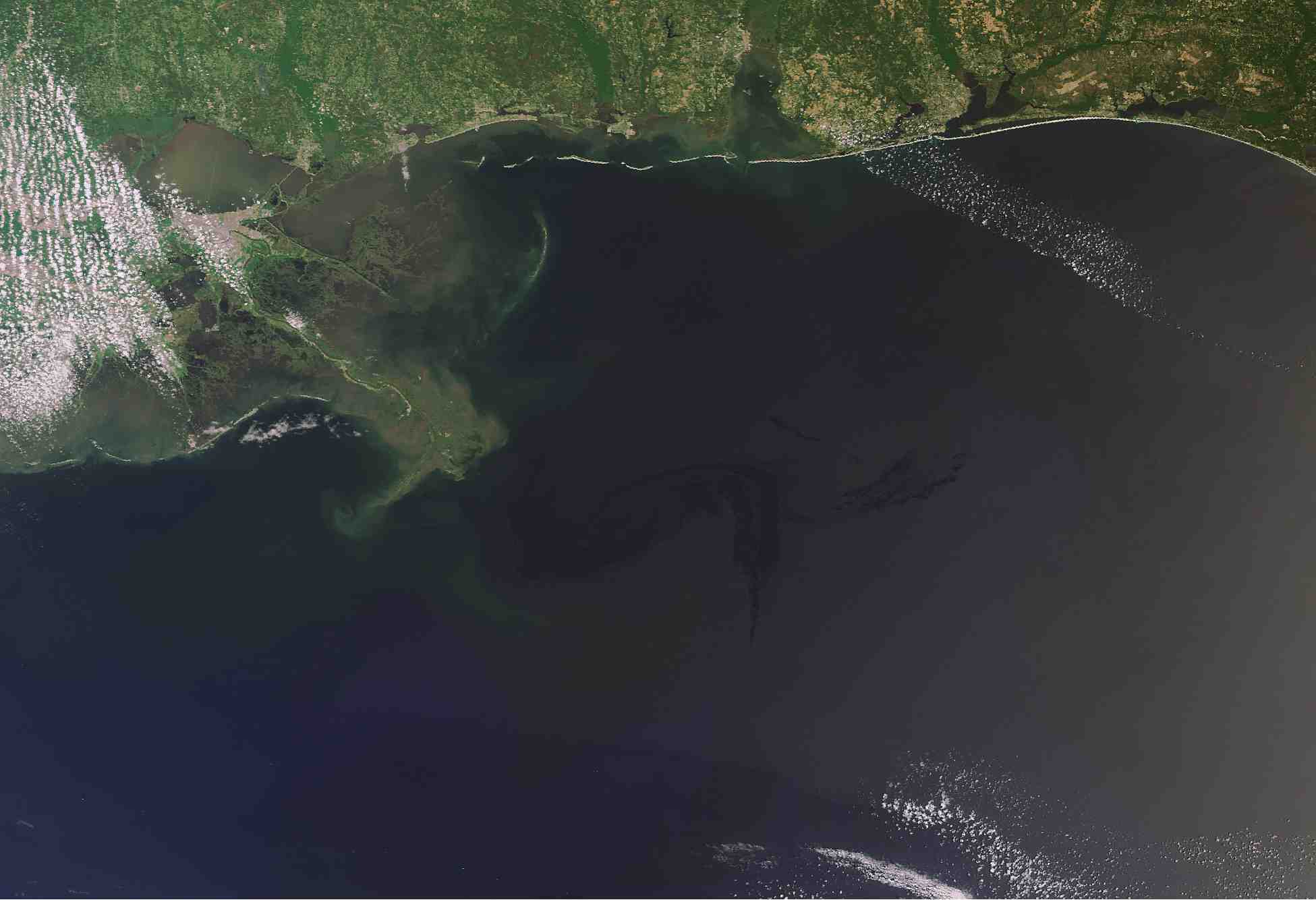
gulf spill nears coast Apr 30 2010 - ESA

Its complete hypocrisy,” Urbaniak told IPS from Brussels.

Perhaps recognising this fact, global business leaders at the World Business Summit on Climate Change that concluded May 26 called on governments to “strive to end the current perverse subsidies that favour high-emissions transport and energy”.
Continue reading