I was the only North American journalist to go and cover this important conference in Nagoya. People donated enough to help with travel costs so I could write about 10 articles that reached more than 200 million people. Scroll down and look for the COP 10 logo to find those articles.
I’m an independent journalist based in Canada who supports his family and the public interest writing articles about important social & environmental issues. This is now only possible with your support: see How Community Supported Journalism Works. Contributions can be made safely via PayPal or check/cheque. Thank you/Merci. — Stephen
UXBRIDGE, Canada, Dec 8 (IPS) – Malaria kills a child every 30 seconds, but a new diagnostic breakthrough may cut that devastating death toll, Canadian scientists announced Sunday.
The discovery of “biomarkers” — a telltale biological signature in children’s blood — that identify two of the most lethal forms of malaria was revealed at the annual meetings of the American Society of Tropical Medicine and Hygiene in New Orleans, Louisiana last week.
“A child with a fever may be treated in a clinic with anti-malarial drugs, but that won’t be enough to treat cerebral malaria,” said Conrad Liles, a tropical disease specialist affiliated with Toronto’s McLaughlin-Rotman Centre for Global Health (MRC). Continue reading →
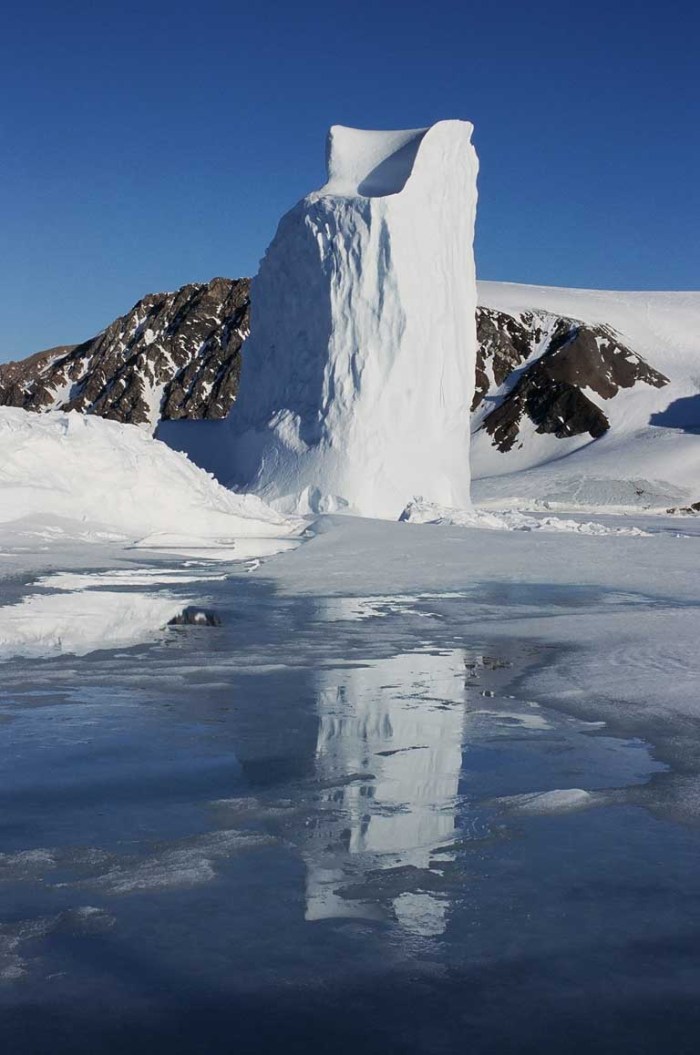
QUEBEC CITY, Canada, Dec 12 (IPS) – Nearly 1,000 scientists and representatives of indigenous peoples from 16 countries have braved a major winter storm to share their findings and concerns about the rapidly warming Arctic region at the International Arctic Change conference in Quebec City.
The Arctic is “ground zero” for climate change, with temperatures rising far faster than anywhere else on the planet. Some predict an ice-free summer Arctic in less than five to 10 years — the first time the Arctic Ocean will be exposed to the sun in many hundreds of thousands of years.
The speed of change has scientists scrambling to understand the impacts on indigenous people, wildlife and ecology.
“The Arctic will be full of future surprises,” said David Carlson, an oceanographer and director of the International Polar Year programme office.
“Protected by its cover of sea ice, the Arctic Ocean is the last unblemished ocean on the planet,” Carlson told IPS.
UXBRIDGE, Canada, Nov 20 (Tierramérica) – Climate change will dramatically increase the number of hot, dry days in Mexico in the coming decades, while coastal regions like the Yucatán, in the southeast, will be swamped by sea levels that are half a metre higher than today, a new study has found.
By 2030, Mexico’s average daily temperature is likely to climb 1.4 degrees Celsius above what has been the average for the past 30 years. By 2090, this increase could rocket upwards by 4.1 degrees, virtually guaranteeing hot days and nights for 80 to 90 percent of the year, says the Oxford University study financed by the United Nations Development Programme (UNDP).
Cold weather will become very rare in Mexico according to data from the Intergovernmental Panel on Climate Change (IPCC), an umbrella organisation of scientists from around the world and the preeminent authority on climate change.
“Mexico is one area of the world where all the computer climate models agree,” says Carol McSweeney of the School of Geography and Environment at Oxford. Continue reading →
An apparent rapid upswing in ocean acidity in recent years is wiping out coastal species like mussels, a new study has found.
“We’re seeing dramatic changes,” said Timothy Wootton of the Department of Ecology and Evolution at the University of Chicago, lead author of the study published Monday in the Proceedings of the National Academy of Sciences. The study shows increases in ocean acidity that are more than 10 times faster than any prediction.
“It appears that we’ve crossed a threshold where the ocean can no longer buffer the effects of CO2 in the atmosphere,” Wootton told IPS.
For millions of years, the levels of carbon dioxide in the atmosphere and the ocean were in balance, but the burning of fossil fuels and deforestation has put more CO2 into the atmosphere over the last 150 years. The oceans have absorbed one-third — about 130 billion tonnes — of those human emissions and have become 30 percent more acidic as the extra CO2 combines with carbonate ions in seawater, forming carbonic acid.
Each day, the oceans absorb 30 million tonnes of CO2, gradually and inevitably increasing their acidity. There is no controversy about this basic chemistry; however, there is disagreement about the rate at which the oceans are becoming acidic and the potential impact. Continue reading →
UXBRIDGE, Canada, Nov 11 (IPS) – A thousand points of light are being shone into the dark ocean depths as scientists from 82 countries work to complete the decade-long global research effort called the Census of Marine Life.
“It’s been a remarkable time of exciting new discoveries and frightening revelations of how quickly the oceans are changing,” said Canadian deep-sea biologist Paul Snelgrove, a leader of a team integrating findings from all 17 census projects.
“We were startled to discover small crustaceans never seen by scientists before completely blanketing the seafloor at 500 metres in the Gulf of Mexico,” Snelgrove told IPS.
And during the eight years the census has run so far, scientists have documented that more than 90 percent of the oceans’ top predators — large sharks, tunas, swordfish, cod and others — are now gone and those remaining are in serious trouble. “We’re also seeing evidence of climate change with the shifting distribution of species,” he said. Continue reading →
The worst natural disaster Haiti has ever suffered requires far-reaching solutions in order to reduce this Caribbean country’s environmental fragility, say officials and humanitarian workers.
Four major storms pounded Haiti in August and September, leaving nearly 1,000 dead and a million people homeless. International relief efforts are keeping people alive and sheltered, but the already degraded landscape has been badly battered, washing away crops, soil and the few remaining trees in many areas.
“I’m not sure if things could get worse here. Haiti must be the most desperate environmental crisis on the planet,” Joel Boutroue, resident humanitarian coordinator and head of the United Nations Development Programme (UNDP) in Port-au-Prince, told Tierramérica.
Boutroue was referring to the future of the poorest country in the Americas, where U.N. peace-keepers have been stationed since 2004. But he added that “the international response to the disaster is quite good.”
While pockets of severe malnutrition still exist, there is access to clean water and only about 3,000 families were without shelter as of the end of October, he said.
However, it is not possible to feed an entire country of 9.5 million people with international aid for long. Haiti cannot feed itself, and even growing 50 percent of its own food is years away, Boutroue fears. Continue reading →
Salmon aquaculture is devastating the world’s oceans and an international coalition of scientists, Canadian First Nations and tourism operators have called for a global moratorium.
‘We’ve seen a regional collapse of all sea life in the 20 years since the salmon farms moved in,’ said Chief Bob Chamberlin of the Kwicksutaineuk Ah-kwa-mish Canadian First Nation in the province of British Columbia on Canada’s west coast.
‘I can only shake my head in bewilderment that this is allowed to continue,’ Chamberlin told IPS from Gilford Island in the Broughton Archipelago, where 20 salmon farms are in operation. Continue reading →
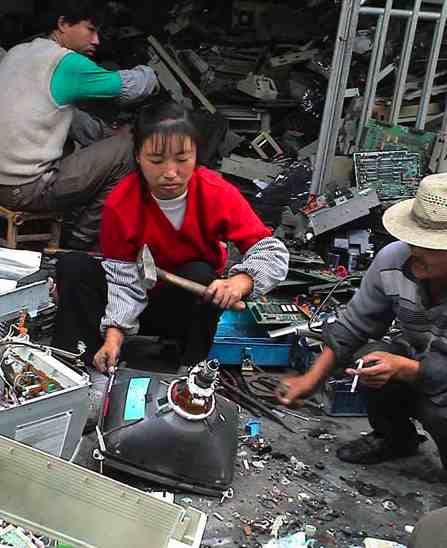
Is your old TV poisoning a child in China? Or your old computer contaminating a river in Nigeria?
Without a law banning export of toxic electronic waste in the United States, there has been no way to know if old cell phones, computers or televisions originating there didn’t end up in some poor village in the developing world, where desperate people pull them apart by hand to recover some of the valuable metals inside.
A small group of people have now allied with a few responsible recyclers to ensure e-waste can be treated responsibly by creating an e-Stewards certification programme. Announced this week, e-Stewards are electronics waste recyclers that are fully accredited and certified by an independent third party.
Such accreditation is crucial in an industry that often makes fraudulent claims. Currently even when e-waste (electronic trash) goes to a “green” recycler, the chances are high that toxic stuff from the developed world ended up in a huge pile in the middle of some village. Continue reading →
Gold mining and recycling car batteries are two of the world’s Top 10 most dangerous pollution problems, and the least known, according a new report.
The health of hundreds of millions of people is affected and millions die because of preventable pollution problems like toxic waste, air pollution, ground and surface water contamination, metal smelting and processing, used car battery recycling and artisanal gold mining, the “Top Ten” report found.
“The global health burden from pollution is astonishing, and mainly affects women and children,” said Richard Fuller, director of the New York- based Blacksmith Institute, a independent environmental group that released the list Tuesday in partnership with Green Cross Switzerland.
“The world community needs to wake up to this fact,” Fuller told IPS.



 By Stephen Leahy
 By Stephen Leahy
 By Stephen Leahy*



 Stephen Leahy, International Environmental Journalist