Why the BP Oil Spill Really Happened

We Can Live Without Oil

“It was a disaster that was going to happen, but business and government simply pretended it was not going to happen.”

[Update: Why the BP spill cannot be cleaned up]

By Stephen Leahy*

UXBRIDGE, Canada, May 10, 2010 (Tierramérica)

The policies and deals that contributed to the massive oil spill under way in the Gulf of Mexico are also jeopardising the Earth’s vital biological infrastructure, according to the Global Biodiversity Outlook 3, published Monday.

The British Petroleum oil spill of 5,000 barrels a day in the Gulf of Mexico, which began Apr. 20 when an explosion caused a rupture at the Deepwater Horizon oil rig, will have devastating consequences for marine life and coastal ecosystems for decades, experts say.

Similar business and policy decisions, multiplied thousands times over the last hundred years, have put the biological infrastructure that supports life in jeopardy, according to the Global Biodiversity Outlook 3 (GBO3) report, issued May 10 by the Convention on Biological Diversity.

The report is the most current assessment of the state of the planet’s biodiversity, the living organisms that provide us with health, wealth, food, fuel and other vital services.

In this study, “you can clearly see the outlines of what could be the sixth great extinction event of all life on Earth,” said Thomas Lovejoy, biodiversity chair at the Washington DC-based Heinz Centre for Science, Economics and the Environment, and chief biodiversity adviser to the president of the World Bank. Continue reading

Arctic Leaking Methane a Super-Potent Global Warming Gas — Reaching Feared Tipping Point?

By Stephen Leahy

“The way we’re going right now, I’m not optimistic that we will avoid some kind of tipping point.

— Mark Serreze, senior research scientist at the National Snow and Ice Data Centre

UXBRIDGE, Canada, Mar 5, 2010 (IPS)

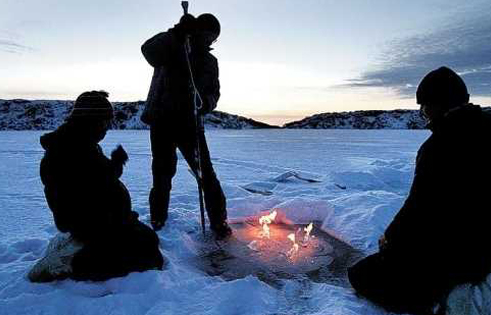
The frozen cap trapping billions of tonnes of methane under the cold waters of the Arctic Ocean is leaking and venting the powerful greenhouse gas into the atmosphere, new research shows.

It is not known if this may be one of the first indicators of a feedback loop accelerating global warming.

Researchers estimate that eight million tonnes in annual methane emissions are being released from the shallow East Siberian Arctic Shelf, which is equivalent to all the methane released from the world’s oceans, covering 71 percent of the planet.

On a global scale of methane emissions from the land-based sources – animals, rice paddies, rotting vegetation – the newly measured emissions from the Siberian seabed are less than two percent.

“That’s still very significant,” Natalia Shakhova, a researcher at the University of Alaska in Fairbanks, told IPS. “Before, it was assumed that this region had zero emissions.”

Do you like this article? It is funded by contributions from readers like you. Please click here to make a donation

Methane concentrations measured over the oceans are currently about 0.6 to 0.7 parts per million (ppm), but they are now 1.85 in the Arctic Ocean generally, and between 2.6 and 8.2 ppm in the East Siberian Arctic Shelf, an area roughly two million square kilometres in size, said Shakhova.

Shakhova, and her University of Alaska colleague Igor Semiletov, led eight international expeditions to one of the world’s most remote and desolate regions and published their results in the Mar. 5 edition of the journal Science. Continue reading

One Meter Sea Level Rise on the Way New Studies Show

New research from several international research groups now reveals that at least one metre sea level rise is virtually certain. Confirms other recent studies that found that IPCC predictions of less than a half a meter rise in sea levels is around 3 times too low. See the Niels Bohr Institute at the University of Copenhagen and the scientific journal, Geophysical Research Letters.

Fish Companies Push Hard to Halt Tuna Collapse

By Stephen Leahy*

VICTORIA, Seychelles, Feb 8, 2010 (IPS)

In the Seychelles’ only cannery, the din of thousands of empty tuna cans rattling on narrow metal troughs is incredible as they bustle along, soon to be filled with Skipjack tuna that only days ago were swimming freely in the inky blue Indian Ocean.

At one end of the Indian Ocean Tuna Limited processing plant – the world’s second largest – cranes offload nets full of frozen tuna from huge international fishing boats called purse seiners while at the other end of the plant, 5,000 cans of tuna roll off the line every minute.

That’s a lot of tuna – roughly 400 metric tonnes a day. Can the Indian Ocean tuna bounty, which amounts to more than 20 percent of the world’s tuna, be sustained?

That was the key question at the first-ever Seychelles Tuna Conference that ended last weekend. It brought together nearly 200 scientists, fishers, environmentalists and policy makers here in Victoria, Africa’s smallest capital city, located 1,800 km east of Somalia and practically in the middle of the Indian Ocean.

“The boats are much more efficient today and the tuna stocks are declining and there is much less tuna than before, ” said Alain Fonteneau, a scientist with the L’Institut de recherche pour le développement, in Montpellier, France, who opened the conference. Continue reading

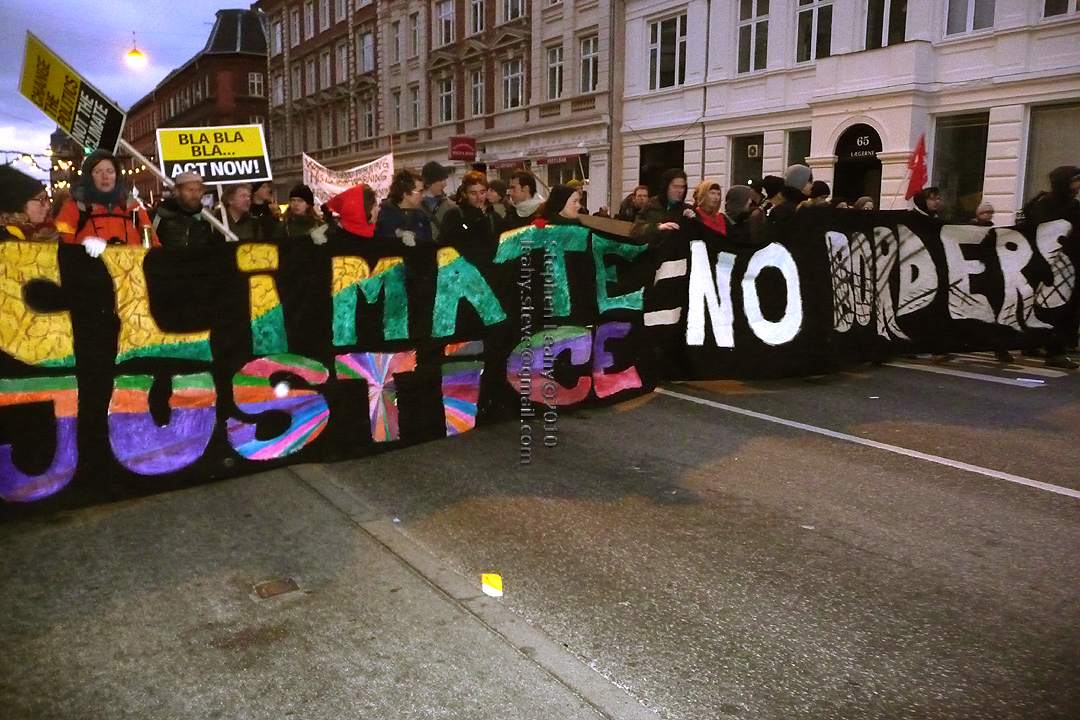
OUR Roof is on Fire: Dangerous Climate Change is Here

It will take lot of us – probably in the streets” to make politicians face the truth, says climate scientist James Hansen.

[Dangerous climate change is already upon us say some of the best scientists we have. But political leaders — and most of the public — don’t get it. This is an attempt to close the chasm between climate reality and climate denial fantasy. I wrote this at the end of the Copenhagen Climate meetings last December thanks in part to financial contributions from readers that allowed me to do the research and interviews. — Stephen]

Our leaders do not get the scale of the problem or the rapidity of the changes.”            — Andrew Weaver, climatologist at Canada’s University of British Columbia

Analysis by Stephen Leahy

COPENHAGEN Dec 22 ,2009 (IPS/TerraViva)

The roof of our house is on fire but our leaders, our economic system and we ourselves are ignoring the alarms and continuing to add more fuel. There are no exit doors in our house; there is nowhere else to go.

Dangerous climate change is already here.

The two-week climate summit in Copenhagen came to an end with disappointing results and details that are still vague.

A ”Copenhagen Accord” was agreed by the US, China, South Africa and India by Friday night. It was unclear which other countries were willing to support it.

But coral reefs are dying, the Arctic is melting and rising sea levels threaten the homes of millions. And we’re on our way to a planet-transforming four-degree C rise in global average temperatures in as soon as 50 years.

Future generations could face an utterly transformed planet, where large areas will be seven to 14 degrees C warmer, making them uninhabitable. In this world-on-fire, the one to two metre sea level rise by 2100 will leave hundreds of millions homeless, according to the latest science presented at the “4 Degrees and Beyond, International Climate Science Conference” at the University of Oxford in September.

That’s the science-based, slap-in-the-face reality as the Copenhagen climate talks fizzle out here with little progress Friday.

Our leaders do not get the scale of the problem or the rapidity of the changes. They don’t get that it must be dealt with now,” said Andrew Weaver, a climatologist at Canada’s University of British Columbia and lead author of the Intergovernmental Panel on Climate Change (IPCC) reports. Continue reading

Keeping Wetlands from Becoming Wastelands

By Stephen Leahy

VICTORIA, Seychelles, Feb 5, 2010 IPS

Swamps, marshes and other wetlands are beginning to be recognised as a countrys green jewels, even in a tropical paradise like Mahé Island here in the Seychelles, with its stunning beaches and dramatic granite outcrops.

“Wetlands are one of the worlds richest ecosystems on the planet,” said Joel Morgan, minister for environment, natural resources and transport, Republic of Seychelles.

“We islanders live closer to nature than many others and we have long understood the importance of wetlands and environmental services and resources they provide us with,” Morgan said at the first-ever World Wetlands Week.

Normally, World Wetlands Day is Feb. 2, but this year the Ramsar Convention, an intergovernmental treaty on conservation and wise use of wetlands and their resources, is celebrating wetlands around the world throughout the entire week.

The Seychelles were chosen for the global launch of World Wetlands Week because they exemplified the Ramsar principle of wise use successfully balancing tourism, development, food security and biodiversity, said Anada Tiega, secretary general of the Ramsar Convention.

“The Seychelles has done a good job implementing the Ramsar Convention,” Tiega said in the opening ceremony.

The Seychelles Islands are a tropical archipelago 1,800 kilometres off the east coast of Africa with a population of just 85,000 people. They comprise 115 islands – the Inner Islands are tall and granitic and the outer low-lying comprise coralline cays, atolls and reef islands. Although generally small in size, wetlands of various kinds can be found on most islands.

For complete article please see:  Keeping Wetlands from Becoming Wastelands

What if our air was 30% more acidic like the Oceans? May be 120% more acidic by 2060

Bleached coastal corals. Bantry Bay, Australia. R Leahy 2006

[2°C is a death sentence for corals scientists agree due to ocean acidification and bleaching resulting from emissions of carbon dioxide into the atmosphere. However the developed nations of the world have set 2 degrees C as the climate stabilization target not that any of them have figured out how to reach this target. It is as if the oceans don’t matter. This reflects a fundamental ignorance about life on Earth, an assumption that we can lose or seriously damage entire ecosystems without suffering any consequences.

This story shows we need to get serious about tackling emission reductions (below 2C) and preserving anything that sequesters or traps carbon because these will be tremendously valuable in a climate-changed world . — Steve

By Stephen Leahy*

COPENHAGEN, Dec 11 (IPS/TerraViva)

What would it be like if the air we breathe was 30 percent more acidic? The oceans are already 30 percent more acidic, and on their way to becoming 120 percent more acidic in 50 years at the current rates of carbon dioxide emissions.

Acidification is already affecting coral reefs, algae and plankton, the base of many marine food chains, according to a new report released here by the International Union for Conservation of Nature (IUCN).

“In the last 10 years, the growth of coral reefs in many areas has declined 15 percent,” said Carl Gustaf Lundin, head of the IUCN’s Global Marine Programme.

“That’s a dramatic shift,” Lundin told TerraViva.

The oceans absorb some carbon dioxide (CO2) from the atmosphere, but the vast quantity being emitted – mainly from the burning of fossil fuels – has altered basic ocean chemistry, turning it sour. That’s also affecting shell-forming plankton and disrupting the growth rates of other species, Lundin said.

The stated goal of many countries to stabilise global temperatures within an increase of no more than 2.0 degrees C. is still “a death sentence for most coral reefs”, he said. The 2.0 C. target implies a level of CO2 in the atmosphere of 450 parts per million (ppm), well up from the historical average of 280 ppm. Continue reading

The simple truth: “The whole thing unravels without protecting at least half of the planet”

Job #1. end government subsidies that drive economic activity that damages the environment

By Stephen Leahy

MÉRIDA, Mexico, Nov 17 IPS

At least half the planet must be protected if humanity is to survive the next century, declared conservationists at the conclusion of 9th World Wilderness Congress on Friday, Nov. 13.

“That is what the science said, this is what many aboriginal people say,” said Harvey Locke, the Wild Foundation's vice president of conservation strategy.

“It’s time to speak the simple truth: The whole thing unravels without protecting at least half of the planet,” said Locke.

A leading economic report released in Brussels also on Nov. 13 pegged the cost of the ongoing loss and degradation of nature’s “infrastructure” at a staggering 2.5 trillion to 4.5 trillion dollars a year.

The enormous challenges humanity faces this century – like a warming planet, freshwater shortages, pollution, declining fisheries, desertification and unsustainable food production – cannot be solved without protecting more than 50 percent of Earth’s land and oceans, Locke told IPS.

Protection doesn’t necessarily mean more national parks, but a ban on resource extraction and all forms of development.

Is this article of interest? It exists thanks to contributions from readers. Please click here to learn more about Community Supported Journalism.

“We all know we aren’t sustainably managing the Earth,” he told participants at the WILD9 congress, a partnership between the WILD Foundation, an international, non-governmental non-profit based in the United States, and Unidos para la Conservación, a conservation organisation in Mexico.

“It is time for us to state clearly the scale of conservation intervention needed to make the 21st century one of hope instead of despair,” he said. Continue reading

Amateur Biologists Join Global Bid to Catalog All the Species on the Planet – Join the Fun

By Stephen Leahy

UXBRIDGE, Canada, Aug 25 (IPS)

(all images courtesy of EOL)

Save the living environment and the physical environment will automatically be saved, according to E.O. Wilson, the world’s leading biologist and father of the online Encyclopedia of Life, which plans to create a web page for every known species – all 1.8-plus million.

Climate and water are parts of the physical environment that rely on the living environment – trees, insects, animals – to keep them clean, healthy and in balance.

But that fundamental reality is not well understood by the public and little progress has been made in preventing the destruction of ecosystems and species, Wilson recently told the New Scientist magazine. That’s why Wilson came up with the idea in 2003 to create a publicly accessible, interactive Encyclopedia of Life (EOL).

Launched in 2008, the EOL is growing quickly with 170,000 entries, over 30,000 still images and video – with some provided by members of the public.

“We want to engage the public. With the EOL they can survey the species in their yard and neighbourhoods and report what they find,” said James Edwards, EOL’s executive director based at the Smithsonian Institution in Washington.

“We’d love to see everyone become a ‘field biologist’ and submit what they’ve found,” he said.

Societal understanding and support is crucial to slow and reverse the loss of ecosystems and species, Edwards told IPS.

“If we can’t do that, we all will be in deep trouble,” he said.

Continue reading

Dwindling Fish Catch Could Leave a Billion Hungry

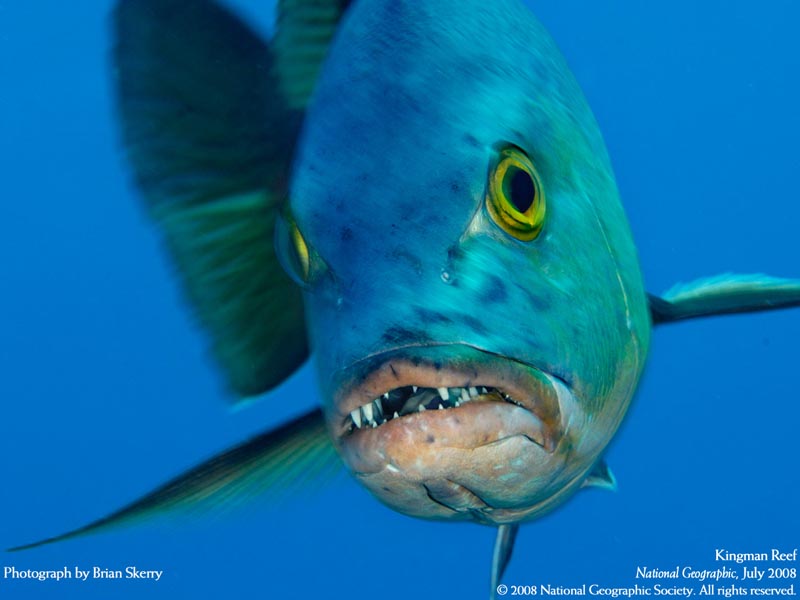
red snapper -- reef fish w teethBy Stephen Leahy

UXBRIDGE, Canada, Oct 9 (IPS)

Without action on climate change “The collapse of fisheries in much of the world would be a sideshow,” Daniel Pauly.

Fish catches are expected to decline dramatically in the world’s tropical regions because of climate change, but may increase in the north, said a new study published Thursday.

This mega-shift in ocean productivity from south to north over the next three to four decades will leave those most reliant on fish for both food and income high and dry.

“The shift is already happening, we’ve been measuring it for the last 20 years,” said Daniel Pauly, a renowned fisheries expert at the University of British Columbia (UBC).

“Major shifts in fish populations will create a host of changes in ocean ecosystems likely resulting in species loss and problems for the people who now catch them,” Pauly told IPS.

In the first major study to examine the effects of climate change on ocean fisheries, a team of researchers from UBC and Princeton University discovered that catch potential will fall 40 percent in the tropics and may increase 30 to 70 percent in high latitude regions, affecting ocean food supply throughout the world by 2055.

The study, published in the journal Global Change Biology, examined the impacts of rising ocean temperatures, changes in salinity and currents resulting from a warming climate. Continue reading