Danger in Turning Africa’s Foodlands into “Carbon Farms”

Keep Agriculture for Food, not Carbon$$

By Stephen Leahy

DURBAN, South Africa, Dec 2 2011 (IPS)

Civil society has warned of the danger of turning Africa’s food-producing lands into “carbon farms” so that rich countries can avoid making cuts in their carbon emissions.

On Friday, they called on host country South Africa to refrain from forcing so-called “climate smart” agriculture into the United Nations climate treaty negotiations known as the 17th Conference of the Parties (COP 17).

South African President Jacob Zuma has stated that agriculture should be part of a new climate treaty. South African officials have previously told IPS they want it included so there will be “specific funds and specific actions” for agriculture under the U.N. Framework Convention on Climate Change.

“Putting agriculture into a future climate treaty is supposedly a consolation prize to Africa for failure by rich countries to agree to legally binding targets,” said Teresa Anderson of the Gaia Foundation, an international non-governmental organisation based in London.

“This consolation prize is a poisoned chalice. It will lead to land grabs and deliver African farmers into the hands of fickle carbon markets,” Anderson told IPS.

Agriculture is a major source of global warming gases like carbon and methane – directly accounting for 15 percent to 30 percent of global emissions. When the entire food production system is included, total agriculture emissions represent nearly half of all emissions. For those reasons there have been previous efforts to incorporate agriculture under a new climate treaty.

             Become a Partner in Independent Enviro Journalism

Changes in agricultural practices can greatly reduce emissions. However, the best way to do that is through regulations, not a climate treaty and carbon credits, said Anderson.

“Why are markets now seen as the only solution when less than 10 years ago they weren’t a focus at all?” Continue reading

Become a Partner in Independent Enviro Journalism

A personal message from Stephen Leahy

“Journalism and media are society’s mirror providing accurate and essential information.

That is no longer the case.

Media are now controlled by a few major corporations like Murdoch’s News Corp. Coverage of environment and science has been gutted. If there is coverage it rarely digs below the surface. It’s not just TV, it’s all media.

After 18 years of being published in major publications on two continents I now count myself lucky to get $150 to $200 for an in-depth article. The few independent media outlets are either non-profits or struggling.

Urgent environmental issues didn’t go away just because most media stopped covering them.

More than 20,000 people attended the international climate meeting in Cancun, Mexico and it received one ten second clip on US network TV according to a Drexel University media study. (Coverage was even worse at last climate meet in Durban)

Nearly every indicator proves things are getting worse but less and less people know about this.

Many people, including leading scientists, tell me: ‘we need people like you to write about these issues‘. I’d like to do far more but it is impossible to continue without your help in what I’m calling Community Supported Journalism. People directly support independent journalists who craft honest and thoughtful articles about important subjects the mainstream media ignores or gloss over.

Community Supported Environmental Journalism Works

In 2010 dozens of people offered their help, donating $5,750 which helped ensure many breaking international stories were covered including the first media reports on the global die-off of corals and how climate change may be bringing colder winters to Europe and eastern North America. Those donors — I prefer to call them partners — enabled me to cover important international meetings like the UN Convention on Biodiversity, UNFCCC climate change conference and much more.

Thanks for reading.” — Stephen

Please join us. Consider a donation of just $10 a month to support enviro journalism that serves the public interest.

Contributions can be made safely and easily via PayPal* or Credit Card*. [You can cancel at any time, automatically. No need to contact me] 

Monthly support options starting @ $10 a month

One-time donations are most welcome. Click and enter the amount.

*More than 100,000 non-profits safely use PayPal Donate service

If you’d like a mailing address or contact me with story ideas, please complete this comment form.

Letters of Support:

We need people like you. In tough economic times, where information flow is increasingly channeled and controlled, you perform a simply critical role. Hang in there. You are an admirable role model for the future.”

– E. Ann Clark, Associate Professor, University of Guelph.

“Stephen Leahy has done a superb job exposing the enormous sums the US government is spending on corporate welfare for big oil.”

Ross Gelbspan, Pulitzer-prize winning editor and author of The Heat is On

My continued appreciation to those who have contributed in the past.

Faith Groups Call for African Spirit of “Ubuntu”; End Sinful, American-style Greed

South African Bishop Geoff Davies (L) and Mardi Tindal, Moderator of the United Church of Canada

By Stephen Leahy

DURBAN, South Africa, Dec 9 (IPS)

African and international faith leaders urged governments attending the final day of climate change negotiations to do what is right and necessary to keep global temperature from rising no more than 1.5 degrees Celsius.

“The two degrees Celsius target is unacceptable because temperatures in much of Africa will be far higher,” said South African Bishop Geoff Davies.

Oil and coal companies along with other major polluting corporations are engaged in “crimes against humanity and the planet” because they continue to pollute the atmosphere when they have ability to do otherwise, said David Le Page of the Southern African Faith Communities’ Environment Institute (SAFCEI).

More than 130 African faith leaders have signed a declaration offering specific recommendations based science, honesty, morality and equity. They called on delegates negotiating a new climate treaty here at the 17th Conference of Parties to live up to the African spirit of “ubuntu” – a way of living focused on people’s allegiances and relations with each other.

The current economic system encourages “people to get as rich as they can and forget about anyone else,” said Davies. “It’s an immoral system.”

“Historic polluters like the United States have to reduce their emissions dramatically” and their position here is “shocking” and “reprehensible”, he said. The children and grandchildren of U.S. congressmen will ask what they were doing to be so selfish and irresponsible, Davies said.

The U.S is the most religious society in the world but their behaviour is “sinful” in their refusal to reduce emissions that causing so much suffering among people, he said.

“When lifestyles of the wealthy hurt the lives of the poor….and future generations it is wrong,” Mardi Tindal, Moderator of the United Church of Canada, the country’s largest Protestant denomination.

“Climate change is a moral, ethical and spiritual issue. We need moral leadership not political leadership,” Tindal told IPS.

“South Africa has had courageous, moral leaders like Ghandi and Mandela. If our leadership shows the same moral courage the people will follow them.” Continue reading

Every six seconds a hungry child dies | UN Tries to Halt Land Degradation Crisis

By Stephen Leahy

CHANGWON, South Korea, Oct 25, 2011 (IPS)

Every six seconds a child dies of hunger-related causes.

That disturbing reality seems as remote as the moon here in the ultra-modern Changwon Convention Centre, where delegates struggled to create effective ways to stem the ongoing decline of food-producing lands.

Each year, 12 million hectares of land are lost where 20 million tonnes of grain might have been grown, according to the United Nations Convention to Combat Desertification. And that loss of food-producing lands is unlikely to change in the near future, even as the final gavel fell in the early morning hours of Oct. 22 at the end the two-week biannual 10th Conference of the Parties (COP 10).

“This conference has been highly successful,” said Lee Don Koo, minister of the Korean Forest Service and COP 10 president and host.

It was certainly the largest international gathering on land degradation, with 6,450 participants from 161 countries, including 83 ministers and deputy ministers. Lee Don Koo said this meeting sent a strong message to the world community about the need for strong, sustainable land management and for the pressing need to set targets to reduce land degradation.

“Our goal is to build a land-degradation-neutral world,” said Luc Gnacadja, executive secretary of the UNCCD. The target date to reach that goal is 2030, Gnacadja told IPS.

Gnacadja would like countries to officially adopt this goal at the RIO+20 conference in June 2012 in Brazil.

It has taken nearly 20 years to get to the point where there is agreement on 11 scientific indicators to measure land degradation and its impacts. Development and implementation of those indicators will take some years yet. The Convention has yet to address the economic and policy drivers of land degradation, acknowledged Antonio Rocha Magalhães, chair of the Committee on Science and Technology. Continue reading

Truth and Wisdom From Spiritual Leaders at Durban Climate Talks

Why do countries at the international climate talks accomplish so little when they apparently understand the science and risks of global warming?

Here is the knowledgeable, depressing and yet inspiring answer from three remarkable spiritual leaders:


That was a press conference on one the last days of the 2011 climate talks in Durban. And here is the article I wrote about this and the “ubuntu” declaration by more than 130 African faith leaders. — Stephen 

Canada’s Harper Government Guts Environment, Science and Monitoring Programs

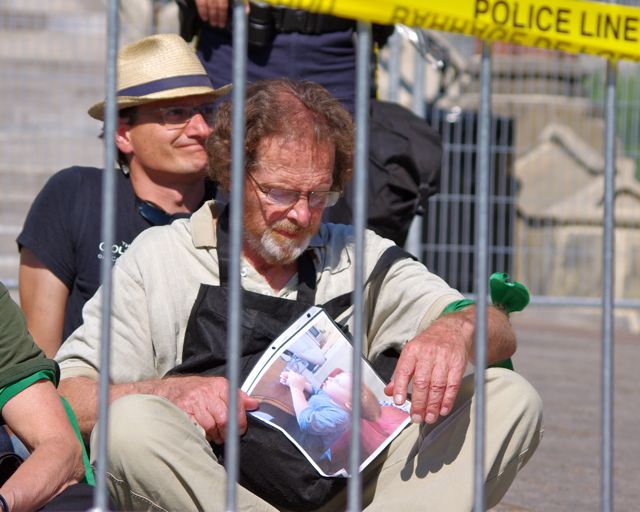
Man w picture of grandchild was arrested for protesting against tar sands expansion, Sept 2011 Ottawa, Canada - Pix by R Leahy

Environment budget slashed while PM Harper’s office places a gag order on government scientists. (And a $60 billion order for military equipment)

By Stephen Leahy

UXBRIDGE, Canada, Nov 9, 2011 (IPS)

Canada’s Stephen Harper government is spending more than 60 billion dollars on new military jets and warships while slashing more than 200 million dollars in funding for research and monitoring of the environment.

Amongst the programmes now crippled is Canada’s internationally renowned ozone monitoring network, which was instrumental in the discovery of the first-ever ozone hole over Canada last spring. Loss of ozone has been previously linked to increases in skin cancer.

“The proposed cuts go so far the network won’t be able to do serious science,” said Thomas Duck, an atmospheric scientist at Halifax’s Dalhousie University.

Canada was the pioneer in ozone monitoring, developing the first accurate ozone measuring tool that led to the discovery that the world’s ozone layer was dangerously thinning in the 1970s, which in turn led to the successful Montreal Protocol on Ozone Depleting Substances.

Canada has about one-third of the ozone monitoring stations in the Arctic region. It also hosts the world archive of ozone data, which is heavily relied on by scientists around the world.

“There’s only one guy running the entire archive, and he’s received a lay-off notice letter,” Duck told IPS.

Ozone monitoring and research is part of Environment Canada, the government department charged with protecting the environment, conservation and providing weather and meteorological information.

“Canada can’t afford to pay scientists but we can line the pockets of big oil?

That is totally backwards.”

Continue reading

The Quiet Crisis: Lost Foodlands Cover Area Larger Than Canada and China Combined – Two Billion People Affected

12 Million Hectares Lost Every Year to Desertification

Dealing with desertification has a long history of failure.

By Stephen Leahy

CHANGWON, South Korea, Oct 13, 2011 (IPS)

Degradation of land is the world’s quiet crisis, undercutting food production, increasing water scarcity, impoverishing hundreds of millions of people and affecting two billion overall. Nearly 20 million square kilometres of the earth’s arable lands – an area twice the size of Canada – have already been degraded.

Each year, 12 million hectares of land, where 20 million tons of grain could have been grown, are lost to desertification. Unless this trend is reversed soon, feeding the world’s growing population will be impossible, experts say. However, the global community has failed for over two decades to address this serious challenge.

Now, delegates from 193 countries are meeting in South Korea under the United Nations Convention to Combat Desertification (UNCCD) to review progress on a ten-year plan to reverse the ongoing decline in the quality and quantity of land in food-producing regions.

During the 10th Conference of the Parties (COP 10) under the UNCCD, delegates will also consider creating a scientific body like the Intergovernmental Panel on Climate Change to serve as the global authority on desertification and land degradation.

“The UNCCD will take bold steps towards delivering critical services to the two billion people that face negative impacts of desertification, land degradation and drought,” Luc Gnacadja, executive secretary of the UNCCD, told delegates during the opening session of COP 10 that began Oct. 10 and concludes Oct. 21.

Land degradation is mainly the consequence of poor land management in conjunction with changes in rainfall. Erosion and degradation most often result from ploughing fields, removing crop residues after harvest and overgrazing. It is akin to tire wear on cars – a gradual, less noticeable process with potentially catastrophic consequences if ignored for too long.

“People do not notice land degradation until there is a crisis,” said Pier Paolo Roggero, a scientist at University of Sassari in Italy. Continue reading

Selling Nature to Save Nature and Ourselves?

Humanity faces unprecedented challenge of climate change combined with food, water and energy shortages

“Markets are preconditioned on inequality and will only make matters worse”

By Stephen Leahy

THE HAGUE, Jul 5, 2011 (IPS)

Avoiding the coming catastrophic nexus of climate change, food, water and energy shortages, along with worsening poverty, requires a global technological overhaul involving investments of 1.9 trillion dollars each year for the next 40 years, said experts from the U.N. Department of Economic and Social Affairs (UN-DESA) in Geneva Tuesday.

“The need for a technological revolution is both a development and existential imperative for civilisation,” said Rob Vos, lead author of a new report, “The Great Green Technological Transformation”.

Absent in the U.N. report is a call for the other necessary transformation: what to do with the market-driven economic system that has put humanity on this catastrophic collision course? Attempts to “green” capitalism are failing and will fail, according to many of the more than 200 social science researchers at a groundbreaking international conference in The Hague titled NATURE INC? QUESTIONING THE MARKET PANACEA IN ENVIRONMENTAL POLICY AND CONSERVATION Jun. 30 to Jul. 2.

“We must start tackling and questioning some core capitalist dictums, such as consumerism, hyper-competition, the notion that ‘private’ is always better, and especially economic growth,” says Bram Büscher, the conference co-organiser and researcher at the Institute of Social Studies (ISS) at Erasmus University in The Hague, Netherlands.

Equally important is to stop looking at nature as a collection of economic objects and services that “must only benefit some specific idea of human economic progress”, Büscher told IPS.

Governments, the World Bank, the United Nations and development agencies, international conservation organisations and others have all come to see markets as the only way to mobilise enough money to end deforestation, increase the use of alternative energy, boost food production, alleviate poverty, reduce pollution and solve a host of other serious and longstanding problems.

Started as a small gathering of academics, Nature Inc? became a major event as hundreds of experts from around the world wished to participate. Büscher believes the main reason for this is that many are actively doing research on environmental and conservation issues and are increasingly running into new market schemes like carbon credit trading, payments for ecosystem services, biodiversity derivatives and new conservation finance mechanisms, and so on.

“Payments for ecosystem services are the newest tropical ‘miracle’ crop,” said Kathleen McAfee of San Francisco State University.

The market is putting new values on tropical forests as carbon sinks, reservoirs of biodiversity or ecotourism destinations, McAfee said during the conference. Continue reading

Cook Islands Aims for 100 Percent Green Energy by 2020

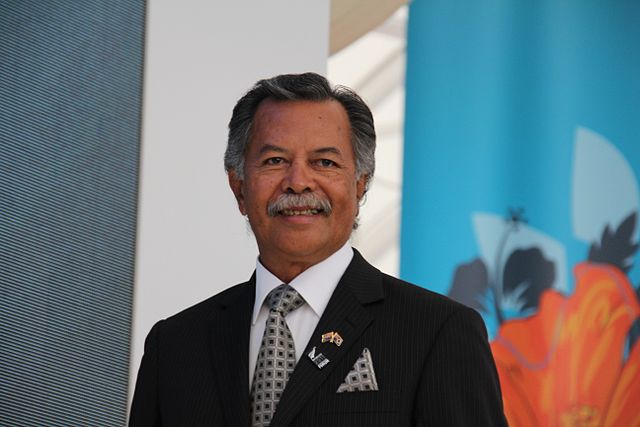
President of Cook Islands – Henry Puna
 Cook Islands’ Carbon Footprint is the size of a town of 3,000 in America

Stephen Leahy interviews HENRY PUNA, Prime Minister of the Cook Islands

VIENNA, Jul 13, 2011 (IPS) –

“One hundred percent renewable energy by 2020… It is ambitious but it is not impossible,” Henry Puna, prime minister of the Cook Islands, told IPS in a recent interview.

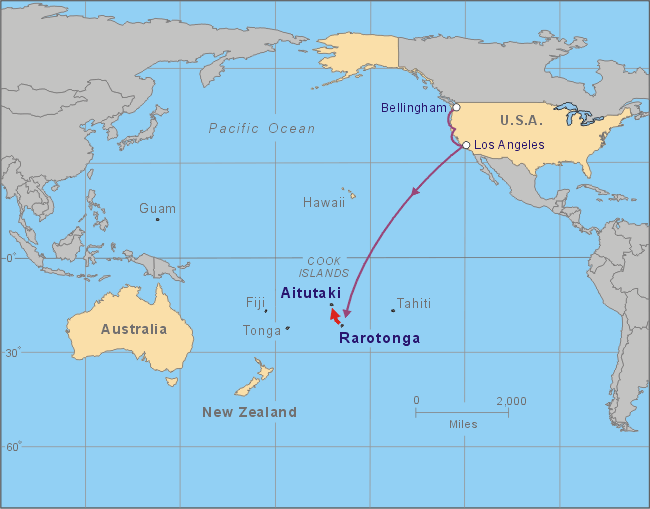
The Cook Islands is one of those low-lying island countries that will drown without serious cuts in the carbon emissions that are warming the planet and melting the world’s ice sheets.

Home to just 14,000 people, the Cook Islands is made up of 15 small islands spread over an area the size of India in the middle of the South Pacific. The entire country’s carbon emissions are about equal to those of the average U.S. or Canadian town of 3,000 people.

With an action plan born of desperation, it wants to be the world’s first zero-carbon emissions country by 2020. With little renewable energy at present and dependent on foreign aid, the Cook Islands plans to generate half of its energy with renewables just four years from now and reach 100 percent by 2020.

IPS senior environmental correspondent Stephen Leahy spoke with Prime Minister Puna at the Vienna Energy Forum in June, where 1,200 delegates from 120 countries and over 40 government ministers discussed how to bring clean, reliable and affordable energy services to everyone on the planet.

Excerpts from the interview follow.

Q: The Cook Islands have a tiny carbon footprint. Why are you making this commitment to be 100-percent renewable?

A: Statistically, our carbon emissions don’t register. As a people we want to do something about climate change, if not for the world than for ourselves.

Nearly all of our energy comes from oil [diesel and petrol] and we spend half of our national budget on oil. That’s tens of millions of dollars that leaves our islands. We want to keep those millions in our local economy. Cook Islanders people are strongly supportive of our dream is to be the cleanest and greenest destination in the world. One day the world will want to know how we got to 100 percent.

Q: Are you hopeful the international community will finally agree to make the necessary carbon emissions cuts to keep global warming to less than two degrees C?

A: The reality is that things move very slowly at the international level. At the [Vienna] forum, I urged the international community to ensure that global carbon emissions peak by 2015 and begin to decline. We need to act fast. This is the decade where we must bring emissions of climate change under control.

Our circumstances differ, we have different life experiences….but we are all part of Mother Earth and should share responsibility to keep her livable for all of us and not just for some.

Q: Are Cook Islanders worried about climate change?

A: The Cooks are already suffering from sea level rise, coral bleaching, more frequent and stronger cyclones, changes in precipitation, and increases in coastal erosion. We live off the sea and the land – we depend on nature for our livelihoods. Anything affecting nature causes alarm amongst people. Climate change threatens our very survival. There is a general sense of apprehension about the future.

Q: What makes you believe you can achieve your ambitious target?

A: Yesterday, I visited Güssing [in Austria], an impoverished town in the 1990s that re-made itself by going 100-percent renewable energy. They got rid of fossil fuels and achieved energy independence. They also attracted lots of clean and green businesses and become a tourist centre.

I spent time with the mayor. They’re going to come to the Cooks and give us advice. They are willing to share their experience. I’m absolutely excited by this.

Q: Your country has few financial resources. Do you really think the Cooks can do what Güssing has done?

A: It’s a small town and we’re a small country. What I learned from Güssing is that if there is the political will backed by public support, then anything can happen. We already have a plan for a two- megawatt solar plant in one of our islands. We have support from Japan, New Zealand and UNDP [the United Nations Development Programme].
Q: What are some of the obstacles you have to overcome?

A: The technology to generate all of our energy already exists but energy storage is the key. We also need to make sure some of this will be able to be used and maintained by isolated communities without the technical skills.

Q: Any final thoughts?

A: Knowing we are taking action helps us feel good even if the world does nothing. We’re not doing this just for the Cook Islands. It is our contribution to improve the overall global environment.

First published as Q&A: Cook Islands Aims for 100 Percent Green Energy by 2020 – IPS ipsnews.net.

Looking to the Sahel for Lessons in Pushing Back Deserts To Feed Billions

By Stephen Leahy

CHANGWON, South Korea, Oct 17, 2011 (IPS)

Nearly all our food comes from the Earth’s limited food- producing lands, but those lands continue to be degraded, guaranteeing far higher food prices and less food in the future, experts warn.

But degradation and desertification can be halted and reversed, as evidenced by once barren parts of Africa’s dry Sahel Region that are now green and thriving thanks to local efforts.

“Without reversing ongoing land degradation, studies show food prices will be 30 percent [higher] and 12 percent less food available” by 2035, said Luc Gnacadja, executive secretary of the United Nations Convention to Combat Desertification (UNCCD), which is meeting here in Changwon, South Korea.
We can’t afford to deplete our food-producing lands when there will be nine billion people by 2050,” Gnacadja said.

Food security is a major theme at this 10th Conference of the Parties (COP 10) under the UNCCD, the international governmental convention charged with finding ways to end desertification and land degradation.

Although the world can produce enough food for everyone, roughly one in seven people will go hungry. Why? They simply cannot afford to buy enough food. World food prices remain 15 percent higher than a year ago, according to the U.N. Food and Agriculture Organisation (FAO). Food commodity speculation and climatic change that is bringing increased heat and changes in precipitation patterns, along with increasing demand for biofuels, have been blamed for rising food prices in recent years.

Largely unseen in the growing concern about feeding the world is the decline in the fertility of soils due to erosion and overuse. Every year, this results in the effective loss of some 12 million hectares of land. Continue reading