Persistent La Niña Is Back Again — And Driving Up Food Prices

By Stephen Leahy *

UXBRIDGE, Canada, Oct 11, 2011 (Tierramérica)

La Niña is back less than three months after the end of its last appearance, a particularly strong event that contributed to driving up global food prices.

The new La Niña will continue the largely dry conditions in important agricultural regions in Brazil and Argentina as well as the southern United States and hurt yields of soy and wheat, experts say.

“Multi-year La Niñas are not uncommon,” said Jeff Masters, co-founder and director of meteorology for Weather Underground, the web’s first commercial weather service.

“The last was between 1998 to 2001 with a few months of neutral conditions like this year,” Masters told Tierramérica.

La Niña and El Niño are, respectively, the cold and warm phases of the famous El Niño-Southern Oscillation (ENSO), a cyclical climate phenomenon that affects weather patterns around the world.

ENSO is part of the system that regulates heat in the eastern tropical Pacific Ocean and is driven by changes in surface ocean temperature and air pressure.

“ENSO is undoubtedly being affected by climate change,” said Masters.  Continue reading

Rwanda Wins Gold for Forest Conservation Blueprint

By Stephen Leahy

UXBRIDGE, Canada, Sep 26, 2011 (IPS)

Government policies are seldom lauded, yet Rwanda’s forest policy has resulted in a 37-percent increase in forest cover on a continent better known for deforestation and desertification.

Rwanda’s National Forest Policy has also resulted in reduced erosion, improved local water supplies and livelihoods, while helping ensure peace in a country still recovering from the 1994 genocide.

Now Rwanda can also be known as the winner of the prestigious Future Policy Award  for 2011.

“Rwanda has sought not only to make its forests a national priority, but has also used them as a platform to revolutionise its stances on women’s

rights and creating a healthy environment,” said Wangari Maathai, Nobel Peace Prize Laureate and founder of the Green Belt Movement.

She issued a statement for the award ceremony in New York City last week just days before her death from cancer in Nairobi Monday at the age of 71. “Rwanda has been a very divided country since the 1994 genocide but this policy is helping to bring peace and value to the people,” said Alexandra Wandel, director of the World Future Council, which administers the Future Policy Awards.

The World Future Council is an international policy research organisation based in Hamburg, Germany that provides decision-makers with effective policy solutions.

“Our aim is to inspire other countries to adapt these successful policies to their individual needs.” said Wandel told IPS. Continue reading

The Future of Journalism: Adopt a Muckraker

“Should you and I pay for the kind of accurate news reporting that is needed to fill us in on what is happening to the planet?

If we’re not willing to pick up the tab to stay better informed, who will?”

Renowned Swiss journalist Daniel Wermus and Director of the Media21 Global Journalism Network in Geneva asks those questions in an April 2010 article about my launch of Community Supported Journalism in 2009. [Updated from Sept 2010] — Stephen

Frontline Earth: Adopt a Muckraker?

By Daniel Wermus

I meet international freelance journalists quite often. Most make it clear that budget cuts have made it increasingly difficult for just about anyone, especially freelancers, to get into print. It is usually the freelancers who are most willing to risk their lives to get the stories that need reporting the most. If the day arrives when they can no longer carry out their professions, we will all have a serious problem.

Muckraker: A reporter or writer who investigates and publishes reports involving a host of social issues, broadly including crime and corruption

Stephen Leahy, a Canadian, and one of the world’s best-known investigative reporters on environmental issues, has launched a challenge: if corporations won’t pay for the news, then it is up to communities and the public to fill the gap. A free society needs journalism, even if reporting the news is not commercially profitable.

Leahy’s model for supporting the news has the journalist make his pitch over the internet. The completed article can then be distributed by news agencies or magazines that are low on funds but high on public interest. That could be IPS, Reuters-Alertnet, Commondreams, InfoSud, The Essential Edge or any number of other publications and news outlets.

[edit: Wermus concludes] Continue reading

Too many of us, taking too much and having too big an impact. Will need 27 planet Earths by 2050

Slow loris from an illegal wildlife market in Southeast Asia

This story was featured on the IPS wire and on the Al Jazeera network . It’s about a study showing that national parks, conservation and protected areas have not and cannot halt the decline in biodiversity that is our life support system. It is hopeless without addressing the root cause of this and all other environmental problems: too many of us, taking too much and having too big of an impact. On our present course we’ll need 27 planet Earths by 2050 they conclude. — Stephen 

By Stephen Leahy

UXBRIDGE, Canada, Jul 29, 2011 (IPS)

Protecting bits of nature here and there will not prevent humanity from losing our life support system. Even if areas dedicated to conserving plants, animals, and other species that provide Earth’s life support system increased tenfold, it would not be enough without dealing with the big issues of the 21st century: population, overconsumption and inefficient resource use.

Without dealing with those big issues, humanity will need 27 planet Earths by 2050, a new study estimates.

The size and number of protected areas on land and sea has increased dramatically since the 1980s, now totaling over 100,000 in number and covering 17 million square kilometres of land and two million square kilometres of oceans, a new study reported Thursday.

This independent environmental journalism depends on public support. Click here learn more.

But impressive as those numbers look, all indicators reveal species going extinct faster than ever before, despite all the additions of new parks, reserves and other conservation measures, according to the study published in the journal Marine Ecology Progress Series.

“It is amazing to me that we haven’t dealt with this failure of protected areas to slow biodiversity losses,” said lead author Camilo Mora of University of Hawaii at Manoa.

“We were surprised the evidence from the past 30 years was so clear,” Mora told IPS.

The ability of protected areas to address the problem of biodiversity loss – the decline in diversity and numbers of all living species – has long been overestimated, the study reported. The reality is that most protected areas are not truly protected. Many are “paper parks”, protected in name only. Up to 70 percent of marine protected areas are paper parks, Mora said.

The study shows global expenditures on protected areas today are estimated at six billion dollars per year, and many areas are insufficiently funded for effective management. Effectively managing existing protected areas requires an estimated 24 billion dollars per year – four times the current expenditure.

“Ongoing biodiversity loss and its consequences for humanity’s welfare are of great concern and have prompted strong calls for expanding the use of protected areas as a remedy,” said co-author Peter Sale, a marine biologist and assistant director of the United Nations University’s Institute for Water, Environment and Health.

“Protected areas are a false hope in terms of preventing the loss of biodiversity,” Sale told IPS.  Continue reading

Inheriting the Whirlwind of Extreme Events

This article looks at the huge upswing in extreme events around the world. Imagine this: the worst-ever tornado season, the worst flooding, and worst heatwave  have hit the US this year. And they may yet experience one the worst hurricane seasons. “24 Hours of Reality” online broadcast documented this Sept 15 to help people clear their heads of the fossil fuel propaganda and open their eyes to the crisis we are facing.  — Stephen

There are four anti-climate change lobbyists in Washington for every member of Congress.”

By Stephen Leahy

UXBRIDGE, Canada, Sep 15, 2011 (IPS)

The dramatic increase in extreme weather that has affected hundreds of millions across the planet is one of the clearest signs that burning billions of tonnes fossil fuels has seriously and permanently disrupted the global climate, experts say.

That is the reality former U.S. vice president Al Gore is focusing on Thursday through an unprecedented live online event called “24 Hours of Reality” broadcast from 24 time zones and reaching millions of viewers in multiple languages.

“In 30 years of weather forecasting I have never seen extreme weather events like those in the last two years globally,” said Jeff Masters, co-founder and Director of Meteorology for Weather Underground, the web’s first commercial weather service.

“I never thought we could have the greatest outbreak of tornados, the worst-ever flooding, record heatwaves and droughts all in one year,” Masters told IPS at a press conference last week in reference to the multi-billion-dollar extreme weather the U.S. has endured this year.

“The hurricane season is only half over and is on pace to be a record year as well,” he said.

Masters and other climate experts say is the “new normal” for the coming decades is the reason why. Burning of oil, gas, coal puts billions of tonnes of carbon dioxide into the atmosphere, where it traps more of the sun’s heat in what is known as the greenhouse effect.

This independent environmental journalism depends on public support. Click here learn more.

That additional heat warms the oceans and air and allows more moisture to be retained in the atmosphere, scientists have long since proven. The enormous amounts of additional heat and moisture now trapped in the atmosphere are the potent fuel for extreme events.

“More than 1,400 high temperature records were broken in July in the eastern U.S.,” said Jerry Meehl, a senior scientist at the National Center for Atmospheric Research. Continue reading

Bike vs Car on a Hot Planet

Hanoi bike parade for climate action

E-cycles, bike highways and cutting government addiction to gas taxes

By Stephen Leahy

BERLIN, Jun 6, 2011 (IPS)

As global carbon emissions hit record-high levels last year, officials from leading Asian nations told the 2011 International Transport Forum in nearby Leipzig that their citizens want more cars.

At the same meeting, some Europeans urged a 21st century renaissance in bicycle transport, with electric and electric-assist bikes for personal health and the health of the climate.

“We in India need to provide more roads and rail,” said B.K. Chaturvedi, a member of India’s Planning Commission.

“Cycling is a miniscule thing. That’s not the future,” Chaturvedi told the nearly 800 attendees.

This independent environmental journalism depends on public support. Click here learn more.

“The bike is better to get around in Beijing, but bicycle use is dropping fast due to poor air quality and the danger from car traffic,” said Pan Haixiao, a professor at Tongji University in China.

Dar es Salaam, Tanzania's Moving Planet Cycle Caravan.

The number of cars and light trucks globally is projected to triple from the current 850 million to 2.5 billion by 2050, according to the International Transport Forum’s (ITF) Transport Outlook 2011. That growth is projected to be almost entirely in the developing world.

Richer countries are actually reducing the personal vehicle use in the last few years.

The Organisation for Economic Cooperation and Development’s ITF is an intergovernmental organisation for the transport sector involving 52 different nations.

Transport is the second leading source of carbon dioxide emissions, contributing about 7.5 gigatonnes to the 30.6 gigatonnes (Gt) emitted in total in 2010. The International Energy Agency (IEA) reported last week that humanity cannot exceed annual emissions of 32.0 Gt or it will be impossible to achieve the internationally-agreed target of below two degrees C of global warming to avoid very dangerous levels of global warming.  Continue reading

Costs for Nuclear Energy Skyrocket While Cost of Renewables Plummet

Darlington Nuclear Plant on Lake Ontario

[This is a repost about the financial costs and risks of nuclear technology (written before the Fukushima I Nuclear Power Plant disaster).   If a country is going to spend $10 billion to generate energy and reduce carbon emissions what technology truly offers the best return on a full cost-accounting basis? The latter calculation is not simple or uncontroversial. Two years ago Canada balked at the costs of new nuclear plants now it plans to build some without knowing the price tag.  — Stephen ]

By Stephen Leahy*

BERLIN, Jul 31, 2009 (IPS)

With costs of nuclear energy skyrocketing while the costs of renewables are falling quickly why is nuclear energy back on the table?

One reason is a powerful U.S. lobby where 14 energy companies spent 48 million dollars in 2007 alone to convince American politicians to give the industry huge loan guarantees because they cannot get financing anywhere else, says Ellen Vancko, a nuclear energy analyst at the Union of Concerned Scientists, a U.S.-based non governmental organisation (NGO).

This lavish lobbying effort by the energy and nuclear power sector has been ongoing since the mid-1990s, according to the Center for Responsive Politics, a U.S. NGO and now totals at least 953 million dollars.

Even more has been spent to convince the public that nuclear is one of the keys to energy security so that there is significant public support for new reactors, a Gallup Environment Poll reported this year.

“There are lots of senators and members of congress talking about nuclear as a clean, renewable energy resource,” Vancko says.

The other reason is the French.

France gets about 77 percent of its power from 58 reactors and is often cited as the model for other countries. “France is a special case. The entire industry is 85 percent owned by the government,” says Mycle Schneider, a Paris-based energy and nuclear policy analyst.

The industry gets direct and indirect subsidies, government loans and loan guarantees “on practically anything they want”, Schneider told IPS.

And despite a well-polished reputation for efficiency and low-cost, the French nuclear industry has been plagued by cost-overruns, equipment failures, and relatively low levels of reliability. Even though French reactors are all of similar design, the cost to build a plant in 1998 was 3.5 times higher than the first plants built in 1974, says Steve Thomas, professor of energy policy at the University of Greenwich in the U.K.
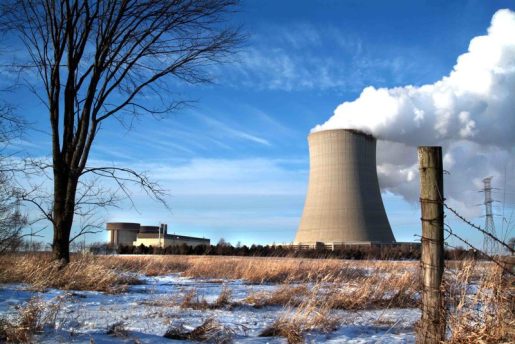
Unlike wind or solar energy or virtually any other technology, the costs of nuclear go up over time rather than down even in pro-nuclear France, he said. “I think that is rather telling about the technology,” Thomas told IPS.

The current Finnish nuclear experience echoes the industry’s long history.

Backed byFrench government loan guarantees, Areva, the French government-owned nuclear energy company began construction in 2005 on what is supposed to be the world’s largest and safest nuclear plant at Olkiluoto, Finland.

Plagued by thousands of construction and design problems it is currently 2 to 3 billion dollars over budget and three to four years behind schedule.

“It’s a total disaster for Areva,” Schneider says. Areva will have to sell another 12 reactors to cover the cost overruns thus far or else French taxpayers will, he said.

“The hype around a nuclear power revival or renaissance was based on nothing and is effectively dead.”

Last month Canada backed out of ordering two 1,200-megawatt reactors because cost estimates of 10,000 dollars/kW were three times higher than expected. [update Feb 2011 – Ontario now holding hearings to spend $33 billion to build two new reactors and upgrade others and bans offshore wind!]

However there is real danger that the nuclear industry will continue to promote itself as a ‘silver-bullet’ solution to climate change and give politicians the kind of mega-projects that gets them publicity, warns Schneider.

Equally important is that corporate shareholders of large utility companies can do very well financially on such projects when governments guarantee to cover any losses.

“The worst thing about new nuclear is that it steals billions of public dollars from other more effective things like energy efficiency,” he says.

(Second of two part series)

-30-

Part one:

Lobbyists Push for Nuclear Energy and put Taxpayers on the hook for 360 billion to 1.6 trillion dollars (again)

China, India, Brazil Doing More to Cut Carbon Emissions Cuts Than USA, Canada, Australia

By Stephen Leahy

BONN, Jun 17, 2011 (IPS)

Negotiations over a new international climate agreement are on the brink as new analyses show that carbon emission reduction promises by industrialised nations are actually lower than those made by China, India, Brazil and other developing nations.

Even with all the promises or pledges added together they are still far short of cuts needed to prevent global temperatures from rising two degrees Celsius, experts reported here.

“It’s a very sad picture we see here,” said Marion Vieweg of Climate Analytics, a German NGO that analyses climate science and policy.

This independent environmental journalism depends on public support. Click here learn more.

“The rich nations are doing nothing to improve their emissions pledges,” Vieweg told reporters during the final hours of the United Nations Framework Convention on Climate Change (UNFCCC) negotiating session here in Bonn. These meetings are intended to work out the details for a new international agreement for government ministers to consider at the 17th Conference of the Parties under the UNFCCC in Durban, South Africa in late November.

Continue reading

Can Obama Take First Step to Break Addiction to Oil? (And Win First Battle Against Big Oil?)

Sept 3 protest at white house

‘…unless river of money from Big Oil is diverted there is no way to deal with climate change’

Analysis by Stephen Leahy

UXBRIDGE, Canada, Aug 31, 2011 (IPS)

The United States’ biggest environmental groups put aside their differences last week to make an urgent intervention on the country’s addiction to oil. The first step on the long road to recovery, they say, is to stop the proposed construction of the Keystone XL pipeline that will “mainline” the world’s dirtiest oil from northern Canada into the U.S. heartland.

“This (Keystone) is a terrible project,” they wrote in a letter to President Barack Obama, citing dangers to the climate, the risks of disastrous spills and leaks, and the economic damage that will come from continued dependence on fossil fuel.

Oil from the Keystone XL will dump an estimated 150 million tonnes of carbon dioxide (CO2) annually into the atmosphere – more than most countries. Scientists warn that approval of the project will further fuel the extreme weather that has already resulted in over one billion dollars in damages recorded this year in nine separate extreme weather events in the U.S.

And that doesn’t include the estimated 20 to 45 billion dollars in costs from Hurricane Irene last weekend, mainly due to extensive flooding.

Carbon dioxide (CO2) emissions from fossil fuels do not cause hurricanes, tornados or droughts, but they do trap additional heat and water vapour that fuels those events, climate scientists have proven time and time again.

Asked about the impacts of adding another 150 million tonnes of CO2 into the atmosphere, German climate scientist Malte Meinshausen, a researcher at the Potsdam Institute for Climate Impact Research, told IPS that it will warm the planet for hundreds of years and lead to higher sea levels and “more pronounced droughts and floods”.

Continue reading

The Oxymoron of Political Leadership and Political Will

Analysis by Stephen Leahy

VIENNA, Jun 29, 2011 (IPS)

Political will is all that’s needed to bring electricity to the 2.5 billion people with no or unreliable access to power, or to feed the one billion who go hungry every day, or to finally begin to slash carbon emissions to avoid dangerous climate change, or just about any other global problem.

Humanity has the technology, resources and even the money to solve these problems, agree scientists, corporate business leaders, heads of civil society organisations and United Nations agencies and government ministers. “All that is lacking is political will,” they almost always declare at the dozens of international conferences, summits and forums this reporter has attended for the past five years. And then everyone goes home.

What is this magical “political will” that can solve any problem?

via The Oxymoron of Political Leadership – IPS ipsnews.net.