Truth and Wisdom From Spiritual Leaders at Durban Climate Talks

Why do countries at the international climate talks accomplish so little when they apparently understand the science and risks of global warming?

Here is the knowledgeable, depressing and yet inspiring answer from three remarkable spiritual leaders:


That was a press conference on one the last days of the 2011 climate talks in Durban. And here is the article I wrote about this and the “ubuntu” declaration by more than 130 African faith leaders. — Stephen 

Cars are only used 90 minutes a day on average. Peer-to-peer car sharing makes money for car owners and reduces need for car ownership.

Stephen's avatarStephen Leahy, International Environmental Journalist

Cars are parked 22 hours a day on average yet world will have 2.5 billion cars in 2050

The costs of car ownership and travel are far higher than anyone realizes: a 100 km total trip costs between 65 and 80 dollars when parking, fuel, wear and tear, insurance, depreciation, repairs are included. A car is usually parked and unused 22 hours a day but still incurs costs. Why not let someone use the car when you’re not and make some money at the same time Robin Chase told me for this article. She’s launched Buzzcar in France as part of a strategy for reducing carbon emissions and congestion in cities.   — Stephen

Why do car owners get so much more public space than bus riders, bicyclists or walkers?

By Stephen Leahy

BERLIN, Jun 2, 2011 (IPS)

The world’s more than 850 million cars and small trucks are parked…

View original post 1,085 more words

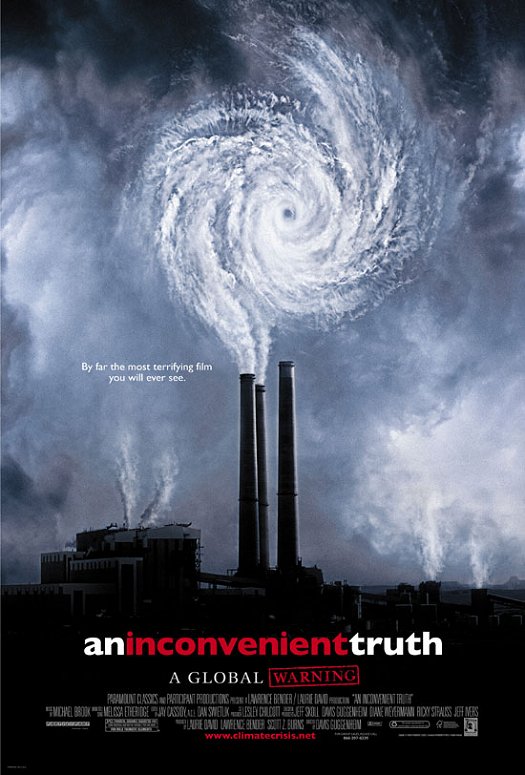
A Very Inconvenient Truth: Gore Got It Right on Global Warming

[Reposted from 2006, nearly six years ago. It offers interesting perspective about the continuing (worsening?) political insanity of inaction  – Stephen]

By Stephen Leahy

BROOKLIN, Canada, Jun 20 (IPS)

Former U.S. Vice President Al Gore’s documentary on global warming, “An Inconvenient Truth”, is filling theatres across North America – and gets the science right, according to climate experts.

“I saw it last night and was impressed with the climate science presented in the film,” said David Archer, a climatologist at the University of Chicago.

“I left the theatre profoundly depressed because of the political insanity in this country that denies global warming is a concern,” Archer told IPS.

Gore’s personal passion about global warming can be traced to the early 1980s. After losing the election to George W. Bush in 2000, Gore dedicated himself to warning the public about the devastating impacts climate change will have on hundreds of millions of people.

“An Inconvenient Truth” is a 98-minute documentary comprised mainly of highlights from Gore’s high-tech slide show explaining the science documenting global climate change.

Some truths are hard to hear, because if you really hear them – and understand that they are in fact true – then you have to change. And change can be quite inconvenient,” Gore says in the film.

Using an impressive set of graphics, he carefully illustrates changes underway such as receding glaciers, collapsing ice sheets, devastating floods and droughts. One memorable scene shows a graph of carbon-dioxide levels in the atmosphere going back 650,000 years that varies only a little until fifty years ago when it skyrockets. Gore mounts a motorised platform to lift him up high up the chart so he can place his finger on the current level of CO2. Continue reading

Toxic Electronic Waste Grows by 40 Million Tonnes a Year — Poisons Kids in Africa

A worker cooks computer motherboards over solder to remove chips and valuable metals at a makeshift e-waste workshop.

‘Public largely unaware of the e-waste impacts on human health and environment’

By Stephen Leahy

UXBRIDGE, Canada, Nov 1, 2011 (IPS)

Mountains of hazardous waste grow by about 40 million tons every year. This waste, mostly from Europe and North America, is burned in developing countries like Ghana in a hazardous effort to recover valuable metals.

A children’s school in Accra, Ghana’s capital, was recently found to be contaminated by lead, cadmium and other health-threatening pollutants at levels over 50 times higher than risk-free levels. The school is located directly beside an informal electronic waste salvage site.

“Poor people in Africa cannot afford to process Europe’s or America’s electronic wastes,” said Ghanaian researcher Atiemo Sampson.

“Those wastes are poisoning our children,” Sampson told IPS from Accra.

Ghana does not regulate the importation and management of electronic waste, or e-waste. The government hopes to have rules in place next year, he said.

Sampson, a Ph.D. student at the University of Ghana, was involved in testing the school and other areas in Accra near the Agbogbloshie scrap metal site, where more than 100 people break apart and burn electronic trash by hand to obtain valuable metals like copper.

Schoolchildren as young as six years old work around bonfires of circuitry, plastic and other leftover high-tech trash, he said.

A nearby produce market, a church headquarters and a soccer field were similarly polluted, to varying degrees. The soil around the school site had measurements for lead 12 times higher than the levels at which intervention is required. Lead is acutely toxic to children and can permanently damage their growing brains and nervous systems, even at very low levels of exposure.

“We don’t know what the immediate health impacts are. We are hoping to test the children’s blood for contaminants but we have not secured the necessary funding,” Sampson said.

International shipments of electronic trash are outlawed by the Basel Convention. However, European and North American e-waste is often shipped as “electronics for reuse” or hidden with legitimate cargo.

Continue reading

Shale Gas a Bridge to More Global Warming

Shale Gas Worse Than Coal Study Finds

By Stephen Leahy

UXBRIDGE, Canada, Jan 24, 2012 (IPS)

Hundreds of thousands of shale gas wells are being “fracked” in the United States and Canada, allowing large amounts of methane, a highly potent greenhouse gas, to escape into the atmosphere, new studies have shown.

Shale gas production results in 40 to 60 percent more global warming emissions than conventional gas, said Robert Howarth of Cornell University in New York State.

“Shale gas also has a larger greenhouse gas footprint than oil or coal over the short term,” said Howarth, co-author of a study called “Venting and Leaking of Methane from Shale Gas Development” to be published in the journal Climatic Change.

(Audio of news conference)http://of%20news%20conference

This latest study follows up on Howarth and colleagues’ controversial April 2011 paper that provided the first comprehensive analysis of greenhouse gas emissions from shale gas obtained by hydraulic fracturing. That study found that when gas wells are “fracked”, they leak large amounts of methane and pose a significant threat to the global climate.

“We stand by the conclusion of our 2011 research,” said Howarth.

That research undercuts the logic of energy sector claims that shale gas is a “bridge” to a low-carbon energy future. Those claims are based on the fact that natural gas (which is mainly methane) has half the carbon content of coal, and when burned for electricity it is more energy efficient than coal.

This independent  journalism depends on public support. Click here learn more.

However, those climate gains are more than negated by methane leaks both at the well during the fracking process (called flow-back), and through the gas delivery and distribution system. Howarth and colleagues estimate that between 3.6 and 7.9 percent of all shale gas produced leaks – called “fugitive emissions” – into the atmosphere, making it worse than burning coal or oil. Continue reading

No Time Left to Adapt to Melting Glaciers — Peak Water Has Already Come and Gone

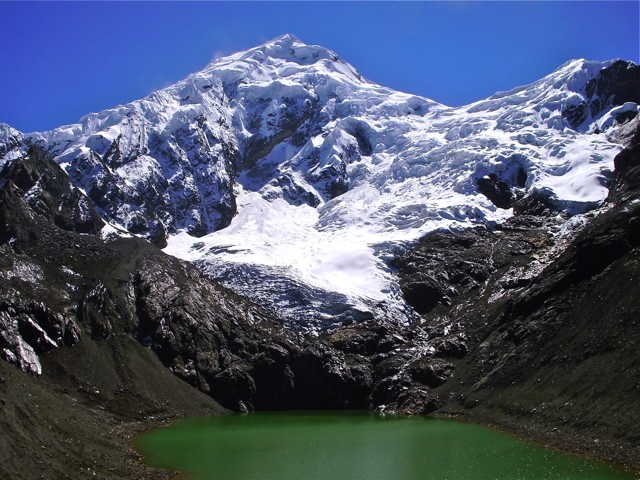
Melt water from the glaciers of the Cordillera Blanca forms lagoons that in turn feed rivers and streams. Credit:Courtesy of Michel Baraer

Without sharp reductions in the use of fossil fuels, the impacts of climate change could come faster and beyond what humanity can adapt to — Lonnie Thompson, glaciologist

By Stephen Leahy

UXBRIDGE, Canada, Dec 27, 2011 (Tierramérica)

The water supplied by the glaciers of the Cordillera Blanca, vital to a huge region of northwest Peru, is decreasing 20 years sooner than expected, according to a new study.

Water flows from the region’s melting glaciers have already peaked and are in decline, Michel Baraer, a glaciologist at Canada’s McGill University, told Tierramérica. This is happening 20 to 30 years earlier than forecasted.

“Our study reveals that the glaciers feeding the Río Santa watershed are now too small to maintain past water flows. There will be less water, as much as 30 percent less during the dry season,” said Baraer, lead author of the study “Glacier Recession and Water Resources in Peru’s Cordillera Blanca”, published Dec. 22 in the Journal of Glaciology.

When glaciers begin to shrink in size, they generate “a transitory increase in runoff as they lose mass,” the study notes.

However, Baraer explained, the water flowing from a glacier eventually hits a plateau and from this point onwards there is a decrease in the discharge of melt water. “The decline is permanent. There is no going back.” Continue reading

Oceans Becoming Hot, Sour and Breathless

Oceans home to 80% of all life — plankton provide 50 percent of the oxygen we breathe

By Stephen Leahy

DURBAN, South Africa, Dec 3 (IPS)

The world’s oceans are becoming hot, sour and breathless – threatening a vital source of food for a billion people mainly in the developing world experts warned today at a special Oceans Day event at the UN climate negotiation.

Oceans are home 80 percent of all life on the planet and emissions from fossil fuels are turning them increasingly acidic, raising water temperatures and reducing the amount of oxygen in some regions said oceanographer Carol Turley from Plymouth Marine Laboratory in the UK.

“We don’t know what all the consequences will be. We suspect the combination of all three will be far worse than one alone,” Turley told IPS in an interview on the sidelines of climate treaty negotiations known as COP 17.

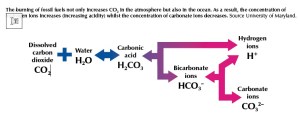
It was only a few years ago that researchers realised that human emissions of carbon dioxide (CO2) was making the surface waters of oceans more acidic. The oceans naturally absorb CO2 from the atmosphere and have now absorbed about a third of all human emissions. That has kept the climate from warming faster but the additional carbon is altering the oceans’ chemistry making them 30 percent more acidic.

One documented impact is that shell-forming creatures like plankton produce thinner shells in more acidic ocean waters. These species are often very important parts of the marine food chain. As emissions of CO2 into the atmosphere increase the more the ocean sours.

[See a powerful 11 min film on Ocean acidification]

In less than ten years at least 10 per cent of the Arctic Ocean surface waters will be too acid for shell-forming species like plankton. By 2040 most of the Arctic Ocean will be too acidic as will significant areas of the Antarctic Ocean said Turley.

Change in sea water acidity pH caused by anthr...The cold waters of the polar regions allow more CO2 to be absorbed faster. The oceans haven’t seen a rapid change like this in 60 million years, she explained.

“But there will also be strange impacts. New research is showing changes in growth, behaviour and reproduction in a variety of non-shell forming species.”

Estuaries and ocean upwelling zones that are often important fishing grounds are also regions where acidification is fastest. Those areas are also subject to low oxygen levels and increasing temperatures creating new conditions in the oceans that no marine species has ever had to cope with.

Oceans are also absorbing most of the extra heat trapped by the additional CO2 in the atmosphere. Again, without this land temperatures would far higher and extreme weather events far worse.

“There is some evidence that some crab species cannot tolerate higher temperatures when ocean is more acidic,” she said.

Continue reading

“Fracking” for Shale Gas: The Bridge to Global Warming Disaster

Switching from coal to gas can increase global warming – NCAR

[UPDATE JAN 20 2012: New study published in journal Climatic Change shows large volumes of methane released during fracking]

By Stephen Leahy 

DURBAN, South Africa, Dec 5, 2011 (Tierramérica)

Hydraulic fracturing or “fracking” is being used to tap the last remaining natural gas deposits across large areas of the United States and western Canada, fueling continued dependence on hydrocarbons instead of a shift to genuinely clean energy sources to cool the planet.

Called shale gas, these deposits represent a new and enormous source of fossil fuel.

“Fracking is driving exploration and drilling all over the United States,” said Gwen Lachelt of the non-governmental organisation Earthworks’ Oil & Gas Accountability Project.

“The oil and gas industry is marching across America from Texas to North Dakota and from the east coast to California,” Lachelt told Tierramérica.

There may be as much as 23,427 billion cubic metres (bcm) in recoverable gas from U.S. shale formations, according to the Annual Energy Outlook 2011, released in April by the U.S. Energy Information Administration (EIA).

The United States will consume 650 bcm of natural gas this year, the EIA projected. Globally, it estimates reserves of “unconventional gas” – the oil and gas industry term for shale gas and coal bed methane – at 915,000 bcm, with 100,000 bcm in Latin America.
However, that estimate is already out of date due to developments in fracking technology and exploration. The EIA estimate of shale gas in the United States in 2009 was less than half the 2011 estimate.

Fracking uses horizontal drilling and hydraulic fracturing with high pressure water and chemicals to fracture gas-bearing shale rock.

Holes are drilled vertically as little as 100 metres and as much as 3,000 metres into the shale, and then horizontally 1,000 metres along the shale formation. Chemicals and large amounts of water are pumped underground at high enough pressure to fracture the shale, releasing the gas into the pipeline.

The “dash for gas” as the industry pundits like to say is being driven by potential exports to Asia and the mistaken belief that natural gas is the “transition fuel” from coal to a low-carbon economy.

It is true that natural gas is “cleaner” in that it releases about 40 to 45 percent less carbon dioxide than coal does to produce the same amount of energy.
However, gas from fracking has a higher carbon footprint because more energy is needed to get the gas and because methane leaks out.

Methane has 25 times the warming impact of carbon dioxide.

Switching from coal to gas as an energy source could result in increased global warming, not less, according to the study “Coal to Gas: The Influence of Methane Leakage”, released in September by the U.S. National Center for Atmospheric Research (NCAR).

This is mainly due to the methane leakage problem, which is common but unregulated.

[UPDATE JAN 20 2012: New study published in journal Climatic Change shows large volumes of methane released during fracking]

Toxic Pollution Shortens Lives By More Than a Decade

Haina, Dominican Republic - Children are developmentally impaired as a result of lead poisoning

Toxins and pollutants are major cause of illness

100 Million affected by 2000 toxic sites

By Stephen Leahy

UXBRIDGE, Canada, Nov 14, 2011 (IPS)

Toxic pollution affects the health of more than 100 million people, shortening their productive life spans by an astonishing 12.7 years on average.

It is a common misperception that disease is responsible for most illness, when in fact toxins and pollutants in the environment are a major source of illness and reduced life spans globally.

Unlike diseases, toxins and pollutants like lead, mercury, chromium, radionuclides and pesticides were created by humans and are often improperly disposed of in a classic example of fouling our own nests.

“To be honest, we were astonished the number was so large,” said Bret Ericson of the Blacksmith Institute, a small international NGO that released its annual report “World’s Worst Pollution Problems Report 2011” last week.

At least 100 million people are affected based on assessments of 2,000 toxic sites in 47 countries. Most of these sites are right inside villages and towns – all are close to people.

“There are thousands more sites out there,” Ericson told IPS. Continue reading