CANADA: A Govt Versus Its People on Climate Change

Stephen Harper, Canadian politician
Image via Wikipedia

By Stephen Leahy

UXBRIDGE, Nov 19, 2010 (IPS)

The Canadian public is completely at odds with its own government on climate change, a new survey revealed Friday.

A large majority of Canadians want urgent action on climate, including redirecting military expenditures to reduce greenhouse gas emissions. In sharp contrast, the Stephen Harper-led Conservative minority government used parliamentary trickery to kill pending legislation to reduce emissions that had already been passed by the majority of Canada’s elected representatives.

“This is a real low point in Canadian democracy,” said Andrew Weaver, a climate scientist at the University of Victoria.

“It’s an abuse of democracy like we’ve never seen before in this country,” Weaver told IPS.

Do consider making a small automatic monthly contribution as a fair exchange for these articles.

Continue reading

A Reporter’s Diary: EXCLUSIVE COVERAGE OF UN CONVENTION ON BIOLOGICAL DIVERSITY FROM NAGOYA, JAPAN

NOTE: The following are excerpts from my personal notes to friends and supporters written during the heat, confusion and massive information dump of a major international conference. Often written late at night I attempted to offer some personal perspective into what was going on and what I was up to. — Stephen

Tuesday, 19 Oct – Geopolitical obstacles getting in the way

I’m here at the big UN conference on biodiversity. It’s 430 am here, the first day ended about 9 pm. It’s 12-ring cat circus like the Copenhagen climate meeting but the mood here is more positive. There are similar geopolitical obstacles getting in the way of slowing the loss of species and ecosystems. Another major difference is the lack of little public awareness of the fact that we cannot continue to shred nature’s web of life without suffering dire consequences.

I’ll try and do my bit – write 10 -12 articles over next two weeks. I wanted to thank a couple of supporters who helped out to cover some of the travel costs. I want to keep you informed of what’s going on here but these notes take a couple of hours to do.

This week is a story about an important development in Africa: In sincere efforts to make one last major attempt to transform Africa’s poverty and hunger are we imposing our worldview on Africa yet again? Bill Gates and others are donating hundreds of millions to create a New Green Revolution for Africa. This difficult and controversial story took over a week to do and wrote the final draft during my 17 hr flight here.

My other story connects the dots between extreme weather this summer and climate change. No single storm is directly attributable to CC BUT without CC it is unlikely the Russian heat wave and floods in Pakistan would have occurred. (PS those were events were two sides of the same coin)

Finally I received a number of letters, mostly positive but a couple saying I was too negative in last week’s article ‘Don’t Worry Be Happy’ Canada Sees Global Warming “Prosperity” Instead of Calamity’. Any organization that puts out a chart of climate impacts at 4 – 5C of global warming and fails to mention the scale of the calamity that would result is delusional or deceptive. Some take the stunningly selfish and naive view we can ‘adapt’ by turning up the AC.

Do consider making a small automatic monthly contribution as a fair exchange for these articles.

Greenest wishes, Steve


Wednesday, 20 Oct – Diversity R Us

There is an astonishing diversity of people here. Last nite I talked to an Amazonian Indian who took 10 days to get here, had wine accidentally spilled on me by a reindeer herder from Finland and found the lost passport of a Brazilian diplomat. And that is a five minute snap shot. It is a very big world with so many different people it is incredible they have all come here to try and address a common issue. That they can’t agree on what kinds of actions and how to implement should not come as a surprise.

Sunday, 24 Oct – Canada won’t play nice (yet again)

Canada is blocking agreement on a key measure to get a new international agreement to protect biodiversity here. This is not new. In recent years Canada has gone out its way to snub international UN agreements including the outright refusal to fulfill its legal obligations under the Kyoto Protocol. Hard to believe the same government lobbied hard for a seat on the UN security council and actually expected to be rewarded.

Sadly there is no one reporting for Canadian publications to document the irony. (And as a result Canadian’s aren’t really aware of what their government is up to.) Continue reading

100 Million Suffering in World’s Toxic Hotspots – 1% of Wall Street Bonuses Would End This In a Year

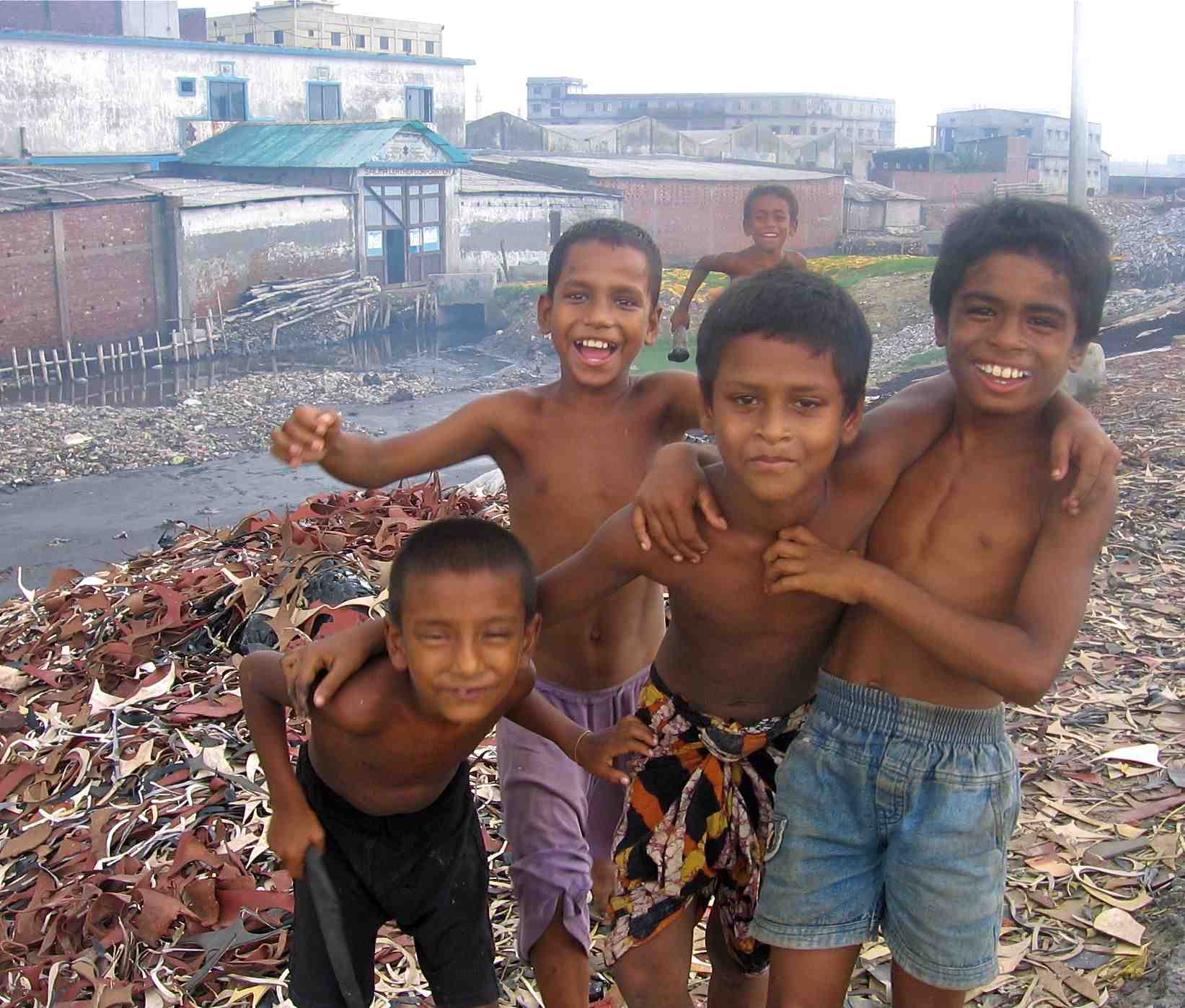
Millions of kids are condemned to die or suffer severe brain damage because there is no money to clean up toxic sites and neighborhoods. One or two billion dollars would solve the problem permanently but health advocates have to beg and plead to get maybe $20-$30 million. Wall Street’s 2010 bonus and salaries are estimated to total a record-breaking $144 billion for just 36 firms according to Wall Street Journal.

Don’t you think they could donate 1 per cent of their ‘earnings’? — Stephen

By Stephen Leahy

UXBRIDGE, Canada, Nov 11, 2010 (IPS)

One of the world’s biggest health threats is also one of the least recognised – more than 100 million people who literally breathe and eat toxic pollutants like lead, mercury, chromium every day, according to the first-ever detailed assessment.

By contrast, global attention and billions of dollars are focused on AIDS, tuberculosis and malaria, which affect comparable numbers of people.

“Toxic pollution has been under the radar screen of most governments for some time,” said Stephan Robinson of Green Cross Switzerland, a group focused on environmental health, and co-author of the assessment titled “World’s Worst Pollution Problems Report 2010”.

“These pollution problems can be dealt with affordably and effectively,” Robinson told IPS.

Past clean-up projects designed by the groups range from the very low-tech, low-cost to more technical engineering projects involving soil removal at playgrounds and groundwater remediation, he said. Continue reading

Why Are We Looking for More Oil & Coal? We Already Have Enough to Cook the Planet 4X

Proven reserves of oil, gas and coal represent four times the amount of carbon that would blow through the 2-degree C climate target (which no one really thinks is ‘safe’).  Burning just one quarter of those proven reserves will bring humanity to the 50-50 point of tipping into dangerous climate change said leading climate scientists in 2009. We need a plan to phase out emissions of carbon entirely they said in my article for IPS. — Stephen

“Only a fast switch away from fossil fuels will give us a reasonable chance to avoid considerable warming,” said Malte Meinshausen, climate researcher at the Potsdam Institute for Climate Impact Research.

See full article based on studies published in Nature:

Heading for +2 degrees C (3.6 degrees F) Carbon Use Must Peak by 2015 Scientists Warn

Reefs and Forests Burn as Climate Disruption Takes Hold NOW


A lot of coral reefs have died this year due to unprecedented ocean heating largely due to climate change. I broke that story last summer. Few coral reefs will survive the next 50 years most experts say without immediate action to reduce greenhouse gas emissions.


Forests are next in line according a new study in PNAS. Huge uncontrollable wildfires will dominate forest landscapes of the near future without dramatic reductions in the burning of fossil fuels the study found.

I would have done a full article explaining all this but simply can’t find a publication willing to pay me to do the work. That’s why I am trying community supported journalism where readers donate small amounts so these articles get done and made available for millions to read.

— Stephen (November 10 2010)

Biofuels Worse Than Paying People to Use More Gasoline – European Study

I’ve done several articles previously about the problems of biofuels. (see below). New report out today shows Europe’s biofuel policy completely wrong headed.

European plans to promote biofuels will drive farmers to convert 69,000 square km of wild land into fields and plantations, depriving the poor of food and accelerating climate change, a report by green groups warned.

…extra biofuels that Europe will use over the next decade will generate between 81 and 167 percent more carbon dioxide than fossil fuels,

— read Reuters take

My previous articles listed below cover much of the same ground although the report is more specific reading impacts of EU policy than anything to date.  — Stephen

Europe’s Green Energy Portfolio Up in Smoke?

“Europe is going to cook the world’s tropical forests to fight climate change; it’s crazy” — Millions of Trees Burned for ‘Green Energy’

Ethanol and Biofuels – Everything (Almost) You Need to Know

An Awakening to the Unravelling of the Web Life – Will Action Follow?

Youth Demand Need a Voice.  Halting Biodiversity Decline Impossible Without Economic Transformation

Analysis by Stephen Leahy 

NAGOYA, Japan, Nov 1, 2010 (IPS)

The international community has finally awoken to the other great trans-boundary challenge of our time, with a new international agreement to halt the unravelling of the web of life that sustains humanity.

The new agreement by 193 nations that are part of the U.N. Convention on Biological Diversity includes a commitment to reduce the rate of species loss by half by 2020, as well as the historic Nagoya Protocol on access and benefit sharing of genetic resources.

This awakening only applies to the few early risers. The vast majority remain asleep, unaware of our utter dependence on the living things that are the one and only source of oxygen, water, food and fuel. And unaware that nature is our reality while the economy is simply a complicated game we created.

Japan imports more than 60 percent of its food and most of Europe’s ecosystems have been trashed, with only 17 percent in reasonable shape, according to a first-ever assessment. The only reason those countries haven’t collapsed is they are rich enough to help themselves to nature’s ecological resources and services like food, timber, materials from the rest of the world.

Put a glass lid over Japan, Germany or England and they wouldn’t last long.

“We exploited the biological resources abroad, especially in the South. This is why we, the people of Aichi, Nagoya, must apologise…for the deterioration of the ecosystems and biodiversity we have caused,” says a public appeal by civil society from Nagoya, the host city of the U.N. Convention on Biological Diversity (CBD) for the last two weeks of October.

The Japanese government wanted no part of this apology, says Kinhide Mushakoji, one of the organisers and a professor at the Osaka University of Economics and Law. The appeal was signed by 156 organisations in Japan.
Continue reading

Biodiversity Pact Signed To Halt Species Extinctions and Protect the Web of Life

By Stephen Leahy*

NAGOYA, Japan, Oct 31, 2010 (Tierramérica)

The delegates to the 10th Conference of Parties (COP 10) to the Convention on Biological Diversity ended up with a relatively weak plan for the Herculean task of halting the disappearance of species. The exception was a pact on the use of genetic resources.

Delegates from 193 countries agreed to put under protection 17 percent of land and 10 percent of oceans by 2020 to stop the loss of plant and animal diversity in their ecosystems.

Currently less than 10 percent of land and less than one percent of the oceans are protected. Previous targets had been 25 and 15 percent, respectively

But among the items agreed was the “Nagoya Protocol on Access to Genetic Resources and the Fair and Equitable Sharing of Benefits Arising from Their Utilisation,” the most notable achievement of COP 10 — which had been in negotiations for 18 years.

The Nagoya Protocol establishes mechanisms for making use of the genetic material in plants, animals and microbes for food, medicines, industrial products, cosmetics and other applications.

Is this article of interest? It exists thanks to contributions from readers. Please click here to learn more about Community Supported Journalism.

Continue reading

Northern “Biopirates” Gobbling up Living Resources of the Global South

By Stephen Leahy

PARIS, Feb 1, 2010 (IPS)

Rich countries are like biopirates, looting far-away lands for food, raw materials and cheap labour. They’re plundering other richer ecosystems because they’ve largely destroyed their own. And they’re blocking global efforts to create an independent scientific assessment panel that is likely point the finger at the real reason species are going extinct at 1,000 times their natural pace, experts say.

European politicians were “shocked” to learn that just 17 percent of Europe’s ecosystems were in decent shape, Dominique Richard of the European Environmental Agency told participants on the final day of the U.N.-hosted Biodiversity Science Policy Conference in Paris.

“We’ve just completed our first complete assessment of the state of biodiversity in Europe and the results really shocked policymakers,” said Richard, a European biodiversity expert.

Most of Europe’s natural systems that provide essential services like food, clean air and water, climate regulation and so on have been in decline for years. But no one in Europe really notices.

That’s because the rich are “geosphere people” who help themselves to nature’s ecological services anywhere in the world, said Ashok Khosla, an eminent Indian environmentalist and founder of the Delhi-based Development Alternatives Group, who was representing the International Union for Conservation of Nature.

Is this article of interest? It exists thanks to contributions from readers. Please click here to learn more about Community Supported Journalism.

The poor, on the other hand, are “ecosystem people” who depend directly on local resources for their livelihoods, Khosla told delegates. The ecosystem people cannot afford to get their food or water elsewhere, so if they degrade their own ecosystems, they suffer the direct consequences. Continue reading

Runaway Global Economy Decimating Nature — World Bank Offers A Solution

By Stephen Leahy

NAGOYA, Japan, Oct 28, 2010 (IPS)

One-fifth of all birds, fish and animals are threatened with extinction – as many as six million unique and irreplaceable forms of life – an authoritative new assessment warned Wednesday.

Deforestation, agricultural expansion, overfishing, invasive alien species and climate change are the specific causes, but the main engine of destruction is an economic system that is blind to the reality that there is no economy or human well-being without nature, experts here say.

“Without global conservation efforts the situation would be massively worse,” noted Simon Stuart, chair of the International Union for Conservation of Nature (IUCN) Species Survival Commission, which launched the study at the 10th Conference of the Parties to the Convention on Biological Diversity (CBD) in Nagoya, Japan.

Published in the peer-reviewed journal Science, it is the most comprehensive assessment ever done of the world’s vertebrates – mammals, birds, amphibians, reptiles and fishes – Stuart said.

Every year, 52 species of mammals, birds and amphibians move one step down a three-step path to extinction, according to the study, which utilised data for 25,000 species from the IUCN Red List of Threatened Species.

Southeast Asia has experienced the most dramatic recent losses, largely driven by the planting of export crops like oil palm, commercial hardwood timber operations, agricultural conversion to rice paddies and unsustainable hunting, the study found. Parts of Central America, the tropical Andes of South America, and even Australia have also all experienced marked losses, in particular due to the impact of the deadly chytrid fungus on amphibians.

“The backbone of biodiversity is being eroded,” said the eminent U.S. ecologist and writer Edward O. Wilson of Harvard University.

Is this article of interest? It exists thanks to contributions from readers. Please click here to learn more about Community Supported Journalism.

Continue reading