Biofuels Worse Than Paying People to Use More Gasoline – European Study

I’ve done several articles previously about the problems of biofuels. (see below). New report out today shows Europe’s biofuel policy completely wrong headed.

European plans to promote biofuels will drive farmers to convert 69,000 square km of wild land into fields and plantations, depriving the poor of food and accelerating climate change, a report by green groups warned.

…extra biofuels that Europe will use over the next decade will generate between 81 and 167 percent more carbon dioxide than fossil fuels,

— read Reuters take

My previous articles listed below cover much of the same ground although the report is more specific reading impacts of EU policy than anything to date.  — Stephen

Europe’s Green Energy Portfolio Up in Smoke?

“Europe is going to cook the world’s tropical forests to fight climate change; it’s crazy” — Millions of Trees Burned for ‘Green Energy’

Ethanol and Biofuels – Everything (Almost) You Need to Know

Northern “Biopirates” Gobbling up Living Resources of the Global South

By Stephen Leahy

PARIS, Feb 1, 2010 (IPS)

Rich countries are like biopirates, looting far-away lands for food, raw materials and cheap labour. They’re plundering other richer ecosystems because they’ve largely destroyed their own. And they’re blocking global efforts to create an independent scientific assessment panel that is likely point the finger at the real reason species are going extinct at 1,000 times their natural pace, experts say.

European politicians were “shocked” to learn that just 17 percent of Europe’s ecosystems were in decent shape, Dominique Richard of the European Environmental Agency told participants on the final day of the U.N.-hosted Biodiversity Science Policy Conference in Paris.

“We’ve just completed our first complete assessment of the state of biodiversity in Europe and the results really shocked policymakers,” said Richard, a European biodiversity expert.

Most of Europe’s natural systems that provide essential services like food, clean air and water, climate regulation and so on have been in decline for years. But no one in Europe really notices.

That’s because the rich are “geosphere people” who help themselves to nature’s ecological services anywhere in the world, said Ashok Khosla, an eminent Indian environmentalist and founder of the Delhi-based Development Alternatives Group, who was representing the International Union for Conservation of Nature.

Is this article of interest? It exists thanks to contributions from readers. Please click here to learn more about Community Supported Journalism.

The poor, on the other hand, are “ecosystem people” who depend directly on local resources for their livelihoods, Khosla told delegates. The ecosystem people cannot afford to get their food or water elsewhere, so if they degrade their own ecosystems, they suffer the direct consequences. Continue reading

Dams Come At a Price of Hi-Quality Food — Hard to Put a Price-tag on Healthy Rivers

By Stephen Leahy

NAGOYA, Japan, Oct 22, 2010 (IPS)

Damming a river may bring electric power, but it often comes at the price of high-quality food fisheries, experts say. When dams are proposed for power, flood control or irrigation, the often devastating impacts on fisheries in rivers and lakes are ignored or discounted.

“It is very difficult to put a dollar value on what inland fisheries represent because it is much more than the landed value of the fish at the dock,” says Yumiko Kura of the WorldFish Center office in Phnom Penh, Cambodia.

Kura is co-author of a new report, “Blue Harvest: Inland Fisheries as an Ecosystem Service”, which highlights the wide-ranging importance of inland fisheries in diets, especially among children, and not just in terms of protein but in supplying micronutrients, notably vitamin A, calcium, iron and zinc.

“Detailed studies in Bangladesh for example have shown that daily consumption of small fish contributes 40 percent of the total daily household requirement of vitamin A and 31 percent of calcium,” according the report released Friday at a side event at the 10th Conference of the Parties to the Convention on Biological Diversity.

In addition, it notes there are more than 60 million full- and part-time jobs in fishing and other activities such as processing, with over half these jobs carried out by women.

Is this article of interest? It exists thanks to contributions from readers. Please click here to learn more about Community Supported Journalism. Continue reading

Organic farms have better fungi and that’s a very good thing

Organic cultivation of mixed vegetables in Cap...
Image via Wikipedia

New study from Britain’s Centre for Ecology & Hydrology concludes: Organic agriculture better for fungi that are a key to healthy ecosystems. [press release below]

This is just one of dozens of different studies that demonstrate the benefits of organic over conventional as I’ve previously posted. Despite the benefits to society organic farmers receive little government support or are marginalized in most countries. Wonder why? — Stephen

Organic farming more profitable and better than conventional systems – U of Wisconsin

Organic Agriculture Reduces Climate Change, Poverty and Hunger

Organic Provides 3X More Food Per Acre in Poor Countries – podcast

Overweight? Hungry? Blame “Hollow Food”


Centre for Ecology & Hydrology

Farming practices have a significant impact on the diversity of beneficial microbial fungi known to play important roles in crop productivity, soil recovery and maintenance of healthy ecosystems, according to new research published today (14 September 2010) in the journal Environmental Microbiology. The conclusions could have important implications for the way humans manage the agricultural landscape and tackle food security issues. Continue reading

Environmental Destruction Makes Money. Conservation Costs Money. This Global Dilemma Must Be Solved

Rich Countries Balk At Spending $ to Halt Biodiversity Crisis

By Stephen Leahy

NAIROBI, May 31, 2010 (IPS)

Developing countries rich in plants and animals but poor in financial and technical resources refused to make binding commitments to halt the unraveling of the planet’s biological infrastructure at the close of a major meeting Friday at the U.N.’s African headquarters in Nairobi.

For their part, rich countries balked at a 50-fold increase in funding to support efforts to slow and reverse the loss of species and ecosystems.

“Anything to do with finance has been a big problem here at this meeting,” said James Seyani, a delegate from Malawi and spokesperson for the African countries.

It takes money to protect, conserve and enhance biodiversity – the term for all living things that make up Earth’s ecosystems that are our life support system. Exploitation and destruction of vital ecosystems like forests and peatlands generates millions of dollars in revenue, but conserving or using these lands in ways that preserves biodiversity often costs governments money.

Do you find this article interesting? It is funded by contributions from readers. Please click here to learn more about Community Supported Journalism.

Reversing the declines in biodiversity is a matter of great urgency and countries with much of the world’s remaining species and intact ecosystems “are prepared to meet their commitments but we need the technical, human and financial resources to do this”, the delegate from Mexico said at the conclusion of the meeting that began May 10.

The absence of such resources is why biodiversity is in its current crisis, he said.

“The developing world needs to remember their previous commitments and provide new additional finances and resources. Those promises are not being adhered to,” Seyani told delegates late Friday afternoon at the end of the U.N. Convention on Biological Diversity’s (CBD) meeting to establish targets and an action plan to end the biodiversity crisis over the next decade. Continue reading

Russia’s Heat Wave Agony a “Wake-Up Call” to the World

Heat Waves Put Global Food Supply At Risk

[New Article]

By Stephen Leahy

VIENNA, Aug 11, 2010 (IPS)

A wind turbine on an acre of northern Iowa farmland could generate 300,000 dollars worth of greenhouse-gas-free electricity a year. Instead, the U.S. government pays out billions of dollars to subsidise grain for ethanol fuel that has little if any impact on global warming, according to Lester Brown.

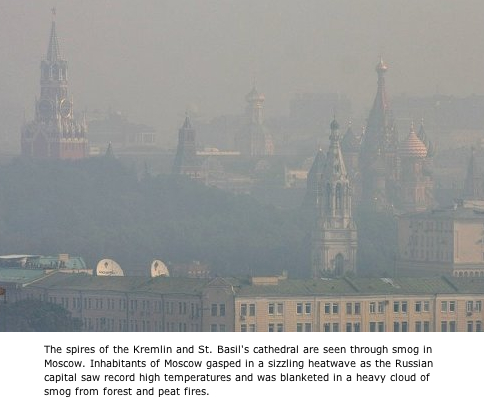
“The smartest thing the U.S. could do is phase out ethanol subsidies,” says Brown, the founder of the Washington-based Earth Policy Institute, in reference to rising food prices resulting from the unprecedented heat wave in western Russia that has decimated crops and killed at least 15,000 people.

“The lesson here is that we must take climate change far more seriously, make major cuts in emissions and fast before climate change is out of control,” Brown, one of the world’s leading experts on agriculture and food, told IPS.

Average temperatures during the month of July were eight degrees Celsius above normal in Moscow, he said, noting that “such a huge increase in temperature over an entire month is just unheard of.”

Do you find this article interesting? It is funded by contributions from readers. Please click here to learn more about Community Supported Journalism.

On Monday, Moscow reached 37 C when the normal temperature for August is 21 C. It was the 28th day in a row that temperatures exceeded 30 C. Continue reading

Food Prices Soar (again) – Governments Starved Ag Research of Funding for Last 20 Years

By Stephen Leahy

[New Article]

MONTPELLIER, France, Apr 14, 2010 (IPS)

How’s this for short-sighted:

A billion people go hungry every day, food prices have climbed 30 to 40 percent, climate change is reducing agricultural production – and for the past two decades, the world has slashed investments in publicly-funded agriculture until it is a pittance in most countries.

“Moral outrage is needed. We must abolish this… It can be done. It must be done,”Ismail Serageldin Website, Egypt and a former World Bank economist, told nearly 700 World Food Prize laureates, ministers, scientists and a few representatives from development and farmer organisations at the first Global Conference on Agricultural Research for Development (GCARD) last month here in southern France.

“This is the launching pad to transform hunger in our time,” Serageldin concluded.

The “rocket” on the launching pad is a major transformation of the 500 million dollars of public funds for international agricultural research carried out by the Consultative Group on International Agricultural Research (CGIAR), an alliance comprising some 8,000 researchers in 100 countries.

For the past year, a global consultation process involving over 2,000 stakeholders from 200 countries has produced a draft plan for reform that promises to meet the needs of the world’s 500 million poor small farmers who feed the two billion poorest people.

Called ambitious and far-reaching by proponents, the “Montpellier Road Map” sets the priorities for “linking science and innovation to the needs of farmers and the rural poor”.

Critics say it resembles little more than a passionate shuffling of the status quo. As the French say like to say: “Plus ça change; plus c’est la même chose” (the more things change, the more they stay the same).
Continue reading

Turning Forests Into Carbon Profits To Protect The Global Climate?

By Stephen Leahy*

MONTPELLIER, France, Apr 7, 2010 (Tierramérica)

Billions of dollars are being mobilised to protect and increase the world’s forests under a climate protection mechanism known as REDD (Reduced Emissions from Deforestation and Degradation). But many experts are unsure that it will work, and some fear it could end in disaster.

According to Anne Larson, who works in Nicaragua as an associate at the Indonesia-based Centre for International Forestry Research (CIFOR), “REDD presents lots of risks.”

“Most countries are simply not ready. They do not have policies to protect the rights of local and indigenous peoples, to determine land tenure or even work out who owns the ‘carbon rights’ to a forest,” Larson told participants at an international conference on smallholder and community forestry in Montpellier, France, in late March.

Under the REDD initiative, richer countries would pay to maintain forests in tropical regions to offset their own carbon emissions. Carbon dioxide from human activities is one of the main gases that produce the greenhouse effect.

The wealthy countries would be granted “carbon credits” towards achieving their carbon reduction commitments to combat climate change. Continue reading

Free Markets Cause Chronic Hunger in Africa — There’s Plenty of Food but No Money

Written a few years ago but still relevant today. Ideology causes hunger not lack of food.

Free Markets Cause Chronic Hunger in Africa -- There's Plenty of Food but No Money By Stephen Leahy

BROOKLIN, Canada, Oct 20, 2006 (IPS)

[World Bank and International Monetary Fund free-market doctrines responsible for much of Africa’s hunger experts say]

It is a world of paradox and plenty: 852 million people are starving while one billion people are overweight, with 300 million of them considered medically obese. And the numbers of people whose health are at serious risk due to starvation or from obesity is rising rapidly. Wh … Read More

The REAL Amazon-gate: On the Brink of Collapse Reveals Million $ Study


By Stephen Leahy

PARIS, Feb 2, 2010 (Tierramérica)

The Amazon jungle “is very close to a tipping point,” and if destruction continues, it could shrink to one third of its original size in just 65 years, warns Thomas Lovejoy, world-renowned tropical biologist.

[UPDATE Sept 6’10: The Amazon River is at its lowest level in 40 years — in 2005 devastating dry spell damaged vast swaths of South American rainforest Amazon May Be Headed For Another Bad Drought]]

Climate change, deforestation and fire are the drivers of this potential Amazonian apocalypse, according to Lovejoy, biodiversity chair at the Washington DC-based Heinz Centre for Science, Economics and the Environment, and chief biodiversity adviser to the president of the World Bank.

Amazonian rainforest, upper Amazon basin, Lore...
Image via Wikipedia

Lovejoy laid out the scenario for participants at the Biodiversity Science Policy Conference in Paris last week, sponsored by UNESCO (United Nations Educational, Scientific and Cultural Organisation), and marking the beginning of the U.N.’s International Year of Biodiversity.

“The World Bank released a study that finally put the impacts of climate change, deforestation and fires together. The tipping point for the Amazon is 20 percent deforestation,” and that is “a scary result,” Lovejoy told Tierramérica in an interview.

The study, “Assessment of the Risk of Amazon Dieback,” released Jan. 22, drew on the expertise of several international research institutions, including Japan’s Meteorological Research Institute, Britain’s Exeter University, Brazil’s Centre for Weather Forecasting and Climate Change (CPET/INPE), Germany’s Potsdam Institute and Earth3000.

Do you find this article interesting? It exists thanks to contributions from readers. Please click here to learn more about Community Supported Journalism.

The results and analysis were reviewed by an international blue-ribbon panel of scientists. Continue reading